Few teachers have had as profound an influence on modern conducting as Finnish conductor and pedagogue Jorma Panula.
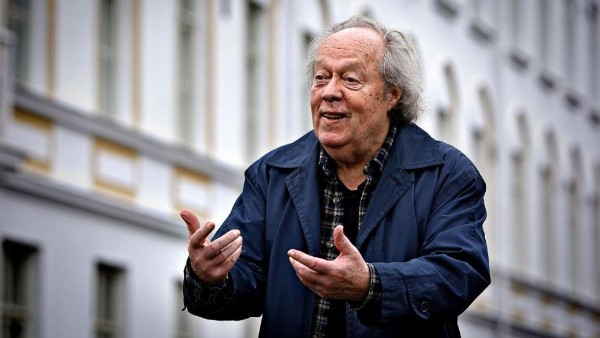
Jorma Panula © symphony.org
Born in 1930 in Kauhajoki, Finland, Panula studied music and conducting at the Sibelius Academy in Helsinki.
He served as the music director of the Turku Philharmonic Orchestra from 1963 to 1965, the Helsinki Philharmonic from 1965 to 1972, and the Aarhus Symphony Orchestra from 1973 to 1976. He also worked as a composer.
In 1973, he began a twenty-year tenure at the Sibelius Academy, teaching conducting. Later, as his popularity grew, he began teaching around the world.
Trailer of the documentary “Klaus Mäkelä: Towards the Flame”, featuring Panula
Over the course of his career, he has taught some of the best-known conductors of the twentieth (and twenty-first) centuries…including controversial wunderkind Klaus Mäkelä, who will be taking over both the Concertgebouw Orchestra and Chicago Symphony in 2027.
Today, we’re looking at six of Panula’s most famous students and how they’ve left their marks on major orchestras around the world.
Osmo Vänskä (1953–)
Sibelius violin concerto, conducted by Osmo Vänskä
Osmo Vänskä was born in Finland in 1953. He began his career as an orchestral musician, serving as the principal clarinet at the Helsinki Philharmonic between 1977 and 1982.
Although he missed Panula’s music directorship at the Helsinki Philharmonic, the two moved in the same circles, and when Vänskä began pursuing conducting in his twenties, he studied with Panula at the Sibelius Academy.
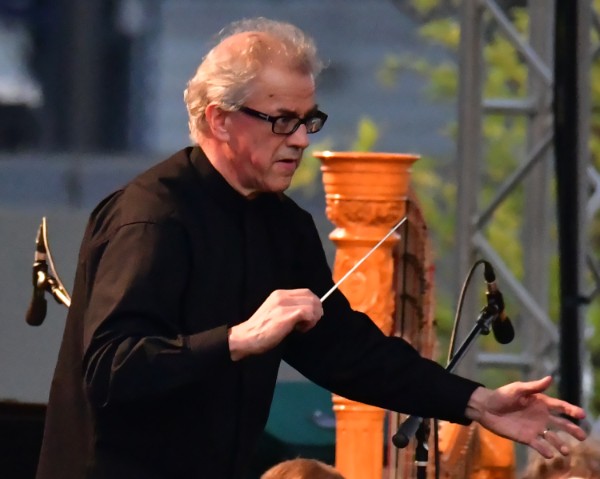
Osmo Vänskä
In 1988, Vänskä was hired as the music director of the Lahti Symphony Orchestra. Although Lahti only has 122,000 residents, under Vänskä’s leadership, the orchestra began making internationally renowned recordings.
After his remarkable tenure in Lahti, Vänskä moved to America in 2003 to lead the Minnesota Orchestra, where he worked until 2022. His two-decade tenure there is widely viewed as a golden age for the ensemble.
A profile about Vänskä’s tenure in Minnesota
A striking part of that tenure happened between 2012 and 2014 during a sixteen-month musician lockout. Vänskä broke the longstanding practice of American music directors staying out of labour disputes, choosing to come out in support of the musicians. In the decade since, multiple American music directors have followed Vänskä’s lead during their own orchestras’ labour disputes.
Today, Osmo Vänskä is the music director laureate of the Minnesota Orchestra and is good friends with his successor, Thomas Søndergård. He still lives in Minneapolis and guest conducts around the world.
Jukka-Pekka Saraste (1956–)
Ravel’s Daphnis et Chloe conducted by Saraste
Saraste was born in 1956 in Heinola, Finland, the son of two teachers. He started his musical career as a violinist, becoming the co-principal second violinist of the Finnish Radio Symphony Orchestra.
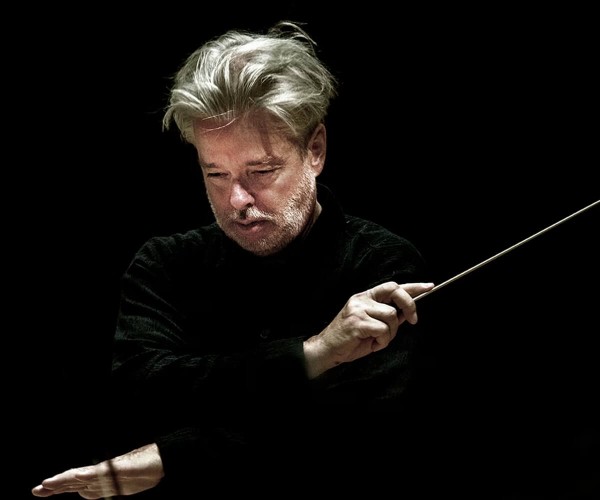
Jukka-Pekka Saraste
Later, he attended the Sibelius Academy to further his studies under Jorma Panula. He met Vänskä and Esa-Pekka Salonen there, and in 1983, co-founded the Avanti! Chamber Orchestra with Salonen.
An interview with Jukka-Pekka Saraste
In 1987, he became the music director of the Finnish Radio Symphony Orchestra (a position he held until 2001) and the Scottish Chamber Orchestra (where he worked until 1999).
In 1994, he became the music director of the Toronto Symphony Orchestra. Like Vänskä’s orchestra would fifteen years later, the Toronto Symphony ran into labour troubles in the 1990s. Saraste became involved and attempted to broker a compromise. He stayed until 2001.
In 2006, he was hired by the Oslo Philharmonic, where he conducted until 2013.
In 2022, he was named the music director of the Helsinki Philharmonic, following in the footsteps of Jorma Panula.
Esa-Pekka Salonen (1958–)
Stravinsky’s Rite of Spring conducted by Salonen
Salonen was born in Helsinki in 1958. He attended the Sibelius Academy there, studying horn, composition, and conducting.
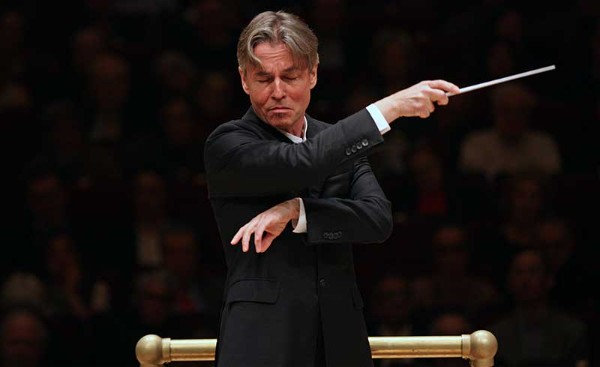
Esa-Pekka Salonen
From early in his career, one of his great passions was contemporary music. He partnered with composer Magnus Lindberg to create a new music appreciation group, which they called “Korvat auki” (“Ears open”), and a new music ensemble, “Toimii” (“It works”).
An interview with Salonen about composing
He made his debut with the Finnish Radio Symphony Orchestra in 1979.
Then, just four years later, in 1983, he stepped in on short notice for an indisposed Michael Tilson Thomas at the Philharmonia Orchestra…while sight-reading the score of Mahler’s Third. He was so impressive that he was named the principal guest conductor in 1985.
In 1984, he became the music director of the Swedish Radio Symphony Orchestra, where he worked until 1995.
That same year, he made his debut at the Los Angeles Philharmonic. After his first rehearsal there, an orchestra musician came up to him and said, “Consider this your future home.” The words were prophetic: Salonen became the music director of the Los Angeles Philharmonic in 1992, staying there until 2009.
His tenure in Los Angeles was so influential that New Yorker music critic Alex Ross wrote, “The Salonen era in L.A. may mark a turning point in the recent history of classical music in America.” The ensemble became known for its adventurous modern programming, its new Walt Disney Concert Hall, and its financial security.
In 2008, Salonen was promoted from principal guest conductor to music director of the Philharmonia Orchestra, staying there until 2021.
In addition to all of this, Salonen began spending more time composing. It didn’t seem likely that he’d return to a demanding American music directorship. However, in December 2018, the San Francisco Symphony announced a coup: they’d hired Salonen as music director, with his tenure set to begin in the fall of 2020.
After the pandemic hit, Salonen and the symphony’s board came to loggerheads over budgetary and artistic matters, similar to Vänskä and Saraste. However, instead of dealing with a potential labour dispute, Salonen made an independent announcement that he would be leaving at the end of his contract in June 2025, which he did.
Dalia Stasevska (1984–)
Sibelius’s Symphony No. 5, as conducted by Dalia Stasevska
Dalia Stasevska was born in 1984 in Kiev. When she was five, her parents moved to Finland.

Dalia Stasevska
She began studying the violin and viola and attended the Sibelius Academy. In her twenties, she developed an interest in conducting, and began studying under Jorma Panula at the Royal Swedish Academy of Music. She even pawned her violin to fund her conducting studies.
An interview with Dalia Stasevska
In 2014, she became the assistant conductor of the Orchestre de Paris, a position she held until 2019.
Over those years, she made a number of prestigious guest conducting appearances, and in January 2019, she was named the principal guest conductor at the BBC Symphony Orchestra. She is contracted to remain in that position until at least 2027.
In the autumn of 2021, she became the music director of the Lahti Symphony, following in fellow Panula student Osmo Vänskä’s footsteps. Her tenure there ended in July 2025.
An interesting music trivia tidbit: she married Lauri Porra, the great-grandson of famous Finnish composer Jean Sibelius.
Santtu-Matias Rouvali (1985–)
Mendelssohn’s Hebrides Overture, as conducted by Santtu-Matias Rouvali
Santtu-Matias Rouvali was born in 1985 in Lahti, Finland, to two Lahti Symphony musicians. He grew up there during Vänskä’s tenure.
He took up percussion and began studying at the Sibelius Academy. In September 2009, at the age of 24, he guest-conducted the Finnish Radio Symphony Orchestra on short notice.
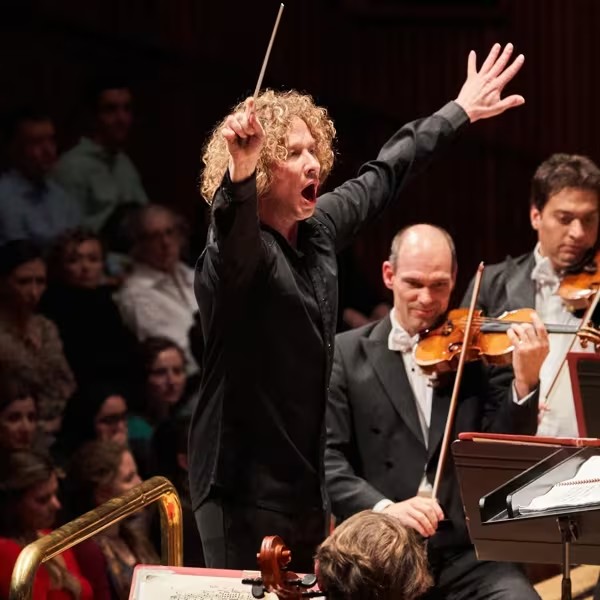
Santtu-Matias Rouvali
In 2013, he became the music director of the Tampere Philharmonic Orchestra in Tampere, Finland; he stayed there for a decade.
An interview with Santtu-Matias Rouvali
He landed his second music directorship in 2017, when he became the chief conductor of the Gothenburg Symphony Orchestra in Sweden. He stayed there until the spring of 2025.
In 2019, he became the principal conductor of the Philharmonia Orchestra in London, following in the footsteps of Salonen.
Klaus Mäkelä (1996–)
Beethoven’s Symphony No. 9, as conducted by Klaus Mäkelä
Klaus Mäkelä was born in Helsinki in January 1996 to a family of musicians. He took up the cello as a boy, then studied both cello and conducting at the Sibelius Academy, where his teachers included Jorma Panula.
Mäkelä’s first professional guest conducting gig happened in 2017 when he was just 21 years old, leading the Swedish Radio Symphony Orchestra. He made such a big impression that a few months later, the orchestra invited him to become their principal guest conductor.
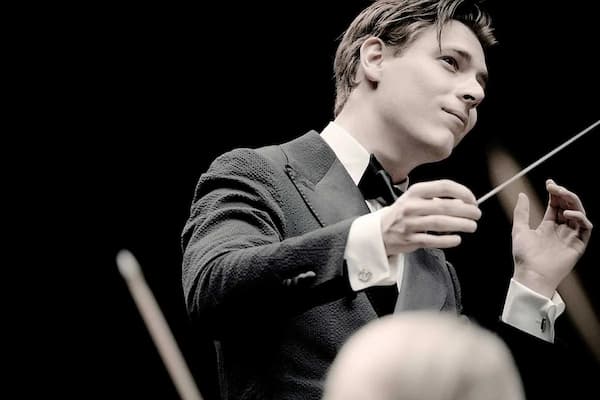
Klaus Mäkelä © Marco Borggreve
Just a year later, in 2018, at the age of 22, he was named the chief conductor of the Oslo Philharmonic after a guest appearance there. This is the same position that his fellow Panula student Jukka-Pekka Saraste once held in the mid-2000s.
In 2022, Mäkelä began a tenure with a second orchestra, the Orchestre de Paris…again, another orchestra where another Panula student, Dalia Stasevska, had once held a position as guest conductor.
That same year, it was also announced that Mäkelä would become the music director of Amsterdam’s Concertgebouw Orchestra. Then, in April 2024, it was revealed that Mäkelä is set to become the next music director of the Chicago Symphony. His official tenures with both orchestras will begin in 2027.
We’ll see how Mäkelä’s time with these storied ensembles pans out. But no matter what happens with Mäkelä, it’s clear that Jorma Panula’s legacy as a teacher is going to live on well beyond him.
Read our review of the documentary Klaus Mäkelä: Towards the Flame, in which Mäkelä discusses his relationship with Jorma Panula.
An interview with Mäkelä about his future plans for Chicago
For more of the best in classical music, sign up for our E-Newsletter