Joseph Haydn earned his nickname “Father of the Symphony” while working as the Kapellmeister in the Esterházy household, where he worked for decades, overseeing the court orchestra.
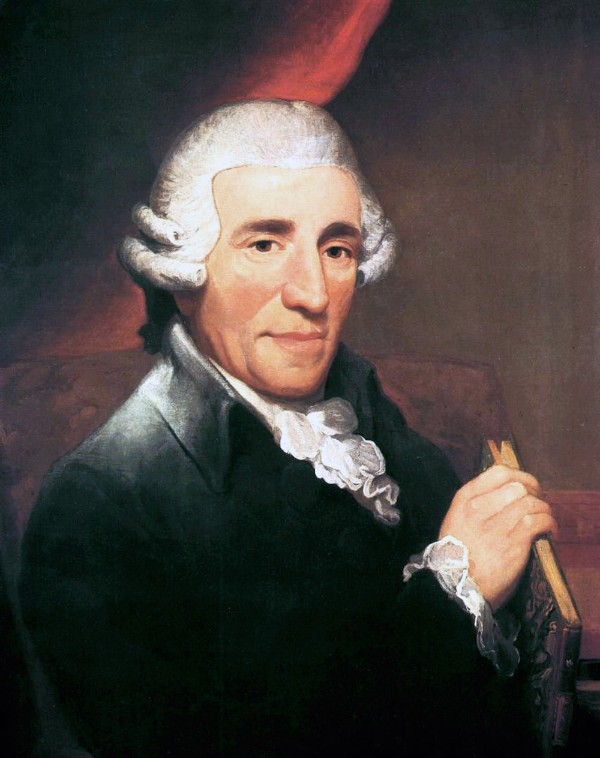
Joseph Haydn
However, when Haydn first joined that household at the age of twenty-nine, he was just the assistant Kapellmeister. His superior was a composer named Gregor Joseph Werner…and Werner didn’t like Haydn at all!

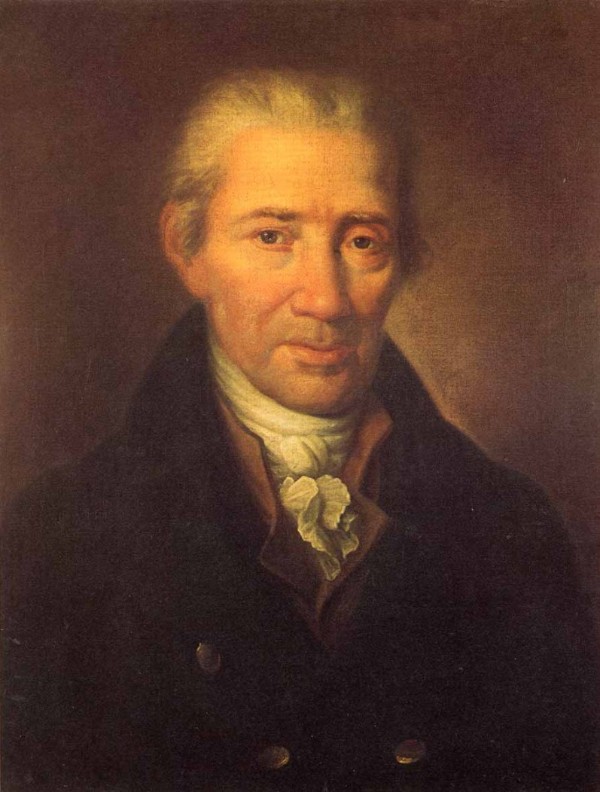
Gregor Joseph Werner
Nowadays, Werner is usually remembered as Haydn’s bitter predecessor. However, he was also a prolific composer in his own right, whose career intersected with the transition between the Baroque and Classical eras.
Today, we’re looking at the life and times of composer Gregor Joseph Werner.
Werner’s Musical Training
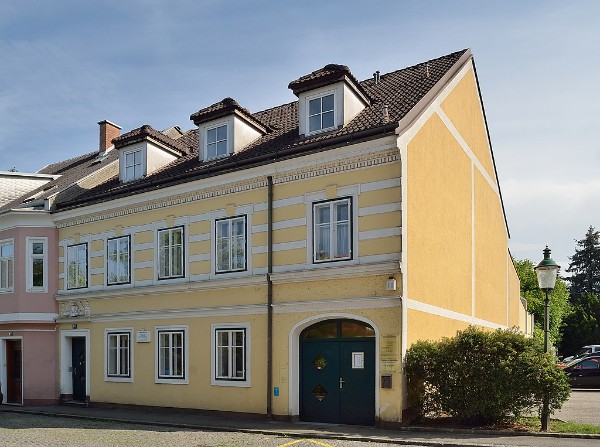
Gregor Joseph Werner’s birthplace
Gregor Joseph Werner was born in January 1693 in the Austrian town of Ybbs an der Donau.
There is a lot we don’t know about his childhood and musical training. However, it is believed that in his early twenties, he may have worked as an organist at the Melk Abbey, a renowned religious and musical institution in Melk, Austria.
According to records, he worked as a freelancer playing some kind of bass instrument.
Working for Jacob Heinrich von Flemming
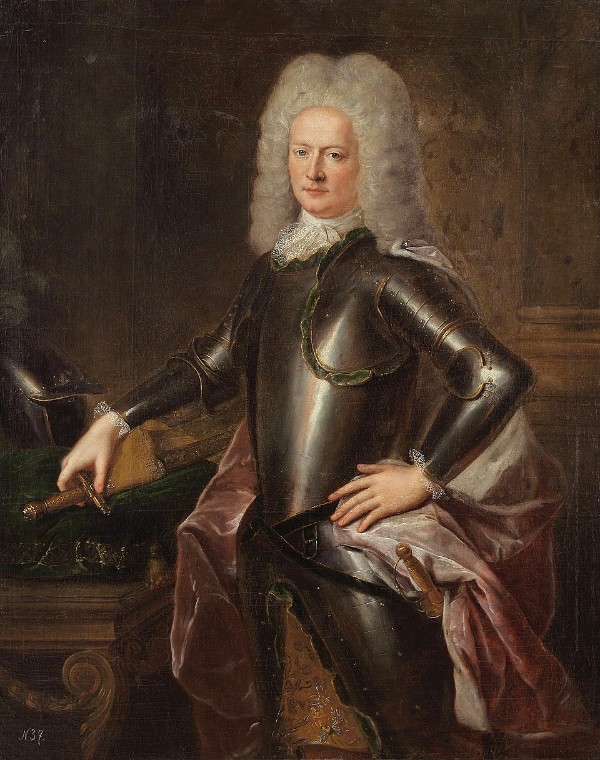
Jacob Heinrich von Flemming
Recent scholarship has discovered that, starting in 1719, Werner worked for Jacob Heinrich von Flemming, a wealthy Saxon and Polish politician, diplomat, and military officer.
Flemming owned a number of estates. He was a member of the intellectual, well-educated elite of his society, and, accordingly, made a point to support the arts and music.
One of the contributions he made to music was keeping a musical ensemble at his household that traveled between Vienna, Warsaw and Dresden (the latter was an especially important musical center at the time).
It is possible that around this time, Werner studied composition under Johann Joseph Fux, a composer, theorist, and teacher whose book Gradus ad Parnassum became a touchstone of musical pedagogy in the Baroque era.
He married in 1727.
Gregor Joseph Werner: Il Settèmbre (im Herbstmonat), Leipziger Barockorchester
Being Hired by the Esterházy Family
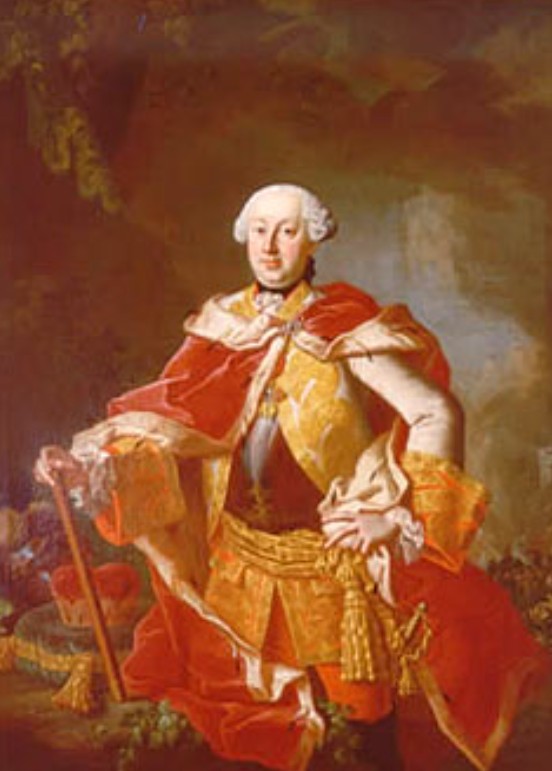
Paul Anton
The year after his marriage, he was hired as Kapellmeister by the noble Esterházy family to oversee the music of the court.
The Esterházys were a Hungarian noble family who were hugely wealthy and influential political allies of the Habsburgs.
Scholars believe that Werner may have been hired at the behest of 17-year-old music-loving prince Paul Anton, who played the violin, lute, and flute, and wanted to hire the best musicians possible. (Of course, it didn’t hurt that maintaining an orchestra provided the family a social cachet and prestige, on top of the artistic benefits.)
Werner worked for the Esterházys for decades.
While there, he wrote a number of works that were published during his tenure. One was a set of twelve orchestral suites, one for each month of the year, published in 1748. Another project was twenty years’ worth of oratorios for Good Fridays.
The Chorus of Frogs by Gregor Joseph Werner
Entering Retirement
Werner had a long and productive career with the Esterházys.
In 1761, the year he turned 68, he entered semi-retirement. That same year, the Esterházys hired 29-year-old Joseph Haydn as their assistant Kapellmeister. Despite Haydn’s title of assistant, he was assigned primary composing duties and granted authority over the orchestra.
It appears that the Esterházy family respected Werner deeply because when Haydn arrived, they didn’t strip him of his Kapellmeister title, as would be standard.
After his semi-retirement, Werner’s primary responsibility became working on religious music.
A documentary about a Werner recording
Haydn Starts Taking Over
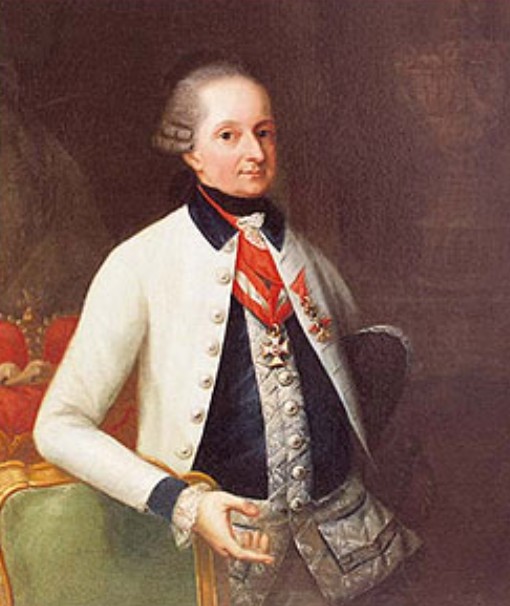
Nikolaus I, Prince Esterházy
Paul Anton died the following year, in 1762. He had no children, so the prince’s heir was his younger brother, Nikolaus I.
Unfortunately for Werner, Nikolaus’s musical tastes veered toward the orchestral and instrumental, so Werner’s church music started falling by the wayside.
The simpler, clearer style of the Classical era was becoming more and more popular…and that was the style that Haydn wrote in.
Werner began feeling anxiety about being eclipsed. He started using derisive nicknames to refer to his younger colleague: G’sanglmacher (writer of little songs) and Modehansl (Little Hans of Fashion).
Haydn’s Symphony No. 6, written in 1761 for the Esterházys
Werner’s Letter About Haydn
We have another indication that Werner wasn’t thrilled with Haydn. In 1765, he wrote a letter to Nikolaus complaining about him.
I am forced to draw attention to the gross negligence in the local castle chapel, the unnecessarily large princely expenditures, and the lazy idleness of the musicians, the principal responsibility for which must be laid at the door of the present director, who lets them all get away with everything, so as to receive the name of a good Heyden [sic]: for as God is my witness, things are much more disorderly than if seven children were around.
Were things that bad? It’s possible.
In his new position, Haydn was in charge of not just arranging performances, but of overseeing the entire professional lives of court musicians.
Consequently, he had a huge number of responsibilities – spread between rehearsing, composing, performing, etc. – that must have been incredibly stressful and overwhelming. So maybe Werner’s complaints had merit.
On the other hand, it’s clear that Werner was resentful about Haydn being hired. So we can only guess what the real story was.
In any case, it’s a fascinating window into the day-to-day dynamics of the workplace at the Esterházy palace.
Werner’s Death and Legacy
Werner died five years after his retirement, on 3 March 1766. He was 73 years old.
For many years, he was viewed as nothing but Haydn’s grumbling predecessor. But during the revival of interest in Baroque repertoire, musicians began revisiting Werner’s output.
Learning more about him and his music, as well as his relationship with the Esterházys, provides fascinating context to the influential career of Joseph Haydn.
For more of the best in classical music, sign up for our E-Newsletter