‘Do We Play for Ourselves?’
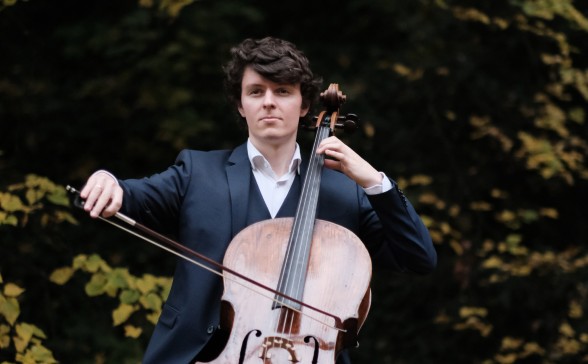
Vilém Vlček © vilemvlcek.com
Born in Prague in 1998, Czech cellist Vilém Vlček is gaining a reputation for his bold, brilliant, and deeply personal performances.
Two big competition wins in 2023 – at the Krzysztof Penderecki Cello Competition in Kraków and the International Instrumental Competition in Markneukirchen – bolstered an already sizeable reputation, making Vilém firmly one to watch.
His versatility and musical maturity abound on a recent release of Martinů’s complete cello and piano works in August this year, scooping Gramophone’s Recording of the Month in the process. Along with pianist Denis Linnik, the pair captures Martinů’s multifaceted and diverse style, ranging from the heavy hitters of his three Cello Sonatas to the lighter works written during the composer’s time in Paris.
Now based in Basel, I talk to Vilém about bridging the perceived gap between soloist and orchestra, his recent deep dive into Martinů and, for him, a recent non-musical source of unexpected artistic enrichment.
How did you find your way to the cello?
My parents are not professional musicians, but they had this idea that they would love my two older brothers and me to develop our work ethic, to learn how to work regularly. At the beginning, there wasn’t even a thought of becoming a professional. The eldest brother started on piano, the other one on violin, so the cello seemed to be the obvious choice for me.
I had an excellent teacher straight away, who found a way to motivate me early on. The momentum just kept building up and, well, here I am today.
So it clicked right from the beginning?
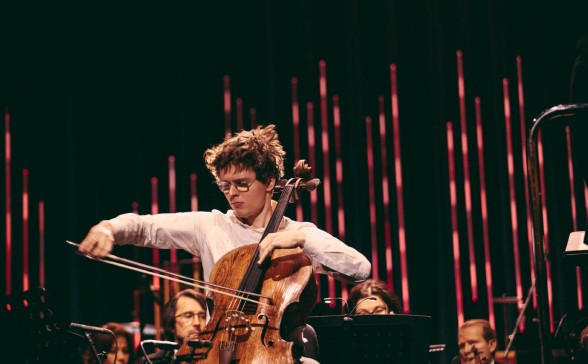
Vilém Vlček © vilemvlcek.com
It did take a while. Maybe there are some people who say that they have no idea what they would do if they weren’t musicians, but that’s not the case for me. I could very well imagine myself doing many other things. I love music, don’t get me wrong, but I think there’s so much to life, and one can do so many different things.
What other things interested you, or what else could you imagine yourself doing?
I’m interested in people. I like people, I like stories, I like the arts, and I like to help people cooperate. My father is a manager, so I always found helping people in groups to get work done super interesting. I think that’s something I’d be otherwise inclined towards.
This can be the problem with being a ‘soloist’, whatever that means. It’s the only department in the life of a musician where you miss that contact with other people.
How do you seek out your connections? How does it feel playing chamber music as opposed to a concerto where you’re in more of a ‘solo’ role?
I learned that I’m a person who gets very nervous, even though it doesn’t look like it from the outside. I can get very nervous when I go on stage.
I’m fortunate that I had opportunities to play with good orchestras early on – not like some of my colleagues who would get to play 10 concerts a year, but every year I would play with a different orchestra, since I was 15, which is a huge luxury.
On the one hand, it’s fantastic, but on the other hand, it’s this yearly thing where you go in front of an ensemble of terrifying people, and you always feel the need to prove yourself. I found over time that this kept building up, and two or three years ago, I just found playing with orchestras so stressful that going to the first rehearsal, I was always so super nervous. I didn’t really know how to deal with it until I managed to reframe it: to make the people play chamber music with me.
I have the biggest respect for orchestral musicians, how much music they’re able to play and learn so quickly. On one hand, it’s incredible, and on the other, it’s occasionally more challenging to always keep this extra spark of ‘let’s make this music together’.
I found for myself that if I went to the first rehearsal or the concert with the thought that the challenge wasn’t to play well, but to make the other people fully engaged in what I’m doing, that helped a lot, and I found in the last two years that my brain focuses much easier because of this.
How did you manage your nerves in the two big competitions that you ended up winning?
I find that what helped me was to look at it from the perspective of the jurors, rather than from the perspective of you as a contestant. I think it helps to imagine yourself sitting on a jury and voting. You are sitting somewhere, sometimes for a day, sometimes for four days, and basically, I think what happens is you start craving music, and you start craving actually being reached and touched, not just being proven that you do something well.
So that helped, I think, to find a sense of purpose, actually being there at those competitions. And I think to be fair, competitions are to a great degree a matter of luck, or many circumstances coming together favourably or unfavourably for you. I was very fortunate that both those juries [in Poland and Germany] were very receptive to my kind of approach.
Internat. Instrumentalwettbewerb Markneukirchen 2023│Violoncello│3. Runde│Vilém Vlček
How much were you playing for yourself, and how much for the jury in those instances?
That’s a whole different question – do we play for ourselves? Compared to many of my colleagues, I think I am a person who could live without the stage. I like to play for myself. I don’t have the need to have this extra rush of adrenaline that you get when you’re playing in front of hundreds of people. I don’t really need that.
But in competitions, you need to make sure that what you do is accessible and that you are generous enough to make sure that even those people who are sitting there for the seventh hour can still enter the world you are creating.
But anyway, you can’t control it. As a member of the audience, you are nearly equally as responsible for the outcome of the concert as the interpreter, in a way. It sounds horrible to say because it’s obviously our job as performers to make sure that we deliver, but if you are sitting there and are not willing to put in this extra step, to go closer, I think, well, what can you do?
How did it feel going so in-depth into Martinů’s whole cello output with your recent album?
The initial prospect was a little terrifying. I know Martinů fairly well, I would say. As a Czech cellist, you play a lot of Martinů, so I had played many of the pieces before we even discussed the possibility of me recording this repertoire with the label.
I still had to learn some pieces, but most of them I knew fairly well. And then the challenge simply was how to make this music (which I know very well because I have been with it since I started) accessible to somebody who maybe has never heard anything by Martinů before.
In that regard, it was extremely helpful to be working with a pianist who doesn’t come from this place. Denis Linnik had played some Martinů, but it’s not his mother tongue. It’s extremely helpful to have someone in rehearsals who will ask, ‘Why this? I don’t understand why you’re doing that, can you explain?’ I like to think that this is what actually helped the album to become more accessible, even though the music itself is, in a way, very intellectual.
Vilém Vlček, Denis Linnik – Bohuslav Martinů: Variations on a Slovak Folk Song, H 378 (official)
Did your own relationship to Martinů change as a result of that process?
Absolutely. Very much. You see music differently every day, but I feel like I can talk more on a level of how I feel connected to Martinů, through this process of spending a year with his music and recording it, and playing it many many times before the recording sessions. I do feel very close to Martinů, and I found a huge sympathy for him as a composer and as a person. He’s extremely relatable.
I don’t know whether it’s a matter of my age or the times we’re in, but I do get very self-conscious, and I worry what people think about me, what I do or who I am, and I feel like Martinů was quite free in that regard, quite unapologetic, which I think is just wonderful.
Who are some other composers who inspire you?
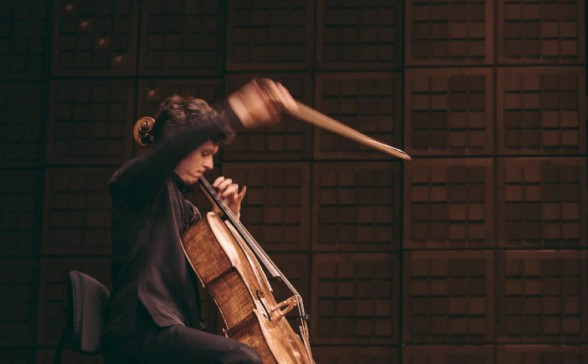
Vilém Vlček © vilemvlcek.com
There are so many names in the air who I’d love to spend even more time with in the future than I have done. I’m instinctually drawn towards people whose work is not so commonly well-known. Maybe when I’m 50, I would also love to record the Beethoven sonatas, but right now I don’t feel like I have so much to bring to the table there.
Somebody whose work I find extremely mesmerising is Mieczysław Weinberg. I have played his Concertino, and just a few weeks ago, I played his concerto for the first time. I think it’s wonderful music.
I think it’s music that can be just there; you don’t need to have a two-hour lecture beforehand on Shostakovich and Weinberg to understand that the music is simply great as it is. So in the future I’d like to spend more time with Weinberg’s music.
What do you do in your spare time?
First of all, I have to say I’m someone who needs to have a lot of time away from music. My stamina is rather limited. I can’t do 10 hours of music a day. It just doesn’t work for me – I’m happy for people who can, but after engaging with music actively for 5 hours, I’m just dead. So, I need to have a fair amount of free time!
I like to walk, and I like art generally. I will read, I will watch movies, and lately I’ve been fulfilling a childhood dream by playing video games, which is something I did a bit of when growing up, but not as much as I wanted to!
I came to the conclusion, which is perhaps a bit of a hot take, that I think video games are almost the perfect vehicle for delivering artistic experiences and getting people educated in art.
The problem that we as performers are facing in the field of classical music is going onstage and engaging with an audience which might sometimes be too passive. I find that if you look at video games, then that’s exactly their essence: you can engage with it, it’s very active, and I think for the future it’s something I would love people to play around with a bit more, to see how they can really create meaningful artistic experiences in that medium.
I think it’s something that’s very much underestimated in its possibilities.
For more of the best in classical music, sign up for our E-Newsletter