As the days draw in, twilight becomes a special time of the day – the light is going, and the dark is coming, but we’re between the two times. The sky may flame with colour, and the trees around us take on a more shadowy presence, our conversations go to more profound and deeper topics, and we think about the future.
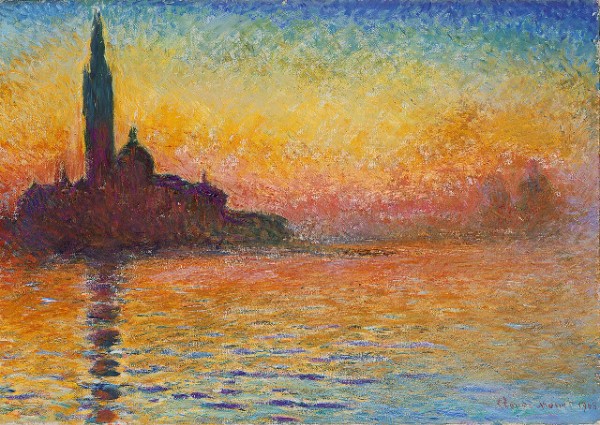
Claude Monet: San Giorgio Maggiore by Twilight, 1908 (Amgueddfa Cymru – Museum Wales)
In his 1893 idyll for orchestra, Czech composer Zdeněk Fibich (1850–1900) captures that time of the day.
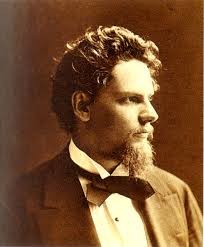
Zdeněk Fibich
A letter written by a family member some 60 years later said that Fibich was capturing walks taken by Fibich and his wife, Anežka Schulzová, and her family on Žofín Island in Prague. The island, now known as Slavonic Island, is home to the neo-Renaissance Žofín Palace, where Liszt and Berlioz performed and where Richard Wagner conducted a concert in 1863.
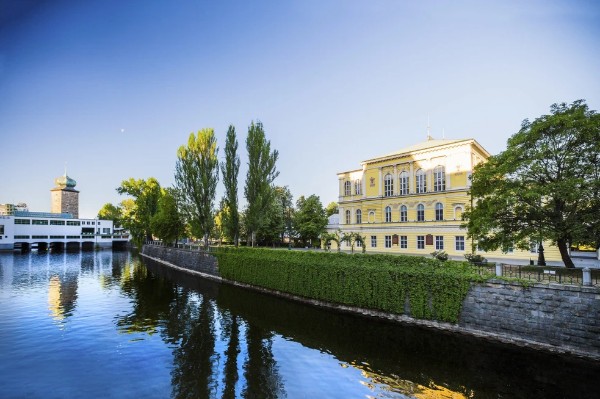
Žofín Palace on Slavonic Island
Each of the themes in Fibich’s work depicts a member of the Schulz family and some of Fibich’s closest friends.
It starts in the string section, with a solemn melody that gradually includes the lower woodwinds. Other instruments come to the fore, such as a flute passage, flitting over the strings, which is partnered with a solo cello. The luscious sound seems to bring elements of love, of companionship, and of happiness as Fibich walks, surrounded by family and friends. The light changes around them, and the sound becomes even more inward-looking. We don’t end with a whimper, but have the high points emphasised by ever-slowing cymbal. We’re not going to go out and change the world after this walk, and perhaps a small nap is in order before dinner, but all is well with the world.
Zdeněk Fibich: At Twilight, Op. 39 (Czech National Symphony Orchestra; Marek Štilec, cond.)
It’s a beautiful evocation of the different feelings that twilight, and a walk with one’s friends, can bring.
Arnold Bax (1883-1953) took his title Into the Twilight from a poem of the same name by William Butler Yeats. This was the first part of a trilogy of ‘symphonic pictures’ that were eventually collected as Éire, representative of his discovery of the Celtic world.
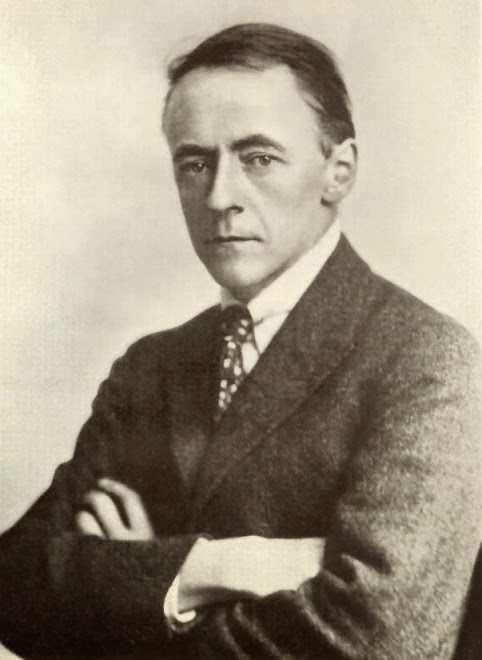
Arnold Bax
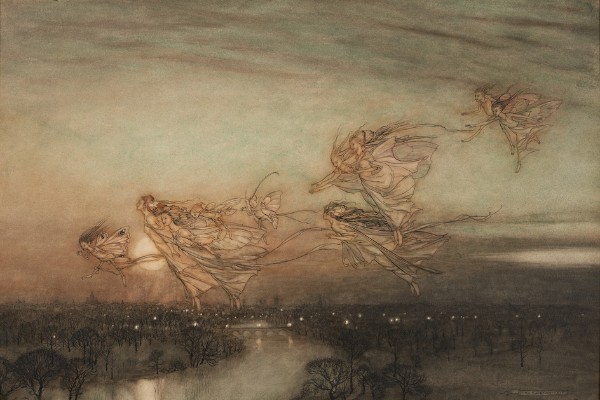
Arthur Rackham: Twilight Dreams, 1913 (Victoria Gallery & Museum, University of Liverpool)
For many years, Bax had been under the sway of Wagner, but with his discovery of the idea of a Celtic world through the poetry of W.B. Yeats, Bax changed his focus from Germany to Ireland. He visited Ireland, he explored its history and literature and even learned to read Irish Gaelic. He took a house in a small village in Donegal and from there came a stream of Irish-influenced works.
In a program note he wrote for a performance in 1909, with Thomas Beecham conducting, he wrote that the work ‘seeks to give a musical impression of the brooding quiet of the Western Mountains at the end of twilight, and to express something of the sense of timelessness and hypnotic dream which veils Ireland at such an hour’.
Arnold Bax: Into the Twilight (Royal Scottish National Orchestra; David Lloyd-Jones, cond.)
Whereas Fibich was writing a piece that was more like any walk in the early evening, Bax is looking at the larger and tragic history of his adopted country. We won’t go home and take a nap after this, but will sit and muse about the rights and wrongs of a country’s history.
Estonian composer Heino Eller (1887–1970) mostly wrote for the piano, but his output also includes 3 symphonies, about a dozen symphonic works, works for string orchestra, 6 string quartets, and around 30 works for the violin. One of those symphonic works was his ‘symphonic picture’, Twilight, written in 1918.
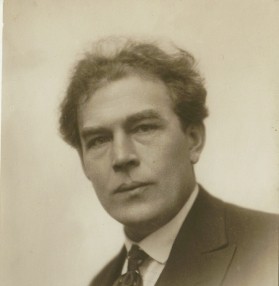
Heino Eller (Photo by J. & P. Parikas)
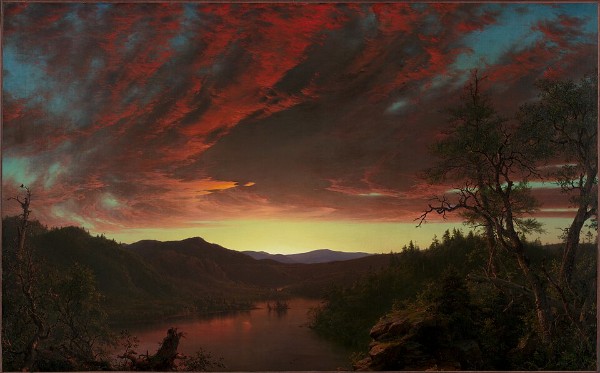
Frederick Edwin Church: Twilight in the Wilderness, 1860 (Cleveland Museum of Art)
Heino Eller: Videvik (Twilight) (Estonian National Symphony Orchestra; Olari Elts, cond.)
This symphonic picture, or tone poem, follows the Scandinavian and Russian models he would have been familiar with in his musical study in St Petersburg. He first studied music in Tartu, Estonia, playing in an Estonian symphony orchestra and in a string quartet. He went to the St. Petersburg Conservatoire to study violin in 1907, but he strained his hand and had to quit. He returned in 1912 as a composition student and graduated in 1920.
Each of these composers gives a different view of the end of the day. Some of them have overtones of a national romanticism, and others are just about love.
For more of the best in classical music, sign up for our E-Newsletter