A composer new to the classical concert music scene has emerged, offering riches of note.
Perhaps the release of a first symphony could be ignored as simply a one-off — enjoyable on its face, but not necessarily a harbinger of things to come. But then this composer, new to symphonic halls, just two years later released a second symphony which is both ”more of the same” and “a whole lot more.”
He introduced his voice with a huge build in the first symphony and then the gentlest gypsy-tinged violin in the second. In both, there is a feeling at the very start that the composer, whomever he might be, has a sense of assurance in both his craft and his material.
Together, the two symphonies comprise a body of work deserving of the attention of the classical music world. Perhaps they are a harbinger of good things to come after all.
Who is this new composer?
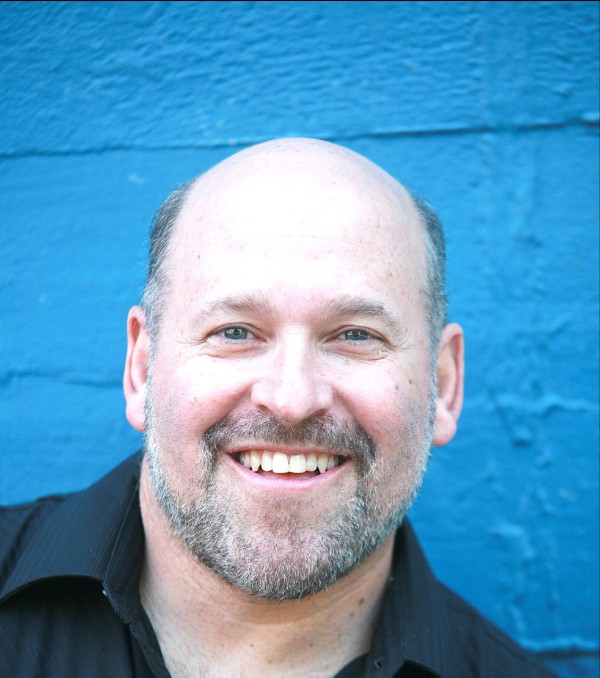
Frank Wildhorn © imdb.com
“New” might be a misnomer. His music has been performed before huge audiences around the world for over a third of a century — just not in classical concert halls. He’s Frank Wildhorn, composer of hit pop songs in the 1980s, Broadway musicals in the 1990s and 2000s and musicals around the world from Europe to Asia in the following two decades.
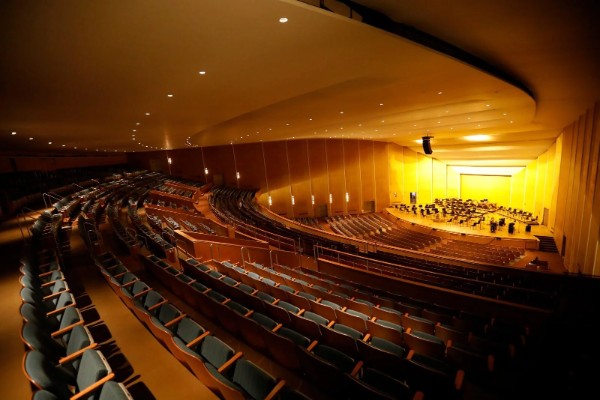
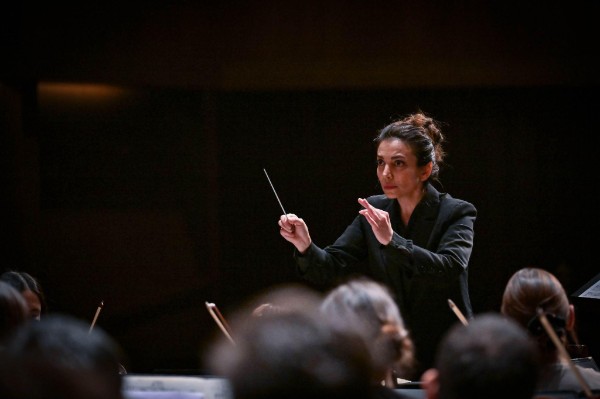
His entry into the classical genre received an auspicious introduction: A premiere performance by the venerable Wiener Symphoniker in the Golden Hall of the Musikverein where symphonies by Brahms, Bruckner and Mahler received their first performances. Under the baton of Koen Schoots, the Symphoniker gave the nine-movement Danube Symphony an energetic and atmospheric performance, which was later released on disc and through streaming outlets. The same orchestra premiered his second work — the Odessa Symphony — in an outdoor performance in the Munsterplatz of the southern German city of Ulm this past July. It has also been released in a recording by that orchestra.
Perhaps it is due to Mr. Wildhorn’s decades of storytelling through music in his theater pieces that each of the sixteen movements of his two symphonies (seven in the first and nine in the second) bears a programmatic title such as “Dawn of a New Spring” or “Farewell to a Soldier.” Each builds a sonic portrait that makes a connection to the concept of the title.
These movement titles are more concrete and more specific than those of Beethoven, who gave us “Awakening of Cheerful Feelings on Arrival in the Countryside”, or Mahler, who used and abandoned titles like “What the Flowers in the Meadow Tell Me.”
None of Wildhorn’s movements attempt Mahler’s grandiosity or Beethoven’s sheer mastery — or even the durations achieved by those masters. The longest movement in a Beethoven symphony, the “Ode to Joy” of the 9th, usually clocks in at nearly 20 minutes, while Mahler lets the first movement of his 3rd symphony build for over half an hour. Wildhorn’s lengthiest movement, a distinctly Straussian waltz titled “Memories of a Viennese Summer,” lasts just a bit over eight minutes.
What is more, the titles of the individual movements of the first symphony are clearly related to the title of the work, Donau Symphonie or The Danube Symphony. They paint a melodic portrait of the history, geography and culture of Western Europe’s longest river. (The Danube flows 1,777 miles from the Black Forest to the Black Sea.)
The second symphony is titled Odessa Symphonie and is as highly programmatic as the first. It centers on the city on the Black Sea where Mr. Wildhorn’s mother was born. It opens with a seven-and-a-half-minute exploration of a simple gypsy-ish theme that grows to a reverberant climax.
From pensive to expansive, and from hushed to thunderous, the dynamic range of this orchestra of nearly ninety is explored with an impressive catalogue of tempos using highly melodic themes. The melodiousness is not surprising given that Wildhorn’s trademark in his nearly half a hundred theater musicals has been soaring melodies.
As is so often the case in musical theater, but less often in classical symphonic works, Wildhorn utilises the talent and skill of an orchestrator to ensure the best use of the forces offered by an ensemble of this size. In this case, it was Kim Scharnberg who had orchestrated many of Wildhorn’s musicals both on Broadway and abroad and also assembled and orchestrated suites based on some of his scores. Still, there isn’t a hint here of a “Broadway sound” or the “feel” of an accompanying band in the pit under the stage. Here, the instruments and the instrumentalists are front and center, creating a sound that feels at home in a classical concert hall.
We may look forward to more works for symphonic orchestras from this pen, but it does not appear that Mr. Wildhorn has any intention of abandoning his theatrical endeavours — he has premiered musicals in London, Seoul, Tokyo, St. Gallen (Switzerland) and Hyogo (Japan) in just the past eighteen months.
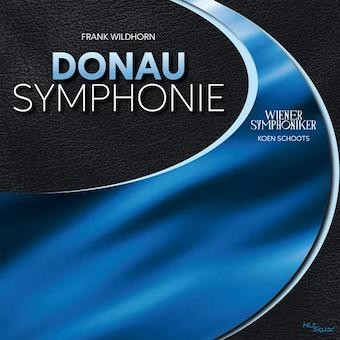
The Danube Symphony
HitSquad Records catalog 668442
ASIN B0FDJHQHBB
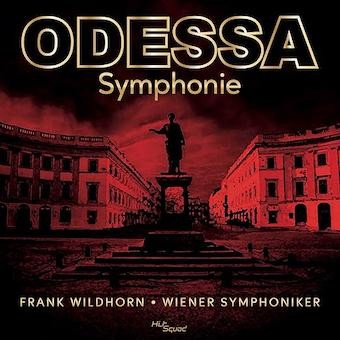
The Odessa Symphony
HitSquad Records catalog 668485
ASIN B09MCHGGZ3
Brad Hathaway retired to live with his wife on a houseboat in Sausalito, California, after nearly two decades covering theater in Washington, DC, on Broadway, and nationwide in the United States. He is a former vice chair of the American Theatre Critics Association.
For more of the best in classical music, sign up for our E-Newsletter