The piano trio is one of those basic good ideas: a violin and cello filled out with a piano creates a musical sound that covers a range of music that’s proved to be immensely satisfying. It’s one of the most common chamber ensembles and came into its own in the classical era. It wasn’t uncommon for composers to take their larger works, such as a symphony, and arrange them for piano trio. Composers such as Beethoven, Brahms, Haydn, and Mozart wrote for the piano trio and were followed by Chopin, Dvořák, Ravel, and even Elliott Carter.
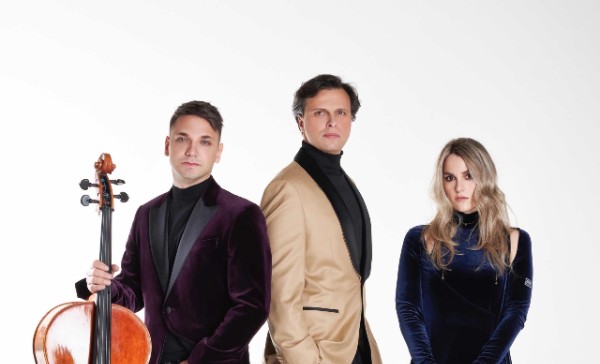
Corda Piano Trio
In this debut recording by the Corda Piano Trio, they focus on the middle years of their repertoire, performing Gabriel Fauré‘s (1845–1924) Piano Trio in D Minor, Op. 120; Sergei Rachmaninoff (1873-1943), Trio élégiaque No. 1 in G minor, and Dmitri Shostakovich (1906-1975), Piano Trio No. 1 in C minor, Op. 8. We have Fauré’s penultimate composition from 1923 and early works by Rachmaninoff from 1892 and Shostakovich from 1923.
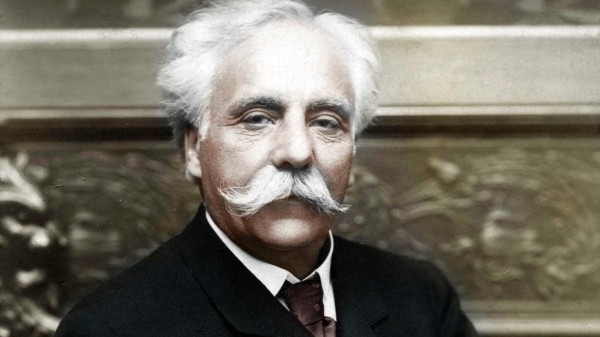
Gabriel Fauré
Fauré’s piano trio was written in 1923, the year before his death and reflects the skills of a consummate composer. His chamber music is one of his most beloved and widely performed works. The premiere of the work was given at the concert held by the Société Nationale de Musique in honour of the composer’s 78th birthday by three recent graduates of the Paris Conservatoire. A month after its premiere, it was performed by the trio of Alfred Cortot, Jacques Thibaud and Pablo Casals, the leading performers on their instruments of the day. From its first performances, the work was praised as one that would enrich the chamber music repertoire.
Gabriel Fauré: Piano Trio in D minor, Op. 120 – I. Allegro ma non troppo
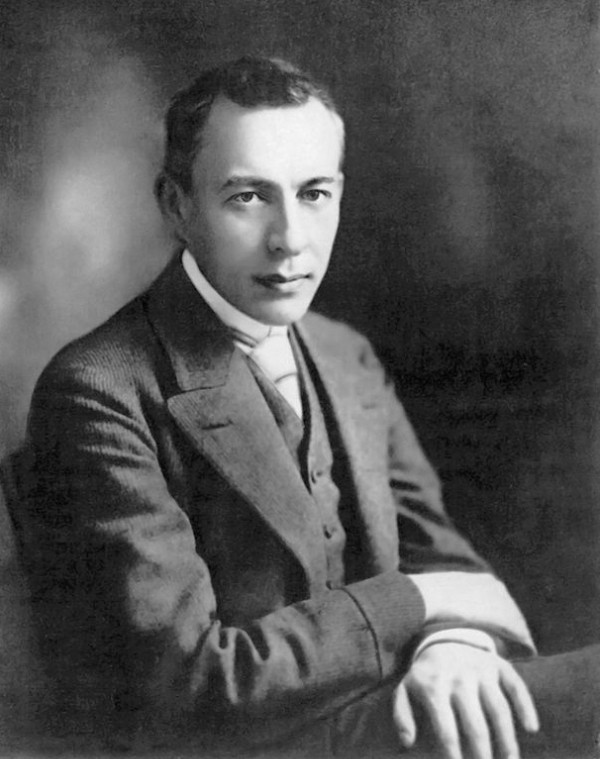
Sergei Rachmaninoff, ca 1900
Rachmaninoff wrote two Elegiac Trios, the first in G minor and the second in D minor. No. 1 is on this recording. It was written in 1892 when Rachmaninoff was only 18. Even in this work, there are many links to Tchaikovsky, such as the one-movement form and its conclusion with a funeral march. Even more integral is that the opening motif, a 4-note rising line, is the opening descending motive of Tchaikovsky’s Piano Concerto. No. 1. Tchaikovsky’s funeral march was in honour of his teacher Nikolai Rubinstein, and Rachmaninoff’s was in honour of the still-living Tchaikovsky. Rachmaninoff’s second Elegiac Trio was written the next year after the death of Tchaikovsky and is a true elegiac work of mourning.
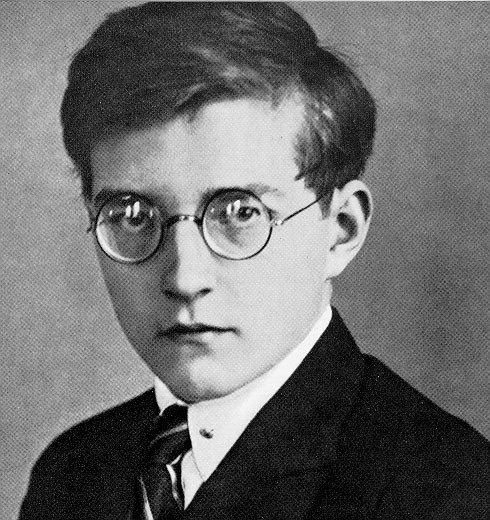
Dmitri Shostakovich, 1925
Shostakovich’s Piano Trio was written in 1923 and given its first performance in 1924. Shostakovich was only 16 when he wrote it, and then it was put away. When the work was finally being prepared for publication some 60 years later, the last bars of the piano part had been lost and were completed by Shostakovich’s pupil Boris Tishchenko. Some sections are full of the romanticism that Shostakovich was to abandon completely in his mature style, while other sections employ elements that became characteristic of his music: lyrical melodies with acerbic harmonies, sudden contrasts in speed and dynamics, yet with spare textures, insistent rhythms, and powerful climaxes.
Although the three works on this album are not that far apart in time, Fauré’s authority carries the case for the piano trio better than the works of nascent composers, writing at age 16 and 18. Nevertheless, it’s the performers’ knowledge of late Shostakovich that carries this work by the young Shostakovich through.
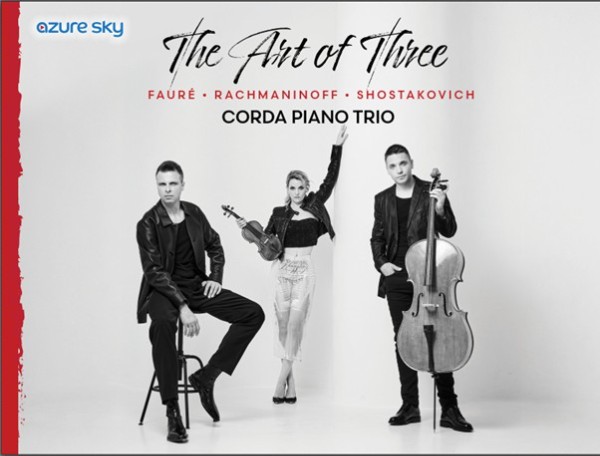
The Art of Three: Fauré, Rachmaninoff, Shostakovich
Corda Piano Trio (Una Stanić, violin; Nemanja Stanković, cello; Vladimir Milošević, piano)
Azure Sky Records AZ1023
Release date: November 2025
Official Website
For more of the best in classical music, sign up for our E-Newsletter