George Ivanovich Gurdjieff (c. 1866-1949) was more than a composer. His life as a philosopher, mystic, spiritual teacher, and movement teacher was an important part of early 20th-century philosophical inspiration. He taught that people are not conscious of themselves and thus live their lives in a state of hypnotic “waking sleep”, but that it is possible to awaken to a higher state of consciousness and serve our purpose as human beings, and his Gurdjieff movements were part of his educational philosophy.
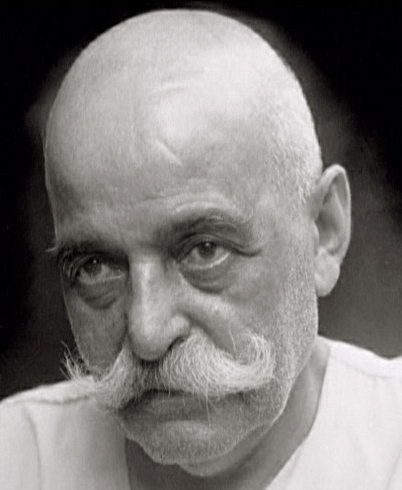
George Gurdjieff
He was born in the Russian Empire in Alexandropol (now Gyumri, Armenia). When the Republic of Armenia was formed in 1918, he became a citizen, but fled to Europe in 1920 when the Red Army invaded. Stateless, he applied to the UK for citizenship, but it was denied and he settled in France.
To focus his followers on their inner selves, Gurdjieff taught his pupils sacred dances or movements that they performed together as a group.
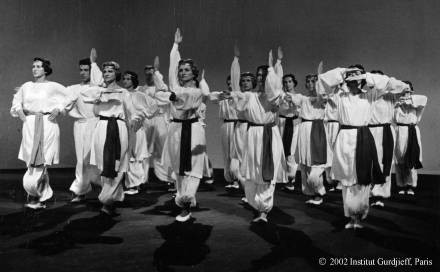
Gurdjieff Movements, 2002 (Institut Gurdjieff, Paris)
His music for these ‘Gurdjieff Movements’ came from music he heard in his travels, from Greece to Armenia, from fishermen to Assyrian women mourners. These were transcribed by his amanuensis Thomas de Hartmann, who followed Gurdjieff from 1916 until they parted in 1930.
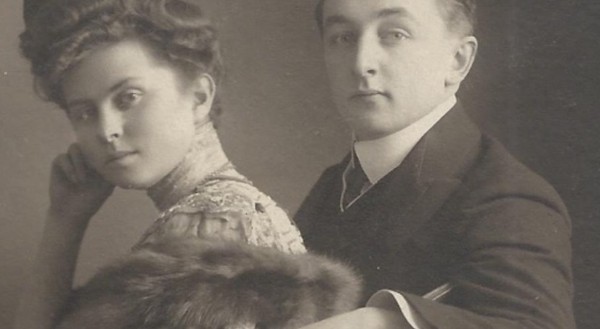
Thomas and Olga de Hartmann, 1906
Gurdjieff also sent de Hartmann to Yerevan (Armenia) to work with Komitas Vardapet, who would become the founder of Armenian classical music. Vardapet’s folk-song collections, hymns, and village songs were important in the music de Hartmann brought back to Gurdjieff in France.
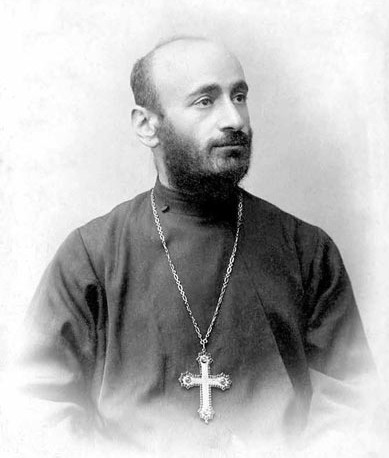
Komitas Vardapet, 1901 or 1902
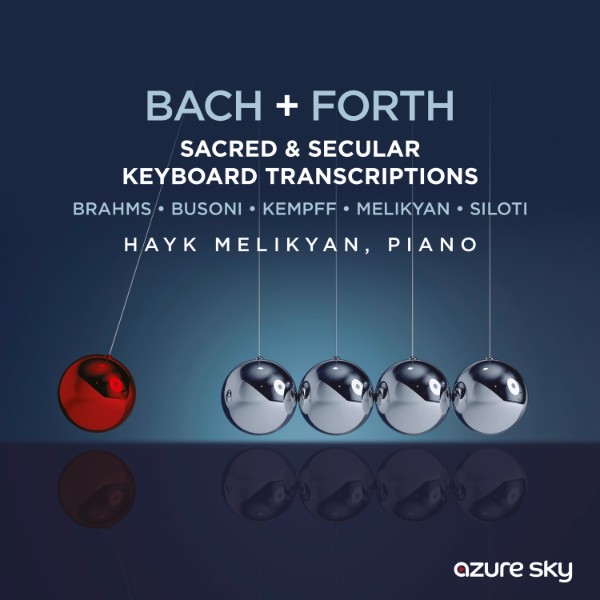
This new recording by Hayk Melikyan gathers music from three different collections: Songs and Rhythms of Peoples, Sayyid Chants and Dances, and Hymns and Prayers, all dating from the 1920s.
George Ivanovich Gurdjieff / Thomas de Hartmann: Songs and Rhythms of Peoples – Armenian Song (1926)
Hayk Melikyan, as an Armenian pianist, feels that it is important that he make this recording so that he can ‘illuminate the spiritual and folkloric wellsprings of Gurdjieff’s music’ and ‘reconnect it with the land of his birth through the interpretation of an Armenian artist’. Rather than regarding these works as pieces from a century ago, Melikyan hears them as living narratives.
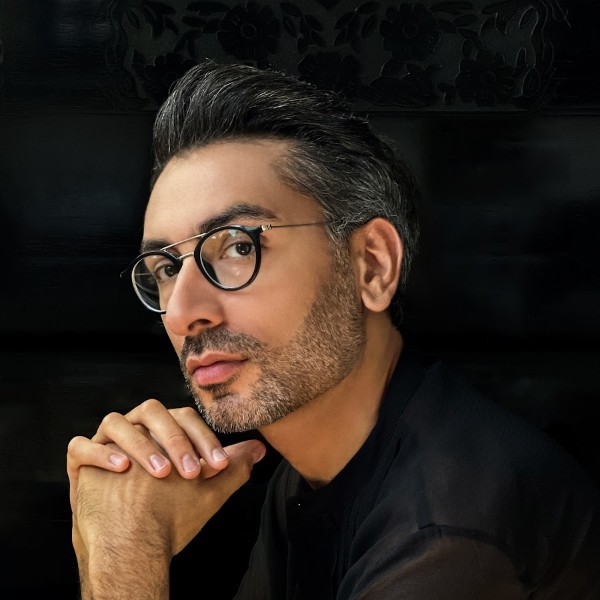
Hayk Melikyan
A growing interest in Gurdjieff and de Hartmann’s music gives reason for this new recording and provides listeners with a reason to look deeper into what remains of the music of so many lost or divided cultures. The program notes cite Gurdjieff’s ‘Armenian-rooted yet global-minded vision’, and that is a perfect description of this recording.
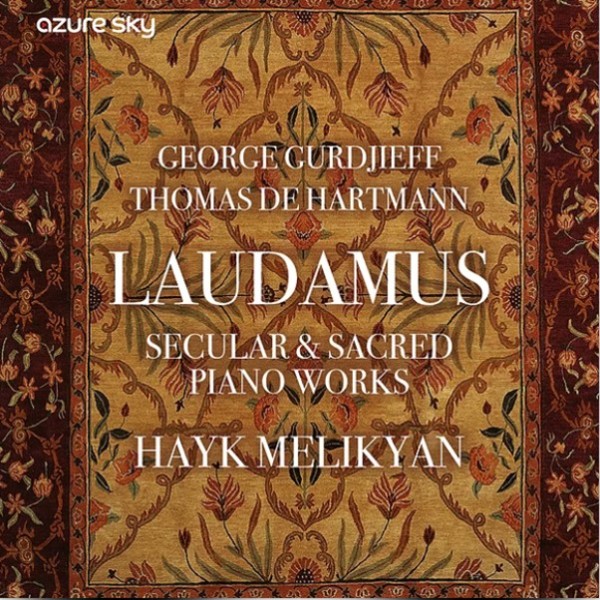
George Gurdjieff and Thomas de Hartmann: Laudamus: Secular & Sacred Piano Works
Hayk Melikyan, piano
Azure Sky Records: AZ1006
Official Website
For more of the best in classical music, sign up for our E-Newsletter