Composed in 1968 by Astor Piazzolla to a libretto by Horacio Ferrer, María de Buenos Aires occupies a singular place in twentieth-century music theatre. Neither opera nor musical, it fuses tango nuevo with surrealist poetry to create a ritual of birth, descent, and return.
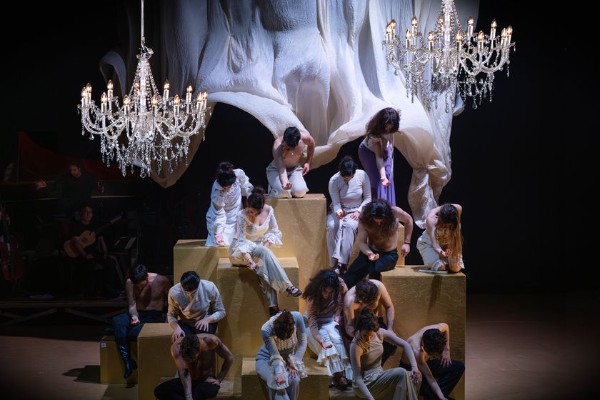
The presentation at the Grand Théâtre de Genève approaches Piazzolla’s “operita” not as a conventional stage document but as an atmospheric encounter. The production privileges mood over spectacle, allowing light, gesture, and musical texture to shape a dreamlike Buenos Aires suspended between reality and myth.
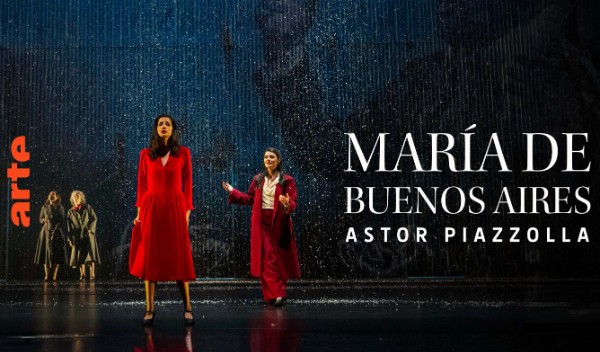
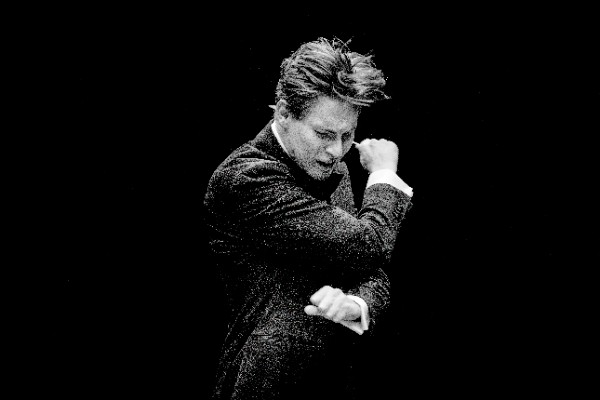
Recorded by arte.tv in November 2023, the performance is directed by Daniele Finzi Pasca with conductor Facundo Agudin. It features Portuguese soprano Raquel Camarinha in the title role, with Inés Cuello as “La voz de un payador” and the duo Melissa Vettore & Beatriz Sayad as “El Duende,” supported by acrobats and actors from the Compagnia Finzi Pasca, the Orchestre de la Haute école de musique de Genève, and choirs under Natacha Casagrande.
Astor Piazzolla: María de Buenos Aires
Available until 02/04/2026
Buenos Aires in Motion
María de Buenos Aires defies easy categorisation. Piazzolla famously described it as an “operita,” a term that suggests both intimacy and defiance. To be sure, it is an opera that refuses operatic grandeur.
Rather than smoothing the work into a conventional operatic frame, the production leans into its hybridity. It is part tango cycle, part surrealist poem, part urban passion play. What emerges is a piece that feels eerily contemporary.
It is an invitation into a nocturnal cityscape where myth and modernity blur, where tango sheds its ballroom polish and returns to the streets, the brothels, and the metaphysical margins from which it once emerged.
From Streets to Myth
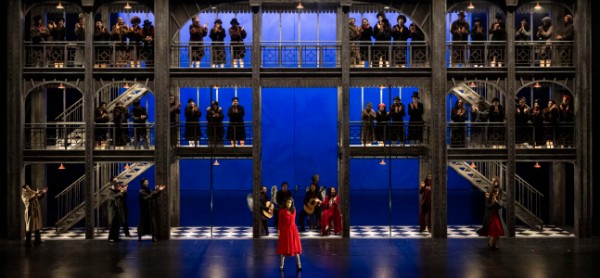
© Carole Parodi
María is introduced as a girl “born one day when God was drunk,” immediately establishing her as a figure caught between reality and myth. She grew up on the streets of Buenos Aires, exposed to the city’s pleasures and dangers. Her life is shaped by desire, longing, and the precariousness of marginal existence.
As an adult, María becomes a prostitute, wandering through brothels, cafés, and tango halls. Her encounters are both sensual and symbolic, revealing the contradictions of passion, freedom, and exploitation.
Eventually, she is murdered, descending into a surreal underworld populated by mysterious figures, including psychoanalysts, tricksters, and spirits of the city, who observe and comment on her fate.
In death, María transforms into a mythic, almost eternal figure. She is reborn as a symbol of Buenos Aires itself, a restless spirit embodying tango, desire, and the city’s contradictions. The cycle of birth, death, and return suggests an enduring presence whose story is both specific and universal.
The Bandoneón Speaks
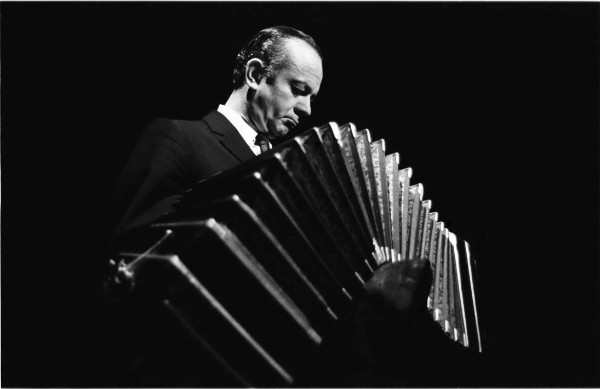
Astor Piazzolla in 1968
Piazzolla’s music is the engine of this ritual. Shifting meters, syncopated rhythms, and abrupt tempo changes give the music a restless and unpredictable energy. The tango pulse is often fractured, layered, and interwoven with counterpoint, creating tension between danceable gestures and dramatic narrative.
Central to Piazzolla’s sound is the bandoneón, whose reedy timbre conveys both intimacy and anguish. In María de Buenos Aires, the bandoneón becomes a narrative agent, articulating desire, conflict, and shadow.
Piazzolla’s music closely mirrors Horacio Ferrer’s libretto. Melodic motifs often underscore specific characters or emotions, while recurring rhythmic patterns mark moments of ritual or repetition. It is poignant storytelling, with sharp rhythmic figures snapping like street arguments, and long, aching lines hovering in the air like cigarette smoke.
Dreams Trapped in Streets
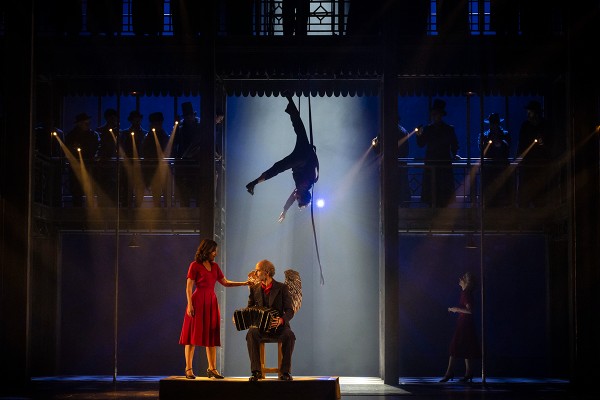
© Carole Parodi
One of the most striking elements of María de Buenos Aires is the role of “El Duende,” the narrator and trickster figure who guides and distorts the action. Half poet, half street philosopher, El Duende embodies the voice of the city itself.
Through him, the work becomes self-aware, commenting on its own myths even as it perpetuates them. In the second half, Buenos Aires becomes a city of ghosts, haunted by its desires and contradictions. The story becomes an endless cycle, with people condemned to repeat their dreams and failures.
Piazzolla’s “operita” is not merely a work to be watched or heard, it is to be inhabited. Through its fusion of tango, surrealist poetry, and theatrical daring, the piece transforms Buenos Aires into a living, breathing entity, where streets, music, and myth collide.
The Grand Théâtre de Genève’s 2023 production, with its acrobatic movement, vivid musical textures, and haunting performances, captures the ephemeral, seductive, and eternal spirit of María herself. Given the poetic/libretto-heavy text, make sure to turn on the subtitles options.
For more of the best in classical music, sign up for our E-Newsletter