
When we think of classical composers, we often think of stiff middle-aged men wearing white wigs.
But a surprising number of masterpieces were actually written by teenagers.
Whether fueled by youthful sincerity, driving ambition, the desire to show off their own staggering abilities, or all of the above, these young composers created pieces that still dazzle today.
Here are seven extraordinary pieces of classical music written by composers in their teens.
Wolfgang Amadeus Mozart: Symphony No. 25
Written in October 1773, when Mozart was 17
Mozart’s Symphony No. 25 is nicknamed the “Little G minor Symphony” to distinguish it from his later, more famous Symphony No. 40. But the descriptor “little” hardly does it justice.
Written in October 1773, when Mozart was just seventeen years old, it is a work of both striking drama and maturity.
It is written in the Sturm und Drang (“storm and stress”) style that was popular in Europe at the time. Works in this style emphasised emotional intensity and extremes.
In other words, it’s exactly the kind of trend an angsty teenager of the 1770s would enjoy exploring.
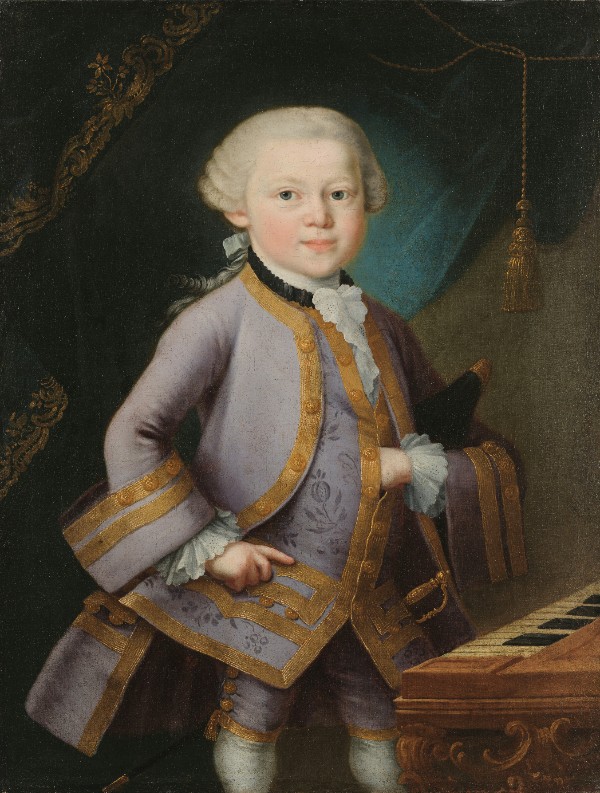
Wolfgang Amadeus Mozart
The first movement opens with a syncopated, driving theme that sounds more like Beethoven than courtly, stereotypical Mozart.
That youthful brooding energy continues throughout the symphony.
Franz Schubert: Gretchen am Spinnrade
Written in October 1814, when Schubert was 17
In October 1814, Schubert took lines from Goethe’s Faust and transformed them into this famous song.
“Gretchen am Spinnrade” (“Gretchen at the Spinning Wheel”) captures the heroine’s obsession with Faust with a piano accompaniment that mimics the mechanical whirring of a spinning wheel.
It’s an intimate, groundbreaking psychological portrait: an astonishing achievement coming from a teenager.
Schubert may have still been a student when he wrote this song, but thanks to it, he helped to change the course of the storied German Lied tradition.
Felix Mendelssohn: Octet
Written in the fall of 1825, when Mendelssohn was 16
Composed in the autumn of 1825, Mendelssohn’s Octet is often referred to as a “miracle”, and after you’ve heard it, it’s difficult to disagree with that terminology.
Written for double string quartet, the Octet sparkles with energy, inventiveness, and flawless craftsmanship.
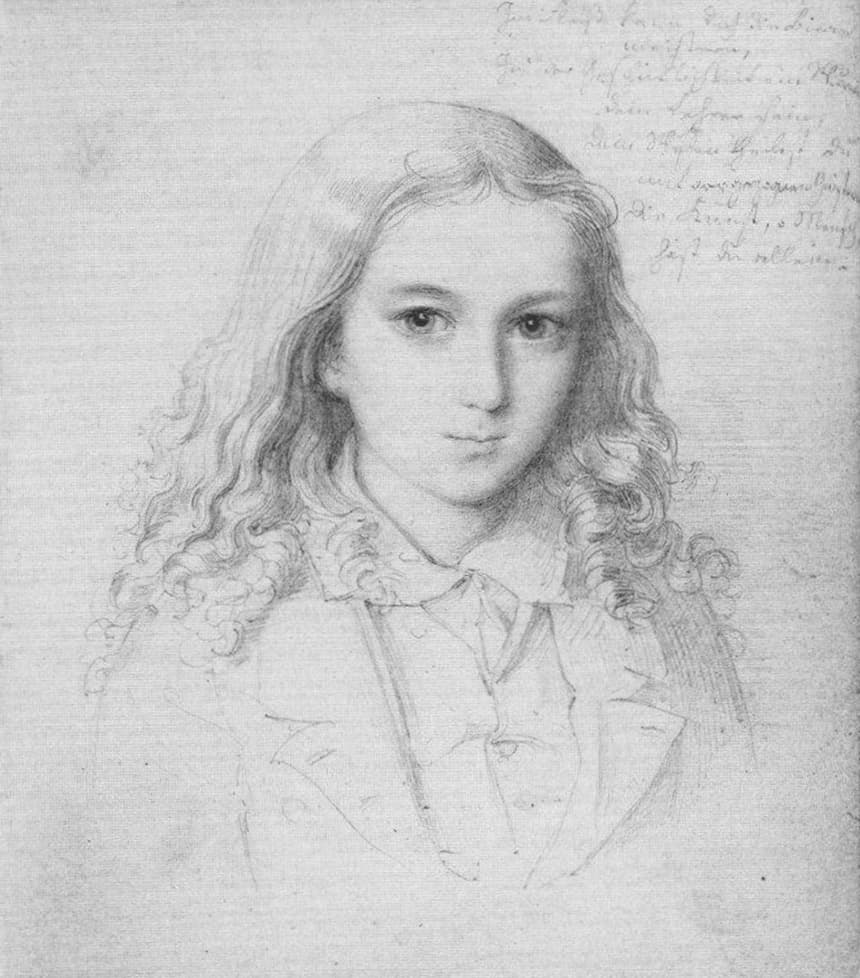
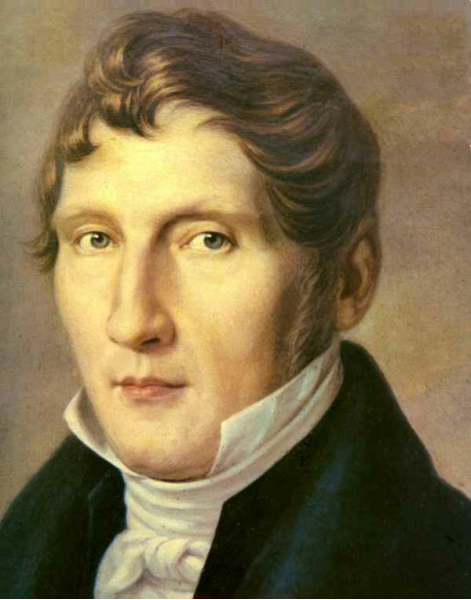
The young Felix Mendelssohn
The Scherzo, inspired by Goethe’s Faust, dances with fairy-like lightness, while the finale showcases contrapuntal brilliance worthy of Bach.
Even toward the end of his life, with dozens more masterpieces to his name, Mendelssohn himself called the Octet “my favourite of all my compositions.”
Years later, he fondly remembered the joy he’d felt writing it…joy that every musician who plays it still feels today.
Georges Bizet: Symphony
Written in October and November 1855, when Bizet was 17
Georges Bizet, later famous for writing the opera Carmen, wrote his Symphony in C as a student assignment at the Paris Conservatoire in October and November of 1855.
Somehow this “homework” turned into one of the freshest, most joyful symphonies of the nineteenth century.
However, Bizet never published it. (It is believed that he may have thought it too similar to works by his teacher, Charles Gounod.)
But when it was rediscovered in 1933, that similarity didn’t matter. Audiences adored it.
Its buoyant melodies and sparkling orchestration prove that Bizet, even as a teenager, had a natural gift for musical storytelling.
Lili Boulanger: Les sirènes
Written in 1911, when Boulanger was 18
Lili Boulanger, younger sister of famed music teacher Nadia Boulanger, showed prodigious talent from childhood.
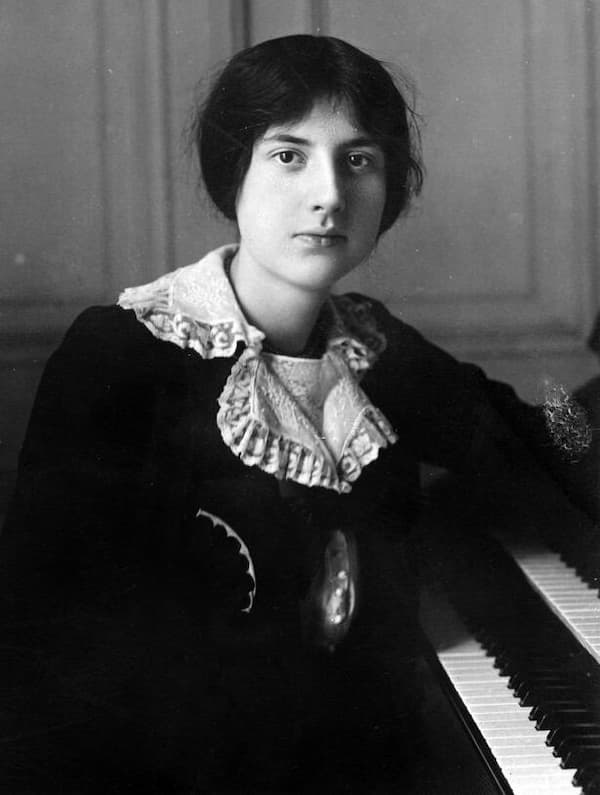
Lili Boulanger
At 18, she composed Les sirènes, a haunting choral work that sets a text by poet Charles Grandmougin.
We are the beauty which charms the strongest men.
Trembling flowers of foam
and mist,
our fleeing kisses are the dream of the dead!
Amidst our blond tresses
the water gleams like tears of silver.
Our shimmering glances
are blue and green as waves.
With a noise like the
delicate shivers
of harvests
we flutter
without having wings.
We seek tender victors.
We are the immortal sisters
offered up to the desires of your earthly hearts.
Lili Boulanger set the poem to shimmery, sensual music that perfectly evokes the irresistible song of the mythical sirens.
Tragically, Lili died at just 24, but works like Les sirènes reveal her as one of the most original musical voices of her generation, even as a teenager.
Erich Wolfgang Korngold: Sinfonietta
Written in 1912–1913, when Korngold was 14–16
In his youth, Erich Wolfgang Korngold was hailed as a second Mozart. (There’s a reason why his music critic father chose the middle name Wolfgang.)
Following in the footsteps of Mozart was a tough act to follow, but Korngold actually delivered.
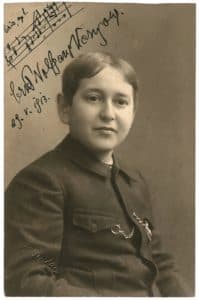
Autographed photo of the young Erich Wolfgang Korngold
His Sinfonietta, completed in 1913, cemented his reputation as a historically talented child prodigy.
Belying its title, which suggests something small and unassuming, this Sinfonietta is a four-movement, 40-minute work brimming with lush late-Romantic harmonies and Viennese grandeur.
The Sinfonietta radiates confidence, wit, and orchestral mastery far beyond Korngold’s years. It remains one of the most impressive orchestral works written by any teenager ever.
Dmitri Shostakovich: Symphony No. 1
Written in 1924–1925, when Shostakovich was 18–19
Shostakovich’s First Symphony is one of the most famous graduation projects in classical music history.
Written between 1924 and 1925 while he was still a student at the Petrograd Conservatory, it immediately established him as one of the leading young composers of the Soviet Union.
The symphony is full of youthful energy, biting wit, and startling originality. Remarkably, Shostakovich’s musical voice is already strong and clear here.
The opening movement introduces quirky, ironic themes that would become his trademark, while the slow movement reveals an intense depth of feeling. The scherzo bristles with nervous energy, and the finale combines playful irony with moments of tragic intensity.
Premiered in 1926 under the baton of Nikolai Malko, the symphony was an instant success both in the Soviet Union and abroad.
It was a hugely important career launchpad for Shostakovich. Within a few years, he would be writing operas and symphonies that put him at the centre of twentieth-century music: a position he would never truly vacate over his long career.
Conclusion
These seven works prove that age is no barrier to genius.
From Mozart’s stormy teenage symphony to Shostakovich’s audacious graduation piece, these seven composers remind us that even when they don’t have much experience, young composers are capable of producing masterpieces that stand the test of time.
What pieces of classical music by teenagers are your favourites?
For more of the best in classical music, sign up for our E-Newsletter








This could be discussed more widely than this. It is very pleasing to see the young Korngold here listed but regrettably most of the list is a predictable one.
One could add many composers of equal gifts to those who appear but I will just add two.
CHOPIN first set of Etudes op.10 he was writing from the age of 17, a set of pieces that moved the pianoforte repertoire in a whole new world.
ALEXANDRE GLAZUNOV. His extraordinarily accomplished 1st Symphony at the age of 16 and his phenomenal memory. A genius by any standard.
.