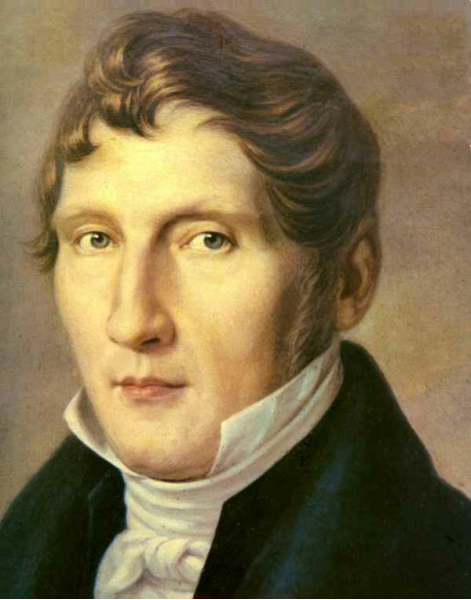
Wolfgang Amadeus Mozart is one of the greatest composers to have ever lived.
He wrote 41 symphonies between the ages of eight and 32. They showcase his remarkable creative journey from prodigy to master musician.
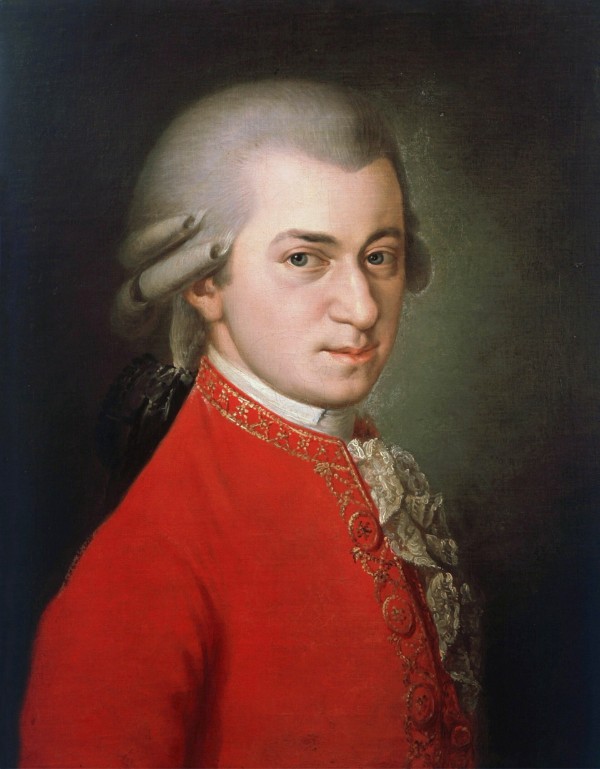
Wolfgang Amadeus Mozart
Today, Mozart’s symphonies remain some of the most viewed classical works on YouTube, serving as a testament to his continued appeal and relevance.
We took a look at which eight performances of Mozart symphonies have accrued the most views over the past twenty years.
They are listed here in reverse countdown order, along with a brief background about each one.
8. Mozart: Symphony No. 31 (“Paris”)
297k views
In 1777, a 21-year-old Mozart, wanting to escape his provincial hometown of Salzburg, set off for Paris to search for a job. Composed the following year, this symphony bursts with brilliance and youthful exuberance.
Written for a large Parisian orchestra (and including parts for clarinets, which were still a novelty in orchestras at the time), its bold textures and jubilant opening captured the excitement and cosmopolitan flair of life in the French capital.
7. Mozart: Symphony No. 39
546k views
Over the course of a few weeks in the summer of 1788, Mozart wrote three of the greatest symphonies of all time: his 39th, his 40th, and his 41st. They would also be his last.
The first in the trilogy, this symphony opens with a stately Adagio that unfolds into music of great warmth and wit.
The clarinets (by now an established part of the Mozartean orchestra) lend the ensemble’s sound a mellow glow.
One eyewitness wrote about witnessing a performance in Hamburg in 1792:
It then becomes [so] fiery, full, ineffably grand and rich in ideas, with striking variety in almost all obbligato parts, that it is nearly impossible to follow so rapidly with ear and feeling, and one is nearly paralyzed. This actual paralysis became visible in various connoisseurs and friends of music, and some admitted that they would never have been able to think or imagine they would hear something like this performed so splendidly in Hamburg.
6. Mozart: Symphony No. 38 (“Prague”)
559k views
Mozart wrote this symphony in 1786. It is unclear if it was written specifically for the audience in Prague, where his opera The Marriage of Figaro was received incredibly warmly, but it earned the nickname anyway.
One indication that it may have been written specifically for Prague is that it employs prominent woodwind parts, and the city was famous for its virtuosic woodwind players.
This work is unusual in that it only has three movements (the customary Minuet is skipped), but it is possible this was meant to appeal to the preferences of audiences in Prague, as one of their most famous symphonists at the time, a man named Josef Mysliveček, specialised in writing three-movement symphonies.
The three-movement structure makes the work sound a bit like an extended opera overture, perhaps another nod to the success of The Marriage of Figaro.
5. Mozart: Symphony No. 29
695k views
Written when Mozart was an 18-year-old, the Symphony No. 29 balances grace with an unrelenting youthful drive.
Its transparent texture reveals a composer mastering Classical Era style while simultaneously cultivating a musical voice heavy on the charm.
The gentle Andante is breathtaking in its grace, and the Minuet is carefully elegant, while the lively finale showcases the teenage Mozart’s knack for requiring both passion and precision from his players.
4. Mozart: Symphony No. 35 (“Haffner”)
1.2 million views
Originally composed as a serenade for the Haffner family in Salzburg, this symphony was reworked in 1782 into one of Mozart’s most exhilarating orchestral pieces.
The “Haffner” opens with a blaze of sound, full of posh ceremonial brilliance, before moving through a charming andante, an almost comically exaggerated minuet, and an unforgettably spirited finale.
It was premiered in Vienna to overwhelming applause, signaling Mozart’s full maturity as a symphonist.
3. Mozart: Symphony No. 25
1.5 million views
Written when Mozart was just seventeen, this stormy G-minor symphony – one of only two he wrote in that key – embodies the fashionable Sturm und Drang (“storm and stress”) style.
Its agitated rhythms, stern syncopations, and minor-key turbulence would have taken audiences of the time aback.
You might recognise it from the striking opening of Amadeus (1984), which introduced a whole new audience to the symphony’s passionate intensity.
The opening to Amadeus
2. Mozart: Symphony No. 41 (“Jupiter”)
3.4 million views
Mozart’s final symphony, completed in 1788 as the finale to his last set of three, is a dazzling capstone to his symphonic career.
Historians don’t know the exact origins of the nickname, but it appears that this symphony may have been dubbed “Jupiter” because Mozart’s strikes of genius reminded early listeners of Jupiter’s thunderbolts.
The finale is, with no exaggeration, one of the great achievements in the history of Western music. It consists of a five-voice fugue woven together with mind-boggling technique and ebullient heart.
Johannes Brahms said of the final three Mozart symphonies:
“I am able to understand too that Beethoven‘s first symphony did impress people colossally. But the last three symphonies by Mozart are much more important. Some people are beginning to feel that now.”
1. Mozart: Symphony No. 40
6.3 million views
Here it is: the most popular Mozart symphony on YouTube.
Topping the list with over six million views, his fortieth symphony remains one of Mozart’s most haunting creations.
Composed in 1788 alongside the 39th and 41st, it captures a rawness of emotion that was unusual in the Classical Era.
The opening movement’s sighing theme has become a part of pop culture and is instantly recognisable.
It’s Mozart at his most personal and profound, and is a masterclass on how to portray elegant musical grief.
Conclusion
From the youthful angst of his Symphony No. 29 to the glory of the 41st, these eight symphonies demonstrate Mozart’s technical mastery and emotional writing in full flower.
Over two centuries later, his music continues to impress and resonate…to the tune of millions upon millions of views.
Whether you’re a newcomer to classical music or a lifelong admirer, these eight symphonies should be essential listening.
What Mozart symphony did you think would be the most popular?
For more of the best in classical music, sign up for our E-Newsletter