One of the wonderful parts of Pyotr Ilyich Tchaikovsky’s ballet The Nutcracker is the divertissements set in the Kingdom of Sweets.
First, we have the Spanish Dance, setting us up for that wonderful drink from South America, Chocolate. Even the word in English comes as a loanword from a Spanish source. The costumes will start the Spanish theme, but it’s the use of castanets by the dancers that seals it.
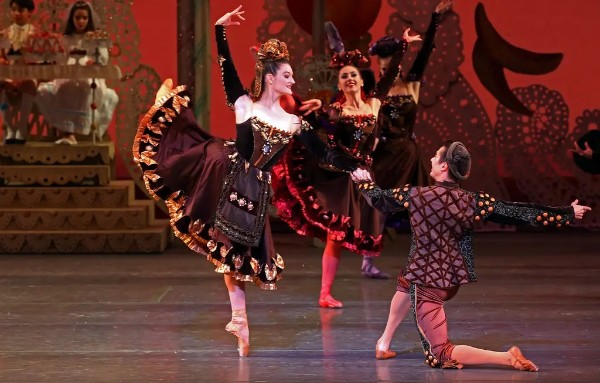
The Spanish Dance – Chocolate, 2013 (New York City Ballet)
Pyotr Il’yich Tchaikovsky: The Nutcracker, Op. 71 – Act II Tableau 3: Divertissement: a. Chocolate – Spanish Dance (Russian National Orchestra; Mikhail Pletnev, cond.)
Next comes a drink from an Arabian source: coffee. Coffee as a word actually comes from the Dutch koffie, borrowing from the Turkish kavhe, borrowed from the Arabic qahwah, meaning ‘the dark one’ and referring to the brew, not the bean.
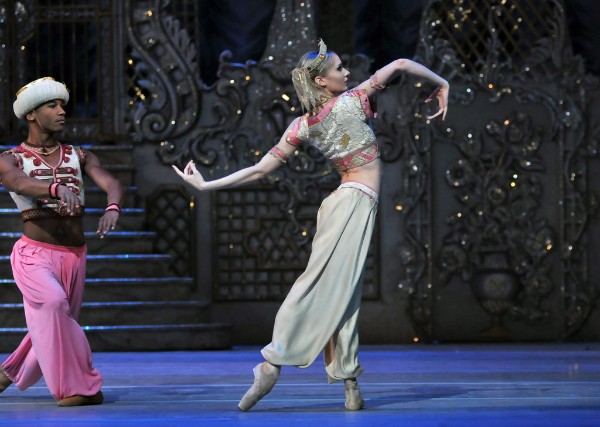
The Arabian Dance – Coffee, 2012 (Melissa Hamilton and Eric Underwood) (Royal Ballet) (photo by Dave Morgan)
Pyotr Il’yich Tchaikovsky: The Nutcracker, Op. 71 – Act II Tableau 3: Divertissement: b. Coffee – Arabian Dance (Russian National Orchestra; Mikhail Pletnev, cond.)
Continuing our tour of the imbibing world, we go to China for Tea. Tea was first recorded in China in 50BC, although it was probably being drunk much earlier. If you know tea as ‘cha’, then you’re picking up the Cantonese language original; if you’re a ‘tea’ aficionado, then you’re taking it from the Mandarin language. If you’re ‘tchai’, then you’re still Chinese, but adding on a Persian ending.
Now flutes enter the drinking sound world and tiptoeing steps.
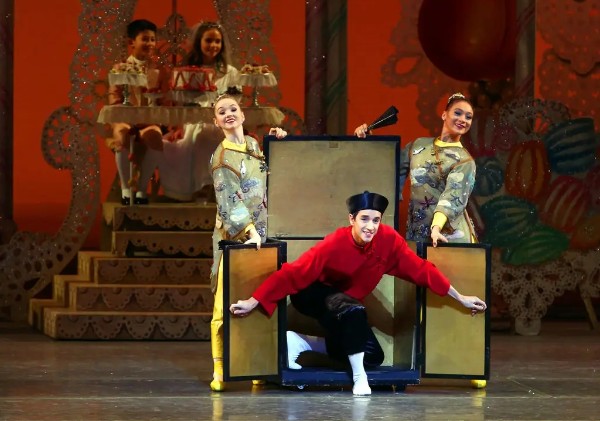
The Chinese Dance, Tea, 2017 (Emma Von Enck, Ralph Ippolito and Rachel Hutsell) (New York City Ballet) (Photo by Andra Mohin)
Pyotr Il’yich Tchaikovsky: The Nutcracker, Op. 71 – Act II Tableau 3: Divertissement: c. Tea – Chinese Dance (Russian National Orchestra; Mikhail Pletnev, cond.)
If those are our holiday drink treats, what are the smells of the holidays?
In his 1904 operetta, The Cingalee, Lionel Monckton takes us to the island of Ceylon and an ode to the Cinnamon Tree.
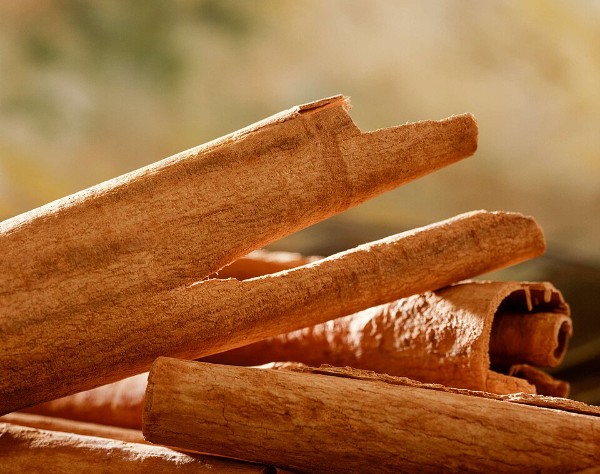
Cinnamon Bark (Photo by Bertrand Thiry)
Lionel Monckton: The Cingalee (excerpts) – Act I: My Cinnamon Tree (Nanoya) (Julie Lill, vocals; Theatre Bel-Etage Orchestra; Mart Sander, cond.)
As the exploration of Asia started in the 15th century and the explorers started to bring back the extraordinary spices they found there, Nutmeg and Ginger became the new staples in the wealthy kitchen.
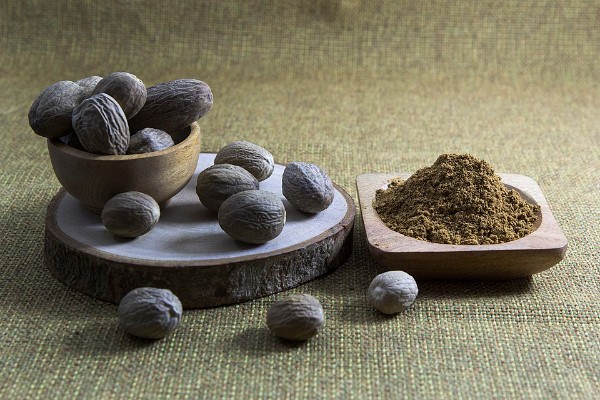
Ground and whole nutmeg (photo by Herusutimbul)
Unknown Composer: Nuttmigs and Ginger [15th Century] (Musicians of the Globe, Ensemble; Philip Pickett, cond.)
In their modern concerto for percussion and orchestra, the composer chose ‘Spice’ as his first movement and seems to capture the aromas in the atmosphere perfectly.
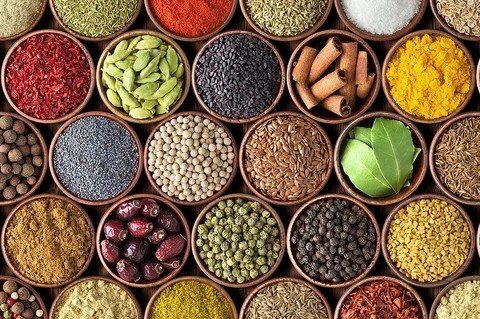
Spices
Avner Dorman: Spices, Perfumes, Toxins! – I. Spices: Allegro (Aron Leijendeckers, percussion; Dan Townsend, percussion; North West German Philharmonic Orchestra; Markus Huber, cond.)
If you’re not in the kitchen, perhaps the smell in the air is pine – wafting from the trees, from the wreaths, and from the fireplace.
Arnold Bax takes us to the forest to tell us The Tale the Pine-Trees Knew. Bax was thinking of the pine trees of Norway and the West of Scotland, where the landscapes are dominated by pine trees, and in his work, we hear the wind in the trees, the tranquillity of the landscape and the enduring green.

A Pine forest in Southern Norway
Arnold Bax: The Tale the Pine-Trees Knew (Royal Scottish National Orchestra; David Lloyd-Jones, cond.)
Vladimir Rebikov’s 1903 opera, The Christmas Tree, was a great hit in Russia until it wasn’t. The most familiar part of his opera about a child out on the street on Christmas Eve is the waltz of the Christmas tree that the beggar girl sees through the window.
Vladimir Rebikov: The Christmas Tree, Op. 21: Waltz (arr. for piano) (Eteri Andjaparidze, piano)
What are your senses of the holiday: spicy and sharp, cold and frozen, or warm with perhaps a few marshmallows melting? A pine tree in the corner and stockings by the fireplace, or did you put your shoes out for St. Nicholas on 6 December?
For more of the best in classical music, sign up for our E-Newsletter