Filmed in the open-air embrace of the 2025 Usedomer Musikfestival, Camilla Nylund steps forward to reclaim Jean Sibelius from the monumental shadow of his symphonies. She is not merely an interpreter, but a luminous conduit for Sibelius’ soul-stirring introspection.
The programme was performed by the NDR Elbphilharmonie Orchestra under the baton of Jukka-Pekka Saraste, a Finnish conductor whose own lineage traces back to Sibelian traditions.
The evening also featured the Excelsior Overture by Wilhelm Stenhammar and the Symphony No. 6 by Sibelius, a work the composer called “cold spring water” in opposition to many contemporary “cocktails.”
Camilla Nylund sings Sibelius
Conducted by Jukka-Pekka Saraste
Available until 02/01/2026
Camilla Nylund
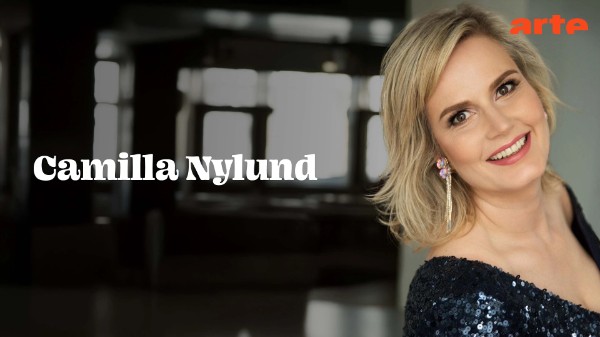
Camilla Nylund
Camilla Nylund, born in 1968 in Vaasa, Finland, embodies the archetype of the lyric-dramatic soprano whose career has traversed the Wagnerian peaks and Straussian summits of the operatic stage. Trained initially in Turku and later at Salzburg’s Mozarteum under Eva Illes, she debuted professionally in 1996 as the Countess in Mozart’s Le nozze di Figaro at the Finnish National Opera.
Her trajectory accelerated through ensemble roles, and her Wagnerian odyssey encompassing Elsa, Sieglinde, Senta, Isolde, and Brünnhilde has made her a Bayreuth regular since 2011. Her Strauss roles showcase a voice of “sumptuous” timbre and “moving characterisation,” as lauded by The New York Times in her 2019 Metropolitan Opera debut.
Heritage in Song
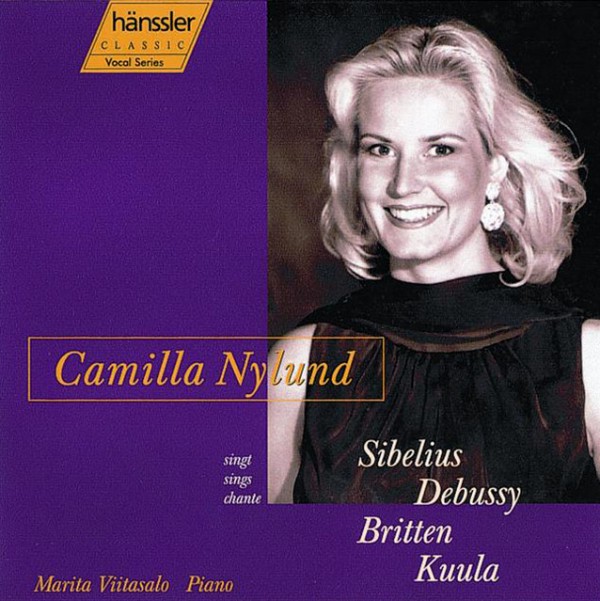
Yet Nylund’s affinity for Sibelius predates her dramatic conquests and is rooted in her Scandinavian heritage and a penchant for Lieder that peel back the operatic veneer. In her 2007 Ondine recording of Sibelius and others with pianist Marita Viitasalo, Nylund’s voice thrives in the exposed and angular lines of Sibelius’ vocal writing.
Awards such as the 2013 Pro Finlandia Medal, 2019 Finnish State Prize for Music, and 2022 Lotte Lehmann Memorial Ring underscore her as a bridge between Finland’s golden age and contemporary stages.
Jean Sibelius
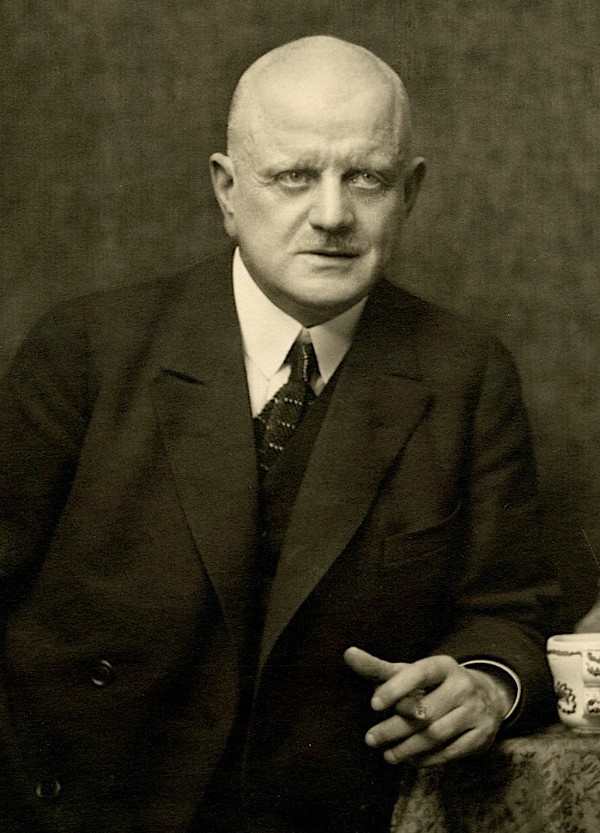
Jean Sibelius, 1923
Jean Sibelius (1865–1957), Finland’s preeminent composer, forged a musical language that crystallised the nation’s nascent identity amid Russian Russification in the late 19th century. He studied violin and composition in Helsinki, Berlin, and Vienna, where influences from Tchaikovsky, Bruckner, and Wagner mingled with Finnish folk modalities.
His early choral symphony Kullervo, Op. 7 (1892) catapulted him to fame, its Kalevala-derived narrative of fratricide and lament a sonic manifesto for autonomy. Sibelius’ oeuvre includes seven symphonies, tone poem and over 100 songs.
Pan-Triadic Sublime
Sibelius’ vocal works, comprising about a third of his output, merit deeper excavation. His solo songs, often for voice and piano but adaptable for orchestra, draw from Swedish, Finnish, and German poets, blending Romantic lied with runic incantation.
They evoke the Nordic sublime and feature organic motifs derived from three-or four-note cells, silences as pregnant as sound, and a pantheistic spirituality that scholars like Fabian Dahlström describe as “pan-triadic,” blending tonal ambiguity with modal purity.
Whispered Longing
The Sibelius Opp. 36, 37, and 38, composed during his most prolific Lieder phase between 1902 and 1904, are the pinnacle of his oeuvre. These intimate vignettes, bathed in spare, rustling, or tempestuous orchestral textures, mirror the textual moods.
“The Tryst,” Op. 37 No. 1, sets Johan Ludvig Runeberg’s tale of a maiden’s post-coital reverie, its undulating strings evoke nocturnal unease, the vocal line a sinuous thread of longing. “Västerbotten,” Op. 36 No. 2, a folk-inflected dance, pulses with earthy vigour, while “Reed, Reed, Sigh,” Op. 37 No. 4 whispers of unrequited love amid sighing winds.
“I Asked No More,” Op. 37 No. 3, closes the selection with stoic resignation, its sparse accompaniment yielding to vocal eloquence. These songs exemplify Sibelius’ “genetic criticism,” evolving from sketches to polished gems where poetic rhythm dictates musical flow.
Cosmic Birth

Jukka-Pekka Saraste
Luonnotar, Op. 70 (1913), Sibelius’ sole mature cantata, elevates this intimacy to cosmic scale. Commissioned for the U.S. 1913 Berkshire Festival, it draws from the Kalevala’s creation myth. The daughter of nature (Luonnotar) floats in the primordial void, birthing stars, earth, and sea from divine pain.
Scored for soprano and orchestra, its 10-minute arc demands vocal acrobatics, including leaps spanning two octaves, and melismas evoking cosmic birth pangs. Set over a seething orchestral cauldron that features dissonant timpani pairs, swirling strings and harp glissandi mimicking watery chaos, Sibelius anticipates atonal expressionism while rooting it in Finnish shamanism.
This production, directed by Bea Conrad, unfolds in the evocative setting on the Baltic island of Usedom, a locale that mirrors the liminal spaces Sibelius so often sonically depicted.
When the final plagal cadence of Symphony No. 6 drifts into silence, the horizon feels wider and the north wind audible summons creation’s dawn.
For more of the best in classical music, sign up for our E-Newsletter