Award shows have long perfected the art of preaching to the converted. Year after year, they gather the most devoted insiders to celebrate their achievements, affirm shared values, and rehearse familiar narratives about excellence, innovation, or social responsibility.
The result is a spectacle that feels less like an outreach to the public and more like a ritual of self-recognition. Even when the rhetoric reaches for universality, the conversation tends to circle back to the room itself, creating a curious blend of pageantry and echo chamber.
Despite this inward gaze, award shows still manage to function as a barometer of the industries they represent, a fact underscored by the 2025 International Opera Awards held in Athens at the Stavros Niarchos Foundation Cultural Centre, home of the Greek National Opera.
Global Reach and Creative Momentum
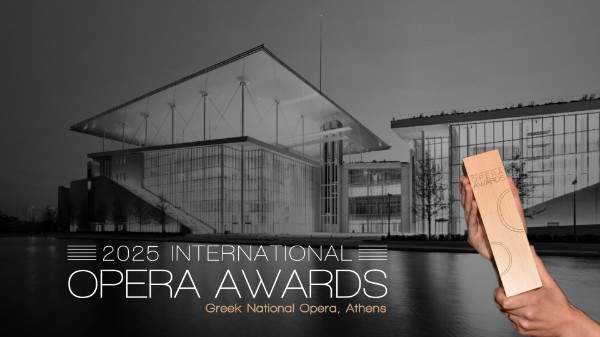
2025 International Opera Awards
The awards started with 1,200 nominees from 60 countries and then slimmed it down to a finalist list. It was live-streamed globally and celebrated not only established stars but also emerging talent, productions, opera houses, and presented a lifetime achievement award to a very worthy singer.
The very design of the ceremony’s trophy, inspired by a Cycladic artefact and crafted in marble, reflected a blending of tradition and innovation, signalling a willingness within the industry to re-examine its heritage in service of a forward-looking artistic vision.
At the awards ceremony, the barometric needle pointed decisively toward the present. The shortlist for World Premieres featured an unusually rich slate of ten productions, evidence that composer-librettist partnerships are writing prolifically for our own moment.
It is a reminder that opera, so often caricatured as an archaic art form, is and always has been inherently contemporary. It is a stage on which living creators, including Helena Cánovas, Ricky Ian Gordon, Toshio Hosokawa, Jennifer Walshe, and Mark-Anthony Turnage, wrestle with the urgencies, anxieties, and imaginative possibilities of their time.
Turnage/Hall/The Royal Opera: Festen (Trailer)
Modern Anxieties on the Operatic Stage
Across the ten world-premiere nominees for the 2025 International Opera Awards, a number of contemporary concerns emerged, suggesting that opera in 2025 is anything but insulated from the world around it. Many of the nominated works grapple directly with questions of identity, authorship, and the erasure or recovery of marginalised voices.
Don Juan no existe (Festival Perelada/Teatro Maestranza/Teatros del Canal (Madrid) / TeatroReal / Gran Teatre del Liceu) reframes a canonical myth to expose how women’s creativity is lost in patriarchal histories, while This House (Opera Theatre of Saint Louis) threads together the lived, inherited, and ghostly traumas of an African American family confronting gentrification, displacement, and the fragility of cultural memory.
Works such as We Are the Lucky Ones (Dutch National Opera) and Alma (Volksoper Wien), though differently scoped, share a preoccupation with survival, be it personal, communal, or historical, and engage with the ethics of telling stories from within or about vulnerable communities.
Another unifying thread is the interrogation of progress, in a technological, social, or artistic sense. MARS (Irish National Opera) pushes this to its extreme by confronting the seductive myth of extraterrestrial escape, satirising the techno-utopian imagination while asking what human costs accompany fantasies of colonising other worlds.
Works such as Prestini/Vavrek’s Silent Light (National Sawdust), Saunders/Atkins’ Lash-Acts of Love (Deutsche Oper Berlin), and Hosokawa/Tawada’s Natasha (New National Theatre Tokyo) tend to probe the intimate and psychological dimensions of contemporary life, exploring the extremities of desire, emotional harm, and the ways modern individuals navigate disconnection, uncertainty, or moral ambiguity.
Even adaptations of well-known material, like Turnage/Hall’s Festen (The Royal Opera) or Filidei/Busellato’s Il nome della rosa (Teatro alla Scala), reveal how modern anxieties about abuse, institutional corruption, secrecy, and justice continue to haunt contemporary society as powerfully as any medieval abbey or bourgeois dining room.
Throughout, these premieres show a shared investment in examining the factors of the present. They explored the tension between innovation and memory, the legacy of social violence, and the aspiration to rebuild or reimagine community.
The Celebration (Thomas Vinterberg 1998)
From Screen to Stage
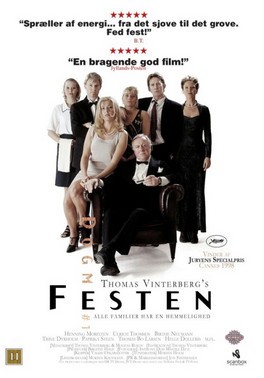
The Celebration/ Festen poster
Among the ten world-premiere nominees for the 2025 International Opera Awards, Festen stood out not only as a searing work of music theatre but also as a model for what contemporary opera can achieve when it engages fearlessly with difficult material. Based on The Celebration (Festen), the groundbreaking 1998 film by Thomas Vinterberg and Mogens Rukov, the opera adapts a story that shocked audiences more than two decades ago with its unflinching portrayal of family secrets, abuse, and collective denial.
In translating this Dogme 95 landmark into an operatic landscape, the creative team retains the film’s emotional volatility while discovering new expressive dimensions in music, vocal writing, and dramatic architecture. The result is an opera that pushes past decorative expectations and embraces a raw, abrasive, and morally challenging aesthetic, one that mirrors the ethical provocations of the original film.
The Anatomy of Dysfunction
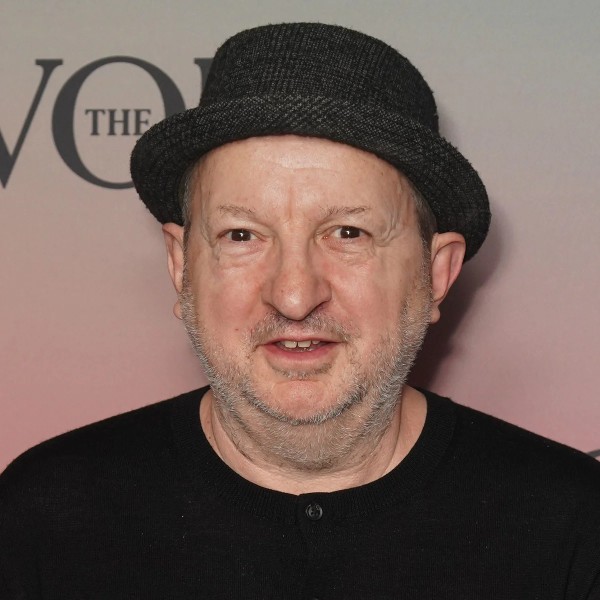
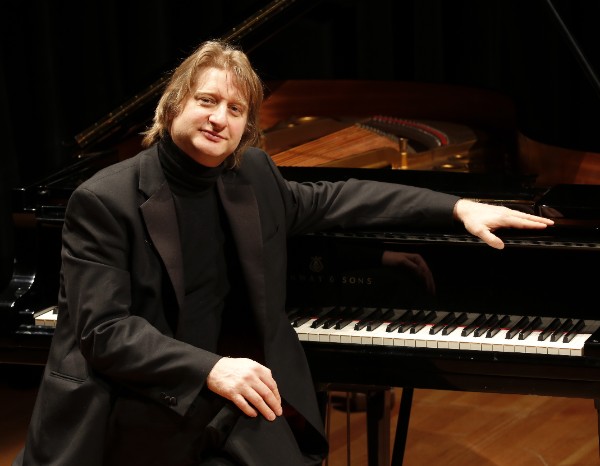
Mark-Anthony Turnage
Composer Mark-Anthony Turnage is no stranger to dark subject matter or to the fusion of contemporary culture with classical technique. From his first operas, Greek (1988) and The Silver Tassie (2000), Turnage has built a reputation for rhythmically charged scores that blend modernist idioms, jazz influences, and sharply etched orchestral writing.
In Festen, he deploys this palette toward psychological realism, with jagged brass lines surfacing in moments of confrontation, brittle percussive textures underscoring emotional fracture, and lyricism being withheld or granted with careful dramaturgical intent. Turnage’s sound world becomes the unspoken narrator of the family’s dysfunction.

Lee Hall
Playwright and screenwriter Lee Hall, known for Billy Elliot and The Pitmen Painters, shapes a libretto that navigates the difficult balance between ritualistic repetition and narrative momentum. The text preserves the Danish film’s brutal directness yet adapts it for operatic form by allowing characters to reveal their inner states through arioso and ensemble structures. In essence, the libretto reinforces rather than softens the brutality of the story.
Together, Turnage and Hall approach Festen not as a melodramatic tragedy but as a controlled detonation of a family system. Their collaboration respects the integrity of Vinterberg’s narrative while exploring what opera alone can express.
Edward Gardner on The Royal Opera’s brand-new opera Festen
Festen and Dogme 95
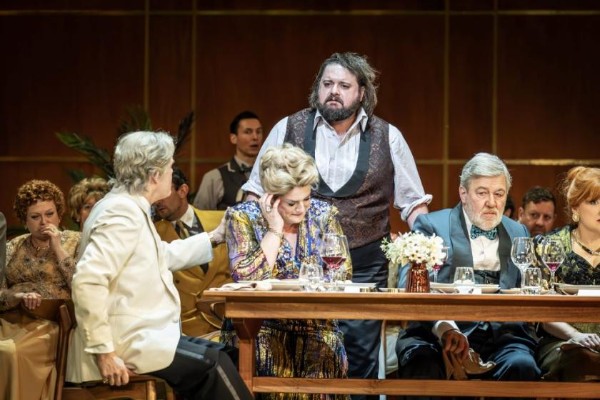
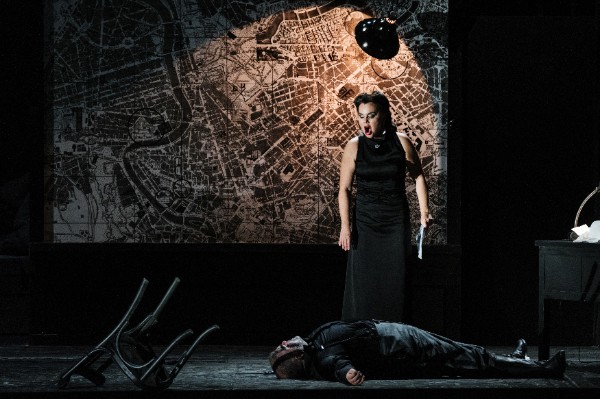
Scenes from Festen
Understanding Festen as an opera requires revisiting the Dogme 95 movement, the radical filmmaking manifesto launched by Danish directors Lars von Trier and Thomas Vinterberg in 1995. Dogme 95 sought to strip cinema of artifice, eliminating artificial lighting and non-diegetic music. Instead, it advocated handheld cameras, on-location shooting, minimal post-production, and an emphasis on authentic performances.
The point was to remove the cosmetic layer of filmmaking and expose unstable truths beneath everyday surfaces. When Festen premiered as the first official Dogme 95 film, Its unpolished visual style, intrusive camera work, and raw performances amplified the narrative’s discomfort. The celebration dinner becomes a trap, the camera an unblinking witness, and the family’s rituals grotesquely exposed.
Translating such an aesthetic into opera might seem counterintuitive, yet Turnage and Hall succeed by embracing the spirit rather than the rules of Dogme 95. They preserved the movement’s commitment to emotional truthfulness and discomfort, amplifying the claustrophobia through musical pressure and vocal confrontations.
Paradoxically, it honours Dogme 95 by breaking one of its basic rules as music becomes the mechanism through which the story’s realism is intensified rather than diluted.
The Paradox of Praise
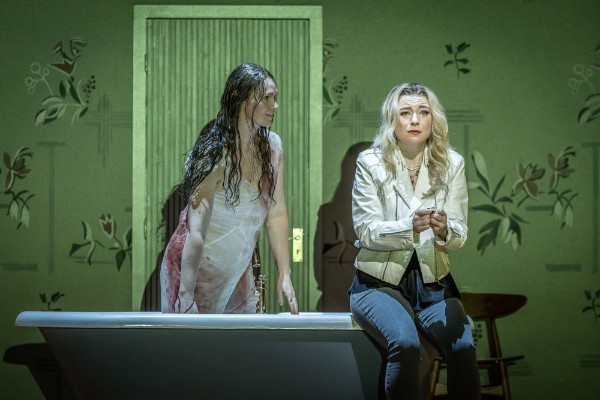
Scenes from Festen
As societies continue to confront the legacies of abuse and the mechanisms that protect abusers, Festen feels painfully current. By being recognised with 2025’s International Opera Award, this production reflects not just artistic excellence but the capacity to enter contemporary conversations.
In the end, the 2025 International Opera Awards revealed a paradox at the heart of the art form today. It is an industry that continues to celebrate itself with all the predictable pomp and circular praise of a black-tie gala, even as the works it honours are increasingly sharper, braver, and more attuned to the fractures of contemporary life.
This contrast only underscores opera’s evolving role, as it is a field whose outward rituals may remain stubbornly ceremonial, but whose creative core is now confronting the world with far more honesty and authenticity.
For more of the best in classical music, sign up for our E-Newsletter