On 7 January 2025, the vaulted nave of Notre-Dame, once scarred by the inferno of 15 April 2019, reverberated once more with sacred cadences of voices and strings. Notre-Dame de Paris emerged from its chrysalis of scaffolding and silence into a luminous bridge across eight centuries.
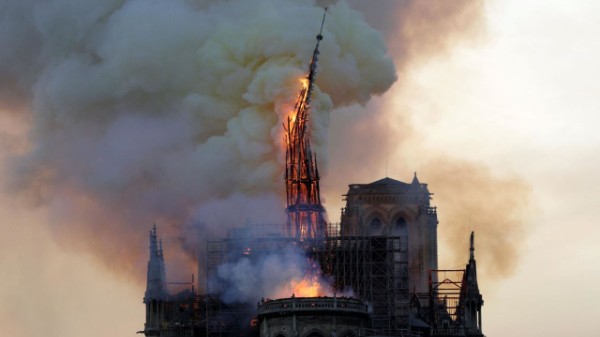
Notre Dame fire in 2019
Under the direction of visionary conductors Simon-Pierre Bestion and Henri Chalet, the ensemble La Tempête united with the Maîtrise Notre-Dame, the cathedral’s venerable choir of young voices, and the Chœur EVE from the Philharmonie de Paris.
Joined by luminaries such as soprano Sabine Devieilhe and organist Olivier Latry, the cathedral’s own titan at the grand Cavaillé-Coll organ, this concert transformed Notre-Dame from a monument of mourning into a vessel of unbridled joy.
Concert for Notre-Dame
Available until 08/03/2027
Cathedral Voices
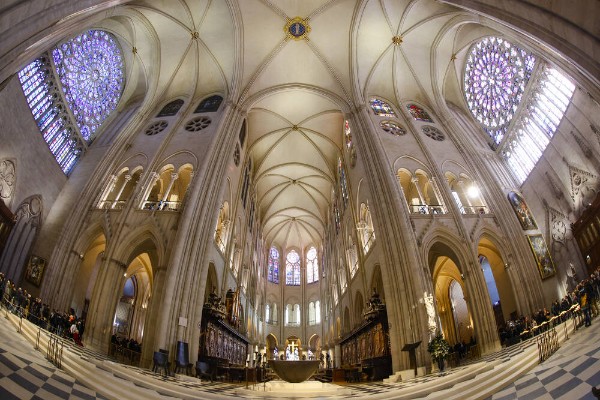
Notre Dame interior in 2025
Unlike the star-studded reopening gala of 7 December featuring Gustavo Dudamel with the Orchestre Philharmonique de Radio France and global icons like Yo-Yo Ma and Lang Lang, this concert delved deeper into Notre-Dame’s sonic DNA.
It eschewed populist spectacle for an intimate excavation of the cathedral’s role as the cradle of Western polyphony, born in the 12th century under the arches where Léonin and Pérotin first layered voices in harmonic defiance of Gregorian austerity.
In an era of cultural fragmentation, this concert stood as a clarion call. Music, like the cathedral itself, endures as a communal edifice, built stone by stone and note by note against the tempests of time. The chronological sweep of the programme transported listeners to the High Middle Ages, when the cathedral was less a static relic than a laboratory for sonic innovation.
The Sound of Sanctity

Sabine Devieilhe © Anna Dabrowska
The evening opened with excerpts from the Magnus Liber Organi, the vast compendium of organa compiled by the school of Notre-Dame composers around 1200. La Tempête’s period instruments conjured the raw, earthy timbre of those early experiments, where two or three voices intertwined in modal dances over a sustained tenor.
The Maîtrise Notre-Dame, comprising over 100 choristers aged eight to eighteen, lent their boyish trebles to Pérotin’s Sederunt principes, a motet whose jubilant alleluias cascaded like sunlight through the clerestory. The music felt visceral, almost pagan and issued a reminder that polyphony was no ethereal abstraction but a revolutionary act.
As the program ascended through the Renaissance and Baroque eras, the concert illuminated how Notre-Dame’s acoustics became a muse for composers across epochs. A poignant rendition of Josquin des Prez’s Ave Maria showcased the ensemble’s mastery of fauxbourdon, the fluid, imitative textures that prefigured the madrigal.
Sabine Devieilhe entered here like a seraph, her coloratura unfurling in melismatic flourishes that danced upon the air, evoking the motet’s plea for Marian intercession. Devieilhe, a star of the Opéra de Paris whose repertoire spans from Handel to Offenbach, brought a modern luminosity to this 15th-century gem. Her voice, agile yet achingly vulnerable, mirrored the cathedral’s own fragility and grace.
Royal Echoes and Romantic Souls
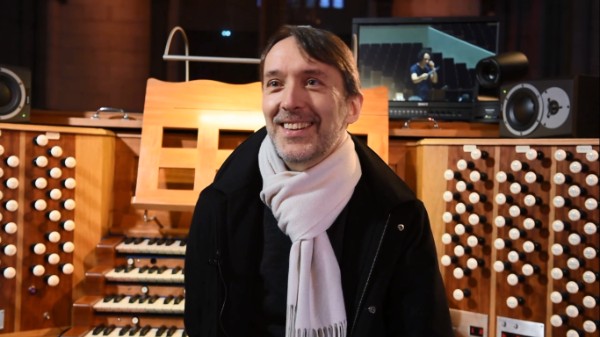
Olivier Latry
Transitioning to the 17th and 18th centuries, the concert evoked the grandeur of Louis XIV’s Versailles-era splendour, when Notre-Dame served as the sonic backdrop to royal baptisms and coronations. Marc-Antoine Charpentier’s In Nativitate Domini Nostri Jesu Christi, with its pastoral drones and shimmering cornetts, painted a nativity scene alive with rustic wonder.
Olivier Latry has held the titular post as organist since 1985, and he unleashes the thunderous diapasons in Louis Vierne’s Carillon de Westminster, a post-Romantic tour de force whose pealing bells mimicked the cathedral’s own carillon. Latry’s improvisation wove flourishes around the theme, the instrument’s roar cascading down like a stone avalanche in reverse as destruction inverted into creation.
Selections from the 19th and 20th centuries exposed the cathedral’s romantic soul as César Franck‘s Panis Angelicus, performed by Devieilhe with La Tempête’s hushed strings, offered a saccharine interlude of Eucharistic longing. Yet it was the inclusion of Maurice Duruflé’s Notre Père, a motet for unaccompanied choir, that truly bridged epochs. The Maîtrise’s rendition captured the work’s modal austerity while grappling with the existential shadows of World War II.
Timeless Voice
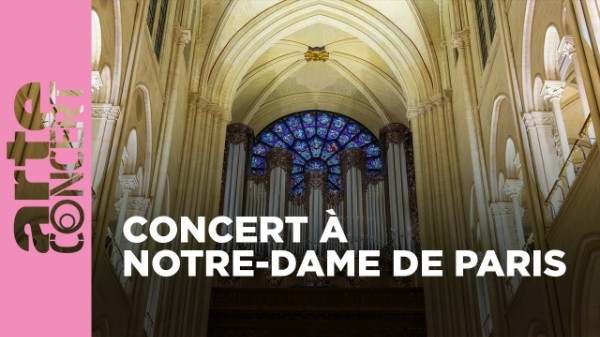
Contemporary voices capped the evening, ensuring the concert’s relevance to a 21st-century audience. Composer and director Simon-Pierre Bestion, whose La Tempête has championed “baroque radicalism” through eclectic programming, premiered a world-creation piece blending electronics with ancient chant.
The finale, a collective rendition of Fauré’s Cantique de Jean Racine, swelled to envelop the congregation, its gentle undulations fading into a profound, resonant silence broken only by applause that echoed like distant thunder.
ARTE framed the concert with interstitial vignettes, including archival footage of the 2019 blaze juxtaposed with time-lapses of carpenters raising oak beams felled from French forests. These themes of stewardship and fragility also echo in a broader cultural landscape, and in debates over the role of Notre-Dame in secular France.
By foregrounding sacred music’s universal appeal, this concert navigated these tensions gracefully, inviting agnostics and believers alike to reflect on heritage as a shared inheritance.
In an age of discord, where cathedrals of community crumble under digital isolation, this concert sounded the heartbeat of a city and a civilisation, one that rebuilt not with stone alone, but also with song.
For more of the best in classical music, sign up for our E-Newsletter