For Plácido Domingo, Otello became one of the defining pillars of his extraordinary career. From nervous beginnings in Hamburg to triumphs on the world’s grandest opera stages, and that even includes the silver screen, Domingo and Verdi’s towering Moor of Venice have shared a uniquely intertwined destiny.
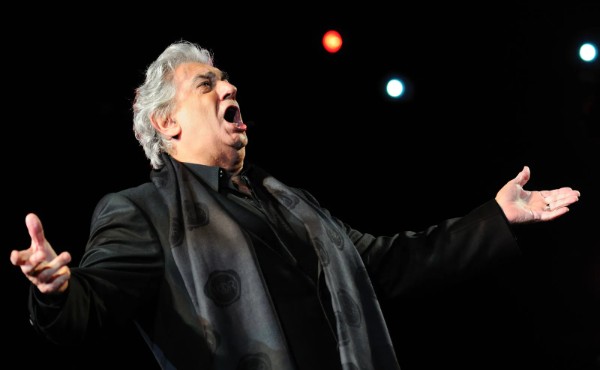
Plácido Domingo
If you asked Plácido Domingo what Otello meant to him, he might smile and say something like, “My favourite role is the one I am working on right now.” Yet there is no question that Otello became one of the roles that shaped and accompanied his extraordinary career.
To celebrate his birthday on 21 January, we retrace this extraordinary partnership between singer and role, one that accompanied Domingo across continents and decades, evolving as both the voice and the man himself changed with time.
Plácido Domingo: Otello, “Esultate” (Paris 1976)
From Lyric Tenor to Tragic Force
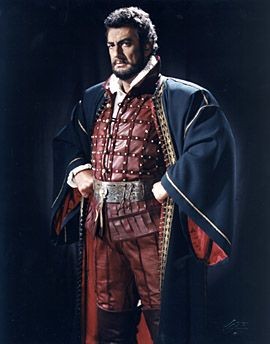
Plácido Domingo as Otello
In the operatic universe, Otello is pretty much as difficult as it gets. It’s vocally merciless, dramatically unforgiving, and emotionally volcanic. Verdi’s score demands a tenor who can burn bright and burn deep. We find scorching high notes, muscular phrasing, and a tragic arc that ends not in triumph but in heartbreaking despair.
When Domingo first approached Otello in 1975 at the Hamburg State Opera, many voices in the opera world were, politely put, sceptical. They whispered that his lyric tenor, although beautiful, wasn’t the proper Otello voice.
Contemporary experts often pointed to earlier greats like Ramón Vinay or Mario Del Monaco and said, essentially, “Follow in their footsteps, or don’t bother.” Domingo himself recounted how every generation’s idea of the right voice for the role was shaped by the previous one, and yet every singer who took it on was told they shouldn’t.
But Domingo, in typical fashion, was unbowed. He dove into the music with what conductor Sir Georg Solti described as “a gift for phrasing that borders on the miraculous.” Solti remembered Domingo’s second Otello (in 1976) as “an amazing experience,” even then hinting that this was a voice and a mind already grasping Verdi’s fierce dramatic language.
In just a short time, Domingo transformed from a lyrical rising star to a dramatic force, becoming part of a living conversation between character and audience.
Domingo/Te Kanawa: Otello, “Già nella note” (Royal Opera House 1992)
A Role Lived, Not Repeated
Otello was not a one-off triumph. Over the decades, Domingo performed the role more than 200 times. That’s a staggering number for one of the most taxing parts in all of opera.
What’s fascinating is that these weren’t static performances. Like any great actor inhabiting a role for decades, Domingo’s Otello changed as he did. Early on, his voice was thrillingly bright and full of youthful impatience, perfect for a commander full of pride and passion.
As years passed, critics and fans alike noticed a richer, more burnished timbre, especially in the middle and lower registers, adding new layers of tragic weight to the part.
These changes weren’t accidental but a reflection of Domingo’s own vocal evolution. By embracing the heavier dramatic and even some Wagnerian repertoire alongside Verdi, his instrument matured.
And with that maturity came a deeper emotional palette for Otello’s jealous rage, poignant remorse, and final collapse.
Plácido Domingo: Otello, “Niun mi tem” (La Scala 2001)
When Applause Became Legend
Opera audiences are notoriously passionate, but few performances have approached the almost mythic reactions that Domingo’s Otello occasionally sparked.
In Vienna in 1991, reports from the Wiener Staatsoper speak of an astonishing reception. Not just applause, but curtain calls stretching nearly an hour and beyond. Some accounts describe over 80 minutes of standing ovation and more than 100 bows before the crowd finally let the company leave the stage.
Whether the numbers are precise or slightly embellished, the feeling was unmistakable, as audiences were electrified. Such reactions aren’t just about vocal fireworks, but about connecting deeply with the story of love, jealousy, and tragic loss.
When Otello went Global
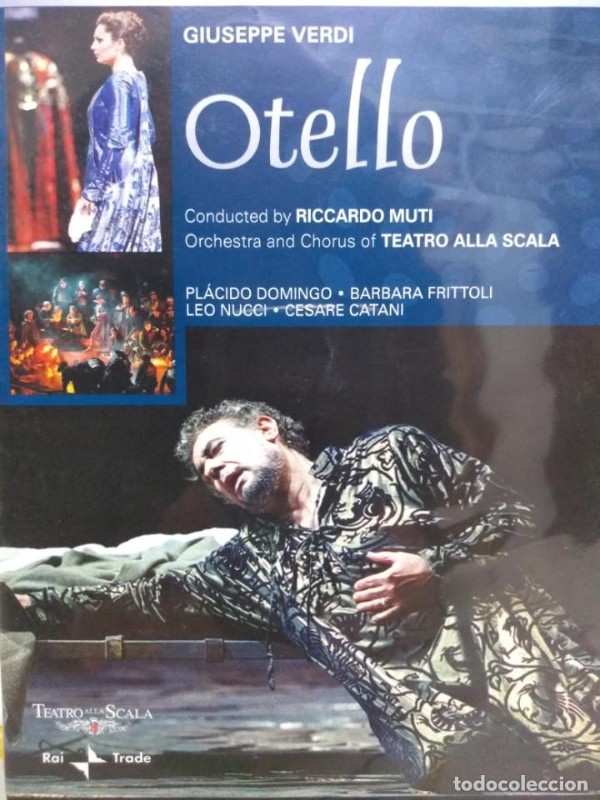
Domingo’s reach as Otello was global. At the Metropolitan Opera in New York, where he sang Otello across multiple seasons, audiences and critics alike praised both his vocal commitment and his dramatic intensity.
Video and radio broadcasts brought his interpretation into homes far beyond the opera house, allowing more listeners than ever before to experience Verdi’s tragic Moor.
On stages from London’s Covent Garden to La Scala in Milan, Domingo’s Otello became not just another role in the repertoire but something closer to a shared artistic lineage. It was a way for audiences around the world to connect with the tragic hero through the singular voice and personality of one performer.
And then there’s the cinematic Otello of 1986, directed by Franco Zeffirelli and starring Domingo himself. Though reception was mixed, with some critics noting the challenges of translating opera to film, it stands as a fascinating testament to Domingo’s belief in the story and his desire to bring Otello’s drama to even wider audiences.
Otello: (Zefirelli 1986)
Beyond Vocal Fireworks
Critics have long admired Domingo’s Otello for combining vocal power and dramatic intelligence. In a review of one of his early live recordings from La Scala, the critic from Classics Today praised not only the brilliance of his high notes but also the emotional shading of key moments, ranging from simmering anger to towering sadness in the final act.
This blend of technical accomplishment and expressive depth is what sets Domingo’s Otello apart for many listeners. He never treated the role as a showcase for vocal fireworks alone.
Instead, every phrase, every word carried dramatic weight. Even when his voice matured and darkened over the years, it only added to the richness of the character’s journey from triumphant general to a man undone by jealousy and loss.
Of course, not every listener is entirely free of personal bias or stylistic preference, as opera fans across forums and comment threads sometimes debate his vocal choices or stylistic approach.
But even detractors often acknowledge the impact he had on audiences and on the role’s performance practice.
Plácido Domingo: Otello, “Dio! Mi potevi scagliar” (Studio 1993)
The Gift of Otello
Domingo himself has offered thoughtful reflections on what Otello has meant to him. In interviews, he has said that the role demanded physical and vocal stamina, clearly an understatement, given how unrelenting Verdi’s score is.
Yet rather than complain, he described it with a kind of respectful awe, noting that the character “gives you so many possibilities to sing and act.”
In another conversation about his favourite parts of his vast repertoire, he acknowledged that while every role has its own joys, Otello gave him “tremendous satisfaction and strength for what was still to come in my career.”
That’s not the voice of a performer looking back with regret, but one who acknowledges with gratitude having engaged with something majestic, complex, and profoundly human.
A Role that Shaped a Career
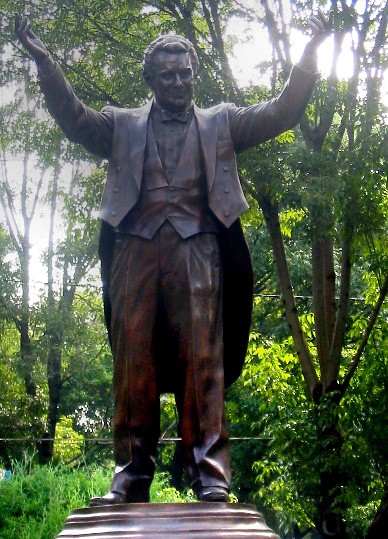
Statue of Plácido Domingo in Mexico City
As Domingo’s career continued, eventually transitioning into heavier and later baritone roles, Otello remained one of the defining landmarks of his artistic life.
In many ways, Otello encapsulated the arc of Domingo himself. A young singer willing to take risks, a mature artist who deepened his dramatic expression over time, and a seasoned veteran who looked back on this role as one of the great companions on his musical journey.
Whether or not one agrees with every interpretation he gave over the years, there’s no denying the scale of his contribution. Domingo didn’t just sing Otello, but he brought it to life for generations of listeners.
And perhaps, that is the truest measure of success for any operatic role. It doesn’t just mean mastering the notes on the page, but making it come alive for the audience.
For more of the best in classical music, sign up for our E-Newsletter