In 2022, Yunchan Lim stunned the classical music world when, at the age of eighteen, he became the youngest winner in the history of the Van Cliburn International Piano Competition.
Since then, the South Korean pianist has signed with the Decca label, released a few impressive albums, and given celebrated performances all around the world.
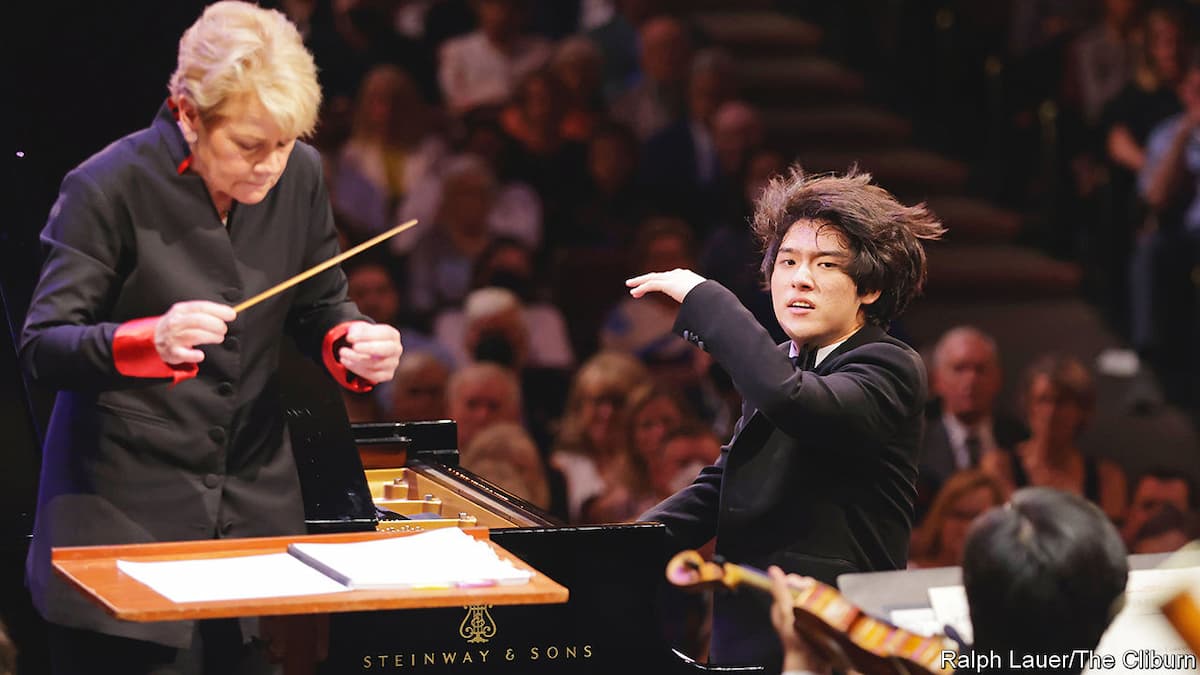
Yunchan Lim playing at the Van Cliburn Competition, with Marin Alsop as the conductor © Ralph Lauer/The Cliburn
But who is Yunchan Lim? How did he become such an unbeatable piano-playing machine? What were his influences? And how should listeners engage with his meteoric rise?
YouTube offers context that other media can’t. Here are ten clips that reveal different sides of Yunchan Lim and his career.
Performance of Rachmaninoff’s Piano Concerto No. 3
Here it is: the performance that launched Yunchan Lim’s career into the stratosphere. It should be the jumping-off point for all Yunchan Lim studies.
Even from the opening passage, it’s obvious that Lim is the total package. He possesses piercing insight, blistering technique, an eerie old-soul maturity, and an unshakeable musical conviction.
Before he won the Cliburn, he said that his ideal life would be playing piano in a room alone. You wouldn’t think that attitude would result in a striking stage presence, but something about the purity of his intention magnetises the audience…and, clearly, the listeners at home, too.
As of late 2025, this video alone boasts 17 million views. That’s not even counting a remastered version, or the streams from the album of this performance that was released in 2023.
Performance of Tchaikovsky’s “The Song of the Lark” from The Seasons
Here’s Lim on the other side of the spectrum: playing a slow solo parlour piece with gorgeous tone and fascinating phrasing.
This is an artist who doesn’t need to fall back on a wash of orchestral sound to manufacture drama. He can tell a story beautifully all by himself. You can practically see the titular lark in your mind’s eye.
This miniature proves Lim’s ability to make even the simplest material sing.
Breakdown of Yunchan Lim’s “Feux follets” Liszt Performance
On classical music YouTube, channels affiliated with Tonebase (including Tonebase Piano, Tonebase Violin, and the personal channel of pianist and commentator Ben Laude) have become wildly popular.
Laude’s breakdowns of Lim’s playing have gone especially viral. For instance, this video alone has 1.7 million views: a staggering number for a classical music channel.
The video begins with a cut of various legendary pianists playing the opening to Liszt’s Transcendental Etude No. 5, also known as “Feux follets”, concluding with a snippet of Lim’s own performance at the Cliburn.
Laude then begins narrating:
Liszt’s piano etude known as “Feux follets” is both hard for a Texan like me to pronounce and hard for anyone to play on the piano.
Arguably [it is] the most difficult of the 12 Transcendental Studies…but that didn’t stop Korean pianist Yunchan Lim from performing it like few human beings ever have before in the 2022 Van Cliburn Competition.
What makes this piece so hard? What makes Yunchan’s performance so good? What is any of this crazy music about in the first place?
The Century-Old Pianists Behind Yunchan Lim’s Award-Winning Chopin Etudes
Despite the fact that he was the youngest gold medal winner in the history of the Cliburn Competition, you will often see Lim being referred to as an “old soul.”
In this video, Ben Laude breaks down some of Lim’s inspirations, and he has a theory about why Lim has been pegged with the “old soul” descriptor so many times.
Growing up in the era of Spotify and YouTube allowed Lim free access to all recordings of the great pianists of the past…even the niche ones who have been forgotten by everyone except the most obsessive piano fans.
Laude backs up his theory with a number of fascinating examples.
Yunchan Lim’s Tiny Desk Concert
Nowadays, a rite of passage for many pop musicians is appearing on National Public Radio’s online Tiny Desk Concert series.
Participants are given around fifteen to twenty minutes to play a few of their songs acoustically in a cramped office, with an audience of lucky NPR staffers in the audience.
Sometimes musicians from the classical music world take a turn behind the office’s upright piano.
Lim’s appearance is remarkable for its intimacy. He plays works by Liszt and Tchaikovsky. In between, he says a few words, praising the music’s “poetic beauty.”
He seems very shy while speaking, and is clearly most comfortable expressing himself at the keyboard. In November 2024, Yunchan Lim was one of them.
It’s very sweet to hear him say, “Thank you. It’s a pleasure to play this beautiful work at the tiny desk; thanks for having me. And I actually had a cold maybe two days ago, so my voice is really not good. I apologise.”
Also, it’s just plain fun to see a concert artist used to nine-foot grand pianos making magic on an upright.
Dave Hurwitz Discusses Yunchan Lim’s Career
Dave Hurwitz is known for his album review website Classics Today, as well as his album videos on YouTube.
In this video, he throws some cold water on the hype that has surrounded Lim from the moment he put hands to keys to begin that Rachmaninoff concerto.
Although Hurwitz believes Lim is hugely talented, he also reminds listeners of other pianists who burst onto the international stage but were ultimately unable to sustain their careers.
He encourages Lim’s fans not to put so much pressure on him or to call his performances the greatest ever:
If you care about music, if you care about your artist, you will be informed about great performances of the works in question. You will know when your artist is doing well, and when your artist is doing less well, and you will respond accordingly, giving your hero…the opportunity for artistic growth. Because being surrounded by a group of yaysayers in everything that you do is the kiss of death. It really is.
It’s an interesting meditation on the nature of quick and early fame, especially in the classical music world.
Yunchan Lim Plays a Bassline as an Encore at Carnegie Hall
In April 2025, Yunchan Lim appeared at Carnegie Hall to perform Bach’s Goldberg Variations: a piece consisting of variations on a bass line, with accompaniment in the right hand.
For an encore, he returned for a simple treat: the bassline of the work’s opening Aria, this time with no accompaniment in the right hand.
All in all, the encore lasts for less than a minute. Beginner pianists could play it. But no beginner could ever hope to bring this kind of musicality and control.
Lim generally comes across as very serious and very earnest, but this choice suggests he has a wry sense of musical humour, too.
Yunchan Lim as a 9-Year-Old Playing Chopin
Yunchan Lim began piano lessons at the age of seven, on the later side for an internationally renowned concert pianist.
At nine, he began taking his studies seriously.
That also happens to be the year this video – a performance of Chopin’s Fantaisie-impromptu in C-sharp minor – is from.
It is absolutely mind-boggling to think that he had only been playing for two years at this point!
His playing reveals some of the hallmarks that would define his later pianistic identity: a striking subtlety, overflowing musicality, and a firm grasp of phrasing, narrative, and momentum.
“Pieces that Must Be Played & Pieces I Want to Play” Interview
In this interview, Lim explains how he approaches repertoire.
He has two lists: must-learns, and want-to-plays. Bach’s Well-Tempered Clavier, the Chopin Etudes, Liszt’s Years of Pilgrimage and Transcendental Etudes, and Beethoven concertos all fall under the “pieces that must be played” category.
At the time of his interview, Mussorgsky’s Pictures at an Exhibition was on the want-to-play list…and he has since indeed played Pictures, and even brought it on tour.
Yunchan Lim Plays “The Swan”
To close, a moment of pure lyricism.
Lim’s performance of “The Swan” is brimming with elegant restraint.
It’s just as mesmerizing as his Rachmaninoff third concerto performance, and proof that Lim’s artistry is just as convincing on an intimate scale as it is on a giant one.
Conclusion
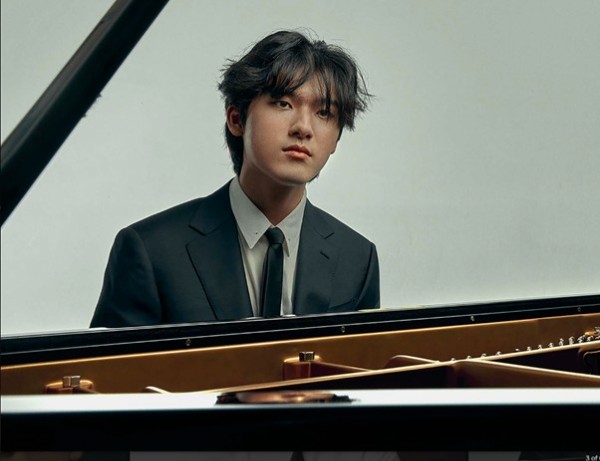
Yunchan Lim
Together, these clips sketch a portrait of Yunchan Lim as not just another competition winner, but as someone who has the capacity to be one of the greatest pianists of his generation.
If you’re just discovering him, these videos are the perfect introduction to why the world is paying attention!
What are your favourite Yunchan Lim videos?
For more of the best in classical music, sign up for our E-Newsletter