
American composer Jennifer Stevenson received a commission from the clarinet and voice duo Whistling Hens and produced a very amusing work entitled Musical Invective. This 2022 work takes the voices of contemporary critics of 5 composers and sets them to music in the style of the composer.

Jennifer Stevenson
She opens with an anonymous criticism of Beethoven’s Second Symphony that was published in 1804 in the Zeitung für die Elegante Welt, Vienna, following the premiere of his new symphony:
Die Zweite Symphonie ist ein krasses Ungeheuer, ein angestochener, sich unbändig windender Lindwurm, der nicht ersterben will und selbst verblutend im Finale noch mit aufgerecktem Schweife wütend um sich schlägt.
[Beethoven’s Second Symphony’s a big crass monster, a hideously writhing wounded dragon, that refuses to expire, and though bleeding in the Finale, furiously beats about with its tail erect.]

Christian Horneman: Ludwig van Beethoven, 1803 (Beethovenhaus Bonn)
Jennifer Stevenson: Musical Invective – No. 1. Beethoven (Whistling Hens, Ensemble)
Stevenson uses material from the symphony, set to a wordless vocalise before launching into an English translation of the critic’s words, delivered with just the perfect curl to the voice.
Jumping forward to Debussy, we’re in the Prelude to the Afternoon of a Faun, and in the text, the Boston critic Louis Elson expresses his dislike for our poor faun in his 1904 review in the Boston Daily Advertiser. The eloquent ‘ugh’ in the middle says more than many of his words ever did!
Debussy’s L’après-midi d’un faune... The faun must have had a terrible afternoon… the poor beast brayed…and whinnied…and avoided all trace of…melody… The work gives as much dissonance as any of the most modern…works… all these…spasms!… When will the melodist of the future arrive?
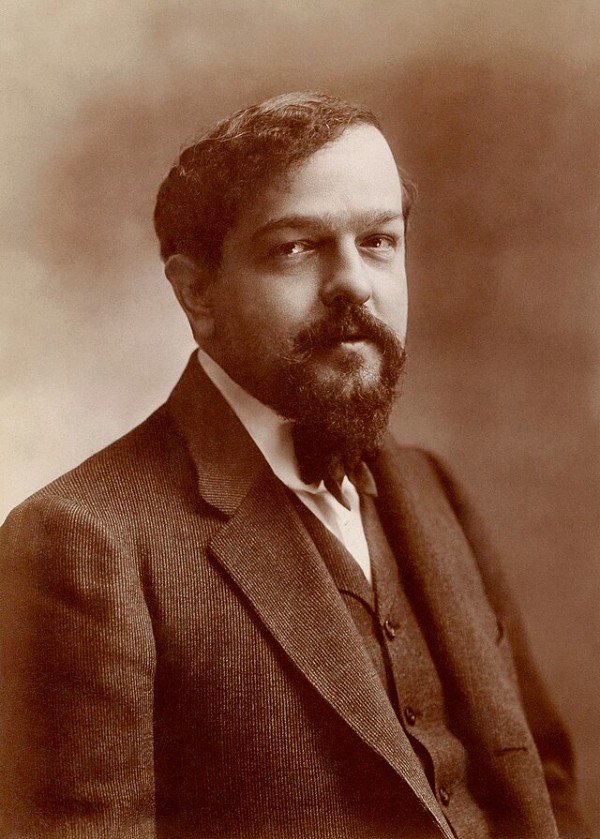
Atelier Nadar: Claude Debussy, ca 1890–1910
Jennifer Stevenson: Musical Invective – No. 2. Debussy (Whistling Hens, Ensemble)
New York critic Oscar Thompson dismissed the music he heard in a 1929 concert of music by Webern, praising it only for being short in duration. He took issue with the language used to describe it, and with the music itself, comparing it to the groaning of an old house.
The program spoke of ‘tonal pointilism,’ ‘tonal fractions’ and ‘differentials.’ What the audience heard suggested odd sounds in an old house when the wind moans, the floors creak, the shades rustle, and the doors… alternately creak and croon. The work had von Webern’s cardinal merit of brevity.

Anton Webern in Stettin, October 1912
Jennifer Stevenson: Musical Invective – No. 3. Webern (Whistling Hens, Ensemble)
The work, Five Pieces, Op. 10, had been written between 1911 and 1913. Even now, these short pieces (the longest is 1:44 and the shortest just 00:32) are described using the same language in the booklet notes for a recent recording: ‘pointillist gestures’, ‘otherworldly ostinatos’, and ‘ghostly timbres’.
New York Times critic James Gibbons Hunekor downgrades women composers as a class, calling them ‘whistling hens’, combining an old English folk motto (‘a whistling woman and a crowing hen are neither fit for God nor men’) into a single unforgettable metaphor. He’s attacking Lili Boulanger’s music, heard in a concert at Carnegie Hall in December 1918. He’s taking exception to her Faust et Helène, which won her the Prix de Rome in 1913. She was the first woman composer to be so awarded.
When a hen whistles, there is consternation in the coop. …The…hen in this case was Lili Boulanger… The composer wanders, pecking at all the shining motives that tempt her. Isolde moans… [Faust] snores… Incoherency rules the vocal parts… Clever girl, but your music is Wagner réchauffée… More’s the pity that she died so young… But women composers are at best whistling hens.
His full review is even nastier than what is recorded in Stevenson’s song, for Huneker goes on to say that ‘… her musical maturity is astonishing, or else her master’s music must have been violently imbued with Wagnerism’. How many reviews of young composers have you seen that imply that the work was far beyond their age, and their teacher must have written it? Damning her with faint praise indeed!

Henri Manuel: Lili Boulanger, 1913
Jennifer Stevenson: Musical Invective – No. 4. L. Boulanger (Whistling Hens, Ensemble)
The final movement takes on George Gershwin and the premiere of Rhapsody in Blue, hating all of it. Lawrence Gilman, writing in the New York Tribune in 1924, finds it all too much.
How trite…feeble…and conventional… How [fussy, futile and] sentimental and vapid… Weep over the lifelessness of melody…so derivative, so stale, so inexpressive!
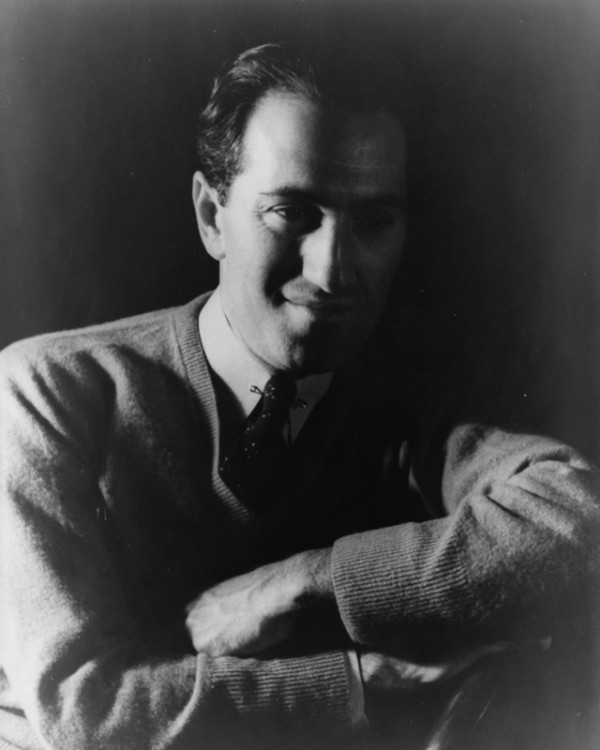
Carl Van Vechten: George Gershwin, 1937
Jennifer Stevenson: Musical Invective – No. 5. Gershwin (Whistling Hens, Ensemble)
Going back over the reactions to works that are now firmly in the mainstream (well, perhaps not the Webern and the Boulanger), and seeing how our own listening has advanced, is always interesting. The critic, writer and self-described polymath Nicholas Slonimsky collected all this vitriol into a book entitled the Lexicon of Musical Invective: Critical Assaults on Composers Since Beethoven’s Time, which makes very funny reading. That was the source of Stevenson’s quotes and the words, combined with her very clever musical writing, ‘… in the style of…’ makes this doubly pleasurable.
The clarinet and voice duo Whistling Hens is made up of soprano Jennifer Piazza-Pick and clarinettist Natalie Groom, and they took their name from the James Huneker quote about Lili Boulanger. As an ensemble, their goal is to ‘perform and commission music by women composers to create a financially and artistically equitable future for women in music’. Since their founding in 2018, they have given the premieres of ‘29 pieces and commissioned 14 compositions, 10 transcriptions, created the Whistling Hens Women Composer Coloring Book, and inspired 17 dedicated works.
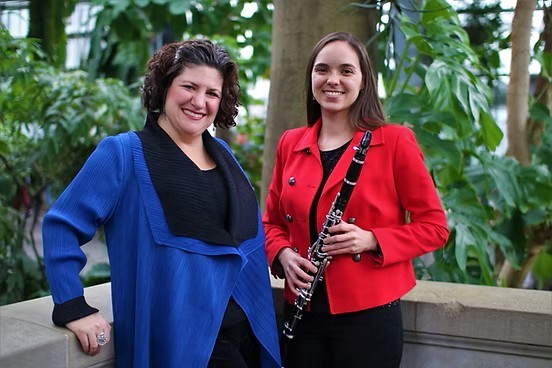
Whistling Hens
For the original works that the critics were writing about:
Beethoven: Symphony No. 2
Ludwig van Beethoven: Symphony No. 2 in D Major, Op. 36 – I. Adagio molto – Allegro con brio (Stuttgart Radio Symphony Orchestra; Roger Norrington, cond.)
Ludwig van Beethoven: Symphony No. 2 in D Major, Op. 36 – II. Larghetto (Stuttgart Radio Symphony Orchestra; Roger Norrington, cond.)
Ludwig van Beethoven: Symphony No. 2 in D Major, Op. 36 – III. Scherzo: Allegro (Stuttgart Radio Symphony Orchestra; Roger Norrington, cond.)
Ludwig van Beethoven: Symphony No. 2 in D Major, Op. 36 – IV. Allegro molto (Stuttgart Radio Symphony Orchestra; Roger Norrington, cond.)
Debussy: Prélude à l’après-midi d’un faune
Claude Debussy: Prélude à l’après-midi d’un faune (Lyon National Orchestra; Jun Märkl, cond.)
Webern: Five Pieces, Op. 10
Anton Webern: 5 Pieces, Op. 10 – Sehr ruhig und zart (Ulster Orchestra; Takuo Yuasa, cond.)
Anton Webern: 5 Pieces, Op. 10 – Lebhaft und zart bewegt (Ulster Orchestra; Takuo Yuasa, cond.)
Anton Webern: 5 Pieces, Op. 10 – Sehr langsam und ausserst zart (Ulster Orchestra; Takuo Yuasa, cond.)
Anton Webern: 5 Pieces, Op. 10 – Fliessend, ausserst zart (Ulster Orchestra; Takuo Yuasa, cond.)
Anton Webern: 5 Pieces, Op. 10 – Sehr fliessend (Ulster Orchestra; Takuo Yuasa, cond.)
Lili Boulanger: Faust et Hélène
Lili Boulanger: Faust et Helene (Lynne Dawson, soprano; Bonaventura Bottone, tenor; Jason Howard, bass; BBC Philharmonic Orchestra; Yan Pascal Tortelier, cond.)
Gershwin: Rhapsody in Blue
George Gershwin: Rhapsody in Blue (arr. F. Grofé for piano and symphony orchestra, 1942) (Orion Weiss, piano; Buffalo Philharmonic Orchestra; JoAnn Falletta, cond.)
For more of the best in classical music, sign up for our E-Newsletter





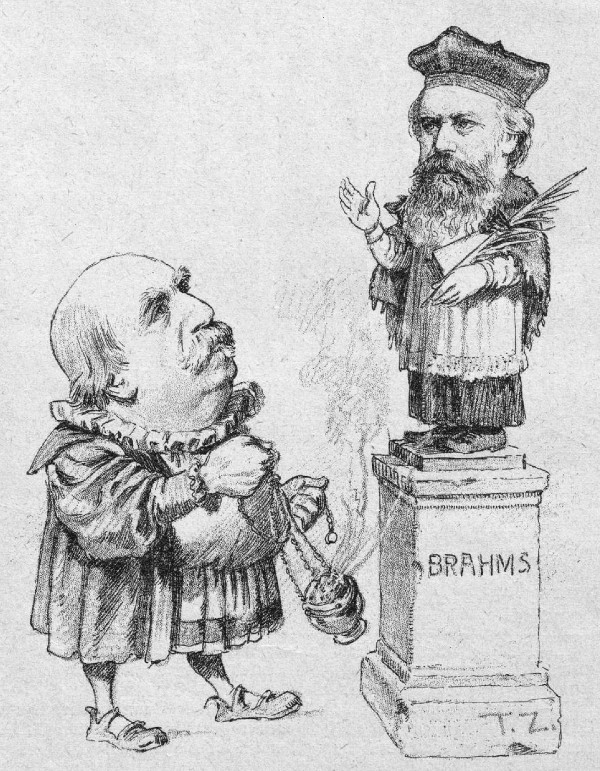


I love the famous comment about Wagners music- ” wonderful, brilliant, majestic moments, thrilling and stirring, stupendous moments- and excruciating, boring , interminable hours”….!