
For many classical music lovers, getting to visit the places where their favourite composers once lived and worked is an extraordinary experience.
Fortunately, many of these places have been lovingly preserved, from Mozart and Beethoven’s birthplaces to the countryside retreats of Tchaikovsky and Sibelius.
Today, we’re looking at some of the best composer museums in the world and exploring the reasons why classical music enthusiasts would enjoy visiting each one.
1. Beethoven-Haus (Bonn, Germany)
Official website: https://www.beethoven.de/en/museum
Beethoven House in Bonn
Located in the building where Ludwig van Beethoven was born in 1770, the Beethoven-Haus was incorporated as a museum in 1889 and opened in 1893. Before it became a museum, the building was a restaurant and beer garden.
The house survived both world wars (although a bomb did fall on the roof in 1944). Today, it is one of the oldest buildings in Bonn.
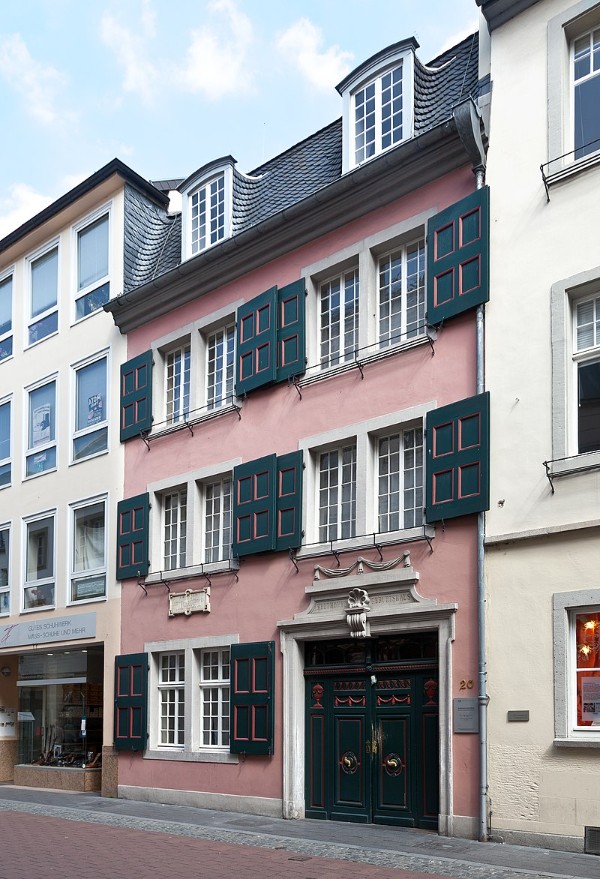
Beethoven’s birthplace
Objects in the Beethoven-Haus’s collection include over a thousand original manuscripts, posters and engravings, instruments (including Beethoven’s last piano), hearing aids and conversation books, and other assorted personal items.
In 1989, the house opened a small chamber music hall in the building next door.
2. Mozart’s Birthplace (Salzburg, Austria)
Official website: https://mozarteum.at/en/mozart-museums/mozarts-birthplace
Mozarts Geburtshaus 4K – Salzburg, Austria – Birthplace of Wolfgang Amadeus Mozart
This charming yellow house, with an elegant sign reading Mozarts Geburtshaus hanging on the front of the building, is where Wolfgang Amadeus Mozart was born in 1756. It became a museum in 1880.
Mozart’s parents moved into an apartment on the third floor in 1747 and continued living there through 1783.
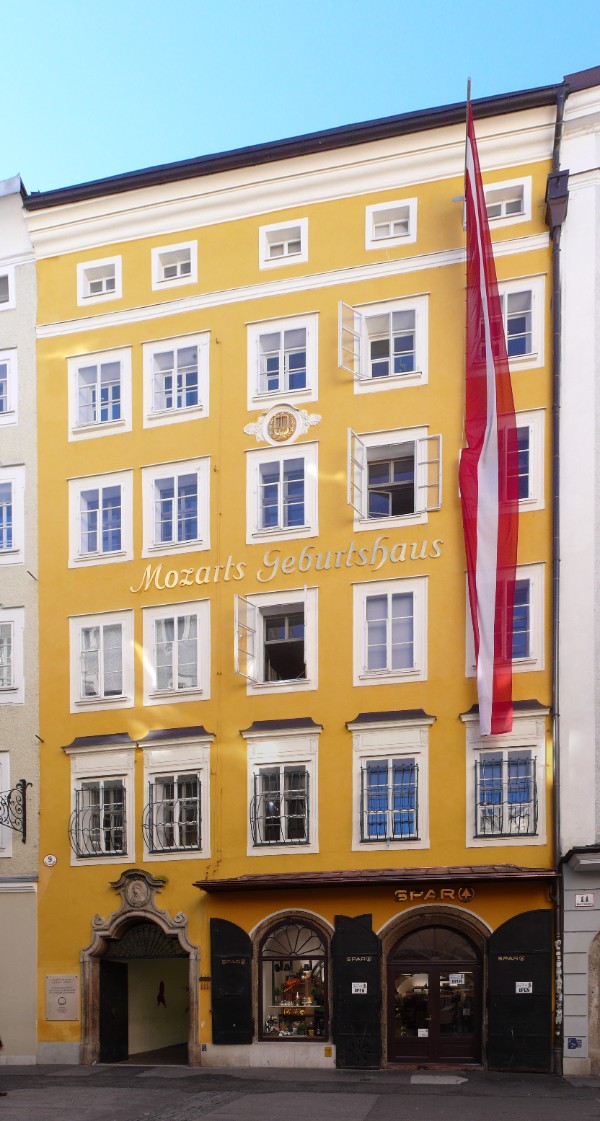
Mozart’s Birthplace
The museum has a number of Mozart’s favourite instruments on display: the violins he played as a child and adult, his viola, his fortepiano, and his clavichord.
His wife Constanze wrote in a statement about the clavichord: “My dear clavier, upon which Mozart played so often and composed Die Zauberflöte, La clemenza di Tito, the Requiem and Eine Freimaurer Cantate… Mozart so loved this clavier, and for that reason I love it doubly!”
3. The Franz Liszt Memorial Museum (Budapest, Hungary)
Official website: https://lisztmuseum.hu/en
Franz Liszt Memorial Museum | Budapest | Franz Liszt | Hungary | Things To Do In Budapest
This building was the site of Budapest’s Old Academy of Music between 1875 and 1907. Before his death in 1886, Franz Liszt taught and lived in the building.
It served a number of purposes afterward, including a coffee shop and office for a foreign trade company. Finally in 1980, the building became a museum.
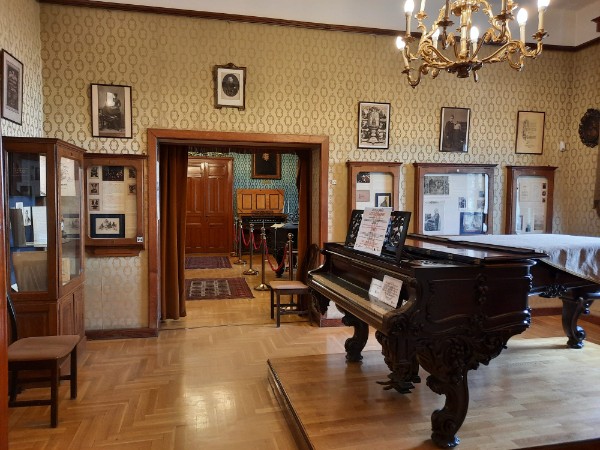
The Franz Liszt Memorial Museum © saltertonartsreview.com
Liszt donated many of his personal belongings to the Academy of Music, and these items are in the museum today.
You can see three of his pianos (one Bösendorfer and two Chickerings), his composing desk, a cabinet organ, and his library of books and manuscripts.
Over the years, the museum has purchased additional relevant manuscripts.
Even if you can’t make it to Budapest, you can enjoy some of the site’s online exhibitions: https://lisztmuseum.hu/exhibitions/visiting-liszt-at-home-in-sugar-avenue-122207
4. Tchaikovsky State Museum (Klin, Russia)
Official website: https://visitmuseums.ru/en/museum-af6ca686-096f-4100-a10c-2619b9551780.html
A day trip to Tchaikovsky State House Museum in Klin
Nestled in the countryside outside Moscow, this was Pyotr Ilyich Tchaikovsky’s last home. The rooms remain as he left them, and include the piano on which he composed his Pathétique Symphony.
This museum is somewhat unusual in that it became a museum immediately after the composer’s death. Tchaikovsky’s younger brother Modest, who idolized his brother, made it his life’s work to create this museum. Tchaikovsky died in November 1893, and the museum opened in December 1894.
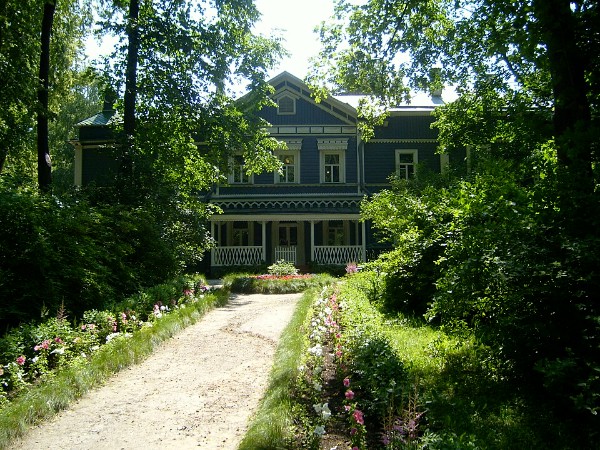
Tchaikovsky State Museum
The house has served as a museum ever since. In 1921, it was taken over by the state.
It continued operating over the following decades, with a break in 1944, when Nazi forces occupied it for two weeks. The museum was later reopened on Tchaikovsky’s birthday in May 1945.
Today, the museum includes a mind-boggling 200,000 items, including Tchaikovsky’s letters, diaries, manuscripts, and a variety of other papers. There are even items associated with other great Russian composers like Glinka and Rachmaninoff. This archive makes it one of the largest collections of its kind in the world.
In addition to the house, the grounds contain a park and a depository for the archives.
5. Bach House (Eisenach, Germany)
Official website: https://bachhaus.de/en/museum
J.S. Bach – in Eisenach, Köthen & Leipzig | Discover Germany
Located in Bach’s birthplace of Eisenach, Germany, the Bach House consists of a historic house with a modern wing that features interactive exhibits and archives.
When the house was purchased to be used as a museum in the early 1900s, it was believed that the structure, built in the mid-1400s, had been Bach’s birthplace. Research done in the 1920s disproved that. But by that point, the museum had already been established; Bach was born in the neighbourhood, anyway, and there was no use in moving.
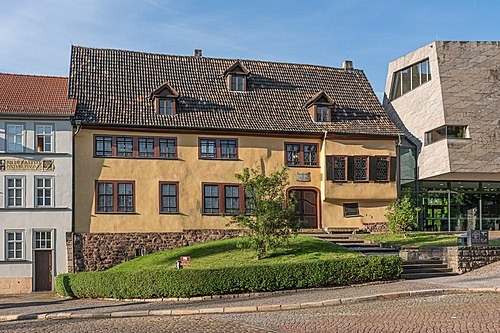
Bach House
The house’s roof was damaged in World War II, but the American troops passing through ordered it to be repaired as soon as possible to avoid damaging the building: a sign of the international respect for Bach.
6. Grieg’s Troldhaugen (Bergen, Norway)
Official website: https://www.kodebergen.no/en/museums/troldhaugen
Edvard Grieg´s home Troldhaugen in Winter | Virtual travel by Allthegoodies.com
The picturesque home of Edvard Grieg – named “Troldhaugen”, or Troll Hill – overlooks Lake Nordås. It was designed by Grieg’s cousin and finished construction in 1885.
At Troldhaugen, visitors can see Grieg’s composing hut overlooking the lake, his original Steinway piano (a gift for his wedding anniversary in 1892), and other assorted artefacts from his life and career.
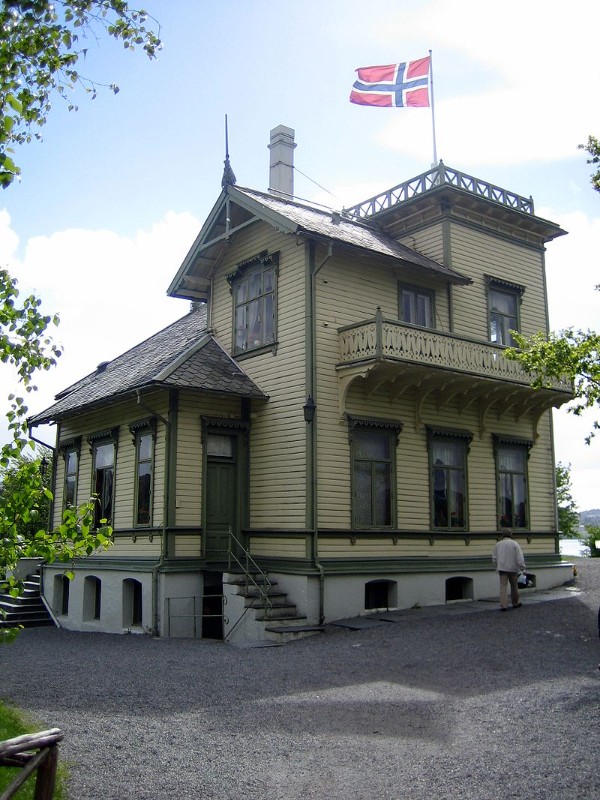
Grieg’s Troldhaugen
An on-site concert hall built in 1985 offers frequent performances of Grieg’s music. There’s also a museum building, gift shop, and even a cafe.
The ashes of both Edvard and his singer wife Nina are buried on the property.
7. Villa Puccini (Torre del Lago, Italy)
Official website: https://www.giacomopuccini.it/en/villa-puccini/
Museo Villa Giacomo Puccini a Torre del Lago Puccini
In 1891, Giacomo Puccini stayed with his wife and son in the magical lakeside town of Torre del Lago. He fell in love with the location and returned to it again and again before finally moving there permanently in 1899.
From that point forward, Puccini lived and worked in this lakeside villa, which his son opened as a museum in 1925, the year after the composer’s death.
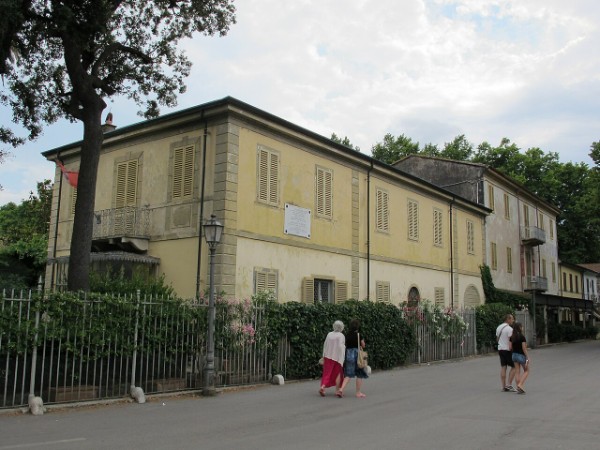
Villa Puccini
The museum preserves his restored pianos, letters, portraits, funeral mask, and more. Visitors can also see many of the home’s original furnishings, including Puccini’s hunting trophies.
Out in the garage (Puccini famously loved cars and motoring), there’s a bookshop to browse.
Puccini was buried in the house’s chapel.
8. Handel House Museum (London, United Kingdom)
Official website: https://handelhendrix.org/
Handel Hendrix House Venue Showcase video
This is definitely the most unique museum on the list! It’s a dual museum: the house of Baroque composer George Frederic Handel, right next door to the apartment of twentieth-century guitar icon, Jimmy Hendrix!
Handel lived in this home from 1723 until his death in 1759. He wrote a mind-boggling number of works there, including Messiah, Judas Maccabaeus, Music for the Royal Fireworks, and so many others.
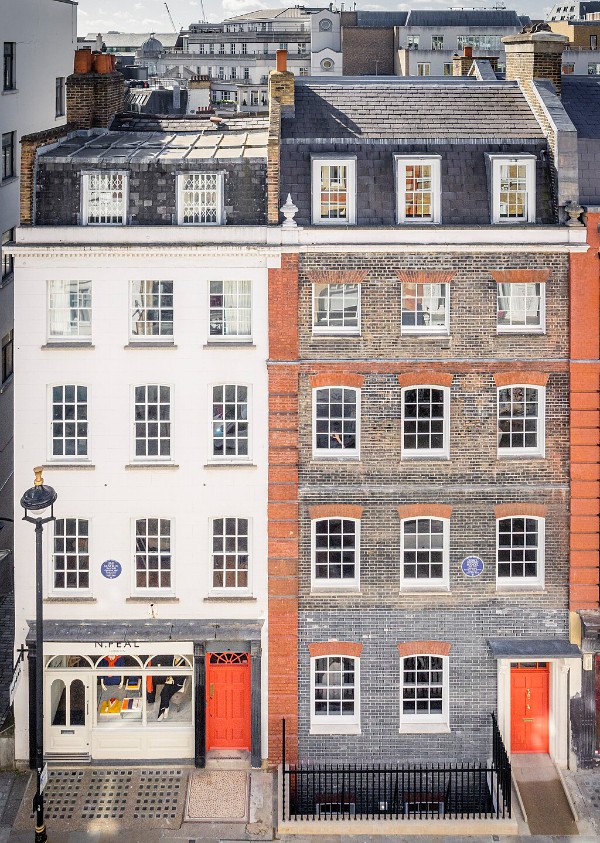
Handel House Museum
The museum was opened in 2001 after forty years of advocacy work.
Today, the building remains a centre of activity, featuring educational talks by scholars and musical performances on Baroque instruments.
Meanwhile, Hendrix’s apartment is in the next building over on the top floor. If you buy a ticket to the Handel house, you get to see Hendrix’s apartment, too!
Conclusion
Composer museums offer the opportunity to experience history in a deeply personal way. Once you’ve been to one, your experience of that composer’s work and understanding of it will be forever changed.
Which composer museum would you most love to visit? Let us know in the comments below, or share your own favourite composer museum!
For more of the best in classical music, sign up for our E-Newsletter





Wonderful tours. Thank you.