
When cultural historians describe the development of eighteenth-century European arts, they often speak of the middle decades as a battleground between the elegance of the Rococo and the rising emotional force of Romanticism. Nowhere is this transitional turbulence more audible
Bach C. P. E.
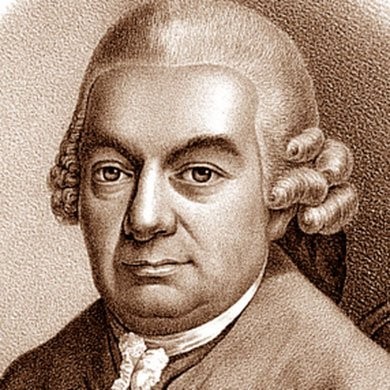
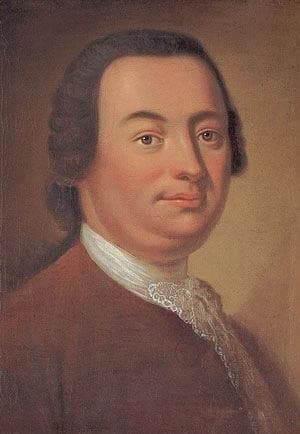
Johann Christoph Friedrich, known as the ”Bückeburg Bach”, was born in Leipzig on 21 June 1732 and baptised two days later. He was the 16th of Johann Sebastian Bach’s twenty children and the 9th child from his marriage to Anna
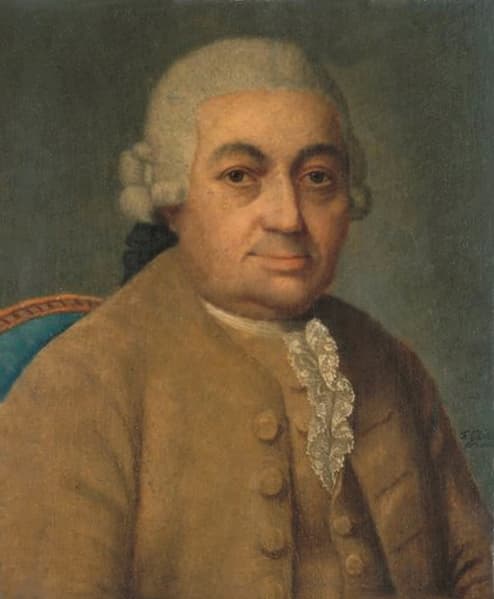
Towards the end of 1713, Johann Sebastian Bach made a trip to the town of Halle to advise on the enlargement of the organ at the Liebfrauenkirche. The organist Friedrich Wilhelm Zachow—the revered and well-respected teacher of Handel—died in 1712,
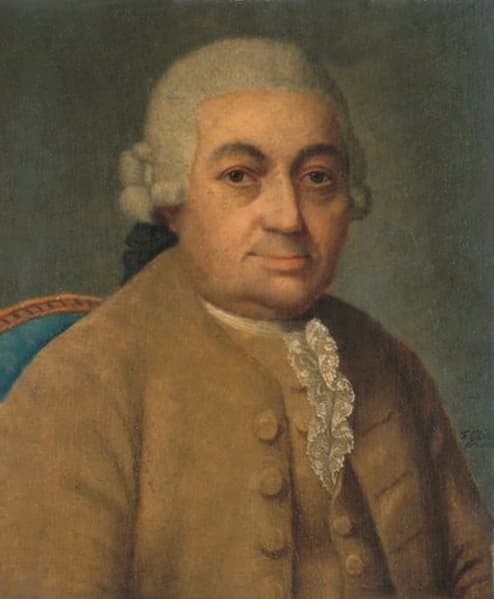
C.P.E. Bach composed a number of character pieces for solo keyboard between 1754 and 1758. He used a French model, the pièce de caractère, and called his works Petites Pièces. The works were named after Bach’s friends and acquaintances. Although
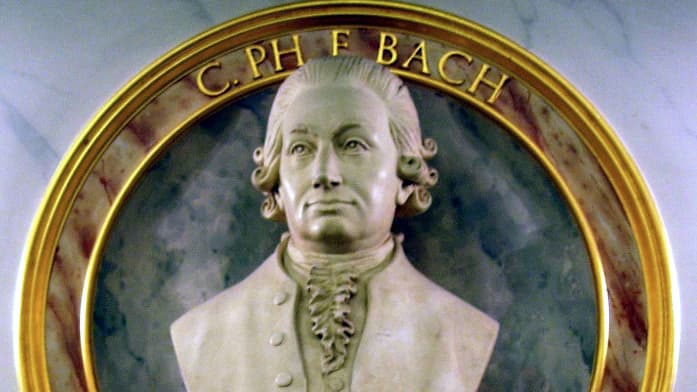
On 2 November 1788, Carl Philipp Emanuel Bach wrote to a friend, “Since 18 September I have been very ill with gout and other ailments. Now my health is beginning to improve.” However, this period of improvement was short-lived, as
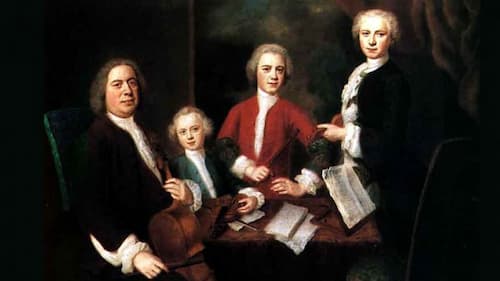
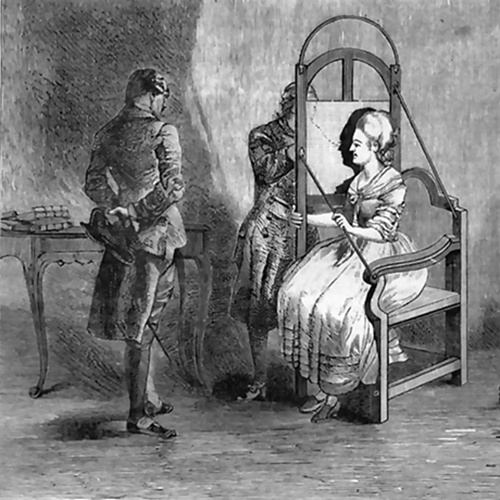
In his ground-breaking book on physiognomy, the Swiss writer Johan Kaspar Lavater (1741-1801) sought to find the face of God in the men around him. Taking literally the notion that God created man in his own image, Lavater, sought to
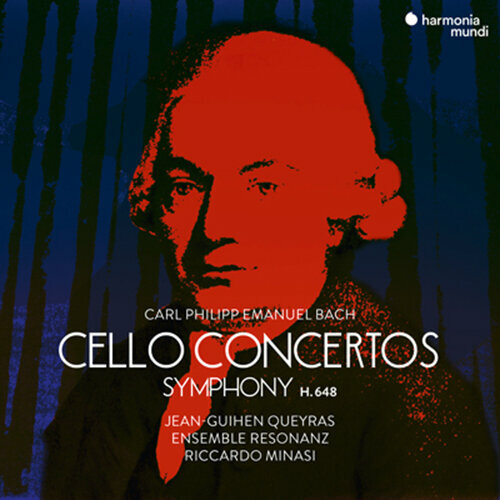
Concerto for violoncello, strings and basso continuo H. 432 (Wq 170) A minor III. Allegro assai From CPE Bach – Concertos for Cello & Symphony H. 648 (2018) Released by Harmonia Mundi C.P.E. Bach: Concerto for violoncello, strings and basso