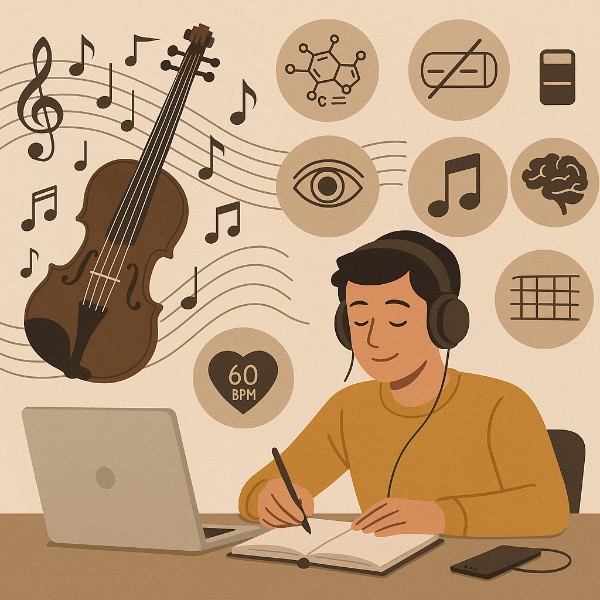
Every musician dreams of that perfect moment when everything just clicks—their fingers move effortlessly, the music flows naturally, and time seems to vanish. This state is known as flow, a psychological concept describing complete immersion in an activity. When musicians enter this state, they not only play better but also experience deeper enjoyment and satisfaction. But what exactly is flow, and how can you achieve it during your musical practice and performances?
What Is Flow and Why Is It Crucial for Musicians?

Flow is a term introduced by psychologist Mihály Csíkszentmihályi, who described it as a state of deep engagement in an activity where challenge and skill are perfectly balanced. In this state, self-consciousness fades, focus intensifies, and actions become almost automatic.
For musicians, achieving flow is more than just a pleasant experience—it’s a key to improving performance. Neuroscientific studies show that when musicians are in flow, their brains exhibit heightened activity in areas responsible for creativity and motor coordination while suppressing the prefrontal cortex, which controls self-criticism. This explains why performers in flow feel less anxious and play with more confidence.
Famous musicians often describe moments of flow as their most profound experiences:
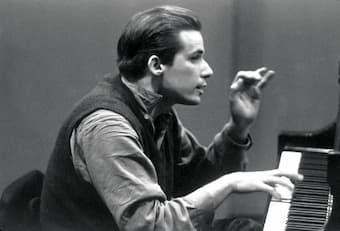
Glenn Gould © Don Hunstein
- Herbie Hancock has spoken about the joy of improvising in jazz, where flow allows him to react instinctively without overthinking.
- Glenn Gould described his best performances as moments where he felt detached from himself, as if the music was playing through him rather than by him.
Achieving flow means tapping into this heightened state, allowing musicians to play at their full potential without the burden of doubt or hesitation.
How to enter flow state
What Conditions Are Needed to Achieve Flow?
Reaching flow is not random—it requires specific conditions. Csíkszentmihályi identified several key factors that create the right environment for flow:

Mihály Csíkszentmihályi
- Clear Goals – Knowing exactly what you want to achieve keeps your focus sharp. Whether it’s mastering a difficult passage, improving dynamics, or expressing a particular emotion, clear goals guide your attention.
- Balance Between Challenge and Skill – Flow occurs when a task is neither too easy nor too hard. If a piece is too simple, boredom sets in; if it’s too difficult, frustration takes over. Finding the right level of challenge is essential.
- Immediate Feedback – Receiving real-time feedback, whether from listening to yourself, working with a teacher, or recording and analysing your playing, helps keep you engaged and allows for adjustments.
- Deep Concentration – Flow requires undivided attention. Distractions, whether external (noise, notifications) or internal (self-doubt, overthinking), prevent immersion.
- Loss of Self-Consciousness – Flow makes you forget about yourself and focus solely on the music. Worrying about mistakes or judgment pulls you out of the moment.
- Sense of Control – A strong connection to your instrument and confidence in your abilities create a sense of control, allowing you to trust your instincts rather than second-guess yourself.
- Transformation of Time – One of the most common signs of flow is the feeling that time speeds up or slows down, as full engagement takes over your perception.
By cultivating these conditions, musicians can enter flow more frequently and benefit from its profound effects on performance.
Don’t Try | The Philosophy of Flow
How Regular Mental Practices Help Enter the Flow State
Achieving flow is not just about external conditions—it also requires internal preparation. Here are some mental strategies that help musicians get into flow more easily and consistently:
1. Mindfulness and Meditation
Practicing mindfulness improves focus and reduces anxiety, both of which are essential for flow. Studies show that musicians who engage in mindfulness exercises experience less performance anxiety and greater concentration. Try:
- Breath Awareness: Spend a few minutes focusing on your breath before playing to center your attention.
- Body Scanning: Mentally check in with your body, releasing tension that may interfere with fluid movement.
2. Visualisation Techniques

Before performing, mentally rehearse playing the piece flawlessly. Imagine the sensation of moving your fingers across the instrument, the sound filling the room, and the emotions you want to convey. This primes your brain for optimal performance and reduces mental clutter.
3. Developing a Pre-Performance Ritual
Many successful musicians follow specific routines before performing to enter the right mindset. Whether it’s stretching, deep breathing, or playing a particular warm-up passage, a ritual signals to your brain that it’s time to focus.
4. Breaking Down Pieces into Flow-Friendly Sections
If a piece feels overwhelming, break it down into smaller, manageable sections that match your skill level. Gradually increase the challenge to keep yourself engaged without becoming frustrated.
5. Embracing Mistakes as Part of the Process
One of the biggest obstacles to flow is fear of failure. Musicians who constantly worry about playing perfectly are more likely to experience mental blocks. Instead of fearing mistakes, use them as learning tools. The more comfortable you become with imperfection, the easier it is to stay in flow.
6. Using the Right Tempo for Practice

Practicing too fast can lead to stress, while playing too slow can cause boredom. Finding the right tempo where you feel challenged but still in control helps sustain engagement and enhances flow.
Final Thoughts: Cultivating Flow for Lifelong Musical Enjoyment
Flow is not reserved for professional musicians—it’s a state that any musician can cultivate with the right approach. By balancing challenge and skill, eliminating distractions, and training the mind to stay present, you can experience more frequent moments of effortless musical expression.
The next time you sit down to play, remember: flow is not about forcing perfection, but about immersing yourself in the joy of music. When you let go of self-doubt and truly connect with your instrument, you’ll discover a level of playing that feels almost magical.
For your meditation and mindfulness exercises, listen to music such as:
Calm Mountains – Tibetan Healing Relaxation Music – Ethereal Meditative Ambient Music
For more of the best in classical music, sign up for our E-Newsletter