The authors of Interlude have frequently written about Antonín Dvořák’s Cello Concerto in B minor, with good reason. While the score presents a formidable challenge for both the virtuoso soloist and the finest conductor, its power lies not in dazzling the audience, but in speaking directly to them. For me, the piece’s most captivating quality is its profound poetry. No one composed with more heartfelt sentiment than Dvořák, and this concerto is a reflection of a personal love.
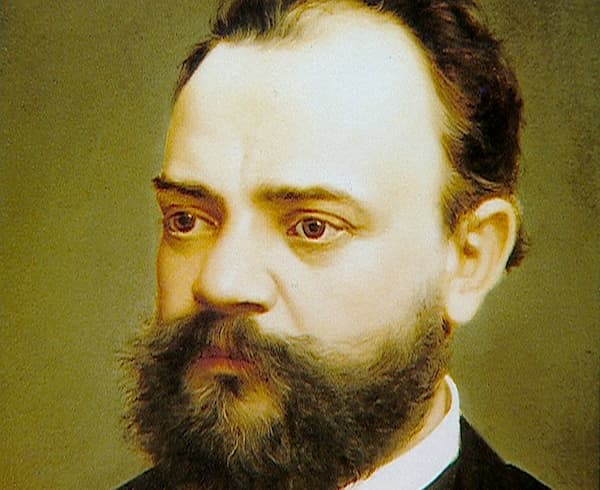
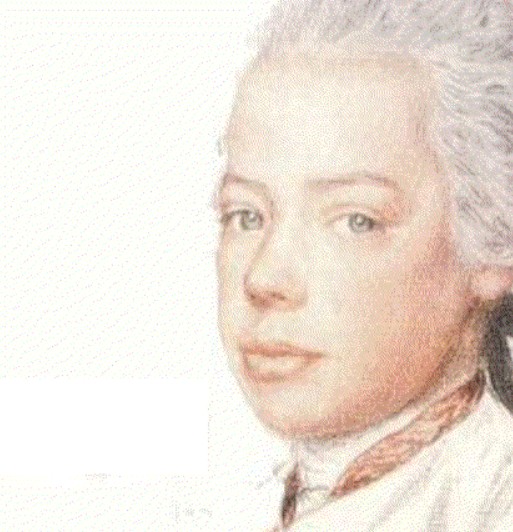
Antonín Dvořák
From its first entry in the Concerto, we hear how Dvořák balanced the soloist with the orchestra. As the cello introduces the first theme, the orchestra first falls silent, then re-enters to accompany with only a small ensemble of players, creating an intimate, chamber-music-like texture. Though the instrumentation shifts frequently, allowing Dvořák to paint with the orchestra’s full palette, the entire ensemble plays together only when the cello is silent.
The cello often engages in duets with woodwind instruments over a light accompaniment, offering Schubertian commentary on their melodies. The solo line is amplified by double and triple stops—three notes played simultaneously—or by rapid ascents from the instrument’s lowest to its highest extremes. At other times, the cello provides a backdrop of arpeggios or high-register trills while the orchestra takes up the melody.
This brings us to the heart of the matter: love. While composing the concerto, Dvořák learned that his wife’s sister, Josefina Čermak (Kaunitzova), was gravely ill. In his youth, he had been in love with Josefina, and only after she rejected him did he marry her sister, Anna. Josefina was particularly fond of one of his songs, “Kéž duch můj sám.” The outer stanzas of the text are presented below:
If only my spirit, alone and undisturbed, could dream,
If only no one would shatter this rapture in my heart,
Oh, grant my soul all its bliss, and even this pain,
Which makes it weep and rejoice for what my eyes have seen!
. . . . .
If only my spirit, alone and undisturbed, could dream!
He loves me! Grant me that holy peace
Which this word bestows, and have faith
That without it, my spirit would die of longing.
Grant me peace
Hear Lucia Popp sing Kéž duch můj sám with Irwin Gage, piano
The adagio second movement forms the emotional core of the concerto. It begins serenely, but Dvořák continuously transforms the opening theme in an improvisatory dialogue between the soloist and orchestra. It is here that he weaves in the altered melody of “Kéž duch můj sám” as the movement’s second theme (beginning at 3’10” in the recording below). This theme undergoes a series of exquisite variations, culminating in a lengthy, passionate cadenza framed by a choir of woodwinds.
Antonín Dvořák: Cello Concerto in B Minor, Op. 104, B. 191 – II. Adagio ma non troppo (Maria Kliegel, cello; Royal Philharmonic Orchestra; Michael Halász, cond.)
The third movement is a folk dance in the form of a rondo, with remarkable plasticity: ABA CDC AEA, all woven together with ongoing thematic development. After Josefina’s death, Dvořák added a poignant epilogue to this movement (starting at 9’45” in this recording), once more quoting his song. In a long, elegiac sequence, the cello grows ever quieter until its voice finally disappears, leaving the orchestra to conclude with a final, glorious flourish.
Antonín Dvořák: Cello Concerto in B Minor, Op. 104, B. 191 – III. Finale: Allegro moderato – Andante – Allegro vivo (Maria Kliegel, cello; Royal Philharmonic Orchestra; Michael Halász, cond.)
Maria Kliegel’s recording of the concerto is itself glorious. Hearing her play is a special pleasure for me. Half a century ago, when I was a student at Indiana University, she was there studying with the great János Starker. I never met Ms. Kliegel, but I was fortunate to hear her play both in recital and outside her practice room. Mstislav Rostropovich fittingly described her as “La Cellissima,” proclaiming her “the best cellist I have heard since Jacqueline du Pré.” May you enjoy her playing as much as I do.
For more of the best in classical music, sign up for our E-Newsletter