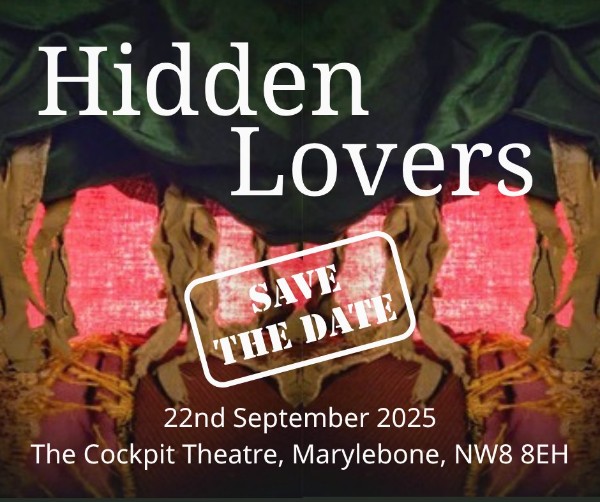
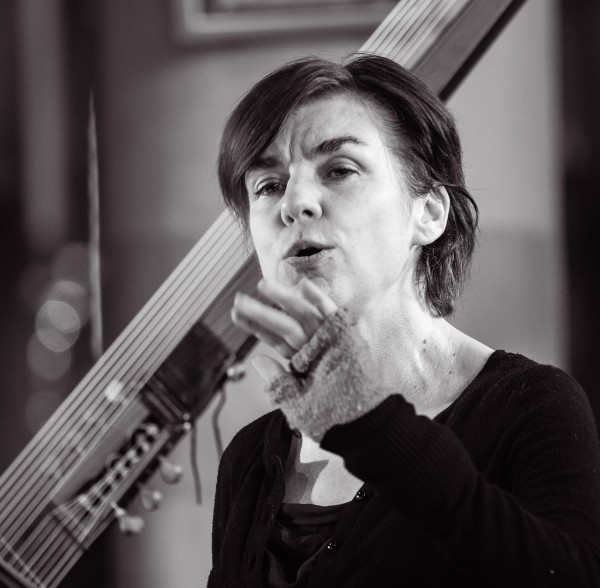
Over the past few weeks, rehearsals have been well underway for the chamber opera Hidden Lovers, composed by Janet Oates. Opening the Tête-à-Tête opera festival at the Cockpit Theatre in London, the opera’s musical forces consist of a string trio, percussion, an all-female chorus, and four soloists. The opera’s libretto by Simon Pettifar was inspired by an English translation of a memoir of Guy de Maupassant, and weaves a tale of love, memory, class, loss, and regret in 19th-century Provence.
Tete a Tete Opera Festival 2025 – Hidden Lovers
Pettifar’s and Oates’ treatment of the subject, and thinking on the personage of Maupassant himself, is nuanced. On the opera’s central character, the Traveller, Pettifar remarks:
“The Traveller in The Hidden Lovers is by no means a portrait of Maupassant, but the character does draw heavily on the French writer’s conflicted, sensual and melancholic nature – the sophisticated metropolitan who yet longs for simplicity and purity of feeling – and above all on his extreme ambivalence – fascinated and repelled, admiring and contemptuous, envious and doubting – in response to the story of the husband and wife who, hidden from the world, have been everything to each other.”
The premiere is soon, and promises to be a magical experience. As usual, Oates creates a timbrally varied and lovely soundworld, with percussive pebbles (perhaps as an ode to the rustic countryside setting and coastlines of the source material, Maupassant’s Sur l’eau), bells, a small steel tongue drum capable of gamelan-esque melody, lush strings, and her quintessentially idiomatic vocal writing, the soloists’ carefully crafted recitatives and melodic interplay shadowed by the chorus, sometimes jaunty and folksy, at other times eerily plaintive. There are even moments when the chorus taps pebbles together while singing a jaunty tune in 6/8, always making me think of Bizet’s Carmen, when Carmen sings and dances while playing the castanets.
Georges Bizet: Carmen – Act II: Je vais danser en votre honneur (Carmen, Jose) (Nino Surguladze, soprano; Philippe Do, tenor; Marchigiana Philharmonic Orchestra; Carlo Montanaro, cond.)
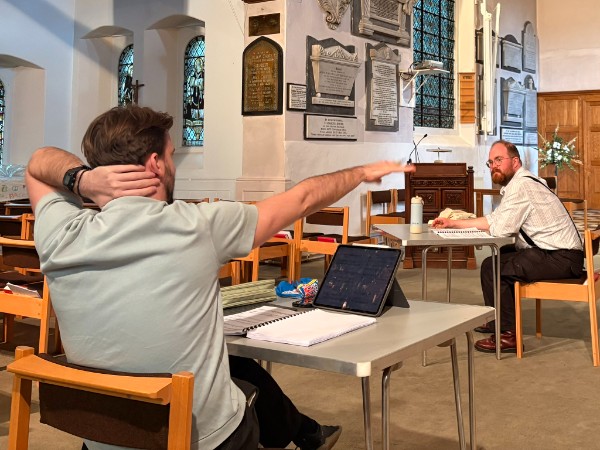
As a member of the chorus, it’s been fascinating to watch the opera come into being and see just a fraction of some of the behind-the-scenes work needed to make something like this happen. Despite being a long-time operagoer, the rehearsal process has given me a newfound understanding of the truly interdisciplinary nature of the art form and surprising insights into what is needed to make an opera work. Hidden Lovers is being stage directed by Alex Gotch and music-directed by Leslie Ann Lewis, with the composer acting as a repetiteur or score reader at the piano during rehearsals, with costumes and set design by V Hayward. Within each distinct role and discipline, there is constant overlap and discussion, with every member of the production learning to speak the language of each other’s disciplines. It’s been a joy to watch singers ask questions about dramaturgy, spacing, stage makeup, eyelines, and so on; to hear the stage director use the quality of musical material as a motive for a particular dramatic interpretation; to watch practical and artistic decision-making happen in real time in a constant dialogue between the composer, musical director, and singers. It’s also been special to see all members of the production contribute antique items for the set dressing, while the costume designer balances vision, practicality, and the comfort and well-being of performers, in conversation with the entire team. As Oates writes in her blog post about the process, “there’s nothing like working with other people to make your music seem relevant and alive.”
Hidden Lovers in rehearsal
From a musical perspective, I’ve been particularly surprised by how powerfully percussion can underpin an ensemble in a context like this. The cleanness of attack and recognisability of gesture, whether it be by a pitched percussion, hand drum, or a bell, creates clear cues that help all involved orient themselves in the scene and the score. I’ve also been reminded of the incredibly succinct evocative power of the voice, or a chorus of voices – how a variation on Provençale folk tune the Farandole, whistled, hummed, murmured, or sung in full by a soloist can immediately evoke time, place, character, and atmosphere. Suspension of disbelief, leitmotif, memory, and melody are all concepts I readily associate with opera, but it’s still exciting to see firsthand how a melodic snippet can transport you to 19th-century rural Provence, even during a rehearsal in a church in noisy 21st-century London.
Janet Oates
Hidden Lovers premieres 7:30pm on the 22nd of September at the Cockpit Theatre, Marylebone. Tickets are available here.
For more of the best in classical music, sign up for our E-Newsletter