Ludwig van Beethoven is often remembered as a solitary genius: a composer who wrestled with fate, revolutionised music, and struggled through tinnitus, deafness, and depression to create some of the most influential works in the Western canon.
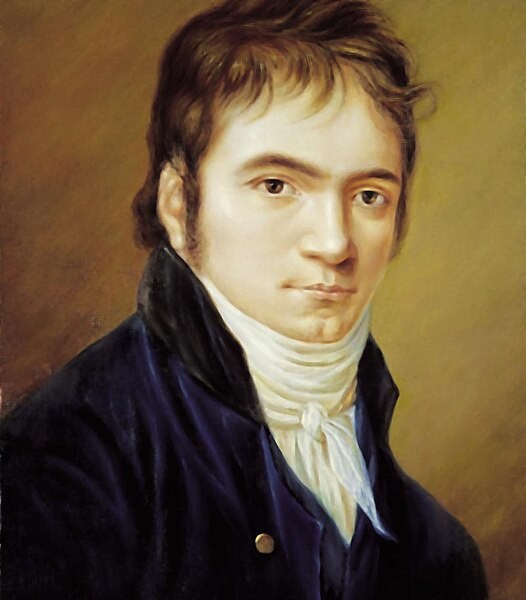
Christian Honeman: Ludwig van Beethoven, 1803 (Beethovenhaus Bonn)
But Beethoven didn’t emerge from a vacuum. Like all great composers, he had teachers and mentors who shaped his development in critical ways.
Today, we’re looking at four of Beethoven’s most significant teachers, influences, or mentors: his father, Johann van Beethoven; Christian Gottlob Neefe; Joseph Haydn; and Johann Georg Albrechtsberger.
Johann van Beethoven (1740–1792): The First Teacher
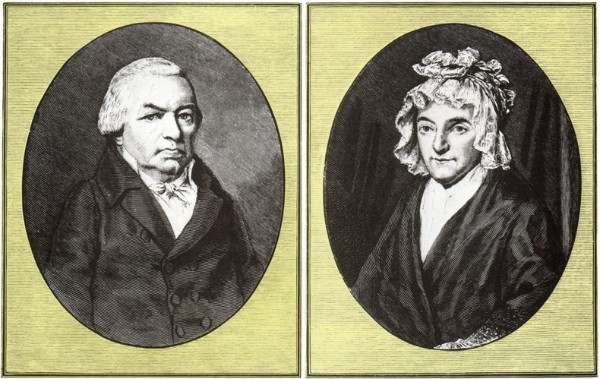
Johann and Maria Magdalena van Beethoven
Beethoven’s first teacher was his father, Johann van Beethoven, a court musician in Bonn, in present-day Germany. Unfortunately, Johann’s professional life was severely affected by his alcohol addiction.
Johann wanted to mould his son into a second Mozart. To do so, he subjected Ludwig to an abusive practice regimen.
According to later accounts, young Ludwig was made to practice for hours, sometimes at night in front of Johann’s inebriated drinking buddies. Johann would also beat his son if he played anything incorrectly, and even lock him in the cellar.
Beethoven was just sixteen when his mother died in 1787. After her death, Johann’s addiction got worse, leading to even more trouble at work.
As the eldest surviving son, Beethoven had to step up to help support his family. He arranged for a portion of his father’s wages to be redirected to him to keep Johann from spending it all on alcohol.
Due to the family’s difficult home life, Beethoven would ultimately distance himself from his father. Johann died in 1792 when Beethoven was 21.
Johann was the one who provided Ludwig with his earliest musical training. Arguably, he was also the one who – unintentionally – encouraged the sparks of defiance, resourcefulness, and woundedness that would shape the rest of Ludwig’s career.
Christian Gottlob Neefe (1748–1798): The Early Mentor
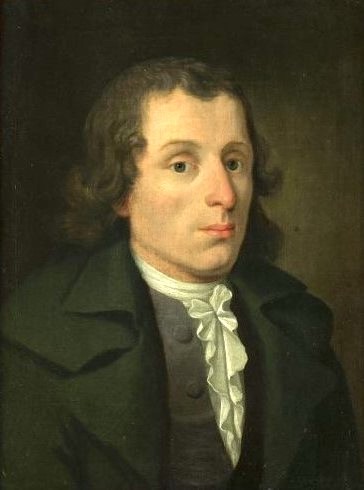
Christian Gottlob Neefe
In 1781, Johann introduced his son to his colleague Christian Gottlob Neefe, a composer, conductor, and organist in Bonn.
Neefe had lived in Leipzig, a city whose musical culture had been shaped by the Bach family. That influence trickled down to the eleven-year-old Ludwig.
Beethoven’s Piano Sonata WoO 47 No. 2; written ca. 1782-83, around the ages of 11 or 12
Neefe worked both to teach Ludwig and to raise awareness of his extraordinary gifts. In 1783, Neefe wrote an article in Cramer’s Magazin der Musik from the third-person perspective to promote his student:
“Louis van Betthoven [sic], son of the tenor singer mentioned, a boy of eleven years and of most promising talent. He plays the clavier very skillfully and with power, reads at sight very well, and…plays chiefly The Well-Tempered Clavier of Sebastian Bach, which Herr Neefe put into his hands. Whoever knows this collection of preludes and fugues in all the keys – which might almost be called the non plus ultra of our art – will know what this means… He [Neefe] is now training him in composition and for his encouragement has had nine variations for the pianoforte…engraved in Mannheim. This youthful genius…would surely become a second Wolfgang Amadeus Mozart were he to continue as he has begun.”
Under Neefe’s guidance, Beethoven matured both as a performer and composer.
Joseph Haydn (1732–1809): The Famous Teacher
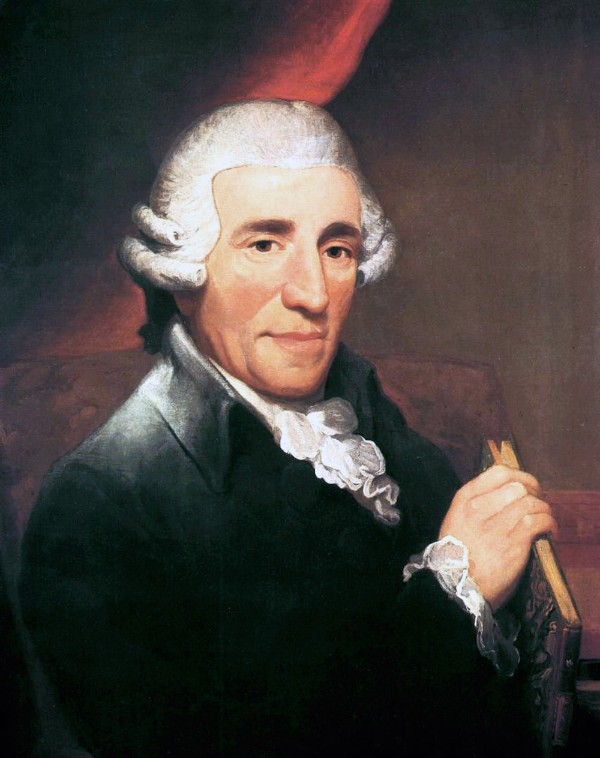
Joseph Haydn
After Ludwig’s mother died in the summer of 1787, the family’s home life deteriorated due to Johann’s grief and worsening alcoholism.
It is believed that Haydn and Beethoven first met three years later, when Haydn stopped in Bonn while traveling to London.
When Haydn returned to Vienna in 1792, he stopped in Bonn again. It is believed Beethoven made arrangements with him to study with Haydn during that stopover.
In 1792, Beethoven moved to Vienna to pursue his musical career. While there, he studied with a handful of teachers, including Haydn.
Evidence exists suggesting that Haydn assigned his 21-year-old pupil exercises from Johann Joseph Fux’s famous music textbook, Gradus ad Parnassum.
But the relationship quickly turned fraught. Beethoven, fiercely independent, rebelled against his renowned teacher.
One example of how the tension manifested was when Beethoven went to publish his Op. 1 – a set of three piano trios – in 1795. Haydn suggested that Beethoven write “pupil of Haydn” under his name. It seems like Haydn made this suggestion out of a genuine desire to help his student sell as many copies as possible, and not because he was on an ego trip. Still, Beethoven was irritated by what he viewed as Haydn’s presumptuousness.
Beethoven’s Piano Trio No. 1, Op. 1, No. 1
All of that said, it seems like once Beethoven reached full maturity, his respect for Haydn blossomed. He attended Haydn’s 76th birthday party in 1808, knelt before him, and kissed his hands.
Even if Beethoven never fully appreciated him in the moment, Haydn’s influence was inescapable. In particular, Beethoven would go on to further develop two especially prized genres advanced by Haydn: the string quartet and the symphony.
Johann Georg Albrechtsberger (1736–1809): The Technician
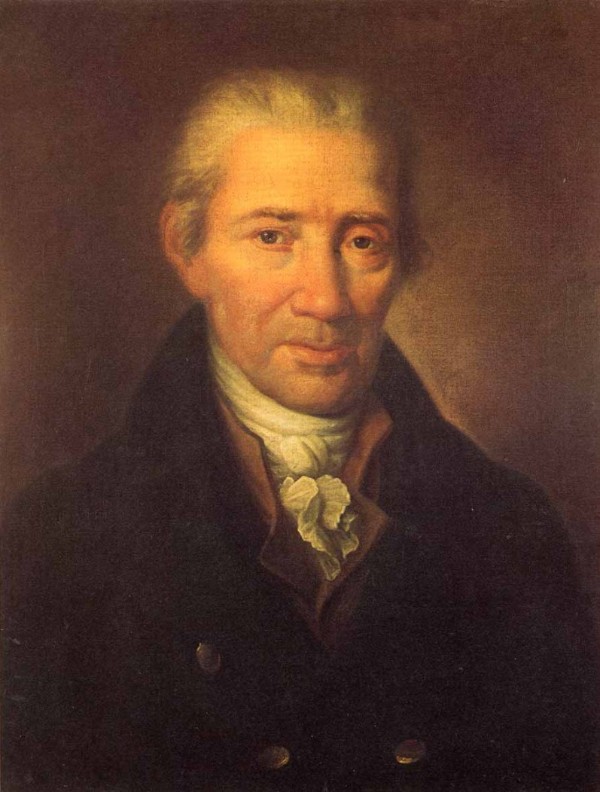
Johann Georg Albrechtsberger
Eager to sharpen his compositional technique and feeling ignored by Haydn, Beethoven turned to Johann Georg Albrechtsberger, one of Vienna’s leading theorists and a respected composer of church music in his own right.
Albrechtsberger had been named the organist to the court of Vienna in 1772, and in 1792, he became Kapellmeister of St. Stephen’s Cathedral.
Albrechtsberger was celebrated for his rigorous instruction in counterpoint and fugue, and over the course of his career, he attracted a number of incredibly talented students, including Hummel, Moscheles, Reicha, and Mozart’s son, Franz Xaver Wolfgang Mozart.
Albrechtsberger’s Quartet in C-major, Op. 20, No. 5, ca. 1780s
He may have been a traditionalist, but Beethoven respected his expertise, and Beethoven apparently got along better with him than with Haydn.
No Beethovenian complaints about Albrechtsberger survive in the historical record…a noteworthy trivia tidbit, given Beethoven’s frequent prickliness about other musicians!
All in all, Albrechtsberger helped develop the technique that Beethoven would later use to expand – and eventually break – musical boundaries.
Conclusion
There has been a long tradition in classical music of other-ing brilliant composers, thinking of them as quasi-gods living in some kind of musical Parthenon.
But doing so does nobody any favours. Beethoven was human, and one of the easiest ways to remember that is to look at the teachers who helped him find his creative voice. Without their influence, his music would have turned out very differently.
For more of the best in classical music, sign up for our E-Newsletter