Today, Frédéric Chopin is best remembered as a composer. But during his lifetime, his primary occupation was piano teacher…and he was very successful at it!
In fact, his teaching career subsidised his compositions.

Portrait of Frédéric Chopin
Today, we’re looking at ten facts about Chopin’s relationship to teaching, what role his job played in his life, how he scheduled his students, how much he charged for lessons, and more.
1. Chopin didn’t mind being known as a teacher.
This is in stark contrast to his colleague Franz Liszt, who, although he gave lessons, was never particularly keen to be known as a teacher.
2. Chopin relied on teaching for money.
There were a couple of reasons why Chopin relied on teaching for money.
For one, over the course of his entire career, he only gave a few dozen public concerts. He felt that his style of playing fit smaller rooms better than large concert halls. Therefore, he didn’t have many chances to play lucrative concerts for large paying audiences.
For another, when he sold his music to publishers, he sold all rights to it. Given the lax copyright laws of the mid-nineteenth century, composing was not always a sustainable source of income.
For those reasons, he gravitated toward teaching to make a living.
Chopin’s Piano Concerto No. 2, dedicated to his student Delphine Potocka
3. Chopin only began teaching after moving to Paris.
Chopin learned how to teach while on the job.
During his childhood and teenage years in Warsaw, he may have occasionally given informal lessons, but he only became a professional piano teacher after he moved to Paris in 1831 at the age of 21.
4. Chopin only taught for part of the year.
During Chopin’s lifetime, it was common for wealthy Parisians to escape the heat of the city in the summer and vacation in the country.
Chopin followed his students’ leads. He only spent about eight months of the year (from October to May) in Paris teaching, while spending his summer composing.
While he was dating writer George Sand in the 1830s and 1840s, he lived with her at her country house in the village of Nohant. Many of his most important works were written there.
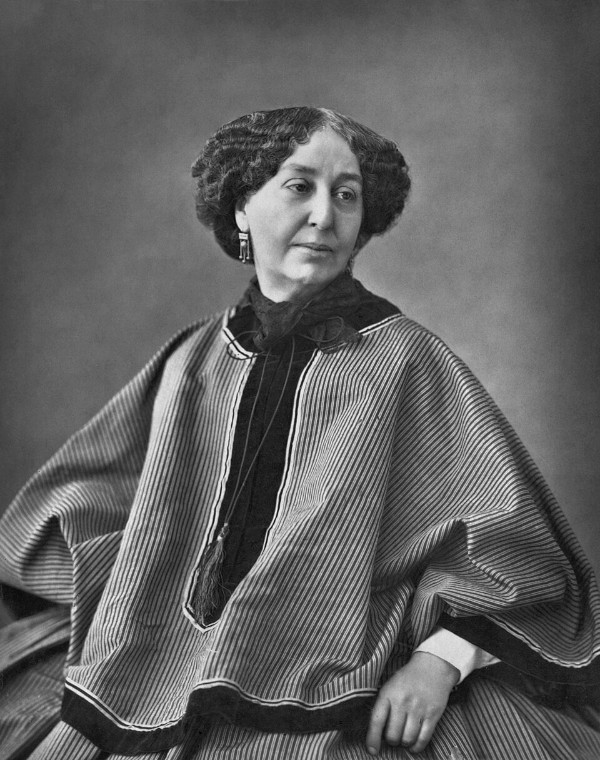
George Sand – Portrait by Nadar (1864)
He taught from 1832 until the year of his death in 1849.
5. Chopin usually saw around five students a day.
On his teaching days, Chopin would rise early and teach through the early afternoon.
He’d usually see around five students a day. Each student’s lesson lasted around forty-five minutes to an hour, but he’d spend more time with talented students.
Nowadays, music teachers usually give one lesson a week, but Chopin sometimes gave two or three, depending on each student’s talent, availability, and interest.
On Sundays, lessons tended to run longer than usual, and his schedule became more flexible.
Chopin’s Ballade No. 4, dedicated to his student Charlotte de Rothschild
6. All in all, Chopin probably taught around 150 students.
It is believed that Chopin taught around 150 students over the course of his career. Roughly twenty of those became professionals; the rest pursued music at home and at salons as devoted amateurs.
However, it’s difficult to know the exact number. Chopin didn’t mind if ambitious pianists claimed they’d studied with him…even if they hadn’t! His logic was that if name-dropping helped pianists, even if they were lying, he was glad to help his colleagues out.
7. Chopin was an expensive teacher.
Chopin’s fee was around 20 gold francs per lesson if he taught at his home, and 30 gold francs if he had to travel to a pupil’s home.
To put this into perspective, during the 1830s, an unskilled worker in Paris earned around two francs a day.
This means that during a single day, giving five lessons, Chopin could earn the same amount that an unskilled worker would earn over two months.
His rates were higher than those of Franz Liszt and Friedrich Kalkbrenner.
8. However, Chopin charged different prices to different students.
Obviously, his fees were an impediment to poorer students. But if someone was in financial need and a good fit for his studio, Chopin would discreetly lower his rates for them.
His heart went out to Polish students in particular (although his students came from all across Europe).
Chopin’s Nocturne in F Minor, Op. 55, No 1, dedicated to his student Jane Stirling
9. It was hard to get a lesson with Chopin!
Chopin had a circle of friends who were devoted to him. Due to his tuberculosis, he was physically frail, often struggling with chronic fatigue. His friends tried to protect him from administrative work so that he could spend his limited energy on music.
Prospective students had to make several appointments with his circle before actually being able to meet him. Even those who would eventually become his favourite students invariably had to go through a rejection ritual before finally securing a place on his schedule.
10. Chopin wanted to write a “Méthode de piano”, but he never finished it.
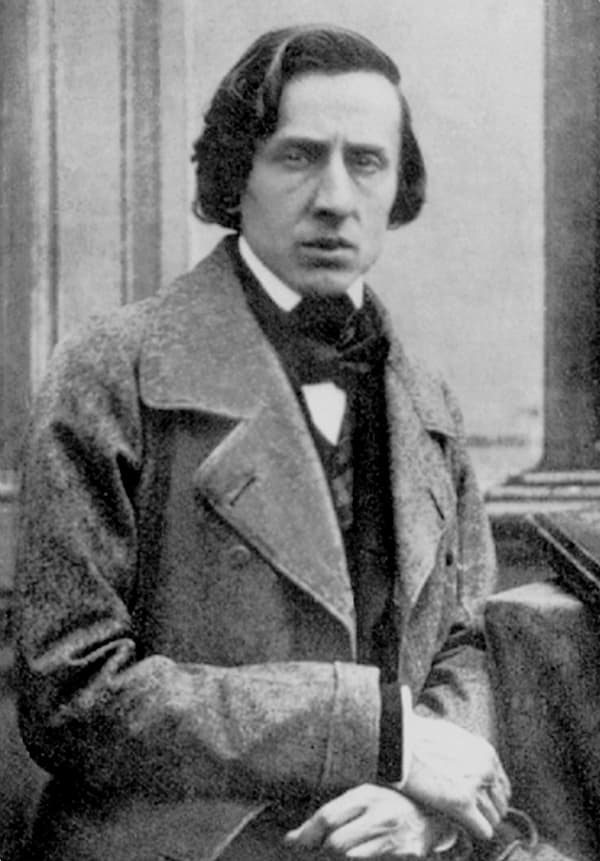
Frédéric Chopin
Chopin took notes for a piano method he hoped to publish someday. Unfortunately, his pedagogy proved difficult to capture in the written word, given that his teaching techniques varied dramatically from student to student. He never finished the method, and it was never published in full.
However, we can guess what he might have included. Here are some of the notes that Chopin jotted down, trying to define music:
- The art that manifests itself through sounds is called music.
- The art of expressing one’s thoughts through sounds.
- The art of handling sounds.
- Thought expressed through sounds.
- The expression of our perceptions through sounds.
- The expression of thought through sounds.
- The manifestation of our feelings through sounds.
- The indefinite (indeterminate) language of men is sound.
- The indefinite language music.
- Word is born of sound—sound before word.
- Word: a certain modification of sound.
- We use sounds to make music just as we use words to make a language.
Notice how so many of his ideas about piano-playing center around the quality of sound, and the relationship between piano playing and the human voice.
He encouraged his students to listen to opera and even to learn how to sing themselves. Maybe if you want to learn the Chopin method of playing piano, you should think about taking voice lessons!
Conclusion
Chopin may not have left a formal method behind, but teaching was a major – some would say the most important – part of his musical life.
Therefore, especially since his teaching career subsidised much of the music we know and love today, it’s an important part of his biography to become familiar with.
For more of the best in classical music, sign up for our E-Newsletter