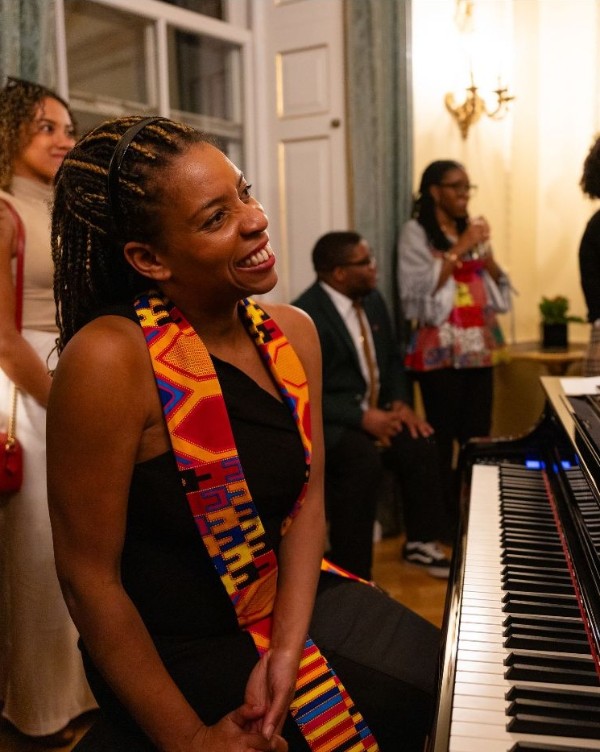
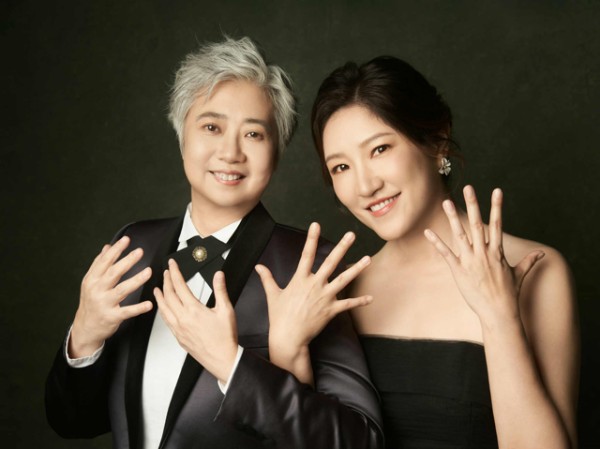
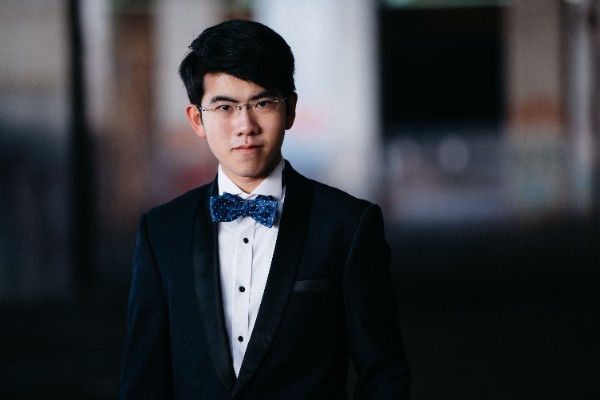
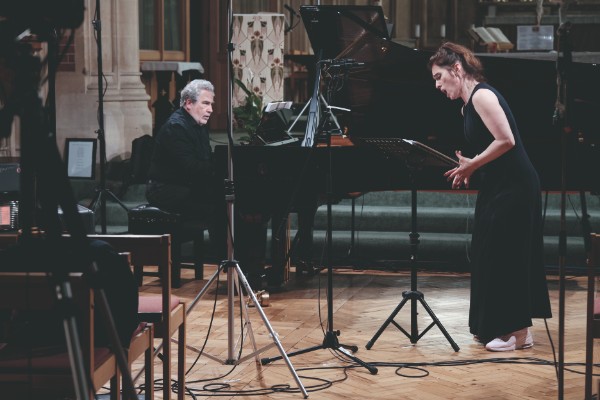
Born and raised in Hong Kong, pianist and bandoneonista Winnie Cheung began piano lessons at age five. Though she spent many years rigorously practicing in her formative years, she grew restless with the solitary nature of traditional classical training. “I don’t consider myself a pianist at that time because I was just practicing in the practice room. I don’t perform for me; it is important to perform as a musician,” she reflects. Today, she channels that deep musical discipline into her transformative project, Tango With Winnie, which brings live tango music and dance to diverse audiences worldwide: from concert halls and art galleries to schools, senior-care homes, prisons, and community festivals.
La Próxima Traición – Ben & Winnie
Winnie’s musical journey took a transformative turn when she left Hong Kong at sixteen for Canada. Freed from the rigid exam-focused system, she recalls, “I became functional… people started asking me to perform, and little did I know at that time that I really started to become a musician, a musician that performs.” She thrived on the spontaneity of performance: “You can’t plan how many songs you’re going to learn a year. When people tell you a date to perform, you say yes if you can; it’s on demand.” Her versatility blossomed as she played everything from Disney songs to concertos, and even coached singers, finding fulfilment in bringing music to those around her. “The line between the stage and the audience has already been blurred,” she says. “You’re my friend, I play for you, you sing with me; we’re both on stage.”
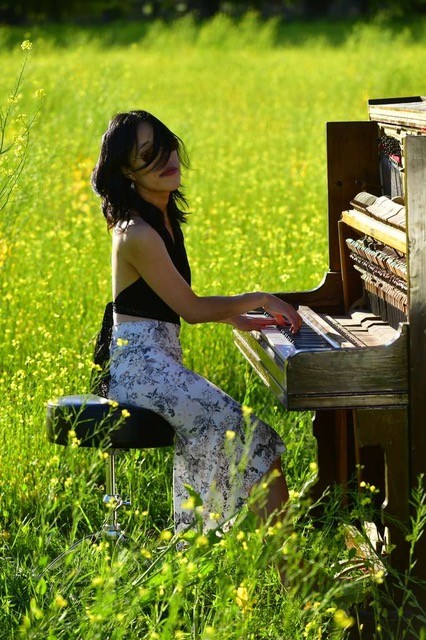
Winnie Cheung
At seventeen, a near-fatal car accident forced Winnie to confront life’s fragility and her true aspirations. Initially on a path toward engineering, she reflects, “I had a lot of time in a wheelchair… the only thing I know is I don’t want to be an engineer.” That period of introspection led her to the University of Chicago, where she pursued a self-directed exploration in literature, linguistics, and music theory, determined to reclaim her identity after years of cultural displacement. “Switching language… I wasn’t sure if I was losing my identity. That was important to me,” she says.
Winnie’s artistic awakening began under the mentorship of John Eaton, the American microtonal composer. “He let me just walk in there and live in the same space that he was in… He taught me that yes, this space is yours if you want to take it,” she recalls. Eaton’s philosophy emphasised authenticity over judgment: “The most interesting music is the music you write for yourself, by yourself, about yourself.” Through his guidance, Winnie honed her compositional voice while simultaneously cultivating her performance skills. “You are not a composer when you’re not composing… you should not pretend that you have the prestige that society gives to artists if you’re not making art.”
After completing her bachelor’s at the University of Chicago, Winnie pursued advanced degrees at the Eastman School of Music, earning her master’s and doctorate in composition with a minor in piano performance. Eastman was rigorous, isolating, and, at times, harsh, but it also provided her with invaluable skills and lifelong friendships. “I still have a piece of Eastman School of Music with me,” she says. “When I was composing, I was a contemporary classical composer; when I couldn’t compose, I played contemporary classical piano music.”
Life shifted again with motherhood, which Winnie embraced while balancing a demanding teaching and performing schedule. “Female musicians deserve a lot more respect because we menstruate and we make babies… It’s a shame nobody talks about…the work time we lost. Did we get compensated? Negative, none, nada,” she insists. Raising two children required her full attention, yet Winnie also continued nurturing her musical identity, demonstrating a remarkable ability to adapt and thrive.
Zorro Gris – Tango with Winnie
In 2015, Winnie discovered Argentine tango, which would redefine her career and her personal expression to the present day. Hosting a visiting musician, she was drawn back to performing: “They put the music in front of me. I just play… I played tango for that one week, and I was hooked.” Tango offered a return to collaboration and spontaneity: “I love playing with people. I don’t want to study; I don’t want to just be in a room. I’m a people person.” From that week onward, she has played tango daily, performing in duos, quartets, and eventually mastering the bandoneon during the pandemic, taking advantage of the time to learn a new instrument.

Winnie Cheung
Winnie’s professional tango work has been both prolific and pioneering. She recounts, “From 2015 on…there is not a single day that I have not been playing tango.” Her commitment extends globally, performing on nearly every continent, conducting workshops, and teaching across ages and communities. She emphasises that music is a vehicle for personal enrichment: “I’m trying to teach you what music, tango music, sounds like… to better your life, [make] yourself a happier, better human, so other people can be a better, happier human around you.”
At age fifty, Winnie maintains an uncompromising dedication to her art, balancing health, family, and professional life. She has learned to prioritise projects based on a simple but profound framework: money, prestige, and pleasure. “If you can get two out of three, that’s already a lot. If you get zero, that’s what you must cut down,” she explains. Even as an accomplished international musician, she remains grounded, aware of the costs of her intense career and the need for self-care.
Winnie Cheung’s story highlights resilience, versatility, and authenticity. Starting as a disciplined child pianist in Hong Kong, she has become a pioneering tango musician who connects different continents and cultures. She believes music is more than just performance; it’s a way of living fully. “If everybody knows that you have an infinite amount of space for yourself, you will not be that aggressive… You will be a lot more compassionate, a lot more thoughtful, and just a lot nicer as a human,” she explains. Through her music, Winnie has shaped her identity and continues to motivate others to find their own place in the world.
Learn more about Winnie Cheung: http://tangowithwinnie.com/
For more of the best in classical music, sign up for our E-Newsletter