When Paul McNulty first set foot in Prague in the winter of 1994, he didn’t know that a chance encounter with a piano from Amadeus would change the course of his life. The piano, identical to the one featured in Miloš Forman’s 1984 film, had been built in Prague. When he learned that another example existed, curiosity led him to make the trip from Amsterdam to see it. What he found was more than an instrument; it was a revelation.
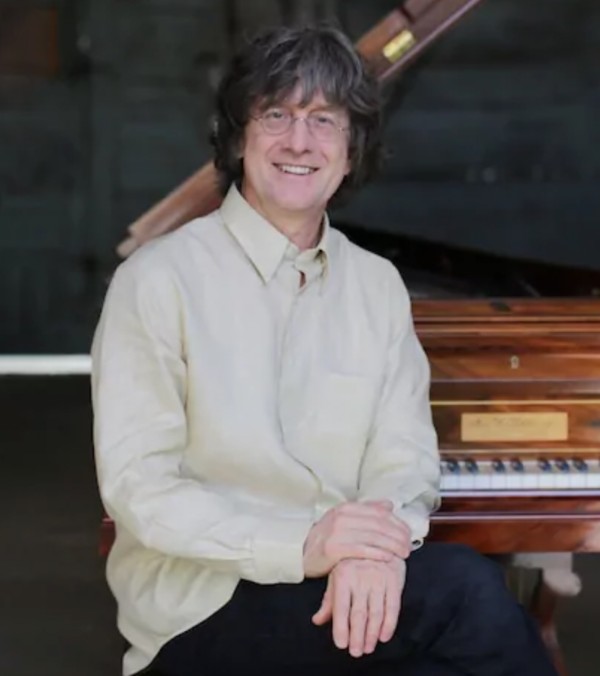
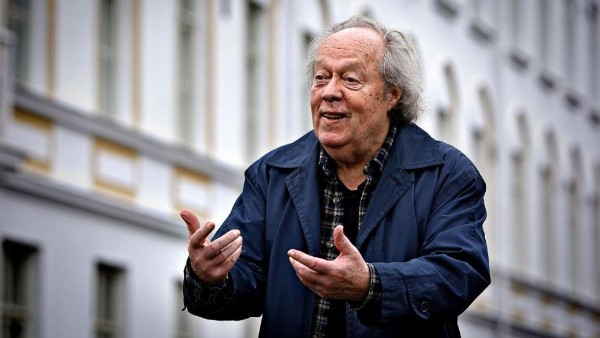
Paul McNulty
The piano sat in the workshop of a harpsichord maker, surrounded by stacks of tonewood. “At that time, I had no soundboard wood at all,” Paul recalled. “It doesn’t grow in Holland; you have to go to Switzerland or find dealers in Belgium. It was always complicated.” The builder offered him not only a five-year supply of soundboard wood but also the promise to cut down another tree for him the following winter. “I drove home to Amsterdam with the piano, and I thought, no one ever told me this before.”
Soon after, he sent a fax to ask if he could move into the workshop. The answer was yes. So, he packed up his tools, machines, and hopes, and moved to the Czech countryside, where he stayed for three years before finding his own home and workshop in a nearby village. “Life is only what I do,” he said with quiet satisfaction. “I don’t really have a social life except in music and traveling. I’m busy, busy, busy.”
Paul’s journey into piano building began in the 1970s, after leaving the conservatory. “I didn’t succeed as a performer,” he admitted. “So I went to piano tuning school, and that was very helpful. I found I had some talent, just in another direction.” His interest in piano history deepened through lectures given by a teacher who worked nights at William Dowd’s harpsichord workshop in Boston. It was the era of the early music revival, and fortepianos, the predecessors of the modern piano, captured his imagination.
Mozart: Piano Concerto No. 24 in C Minor, K. 491: I. Allegro (Performed by John Gibbons using McNulty’s first built piano)
In 1985, he built his first piano entirely by hand. “It took three months, eleven hours a day,” he said. That instrument later toured Europe with John Gibbons and the 18th Century Orchestra and eventually found a home at the State Academy of Music in Oslo. “Deadlines are the law,” he laughed. “A professionally made instrument cannot be made slowly. There’s a rhythm to the work, just like in music.”
His understanding of fortepianos, early grands, and the evolving designs of the 18th and 19th centuries is both scholarly and intuitive. He described the shift from iron to steel strings in the 1840s, which revolutionized piano construction. “When mild steel wire appeared, builders could create longer strings and greater tension,” he explained. “Franz Liszt’s 1846 piano by Louis-Constantin Boisselot, for example, had the same tension as a modern Yamaha concert grand, which is about 30,000 kilos.”
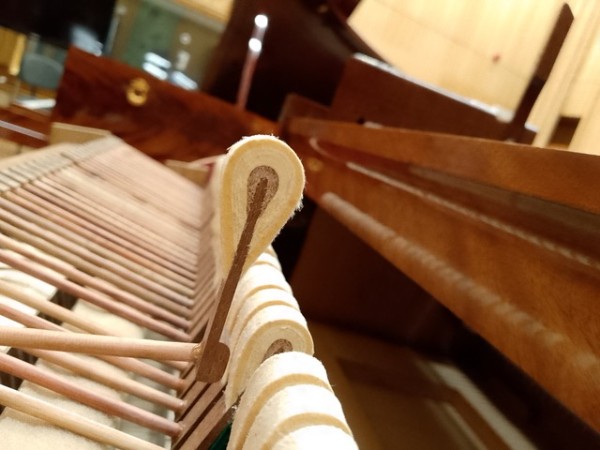
The hammers of a Pleyel 1830 copy
Paul has replicated instruments created by some of the great builders of the past. To name a few, the list includes Johann Baptist Streicher, Conrad Graf, Friedrich Buchholtz, and Camille Pleyel. Each, he said, shows both a technological and an aesthetic evolution. “The early pianos of the Rococo era were basically harpsichords with hammers. But as Beethoven demanded more power and sustain, builders responded. By 1810, Nannette Streicher had expanded her father’s design to six octaves to meet Beethoven’s needs. The piano became orchestral.”
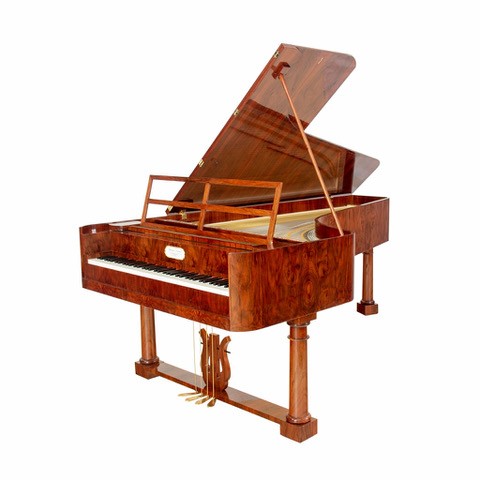
The replica of Chopin’s 1825 Buchholtz piano
When he replicated Chopin’s 1825 Buchholtz piano, the project held deep cultural significance. The original instrument, once owned by the Chopin family, had been destroyed in 1863 during an uprising. “When I finished the replica, it was premiered in Warsaw on March 18, 2018, the exact same day Chopin premiered his F minor concerto in 1831,” he said. “The Minister of Culture and the Prime Minister gave speeches before the premiere concert and publicly stated that ‘The piano Chopin played was burned in the street, and now we have it back.’”
“Chopin’s Warsaw Piano” -A TV documentary of Paul McNulty making Buchholtz piano:
Frédéric Chopin’s Concerto in E minor, Op. 11, Rondo. Vivace (performed by Dmitry Ablogin on McNulty’s “Chopin’s Warsaw piano” and Freiburger Barockorchester)
While Paul’s work bridges history and craft, his wife, pianist Viviana Sofronitsky, embodies the artistic soul of the fortepiano. For her, the revelation came later, after years of studying and performing on modern instruments.
Viviana Sofronitsky performed on McNulty Pleyel, Walter, Graf, Stein & Boisselot fortepianos
“I didn’t think I would ever play fortepiano,” she said with a smile. “When I was in school, I saw antique pianos in museums, but they were unplayable, just curiosities. I couldn’t imagine making music on them.” When Viviana was a student at the Moscow Conservatory, the program required students to play music from all periods. But she felt she didn’t truly understand Romantic music, so she focused on Classical and very modern repertoire. Yet even within the Classical period, she felt something was missing. “Even Mozart didn’t speak to me,” she recalled. “I thought something was wrong with me. I thought I needed to work harder, to play more, and somehow it would come. But it never did. So, I turned to the music I felt I understood better, which are the baroque and the very contemporary, also started playing harpsichord and organ.”
To study the harpsichord, Viviana went to the United States, to Oberlin College, and there her life changed completely. One day, there was a fortepiano concert featuring Mozart trios. “It was like a door opened,” she said. “Suddenly, everything made sense, the balance, the structure, the colours. I asked to try the fortepiano afterwards, and I realised how natural it felt. Only thanks to the fortepiano, I finally understood the language of Mozart.”
From that moment, she began to see the fortepiano as a living voice, not an artefact. “It’s like hearing the composer speak in their own language,” she said. “If you read poetry in translation, you lose the tone, the rhythm, the inner life. But when you hear it in the original language, it becomes alive again. That’s what happens when you play Mozart, Schubert, or Chopin on the instrument they knew.”
Viviana’s analogy extends beyond the fortepiano. “The music of some composers, such as J.S. Bach, preserves its meaning and impact even when played on a different instrument from the one it was written for. But other composers, such as C.P.E. Bach or Rameau, are much more closely connected to the instrument for which their music was written. When it is played on another instrument, it loses its meaning. That was the reason why the great music of the French harpsichordists was rarely performed until Wanda Landowska brought the harpsichord back to the concert stage in the early 20th century.
Her years performing on Paul’s reconstructions have reshaped her artistry. “Now I can play this music even on a modern piano with better understanding,” she reflected. “Once you’ve heard the original voice, you never forget it. You translate it, but you still remember its sound and spirit.”
In their home outside Prague, the sound of history comes alive daily, a conversation between maker and musician, husband and wife, art and craft. Each fortepiano they build and play revives not just a sound but a human connection across centuries: a voice that still sings, tenderly and truthfully, in its own language.
Paul McNulty Fortepianos: fortepiano.eu
For more of the best in classical music, sign up for our E-Newsletter