The Polish pianist and scholar Dr. Sławomir Dobrzański continues his impressive exploration of overlooked Romantic repertoire with Antoni Kątski: Piano Works, Vol. 3, the newest release in Acte Préalable’s praised series. This album takes listeners on a musical journey through the 19th century, highlighting the life and artistry of a cosmopolitan virtuoso whose career once spanned nearly every continent.
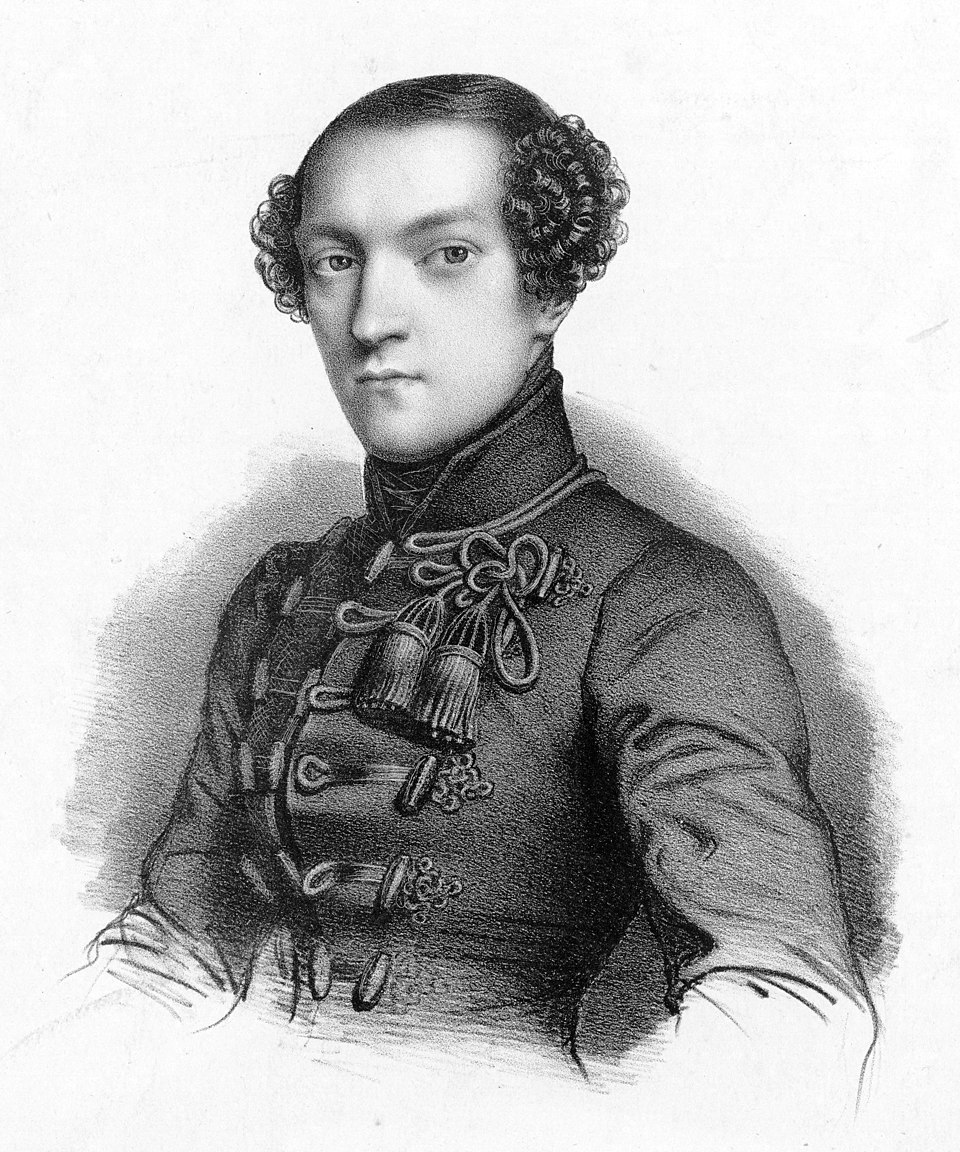
Antoni Kątski
Known during his lifetime as Chevalier Antoine de Kontski, Antoni Kątski (1816–1899) was a child prodigy, pianist, composer, and world traveler. A student of John Field and Sigismond Thalberg, he performed across Europe, Russia, and the Americas, and is believed to have been the first European pianist to tour Japan and the Philippines. Yet despite his fame and honours, including serving as the King of Prussia’s court pianist, his music has largely been forgotten.
For Dobrzański, who has devoted years to reviving Kątski’s legacy, the journey began with curiosity and serendipity. “The mysterious name Antoni Kątski appeared in some biographies of Chopin,” he recalls. “Then, while visiting Grand Rapids, Michigan, I heard from locals that a great Polish pianist named Anton de Kontski lived there after moving to the United States. I began researching his life and music and accidentally discovered a treasure trove of charming and totally unknown piano music.”
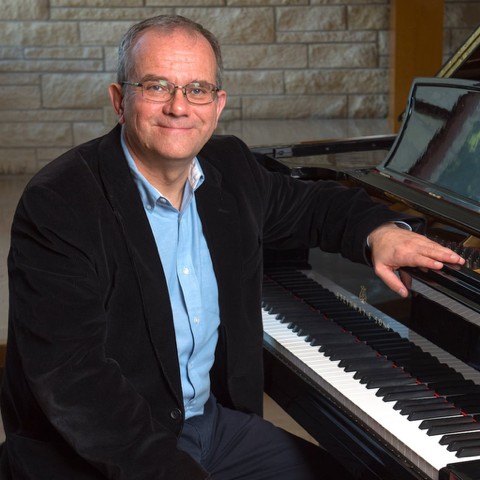
Sławomir Dobrzański © KSU Photo Service
Originally intending to record a single disc, Dobrzański soon realised the composer’s output was far richer than anticipated. “Initially, I recorded just one CD with music that I considered representative of his entire output,” he explains. “As time progressed, I collected more of his music, and there was an obvious need to record at least one more CD and then another one.”
The new album focuses on Kątski’s works inspired by travel, a recurring theme in his career. The selections span from early lyrical miniatures such as Souvenir de Bukowiec to later pieces like the Persian March and Polish National Alliance March, which reflect his experiences abroad and his eventual life in America.
“Romanticism glorified travel,” writes Dobrzański in the liner notes. “An artist was a perpetual, often solitary pilgrim, sensitive to nature, landscape, and the mystery of the unknown.” That sentiment threads through Kątski’s souvenirs, each one a musical snapshot of a place, encounter, or mood.
“Well, the world is so different today than it was during the 19th century,” Dobrzański reflects, “but some echoes of that romantic world can still be found in nature and architecture. It’s easy to understand Kontski’s portrayal of a waterfall or his instinctive understanding of Polish folklore.”
Indeed, pieces such as La Chute du Rhin vividly evoke the power of nature through cascading arpeggios, while Souvenir de Dantzic, dedicated to Giacomo Meyerbeer, unfolds with lyrical charm and delicate shading. Particularly striking is Dobrzański’s use of a long-forgotten performance technique known as carezzando, described in Kątski’s pedagogical treatise L’Indispensable du pianiste, Op. 100.
“At some point in his life, Kontski wrote a method book in which he promoted a special piano articulation called carezzando,” Dobrzański explains. “He advocated sliding the fingers slowly on the keys to produce a special sound effect. I found the carezzando in his Souvenir de Dantzic and followed the instructions from his method book. I was surprised by the colour effect.”
Kątski’s worldliness extended beyond Europe. The Persian March, composed during his travels in the Caucasus, stands out as a unique blend of Western virtuosity and Eastern flavour. Kątski was reportedly the first European to notate Azerbaijani folk melodies using Western notation. His Grant Funeral March (1885), dedicated to “The American Nation,” reveals a surprising affinity for the ceremonial dignity of 19th-century America, while the Polish National Alliance March (1892) reflects his patriotic pride as a new U.S. citizen.
Antoni Kątski: Grant Funeral March op. 326 – To the American Nation
Dobrzański’s interpretations bring warmth and conviction to each piece. His touch captures both the brilliance and the tenderness of Kątski’s style, the salon grace, the theatrical flair, and the emotional sincerity that connect him to the lineage of Chopin and Thalberg. Yet, as Dobrzański reminds us, Kątski was not a revolutionary like Chopin or Liszt. “During their lifetimes, their music was often considered shockingly modern,” he says. “Composers such as Kontski would have been more mainstream, more conventional, but no less exciting. When we learn to appreciate Kontski, we learn to appreciate the exquisite qualities of the great composers even more.”
Interpreting rarely played repertoire poses unique challenges. “I really enjoy the process,” Dobrzański says. “I feel totally free to experiment within the limits of good taste and romantic aesthetics, of course. Being the only person in the world playing a certain composition is great fun, but also a lot of responsibility.”
Beyond his artistry, Dobrzański’s scholarly dedication has played a crucial role in reclaiming lost voices from the Romantic era. A professor at Kansas State University and a recipient of Poland’s “Meritorious for Polish Culture” honour, he has also recorded the complete piano works of Maria Szymanowska and Wiktor Łabuński, among others. Yet Kątski remains a particularly personal mission, a window into a time when pianists were not only musicians but also storytellers, travelers, and cultural ambassadors.
“I do like taking a break from romanticism every once in a while,” he admits. “I am currently exploring music by Kassern, Čiurlionis, and Skoryk. Whether this will lead to a recording, it is too early to tell.”
For now, Antoni Kątski: Piano Works, Vol. 3 stands as both an act of rediscovery and a celebration, a tribute to a globe-trotting composer who left behind a map of his journeys in music. Through Dobrzański’s sensitive artistry, Kątski’s voice once again resounds with clarity and warmth, reminding listeners that even forgotten paths in music history can lead to unexpected beauty.
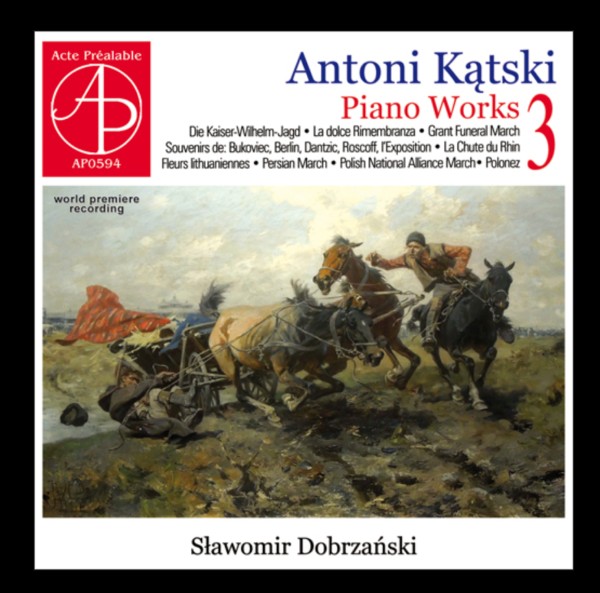
Antoni Kątski: Piano Works, Vol. 3
Sławomir Dobrzański, pianist
Label: Acte Préalable
Catalogue no.: AP0594
For more of the best in classical music, sign up for our E-Newsletter