If the directors of the Rossini Opera Festival in Pesaro intended to set the fox among the chickens and shake up their audience this year, they certainly succeeded. Just the mention of controversial director Calixto Bieito set tongues wagging and triggered animated discussions.
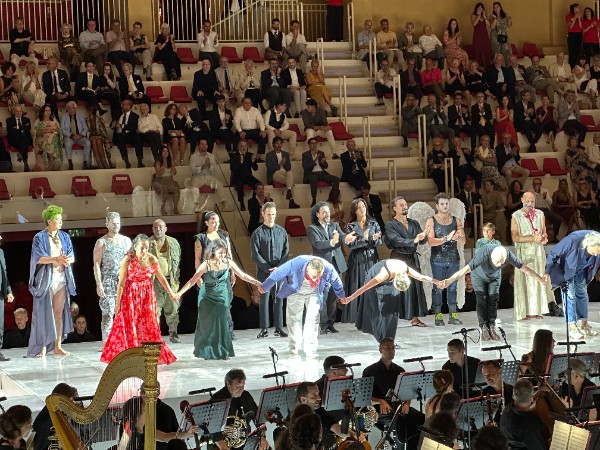
Rossini Opera Festival 2025 – Zelmira
Zelmira, the last opera from Rossini’s fruitful Neapolitan period, was handed to the Spanish director as his debut in Pesaro. An ambitious and complex opera, Rossini wrote Zelmira for some of the finest singers on his impresario’s roster, including Isabella Colbran in the lead role, the soprano who the composer would soon marry. Casting this opera properly will always be a challenge. But directing the confusing story of a political power struggle set in ancient Lesbos remains even harder.
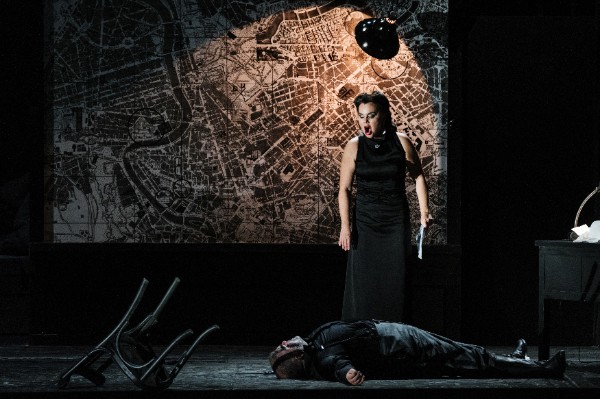
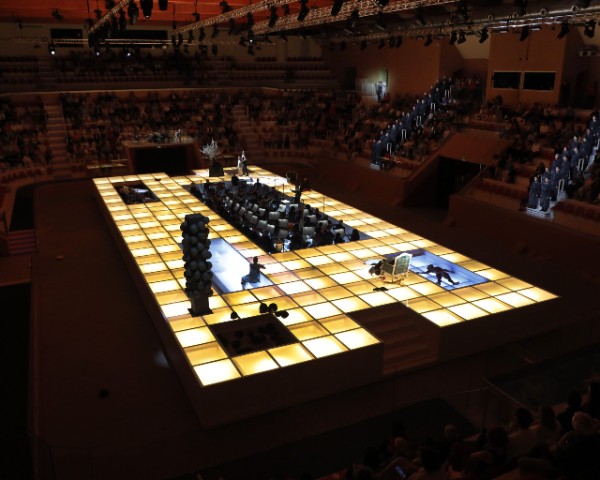
In this respect, at least in this reviewer’s view, Bieito failed, and the festival’s management failed their audience. Performed in Pesaro’s charmless Scavolini basketball arena with a depressingly thin audience on all four sides, this Zelmira struggled to gain momentum and precluded any intimacy. Bieito’s enormous 360-degree stage was populated by several pools; some with water, some with dirt, some just empty ditches. He animated the scene with often inexplicable stage props (a presumed hanged body used as a boxing bag, an empty glass ballot box being carried around, plaster busts recalling antiquity, a throne, balloons released by a child wearing a crown sitting on that throne, etc.), which proved confusing and hard to follow, let alone interpret. Seemingly gratuitous same-sex relationships between the protagonists and an unexplained pregnancy of sorts further muddled things.
Plot clarity wasn’t helped by the absence of supertitles. An app was apparently made available to follow the libretto on mobile phones, but that was neither widely taken up nor an appealing option. The venue had other difficulties, including safety issues around the seating on the steep and unsecured steps – a real challenge for the older opera-going demographic.
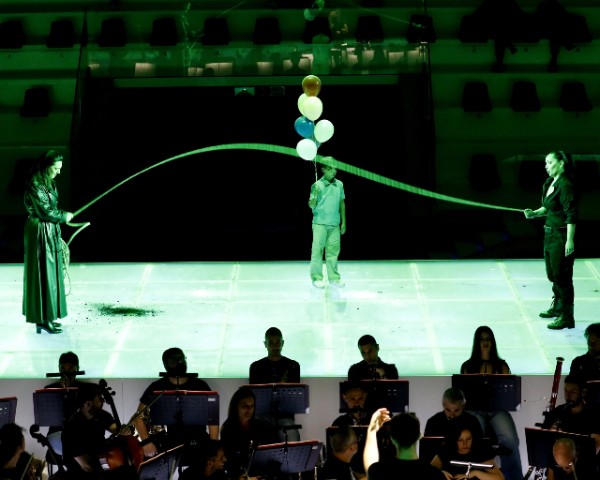
© rossinioperafestival.it
While Bieito offered little in terms of plot explanation, the music spoke volumes. Anastasia Bartoli, in her third outing in Pesaro, proved a sensational Zelmira. Her voluminous voice possesses thrilling agility. Her floating pianissimi are as spellbinding as her awe-inspiring squilli. Bartoli’s visceral physicality makes her one of the most exciting sopranos on European stages today.
She was well paired with Marina Viotti as her confidante Emma. The first act duet between Viotti and Bartoli with the harp obbligato was a celebration of sheer beauty, coordinated delicacy and belcanto flexibility.
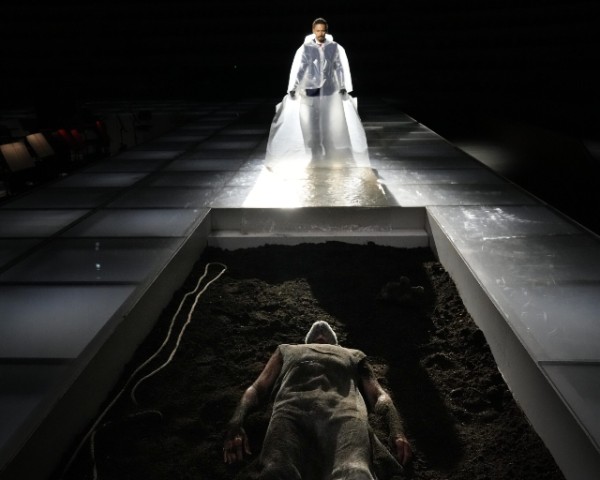
© rossinioperafestival.it
The assorted rivals for power over Lesbos were equally strong. Lawrence Brownlee played a PTSD-suffering returning Prince Ilo. Though he was made to cower through most of the performance, his singing was nothing short of magnificent, and nowhere near post-traumatic. The veteran belcantista’s voice still shimmers and blades.
The intriguer Antenore was performed by local favourite Enea Scala. His voice has certainly seen sunnier days, but he still fearlessly delivers vocally as well as dramatically and boasts an electrifying attack.
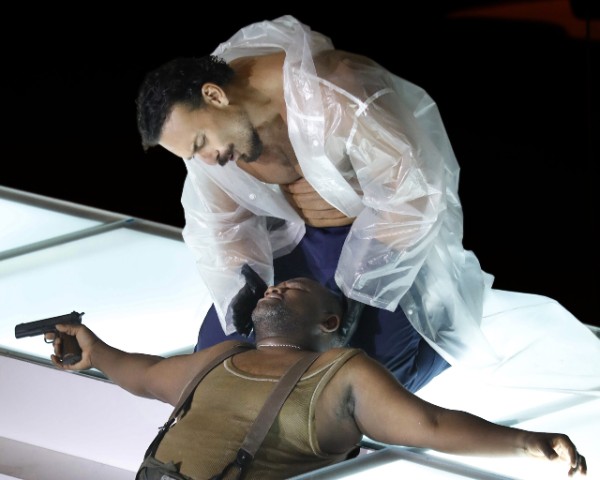
© rossinioperafestival.it
His co-conspirator Leucippo, portrayed by Gianluca Margheri, was unmissable. He liberally displayed his un-operatically chiselled torso throughout the show – a Chippendale performer with a crisp voice.
© rossinioperafestival.it
The Orchestra del Teatro Comunale di Bologna did a creditable job in their mid-arena pit, and conductor Giacomo Sagripanti did his best to keep the four-ring circus together and under control – not an easy task with singers and chorus in every direction, in addition to a banda up in the rafters.
Zelmira’s finale, the fiendishly difficult riedi al soglio, is the irresistible climax of the opera. Apparently, Bartoli did a great job of it. But I cannot vouch for it. The powerful female chorus was placed in the aisle directly next to my seat, making Bartoli both invisible and inaudible.
The production’s inevitable coda arrived during the applause (and some unrestrained boos), when the costume designer fell into one of the many water pits on the stage. You cannot invent these things.
A second questionable evening took place at the town’s jewel box of a theatre, the Teatro Rossini. The first half featured a series of Rossini art songs, Soirées Musicales, beautifully arranged for orchestra and performed recital-style by young singers. The format carried an unwelcome taste of graduation recital. Not exactly what one expects from a top-tier festival. It also unnecessarily extended the evening and distracted from the main event, La Cambiale di Matrimonio by director Laurence Dale. The revival from 2020 showcased Pesaro’s forte with buffo ensemble pieces, and Pietro Spagnoli excelled as Tobia Mill, demonstrating his impeccable diction.
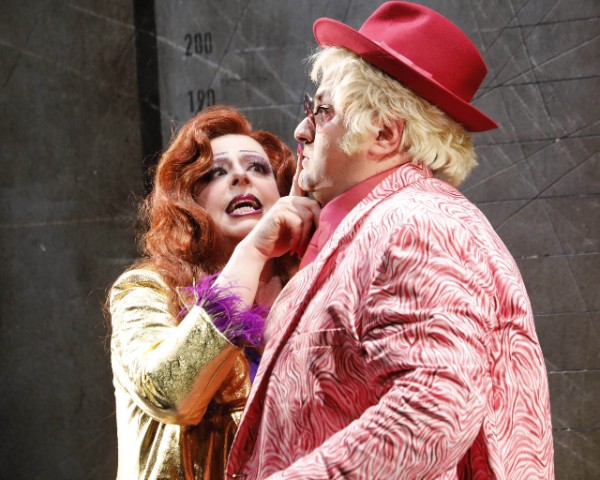
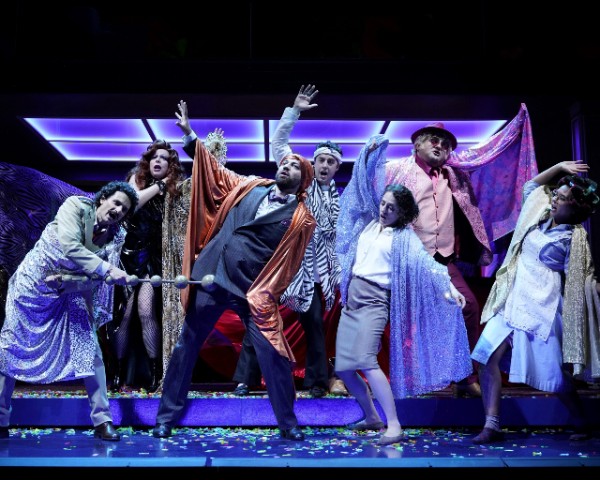
Another new production was Rosetta Cucchi’s L’Italiana in Algeri. The Pesarese director, who has repeatedly proven her ability to stage visually impactful yet meaningful productions that actually make sense, took this popular opera buffa to a comical extreme. Her shrill and unabashedly camp vision turns the Italian shipwrecks into transvestites. Cucchi’s direction was consistent, clever, light-hearted and fun, while never descending into annoying slapstick.
© rossinioperafestival.it
She was helped by a first-rate cast of singers, actors, dancers and yes, transvestites. Veteran mezzo Daniela Barcellona took on the lead role of Isabella with visible relish, her tall, slightly manly appearance fitting her character to a tee. She navigated the music with her trademark vocal agility, plumbing the depths of her score with gusto, while tackling the complicated coloraturas with enthusiasm. A masterful performance!
Georgian bass Giorgi Manoshvili proved a highly effective Mustafa, his versatile and rich voice matching his unexpected comic talent. His fellow countryman Misha Kiria’s booming baritone and hulking presence furthered the comedic impact. The smaller roles were well cast with an army of enthusiastic and younger singers.
Noted Russian tenor Dmitry Korchak, a festival regular, has reinvented himself as a conductor and energetically led the Orchestra del Teatro Comunale di Bologna.
© rossinioperafestival.it
A largely delighted audience spilled out of the Teatro Rossini, confident that Pesaro can still deliver top-notch Rossini when it really wants to. One can only hope that the festival didn’t overspend on Bieito and will put on a more thoughtfully planned program in 2026.
Performances attended: August 10,11,12 of 2025
For more of the best in classical music, sign up for our E-Newsletter