
With much fanfare, the Salzburg Festival announced Ulrich Rasche as director of Gaetano Donizetti’s Maria Stuarda. A proponent of “perpetual stage movement and intense lighting to create visceral experiences,” the German director’s vision was of two queens, each stuck in their own mechanical world, on their own large round platforms with concentric circles moving in different directions.
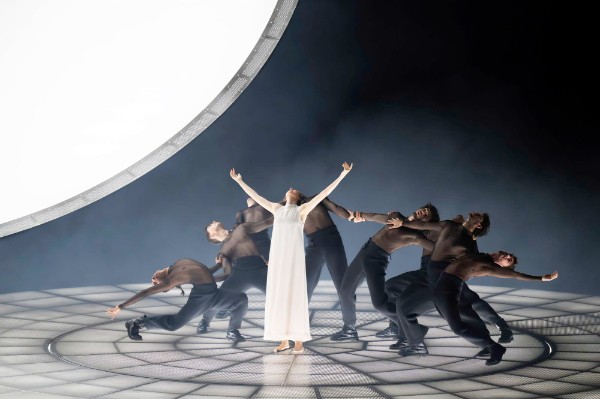
Maria Stuarda 2025: Lisette Oropesa (Maria Stuarda), Dancers from SEAD — Salzburg Experimental Academy of Dance © SF/Monika Rittershaus
The platforms slowly move and swivel, occasionally demonstrating a parity of power between the rivals or an inexorable drifting apart. Dancers remain in non-stop motion, mildly reminiscent of a silent ancient Greek chorus and a gentle nod to many of (the late) Robert Wilson’s productions. The principals are also perpetually in the same rhythmic motion, albeit mostly in alternating direction – certainly a testament to the singers’ physical fitness. But that single big idea soon tired, and the highly stylised movements of all performers ultimately turned the singers into unemotional automatons, robbing the story of much of its dramatic intensity. In moments of passion, the lovers barely engage; in the confrontation scene, the antagonists don’t even have a chance to look at one another – the platforms supposedly doing the talking. More annoyingly, the monster platforms’ creaking and clanking proved an irritating distraction.
A third large sphere, more like an oversized bathroom lamp, occasionally descended and swerved around one platform or another, sometimes serving as a projection surface to portray a supposedly erotic scene of Maria with some half-dressed men. In the finale, the hanging sphere completely descends to crush some of the dancers, relegating the Queen of Scots to the back of the stage and her supposed execution. Dramatic, yes, but it also completely blocked the lead during her final moments of singing, rendering her climax inaudible.
Maria Stuarda | Trailer | Salzburger Festspiele 2025
Rasche did little that benefitted the singers. But neither did the conductor. It seemed Antonello Manacorda took the rhythmic cue from the marching dancers and singers, resulting in a largely monotonous rendition. The conductor was quoted as wanting to get away from “cliché belcanto,” but in the process, he lost much of the rising tension inherent in Donizetti’s score. The most noticeable change was for Maria’s 2nd act prayer scene, where Manacorda upped the pace and the volume, duly drowning out Lisette Oropesa’s sumptuous preghiera.
Cuban-American soprano Oropesa was the vocal star of this production. Her singing was fine, nuanced, at times forceful, subtle. But even a talented actress as she is couldn’t imbue this Maria Stuarda with much passion.
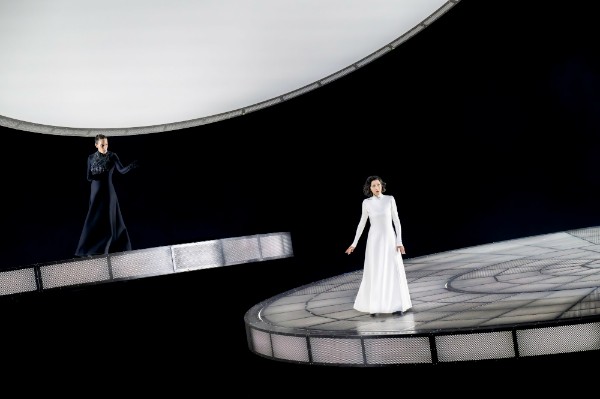
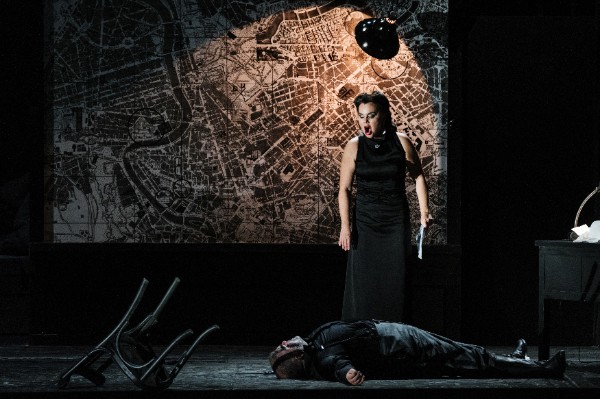
Maria Stuarda 2025: Kate Lindsey (Elisabetta), Lisette Oropesa (Maria Stuarda) © SF/Monika Rittershaus
Her rival Elisabetta was ably sung by fellow American Kate Lindsey. A vocally crisp and strong mezzo, her first act strutting around the rotating disc made her look like a cross between Nosferatu and Mrs Danvers, and a far cry from a queen.
Uzbekistani Bekhzod Davronov sang Robert Leicester. A medium-sized voice of remarkable beauty in the middle range, his top notes were occasionally hesitant, and he was often overpowered by a seemingly uncaring Vienna Philharmonic.
Alexei Kulagin gave a standout performance as Talbot, possessing a rich and nuanced bass. He was also allowed a bit more unrestrained movement, stepping on both platforms – as would befit the love interest of the two rivals. Nino Gotoshia was a noteworthy Anna, Mary’s lady in waiting. A talent worth keeping an eye on.
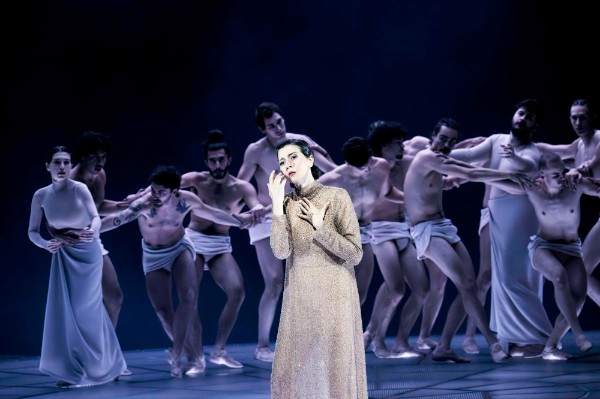
Maria Stuarda 2025: Nino Gotoshia (Anna Kennedy), Dancers from SEAD – Salzburg Experimental Academy of Dance © SF/Monika Rittershaus
The opening night audience was delighted by the performance. Nearly no complaints were heard; many shot up from their seats to applaud Rasche and the cast, praising the interpretative brilliance of the rotating platforms and the visual impact, and complimenting the Salzburg Festival for putting on such a daring production. Very few asked if anything of this production was actually in the service of Donizetti and his sensational score.
Performance attended: 1 August 2025
For more of the best in classical music, sign up for our E-Newsletter





Bravo!! So glad the reviewer of Donizetti’s opera “Maria Stuarda” wasn’t blind to the horror of the rotating disks calling themselves “stage design”, neither was deaf to the terrible noise they produced. Finally, someone with enough common sense and taste and courage to say the truth about the destructive modernism creeping into classical music production (see also the distorted modern statuses among 16th century surroundings in the Residence on Residence square in Salzburg, or the horrible orchestration and performance of the “Die schönne Müllerin” in one of the fringe events at the same festival). Open your eyes and ears, Austrian public!! Not everything modern is by default good.