After 48 years – mirabile dictu – Milan’s Teatro alla Scala has mustered the courage to bring back Vincenzo Bellini’s Norma. The reasons for the long absence are somewhat unclear. Were memories of Montserrat Caballé’s sensational 1977 performance still too fresh? Or was it even the very long shadow of Maria Callas, whose 1955 rendition still retains its legendary status among operatic die-hards? Or was it just a reluctance to put on such a dramaturgically static yet musically demanding work?
Norma – Trailer (Teatro alla Scala)
Possibly, it was the new critical edition (2022) by leading British musicologist Roger Parker that offered a welcome fresh approach. But it by no means made the opera easier to perform. Among other changes, this edition returns to Bellini’s original G Major tonality for Casta Diva, a fearsome aria at the best of times. Bellini had apparently transposed the aria down one tone for the original Norma, Giuditta Pasta, who was probably not comfortable with the high notes; this lower version has now become the standard. Bellini’s notes on an autograph score offered La Scala sufficient compelling reasons to bring this masterwork back to the stage where it was originally premiered in 1831.
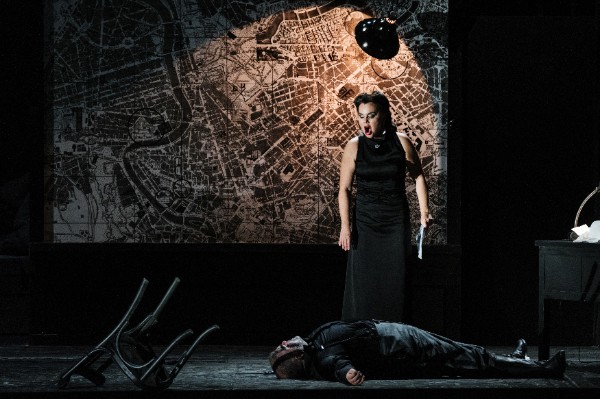
French director Olivier Py was entrusted with the production, and it was roundly lambasted by critics and audience alike after the première of 27 June 2025. Moving the setting from Gaul in Roman times to Milan during the Risorgimento might work as a commentary on the horrors of occupation, but it jars with the text from the very beginning: Oroveso, Chief of the Druids and father of the high priestess Norma, commands his “druids” to go to the hills and observe the “mystical priestly bronze.” Not something Garibaldi would have encouraged.
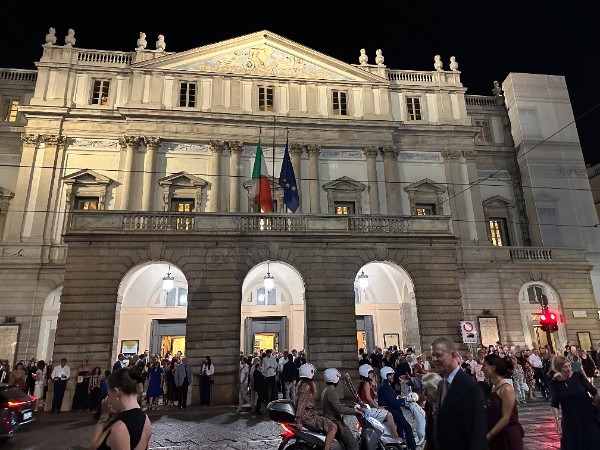
Teatro alla Scala
Py also uses La Scala itself as a prop, showing it at times as a full-frontal stage set, at other times displaying an image of the theatre post-world war destruction. He further created a story-within-a story of a performance at La Scala. For this, he chose – of all operas – Medea, one of Callas’ signature roles, though he was probably alluding to the heroine’s dilemma over sacrificing her children. Top hatted burghers (possibly Austrian occupiers), Italian partisans, and a sprinkling of bare-chested men dancing with Greek theatrical masks, all added to the general confusion. However, to Py’s credit, he succeeded in entertaining and keeping the audience guessing, not a totally unwelcome change from what is usually a static, drab and boring procession of druids wearing dark robes in dimly lit forests.
But Norma is really all about the music, and in this regard, La Scala truly delivered. Marina Rebeka was accorded the awesome responsibility of treading in the footsteps of Callas, Leila Gencer and Caballé, and by most accounts, the Latvian soprano did a good job. But she pulled out of the last performance and was replaced at short notice by Jessica Pratt.
Casta Diva from Norma by Vincenzo Bellini @ La Scala 2025
Pratt is a very different kind of soprano from Rebeka. A true bel canto specialist, the Italy-based Australian provided a veritable masterclass. Her Casta Diva, now even more daunting in the G Major setting, was nothing short of arresting. Pratt adeptly handled all embellishments, subtly weaving and stringing out the most filigree pianissimi, before effortlessly swinging to a squillo on a top note that could pierce the back of the building. Pratt has achieved true mastery of her art, sticking to what she does best, and she has come to dominate this Fach. Her performance had nothing to fear from any comparisons with her legendary predecessors.
Though there was very little time for rehearsal, Pratt moved confidently and blended beautifully with her colleagues, above all Vasilisa Berzhanskaya’s Adalgisa. The Russian mezzo deployed her voluminous voice with skill and finesse, and also collegial consideration towards colleagues with less stentorian heft.
British tenor sensation Freddie de Tommaso was well cast as Pollione, a role that is now mostly sung by a spinto tenor. Though he occasionally showed some discomfort in the fioriture and the high notes, his middle register remains irresistibly rich, powerful and splendid.
Italian bass Michele Pertusi sang Oroveso. He is a Scala regular and one of the finest representatives of true italianità in today’s opera circuit.
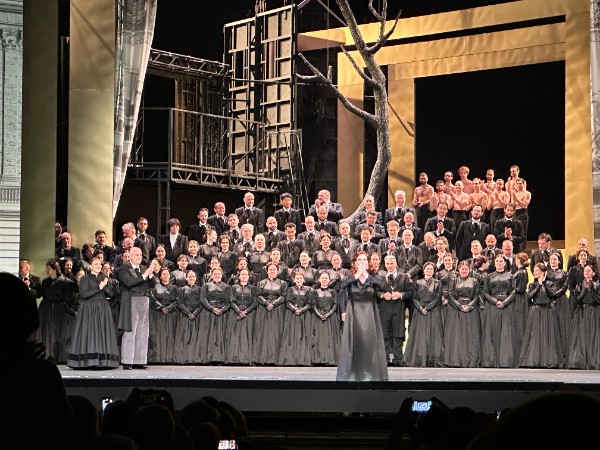
The Chorus of La Scala was in particularly fine form. Precise, powerful, nuanced and clearly enthusiastic.
Fabio Luisi kept the orchestra at a fast clip, though always respectful of the voices and taking his time whenever necessary to tease out Bellini’s sumptuous details.
A hopelessly sold-out auditorium and restrained loggionisti proved that La Scala is still at the top of its game for the most demanding of operas. Even if it took 48 years to get up the courage.
Performance attended: 17 July, 2025
For more of the best in classical music, sign up for our E-Newsletter