There are three well-known French composers who have changed the direction of music forever. With their works, they have broken traditions, connected cultures and brought innovation to how music is perceived, composed and experienced. We are, of course, talking about Debussy, Satie and Ravel. If indeed these three composers have been innovatively unique, they are themselves the result of a multiplicity of influences, which are the subject of this article. From their predecessors, to their contemporaries and their faraway neighbours, influences have been diverse and varied. Let’s then look at giving credit to the sum of Debussy, Satie and Ravel’s parts.
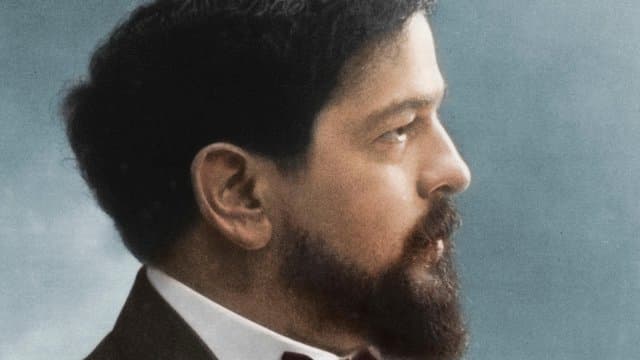
Claude Debussy © Classic FM
Both Debussy and Ravel worked closely with the Russian patrons of the time, Debussy through Nadezhda von Meck — who was also the patron of Tchaikovsky and Rubinstein —and Ravel through Ida Rubinstein, who, a dancer and actress, commissioned many ballets of the time. This led to the influence of Russian culture on both composers, Debussy with Rimsky-Korsakov, for instance, and Ravel with Mussorgsky — he later in his career arranged the composer’s Pictures at an Exhibition for orchestra.
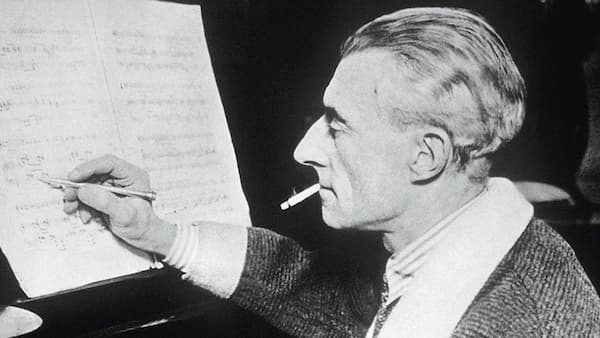
Maurice Ravel in 1928 © Fototeca Gilardi / akg-images
Both through entering the order de la Croix and returning to the conservatoire, Satie studied plainchant and medieval music, which had a lasting impact on his approach to composing melodic lines, as well as helping his perception of time and particularly fragmenting musical phrases outside of the traditional notation system, ignoring bar lines and note values, for instance.
Debussy and Ravel both had a fascination for the French composers who preceded them; Couperin’s harpsichord work was a great influence on Debussy, and Ravel dedicated his piece “Le Tombeau de Couperin” to the Baroque composer.
Ravel: Le Tombeau de Couperin (Orchestre national de France)
Both Debussy and Ravel were incredibly curious musicians, and this led them to discover the music of other cultures around the world. If it is well-known for Debussy and the Indonesian gamelan, another element which influenced both Ravel and Debussy is the music of Spain. This can be seen in both their catalogues, from Ravel’s “Boléro” to Debussy’s “Images pour orchestre”.
Debussy : Ibéria (Philharmonique de Radio France)
Throughout his life, Ravel toured the United States. After his concerts, he was introduced to North America’s native and truly original music: blues and jazz. Whilst still in its early forms, the discovery of the rhythms, the swing, the melodies and harmonies, the improvisations and the instrumentations of jazz left a deep mark on the composer’s approach to music. For Satie, it was the Parisian cabarets and late-night clubs that marked the composer’s approach to his own music — and later his own works, such as in “Parade”.
Parade (Satie / Picasso)
If this article has mostly focused on musical influences, let’s not forget that literature, poetry, and the arts have also influenced each of these artists in the development of their musical selves, too; in fact, Debussy would associate his ideas with symbolism, rather than the impressionism that is often associated with him.
Ravel and some of his contemporaries founded a group of artists called les Apaches. They were fascinated by topics such as Javanese music and the music of Russia, as well as poetry, literature and painting and would often discuss this together. Debussy, who was never a member, fascinated them too. All these common influences and connections are no surprise when one hears the resulting music.
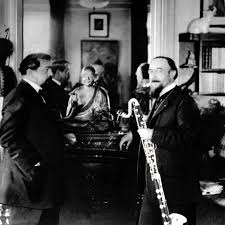
Claude Debussy and Erik Satie
One additional actor to mention — and eventually a member of les Apaches — present on the French scene at the same time, and equally challenging these composers is, of course, Stravinsky. The dancer and patron Ida Rubinstein, to whom Debussy’s “Le Martyre de Saint Sébastien” and Ravel’s “Boléro” were commissioned, would challenge the latter by competing with Stravinsky. Interestingly enough, when one looks at the music of Stravinsky very closely, one can identify elements of the music of the French composers, particularly Debussy.
Once every few centuries, there are some composers who impact the course of music so much that its history is forever changed. Debussy, Satie and Ravel. Beethoven, Wagner, Schoenberg. Three names that will constitute the second part of this series of articles…
For more of the best in classical music, sign up for our E-Newsletter