Reaching the end of a multi-year project, Inventa Records presents a six-volume recording of the music of the 17th century Portuguese composer Manuel Rodrigues Coelho. Born in 1555 in Elvas, in the south of Portugal, he died in Lisbon in 1635 as organist of the Royal Chapel in Lisbon. His only known work was the Flores de musica pera o instrumento de tecla & harpa, published in Lisbon in 1620, clearly the culmination of years of work. (Digital version: https://purl.pt/68/1/index.html#/1/html)
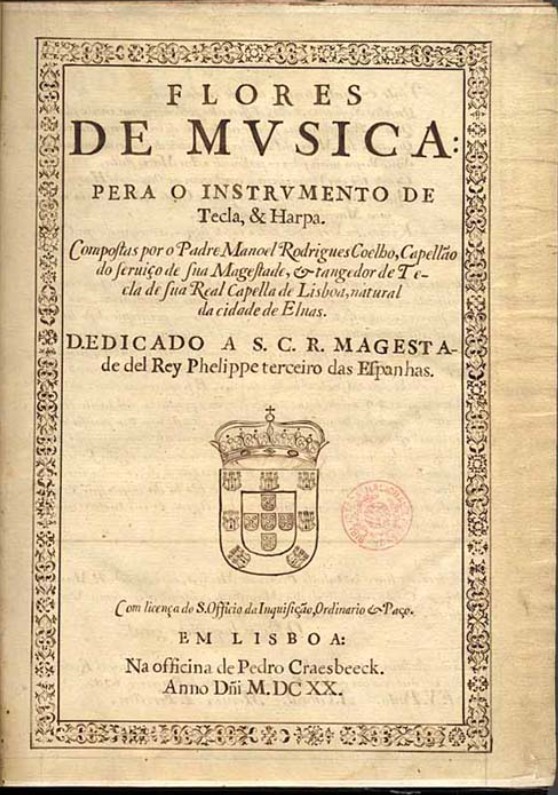
Manuel Rodrigues Coelho: Flores de musica pera o instrumento de tecla & harpa, 1620 (Biblioteca Nacional de Portugal)
Starting in 2020, on the 400th anniversary of the work, a new edition was prepared by João Vaz, and that edition was used for the preparation of this first complete recording of Coelho’s Flores de Musica. The recording was made ‘using all the media prescribed by Coelho – keyboard instruments (organ, harpsichord and clavichord) and harp’. None of the instruments used are survivors from Coelho’s time, but important historical instruments in Portugal were used, such as the 1765 Fontanes de Maqueira organ in the Church of São Vicente de Fora in Lisbon, and an 1758 Antunes harpsichord. Instruments in places important to Coelho’s career, such as in the Cathedral of Elvas, were also used.
Volume 1 is organ music and vocal music, performed by Sérgio Silva, organ, playing 18th-century organs in Elvas Cathedral. He’s joined by Mariana Moldão, soprano, and Maria de Fátima Nunes, mezzo-soprano.
Within the Flores de musica there are 24 tentos. Coelho wrote 3 on each of the 8 ecclesiastical modes. The Terceiro Tento do 8º tom is typical in Coelho’s output in starting with long notes that are then used as the basis for new motives, new rhythmic patterns, and changes of tempo from quadruple meter to triple meter.
Manuel Rodrigues Coelho: Terceiro Tento do 8º tom
Many of the tracks were intended for what was known as ‘alternatim’ performance, which was common in the 16th through 18th centuries in Latin countries. Some verses of the Office could be replaced with solo organ music, and in the Flores de musica, we find examples of verses from hymns, the Magnificat and Benedictus, psalm tones, and kyries written for this purpose.
As with many projects, when presented with a complete book from a former century, we’re unsure of the actual practice of the day. The ‘alternatim’ versions given in the Flores de musica are complete, but we’re unsure if it was to be played as published or was intended to be a reference to a work where you might play only the first and last stanzas or whatever the choir in a particular performance might need. Because of the didactic nature of this recording set, the performers clearly set out their decisions, in this case, choosing to use ‘the first and last stanzas with plainchant and the four middle stanzas with Coelho’s settings’. Details of the two organs used for the recording (the Main Organ by Pascoal Caetano Oldovino, 1762, and the Positive Organ by Pascoal Caetano Oldovino, 1754; both restored by Pedro Guimarães in 2015), and the specific registrations used for each track are detailed.
The next volume is also organ music, with André Ferreira as organist and the Ars Lusitana, led by Maria Bayley. Reading into the Flores de musica, an appreciation of 17th-century performance practice can be gained. Two significant aspects of the collection must be understood. The more-than-500-page book is one of the largest music works printed in the seventeenth century. It was also an anomaly in that it was written in open score format, rather than numbered tablature, making it the first volume of its kind printed in Portugal. In many ways, the Flores de musica can be viewed as presenting the kinds of things that a chapel organist would do, including teaching. The didactic quality of the book should not be underestimated and the provision for the ‘alternatim’ settings is part of our growing realization of the improvisations that a chapel organist might be faced with on the fly.
One unusual composition is his Versos sobre Ave maris stella. Coelho breaks the hymn into 5 sections and creates new thematic material for each different verse. There’s no presentation of the hymn as a whole, just these elaborations on each verse, and it is thought that the nature of the work is not to be presented in ‘alternatim’ but as a piece unto itself. In the performance, they have reconstructed Portuguese Latin pronunciation.
Manuel Rodrigues Coelho: Ave maris Stella
The principal performers on this recording, the organist and the director of Ars Lusitana close their notes on this volume by saying ‘We have aimed to place each verse and tento of Flores de Musica into a semblance of its liturgical context, and our interpretation was guided as far as possible by treatises and the music itself; but one quickly understands that we are simply grasping the surface of an unimaginable rich musical life’.
Volume 3 consists of harpsichord music, performed by Ana Mafalda Castro. She performs 7 tentos and one Susanna. There are four settings of Susanna un jour in the Flores de musica, each based on the famous original by Orlando di Lasso. The performer notes the anomalous position she’s placed in ‘playing a group of works together that have never been played in such a way in the composer’s lifetime’. Viewing it as an anachronism, she nevertheless acknowledges the necessity of a construction for the medium of an audio recording.
For Castro, the ‘tento can be described as the equivalent of a ricercare or a fantasia, both well known in Coelho’s time’. The fundamental structure is based on the imitative writing and the diminutions that support the modal organisation. The addition of a triple meter section is an additional concern for the performer because sometimes it must be played slower and sometimes more quickly. The implications of the Trinity in triple-meter sections cannot be ignored, and she finds that these sections often have their own peaceful, if not religious feeling.
In her performance notes, Castro emphasised how, from her very first recording 30 years ago, Coelho has been part of her repertoire. She welcomes the opportunity to add her years of performing experience to this recording, adding glosas and ornamentation that she would have hesitated over when she began her career.
Manuel Rodrigues Coelho: Susanna grozada
Volume 4, performed by Fernando Miguel Jalôto on harpsichord, follows the same organisation as Volume 3. Seven tentos separated by another setting of Susana grosada.
Manuel Rodrigues Coelho: Segunda Susana grosada a 4 sobre a de 5
The harpsichordist, Fernando Miguel Jalôto, bemoans the fact that, although Coelho’s works are known internationally, they aren’t performed as much as they should be. He declares that ‘performers and listeners are frightened by the complexity and sophistication of his writing, predominantly in imitative counterpoint and that Coelho is still regarded as being a very intellectual, complicated and distant, perhaps even pedantic, composer’. He’s encouraged by Coelho’s note that ornaments should be added ‘as often as possible’ with both hands and cautions performers not to go overboard on this! Jalôto also makes the point that this is not only Portuguese harpsichord music but also should be considered as part of the body of Western harpsichord music – Coelho’s links with Spain are palpable and place him in the centre and not on the periphery of musical life.
One of the early essays noted the appearance of the word ‘harp’ in Coelho’s title: Flores de Musica pera o Instrumento de Tecla, & Harpa. It was speculated that, since Coelho and the harp were not associated, perhaps the inclusion of the instrument in the title was a 17th century marketing hook (and we thought we invented those things!). Volume 5 includes music for harp and for clavichord, along with 4 Susanne settings: the original by Lassus, two Coelho fantasias, and a plainchant version.
Coelho’s 4 versions of Susanne un jour are unusual. One appears in vol. 3, one in volume 4, and now two in volume 5. Susanne is, of course, the Susanna of the Old Testament who, while bathing, was observed and menaced by two elders. They tell false tales besmirching her reputation as a young married woman, but are found to be liars, and her name is cleared. She’s a symbol of modesty and fidelity, but also a vehicle for the depiction of the female nude.
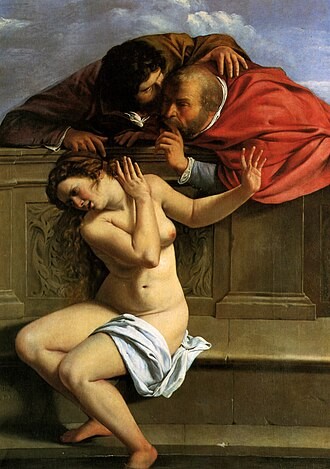
Artemisia Gentileschi: Susanna and the Elders, ca. 1610
(Pommersfelden: Schönborn Collection)
The harp referred to is the Iberian arpa de dos órdenes, a cross-strung instrument dating from the Renaissance through the Baroque period. Nonetheless, in her essay, harpist and singer Maria Bayley says that the music has ‘distinct technical challenges’ because it’s really keyboard music and not harp music. Whereas the keyboardist is faced with writing that is ‘idiomatic for the keyboard…exploiting its ability to sustain voices independently, navigate complex counterpoint with ease, and ornament through long runs of semiquavers’. The harp, on the other hand, was only played with ‘the thumb, index, and middle fingers of each hand, rather than all four fingers as in modern practice’. Sustained notes aren’t possible, the decay of the sound is more rapid, and, to perform the music, Bayley found it necessary to do a bit of rewriting, adding ‘Cross-fingering, redistribution of voices between hands, and the occasional selective revoicing of chords’ to keep it to the harp idiom. Bayley credits this recording as being ‘the first recording made in Portugal focusing on the Iberian harp as a solo instrument’.
Manuel Rodrigues Coelho: Terceira Susana grosada a 4 sobre a de 5
The final volume is a return to organ music, but bolstered with singers of the Capella Patriarchal, directed by João Vaz, and players from the Cornetas & Sacabuxas de Lisboa. The essay, by João Vaz, returns to the wonder of the collection. By Coelho’s own admission (and despite that harp reference in the title), the collection was intended for accomplished players, rather than amateurs. The complex nature of the pieces and their technical demands places it apart from didactic collections of the time. In addition, the thorough exploration of the 8 church modes in the tentos, the addition of the Kyries, and works based on plainchant melodies indicate that the book was really intended for liturgical use.
Manuel Rodrigues Coelho: Ave maris stella sobre o cantochão do tenor
This last volume, consisting of 2 CDs, sees the end of João Vaz’s project of a complete recording of the Flores de musica, which he himself seemed an ‘unfeasible idea’ at the start!). As an exploration of music in Portugal in the early 17th century, it is unmatched. Each volume, with an essay written by the principal artist, details the unique elements of the collection. So much was learned about contemporary performance practice and ornamentation, not only at the royal court but also in the country’s many churches, that it should be studied for many years as an investigation of music from theory to practice.
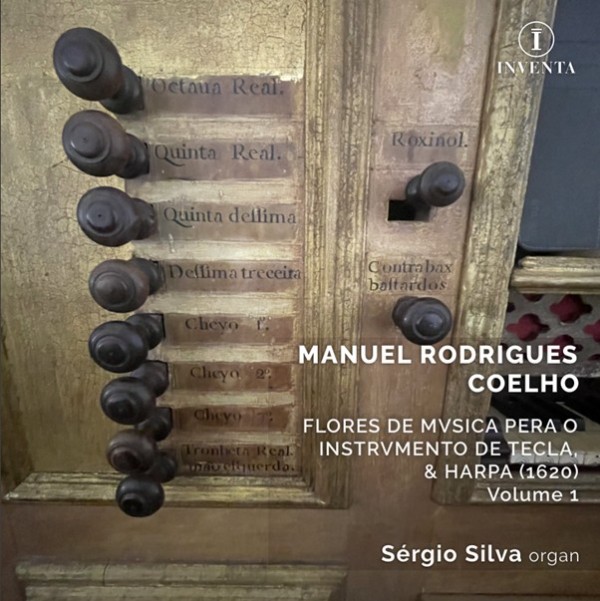
Manuel Rodrigues Coelho: Flores de Musica pera o Instrumento de Tecla, & Harpa (1620), Volume 1
Sérgio Silva, organ; Mariana Moldão, soprano; Maria de Fátima Nunes, mezzo-soprano
Inventa Records, UK INV 1009
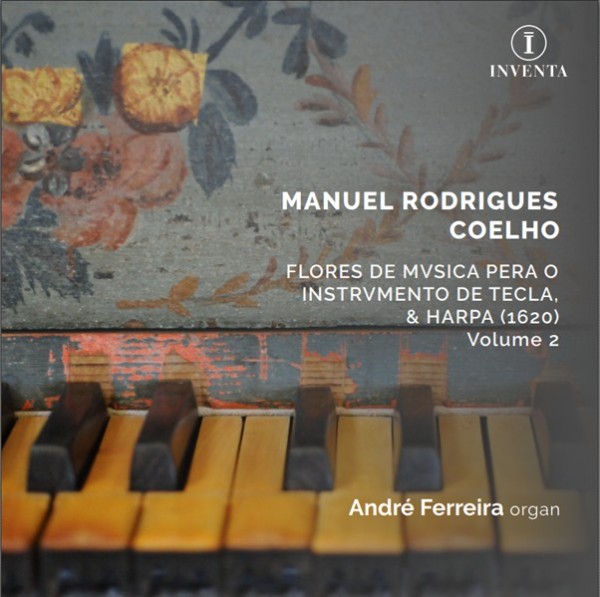
Flores de Musica pera o Instrumento de Tecla, & Harpa (1620), Volume 2
André Ferreira, organ
Ars Lusitana (Francisco Vilaça, João Líbano Monteiro, João Pedro Afonso, Jorge Rodrigues & Pedro Morgado, plainchant; Maria Bayley, tiple and cond.)
Inventa Records, UK INV 1013
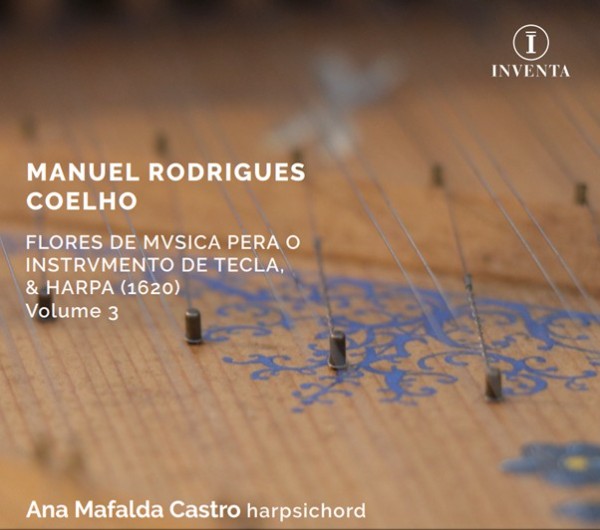
Flores de Musica pera o Instrumento de Tecla, & Harpa (1620), Volume 3
Ana Mafalda Castro, harpsichord
Inventa Records, UK INV 1014
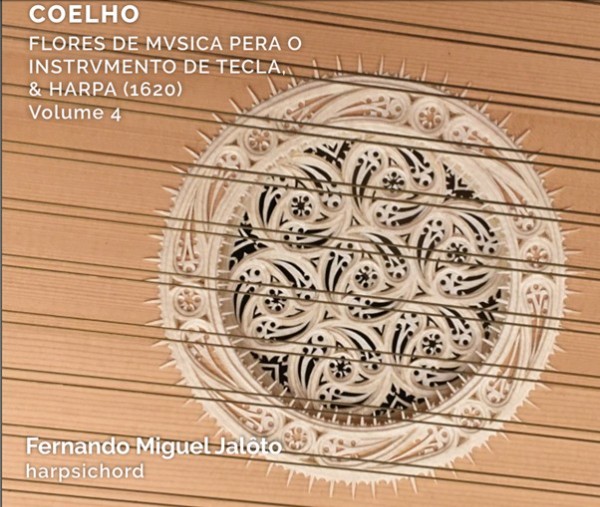
Flores de Musica pera o Instrumento de Tecla, & Harpa (1620), Volume 4
Fernando Miguel Jalôto, harpsichord
Inventa Records, UK INV 1016
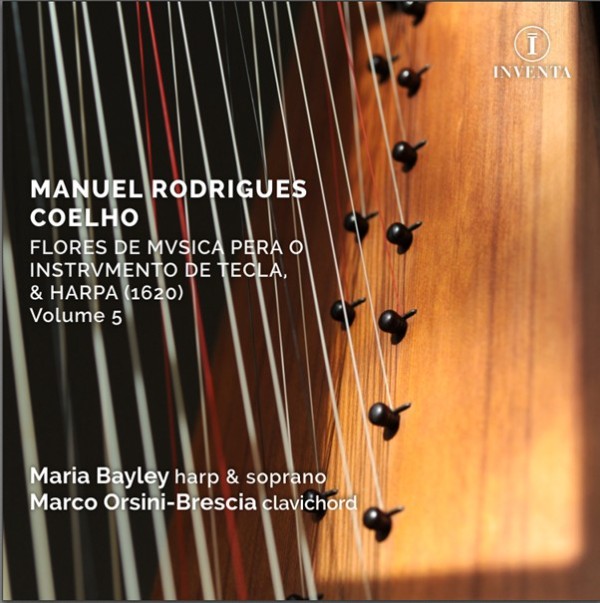
Flores de Musica pera o Instrumento de Tecla, & Harpa (1620), Volume 5
Maria Bayley, harp and soprano; Marco Orsini-Brescia, clavichord
Inventa Records, UK INV 1018
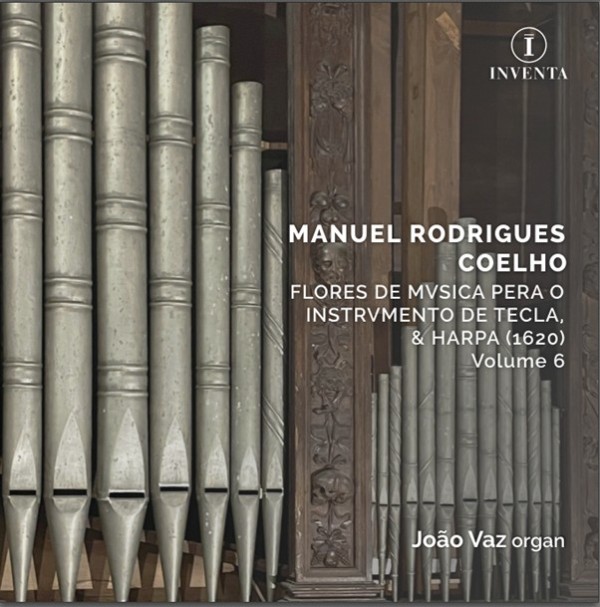
Flores de Musica pera o Instrumento de Tecla, & Harpa (1620), Volume 6
João Vaz, organ; Capella Patriarchal (Mariana Moldão Martins, soprano; Maria de Fátima Nunes, alto; João Moreira, tenor; Henrique Leitão, bass; Sérgio Silva, organ; João Vaz, cond.); Cornetas & Sacabuxas de Lisboa (Rodrigo Calveyra and Tiago Simas Freire,cornetts; António Santos, Hélder Rodrigues, sackbuts; Benny Aghassi, dulzian)
Inventa Records, UK INV 1019
For more of the best in classical music, sign up for our E-Newsletter