It seems as though every age has its own Kurt Weill (1900–1950). Into the 1920s German cabaret? We have a Weill for that. Broadway more your style? We have a Kurt Weill for that. Hollywood? Art song? Opera? Yes, for all those and more.
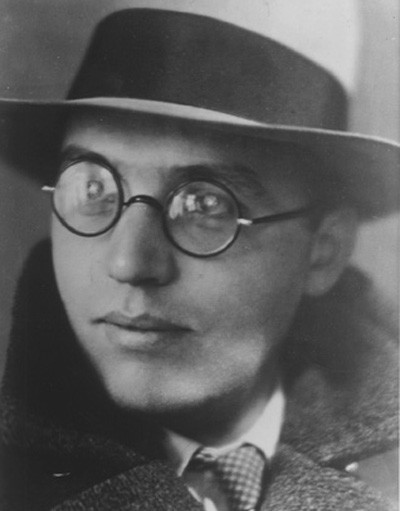
Kurt Weill, 1928 (photo by Thiele)
English mezzo-soprano Katie Bray has been living with the sound of Kurt Weill since childhood. Not only was he one of her mother’s favourite songwriters, but also her grandfather, an accordionist, had him under his fingers. Bray studied Weill’s career, spent in a search for safety and a place for creativity, looked at how he responded to each new situation, and put together this album of his music.
For Bray, the song ‘Youkali’, a tango-habanero written originally as an instrumental interlude for the 1934 French play Marie Galante, is critical to understanding Weill’s career. Weill was in Paris for two years after his escape from Nazi Germany. After appearing in the play, the music had lyrics written for it by ‘Roger Fernay’ (aka Roger Bertand) describing the idyllic island ‘almost at the end of the world’, that, like so much in the 1930s, proved to be only an illusion. Lost for many years, it reappeared in the 1980s and has since been recorded more and more. Bray takes the song and weaves it through her album – a snippet here, a vision of it on accordion or a dream of it for double-bass there and finally, at the end of the album, the full song.
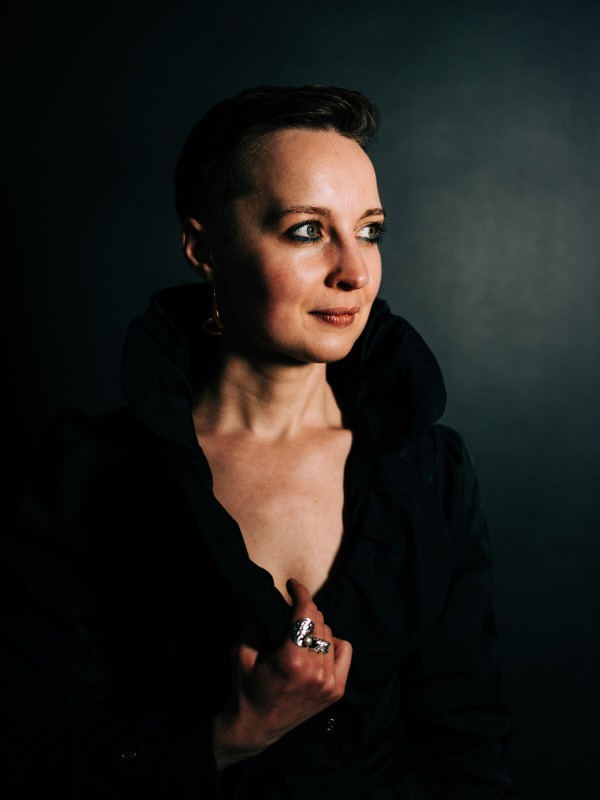
Katie Bray © Tim Dunk
As a mezzo, Bray has the dark tone to both sing out the pathos of the songs and draw us in to the immediacy of others. We spoke of the century of Weill’s song (he started writing commercially in 1926), and how his gift for melody and his talent kept coming to the fore. Some of the last works he wrote, for his incomplete musical based on Twain’s story of Huckleberry Finn, with lyrics by Maxwell Anderson, are included on this album, including the very comic ‘Apple Jack’.
Through the album, Weill’s work with the cream of the Broadway lyricists, including Oscar Hammerstein II, Ogden Nash, and Ira Gershwin, brings us welcome surprises, including the 1942 ‘Buddy on the Nightshift’ about two war-workers who pass in the night but never meet.
Kurt Weill: Buddy on the Nightshift
Bray works with an ensemble of Murray Grainger, accordion; Marianne Schofield, double-bass; and William Vann, piano, and instead of keeping them solely as in the background, each has a time to shine. Where ‘Youkali’ slips in and out of the recording, we can hear Bray singing with Bray in a voice-over improvisation that brings out both the beauty of Bray’s voice and her idea that ‘Youkali’ and its idealised paradise could be used to define Weill’s search for a safe place.
In our discussion, Bray told me how she took this repertoire on the road, both to see how an audience took to Weill and to give her ensemble time to get the works under their skin. They had to be comfortable enough with Weill and his character to create their own improvisations on ‘Youkali’, and this comes across beautifully.
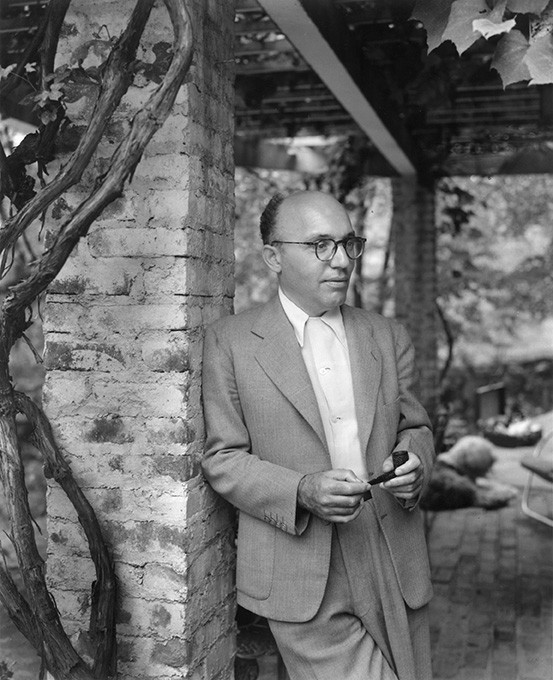
Kurt Weill, 1946
Aside from Weill, we talked about how much she enjoyed the new physicality possible in opera. She’s currently on stage at English National Opera in Handel’s Partenope, updated to 1920s Paris, and enjoying herself in what ENO calls Handel’s first romcom. She viewed the rediscovery of Handel as a viable opera composer, some 300 years later, as a very good thing.
Bray contrasted the movement in an opera with the relative stillness that is expected of recital singers, and we wondered if something might be done – at the very least, bring a chair! She also noted with approval the increasing tendency of recitalists to create ‘mini-operas’ on the recital stage through careful curation of their music and the stories they could tell. You don’t have to just sing something like Die schöne Müllerin or Winterreise to have a coherent story. She is looking for the modern woman’s version of those song-cycles, too.
Between Berlin and Broadway, Weill created multiple worlds of music, and Bray shifts delicately between them. In Search of Youkali is her way of presenting the chameleon, if not the kaleidoscope, that was Kurt Weill.
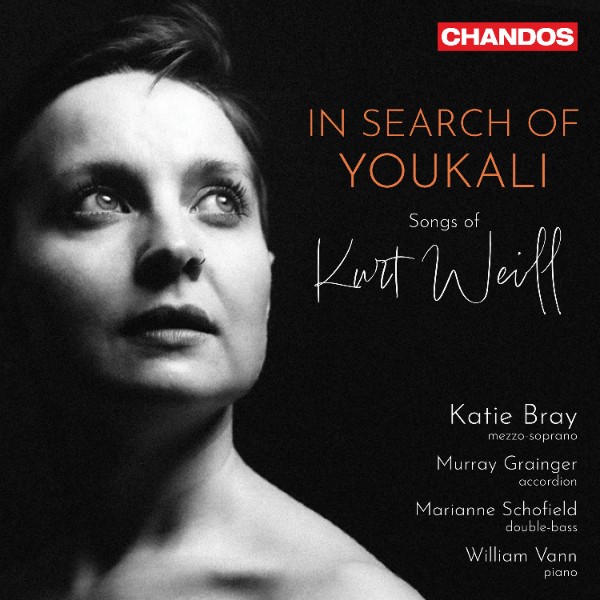
Kurt Weill: In Search of Youkali
Katie Bray, mezzo-soprano; Murray Grainger, accordion; Marianne Schofield, double-bass; and William Vann, piano
Chandos CHAN 20359
Release date: 9 January 2026
For more of the best in classical music, sign up for our E-Newsletter