Geoffrey Álvarez: St Paul’s Shipwreck
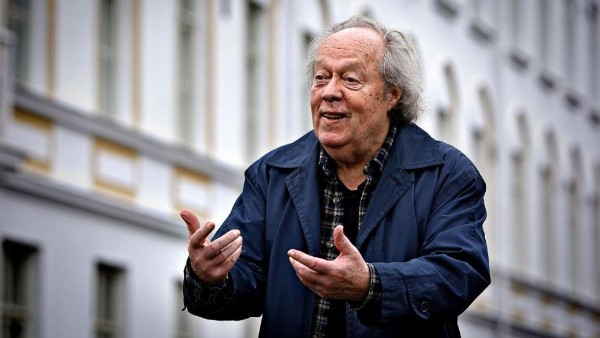
British-Nicaraguan composer Geoffrey Álvarez (b. 1961) studied at the Royal Academy of Music and was awarded a Doctor of Philosophy degree from the University of York, studying with David Blake and Richard Orton. He writes in multiple genres, from chamber music to opera, and wrote a piano concerto dedicated to Luciano Berio, who had invited him to Florence.
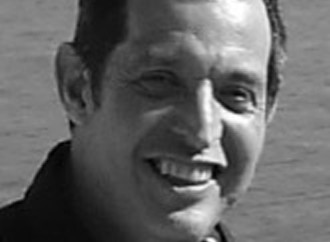
Geoffrey Álvarez
His 2014 organ symphony, St Paul’s Shipwreck, takes a story from the Acts of the Apostles in the Bible. Paul had been arrested in Jerusalem in 57 AD for defiling the temple. Faced with flogging and interrogation, Paul asserted his Roman citizenship and was held until a mob threatened to overrun the prison where he was kept.
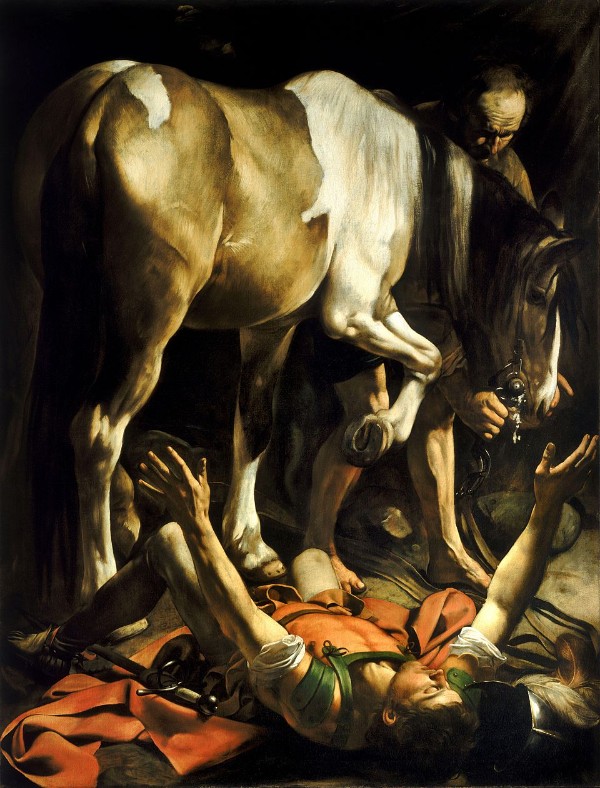
Caravaggio: St Paul’s Conversion on the Way to Damascus, 1601 (Rome: Santa Maria del Popolo, Cerasi Chapel)
He was hidden away in Caesarea, in Herod’s headquarters. Held for another two years, when he was brought again before the tribunal, he again asserted his Roman citizenship and requested that he be sent to Rome to appeal before Caesar, as was his right as a citizen. In 60 A.D., as he was being transported to Rome, a terrible storm arose, and the ship’s captain chose to beach his vessel on an island so as to avoid its total loss. The island of Melita was the site of the beaching.
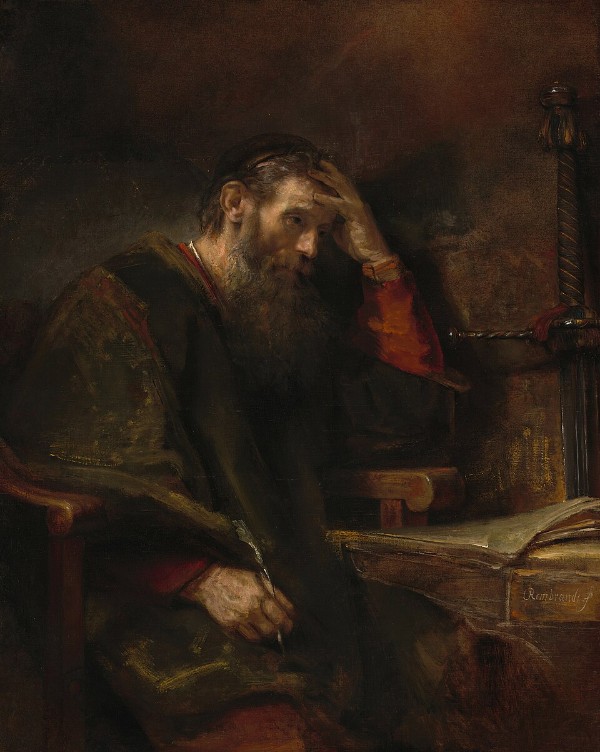
Pierre-Étienne Monnot: St. Paul, 1708–1718 (Rome: Nave of the Basilica of St. John Lateran) (photo by Jastrow)
As the mariners reached shore, the islanders rushed to help them, collecting wood for a fire. A snake slithered out of the pile and bit Paul when he picked it up. When he didn’t die from the poisonous bite, the islanders hailed him as a God.
The island is now known as Malta, and one writer called the shipwreck ‘the most important single event in the country’s history’. The city of Valletta commemorates the event at The Church of St Paul’s Shipwreck. Built in the 1570s, it is considered one of the most beautiful buildings on Malta. It holds a wooden statue of the saint that is paraded through the town each year on the Feast of St Paul’s Shipwreck, 10 February.
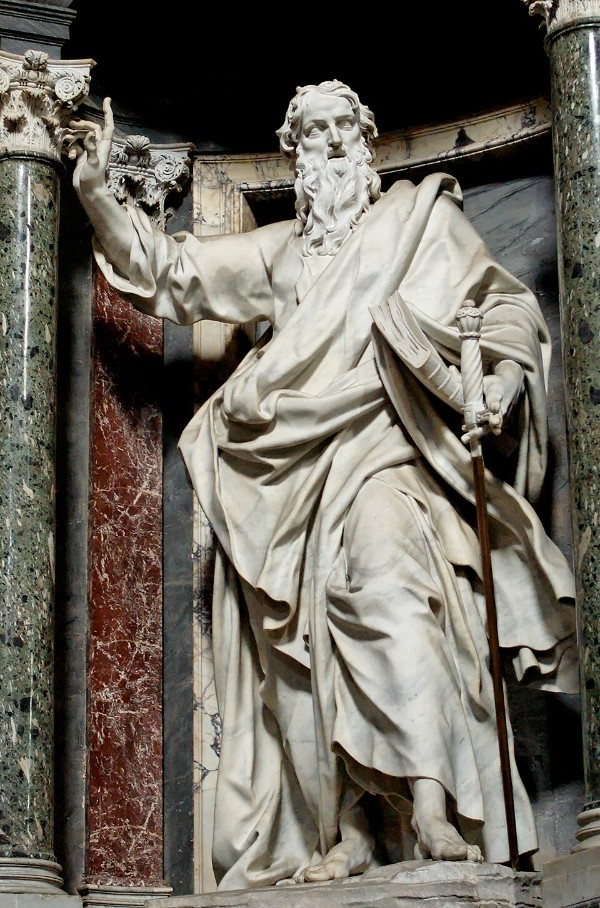
Rembrandt: The Apostle Paul, ca 1657 (Washington, DC: National Gallery of Art)
The church contains paintings on the life of St Paul and two important relics, the right wrist-bone of the saint, and a section of the column from Rome where the saint was beheaded in Rome, ca. 64 AD.
St Paul was not one of the 12 Apostles, although he was a contemporary of Jesus. He did know the Apostles Peter, John, and James. Paul is the Pharisee who, on his way to Damascus to arrest Christians, was blinded by a bright light, heard Christ speak, and was later healed by Ananias. This caused his conversion and baptism. Fourteen of the 27 books of the New Testament are attributed to Paul.
Geoffrey Álvarez’s 2014 work on St Paul’s shipwreck received its premiere at the University of Glasgow’s Memorial Chapel, notably during a strong storm. The organist, Kevin Bower, described the work as ‘The first great organ storm of the 21st Century’. In this performance, by Tom Winpenny on the Harrison and Harrison organ at St Albans Cathedral, he uses the power of the organ to place us in the middle of the storm. One writer described the work as having a musical language that was somewhere between ‘modality (plainsong) and tempest-twisted tonality’.
The composer starts the work with a quotation from the plainsong versicle of the Alleluia from the Mass for Commemoration of St Paul Apostle that starts Sancte Paule Apostole. The composer sees this as a point of diatonic “innocence” that is gradually destroyed chromatically as the storm rages.
The composer goes on to say: ‘The point of departure for the work was the opening pedal solo suggesting the brooding anger of the sea which boils over into leaping figures accompanied in the upper voices with dissonant harmonies – redolent of storm clouds: it is heard ten times in total throughout the work, each time with harmonisations representing different atmospheric states. It is only at the end of the piece, after stylised thunderbolts alluding to figurations in Olivier Messiaen’s organ toccata Dieu parmi nous, and after further turbulence, that the leaping figure is finally drenched with blazing Mediterranean sun. Meanwhile, the spirit of Michael Tippett’s music sings as Noah’s messenger-bird, hovering over the face of the waters at earlier moments of relative repose.
Geoffrey Álvarez: St Paul’s Shipwreck (Tom Winpenny, organ)
From his capture in 57 AD in Jerusalem to his beheading in Rome under the reign of Nero, Paul was an important figure in church history. He is regarded as one of the most important figures in the Apostolic Age (ca 27 AD–ca 100 AD). Álvarez’s organ work recognises the importance of Paul in the history of Malta and his importance in the history of the church.
For more of the best in classical music, sign up for our E-Newsletter