The cello sound brings tears to the eyes of many listeners. Do you wonder why? The warm, golden sound is the closest frequency to the human voice and can emotionally engage listeners in a unique way. Perhaps you’ve heard a cello on the soundtrack of a film or television program and wondered how to get to know more about music that features the cello? Perhaps you adore the cello and want to introduce its sound and classical music to your child?
I have several suggestions—cello music to play as you’re settling down, or when you’re preparing your kids for the evening or before bedtime (and a few for the morning!)
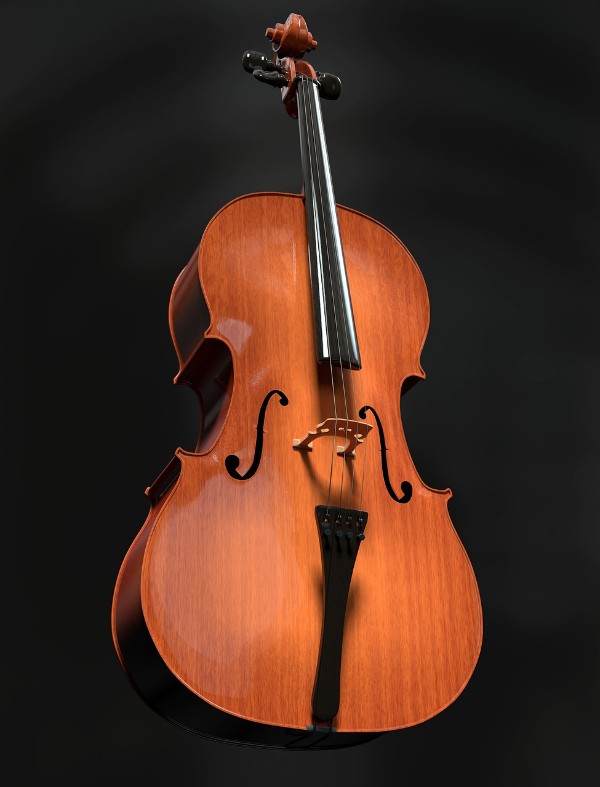
Cello
One of my favourite short pieces is Debussy’s Rêverie, dreams, performed by me with pianist Heather MacLaughlin. The stunning paintings in the video are by nationally renowned Minnesota impressionist painter Kami Mendlik.
Another lovely lullaby is “Nana” from the Suite Populaire Espagnole by Manuel de Falla, once again performed by Heather MacLaughlin and me. It is gentle and undulating like a lullaby you might sing to your child. This particular program was dedicated to the more than one million Jewish children who perished in the Holocaust during World War II.
Heather MacLaughlin and Janet Horvath Perform Debussy’s Rêverie
Heather MacLaughlin and Janet Horvath Perform Manuel de Falla’s “Nana” from the Suite Populaire Espagnole
The great cellist and humanitarian Pablo Casals wrote his emotional El Cant dels Ocells, a traditional Catalan song, to encourage freedom and peace, and it has become a symbol worldwide. While it is soothing and tender, it conveys the deeper meaning.
Pablo Casals – Song of the birds | Amsterdam Sinfonietta
Now for something quite different, Schubert’s lovely Quintet D 667 in A Major for Violin, Viola, Cello, Double bass and Piano. Perhaps the most famous piece of chamber music ever written, it’s entitled “The Trout” and is full of infectious melodies. The nickname comes from the fourth movement— a set of variations on his well-known song Die Forelle. Let me introduce you to this movement, first the theme, and then the variation that shines a light on the cello.
Franz Schubert: Piano Quintet In A Major, Op. 114, D. 667, “Die Forelle” (The Trout) – IV. Theme: Andantino — (Academy of St. Martin in the Fields Chamber Ensemble, Ensemble)
Franz Schubert: Piano Quintet In A Major, Op. 114, D. 667, “Die Forelle” (The Trout) – IV. Variation 5 (Academy of St. Martin in the Fields Chamber Ensemble, Ensemble)
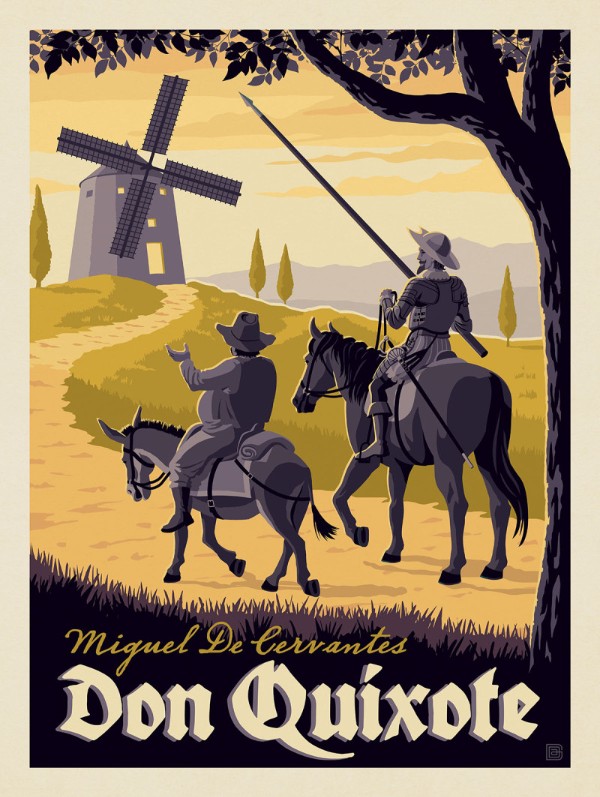
Don Quixote
If you’re in the mood to have your heartstrings tugged, I would recommend the gorgeous final movement of the tone poem Don Quixote Op. 35 by Richard Strauss—the Epilogue and Death of Don Quixote. The Don has traveled the world over and has encountered several adventures, but here his mind clears and he realises his folly. Don Quixote revisits his memories, and they are bittersweet. Listen to the astounding cellist Jacqueline du Pré perform here, a live recording, with the New Philharmonia Orchestra, Adrian Boult conducting.
Richard Strauss: Don Quixote, Op. 35, TrV 184 – Epilogue: Don Quixote’s Mind Clears – Death of Don Quixote (Jacqueline Du Pré, cello; New Philharmonia Orchestra; Adrian Boult, cond.)
For easier listening, Haydn can’t be beat. His Cello Concerto in D Major No. 2 Hob.VIIb is a delight. And since I wouldn’t be able to pick a favourite movement, as I love them all, here is the concerto complete, with the wonderful British cellist Steven Isserlis.
Franz Joseph Haydn: Cello Concerto No. 2 in D Major, Hob.VIIb:2 (Steven Isserlis, cello; Chamber Orchestra of Europe; Roger Norrington, cond.)
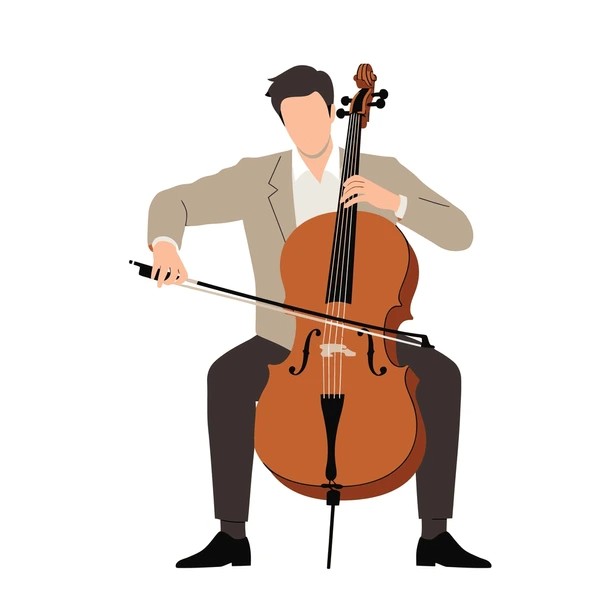
Let’s stay in that era for a moment. What could be more sublime than Mozart? Here is a transcription of the brilliant Sinfonia Concertante for Violin and Viola and Orchestra in an arrangement for sextet— Two Violins, Two Violas, Two Cellos (or one cello and Double Bass, as it is here) transcribed by Gunther Schuller. This performance is with the ensemble I formed and performed with for many years, The Minneapolis Artists Ensemble. Here are two movements: the effervescent first movement and the exquisite slow movement. What a great introduction to the string sound!
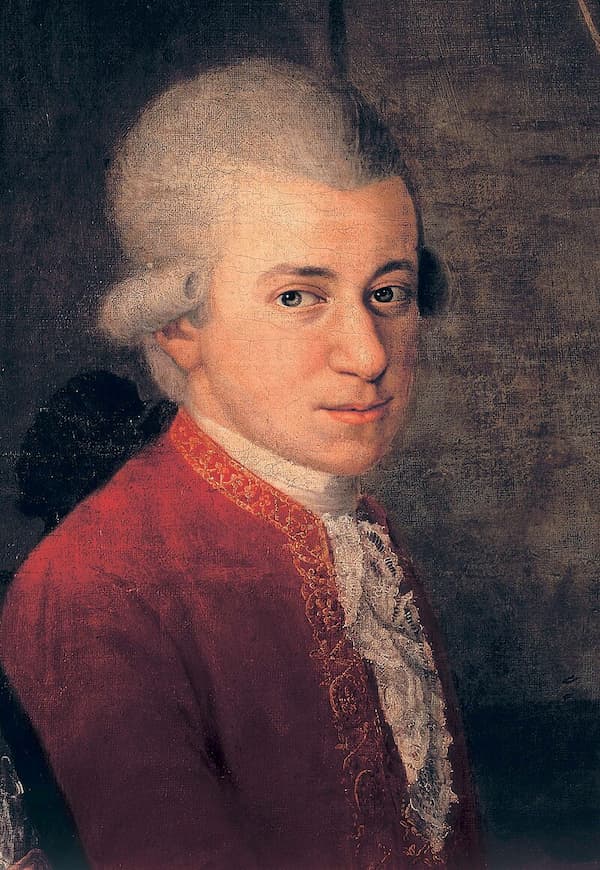
Croce: Mozart Family Portait (detail), 1781
Mozart continues to mesmerise listeners. His writing for piano is perfect, delicate, and sparkling. Of course, he, as well as his sister Nannerl, was a consummate pianist. The Trio for Piano, Violin and Cello is a favourite of mine. Here Arthur Rowe, pianist, William Preucil, violinist, and I on the cello, perform this charming piece live. I would say the slow movement is a great choice for bath time, with its undulating tempo in three, perhaps slowing your breathing down, and the first movement for getting up in the morning. The trio movement never fails to put me in a good mood. I hope it does that for you. It is lighthearted and enchanting.
Wolfgang Amadeus Mozart: Trio for Piano, Violin and Cello – I. Allegro
Wolfgang Amadeus Mozart: Trio for Piano, Violin and Cello – II. Andante grazioso
Wolfgang Amadeus Mozart: Trio for Piano, Violin and Cello – III. Allegro
But the cello with a full orchestra playing romantic music is noteworthy. The slow movement of the Dvořák Cello Concerto in B Minor is one of the most gorgeous movements ever. Cellist Truls Mørk plays it here, and his rich and luscious tone communicates the sublime and expressive potential of the cello. Listen also for the lovely flute sounds.
Truls Mork – Dvorák Cello Concerto in B minor, Op. 104 – II. Adagio
And finally, let’s hear what a section of cellos sounds like in the orchestral setting.
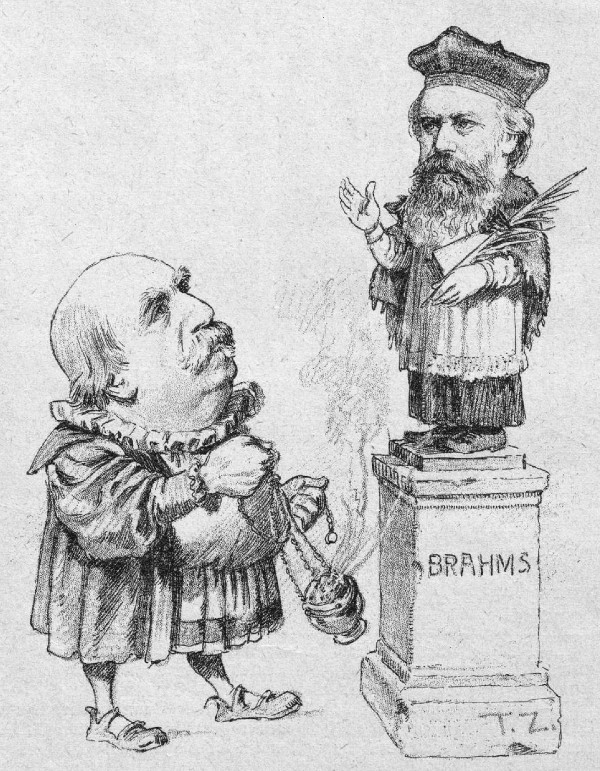
The slow movement of Brahms‘ Symphony No. 2 in D Major, Op. 73 opens with the cellos in a soaring and singing theme. Just over two minutes in, the cellos return, handing the theme over to the higher strings. Lilting winds enter, and it is ever so gentle until it impulsively digresses into agitation for a moment, but the beautiful theme returns in the violins and horns. The sound of eight or ten cellos is a beautiful mosaic of colour, and Brahms and other composers use us often!
Johannes Brahms: Symphony No. 2 in D Major, Op. 73 – II. Adagio non troppo (London Philharmonic Orchestra; Marin Alsop, cond.)
I’ll leave you with one last example—the most breathtaking movement from Mahler’s Symphony No. 5, the Adagietto. Written for strings alone, it portrays deep yearning and is a moving example of the sumptuous, rich, and expressive sonority that can be produced by the string section—the violins, violas, cellos and the double basses together breathing the music as one.
Gustav Mahler – Adagietto | Leonard Bernstein
I hope this journey through some stunning cello music enriches your evenings and your days, too. If you would like to venture further, here is a link to a recital of mine with works of Beethoven, Brahms, and Martinů, plus Juba by the revered composer from Minnesota, Libby Larsen.
For more of the best in classical music, sign up for our E-Newsletter