The piano trio literature – music for violin, cello, and piano – is splendid to listen to and wonderful to play. Virtually every composer of note has written in this genre, including the greats such as Mozart, Beethoven, Brahms, Schubert, Ravel, Dvořák, and Tchaikovsky, and we have featured several of them. I’ve loved to play this music more than I can say. If you are unfamiliar with these trios, have a look at this feature.
But did you know that there are masterpieces of the literature by women composers whose works are only recently being performed regularly?
In this series, we will introduce you to 12 marvellous pieces for piano trio in four articles beginning with the French composer, virtuoso pianist and teacher Louise Farrenc (1804-1875).
Meet Farrenc, a trailblazer among women. Professor of Piano at the Paris Conservatoire for three decades, the only woman in the 19th century to hold such a prestigious post in Europe, nonetheless had to fight to be regarded as equal to her male counterparts and to earn equal pay.
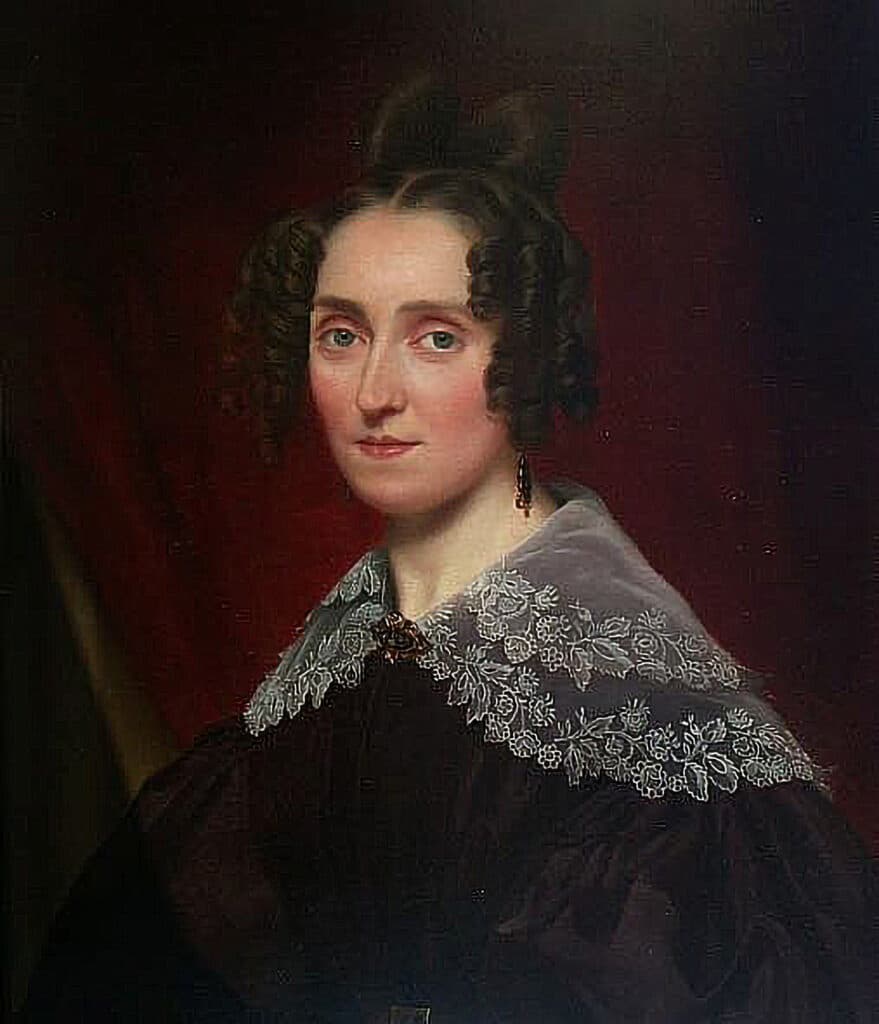
Louise Farrenc
She wrote two piano trios, No. 1, Op. 33 in 1843-44 and Piano Trio No. 2, Op 34 in 1844. But she also wrote two other worthy trios, indicating that the violin can be substituted for the wind instrument, Op. 44 for Clarinet, Cello, and Piano and Op. 45 for Flute, Cello, and Piano.
Born in Paris, France, Farrenc was a composer and a virtuoso pianist as well as a teacher. Her solo career as a concert pianist drew accolades, but her passion had always been composing. She came from a family of sculptors and artists; hence, they recognised Farrenc’s abilities and allowed her to pursue composition studies. But after successful studies with Ignaz Moscheles and Johann Nepomuk Hummel, due to the restrictions of the time, she could not enrol at the Conservatoire de Paris. Women were forbidden to register. The teacher at the conservatoire, Anton Reicha, agreed to work with her privately.
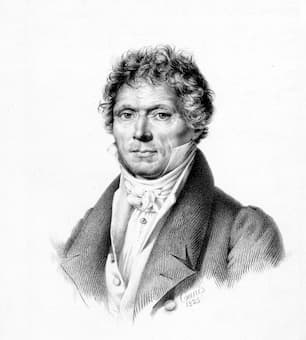
Anton (Antoine) Reicha
When she married flautist and fellow conservatoire student Aristide Farrenc, she put her own studies on hold. They toured together as a duo, and subsequently, they opened the publishing house Éditions Farrenc. For 40 years, it became one of France’s preeminent music publishing companies. To her credit, Farrenc returned to studying and performing, and her ever-increasing standing as a soloist led to her appointment in 1842 to the Paris Conservatoire, a position she held for thirty years.
Louise Farrenc’s dramatic symphonies are finally being performed, despite the condescending attitudes of the 19th century when critics of her works grudgingly admitted they were wonderful and extraordinary “for a woman composer.” Only after the success of her celebrated Nonet in E-flat major, Op. 38 premiered in 1850; did she demand and receive the pay commensurate with other professors.
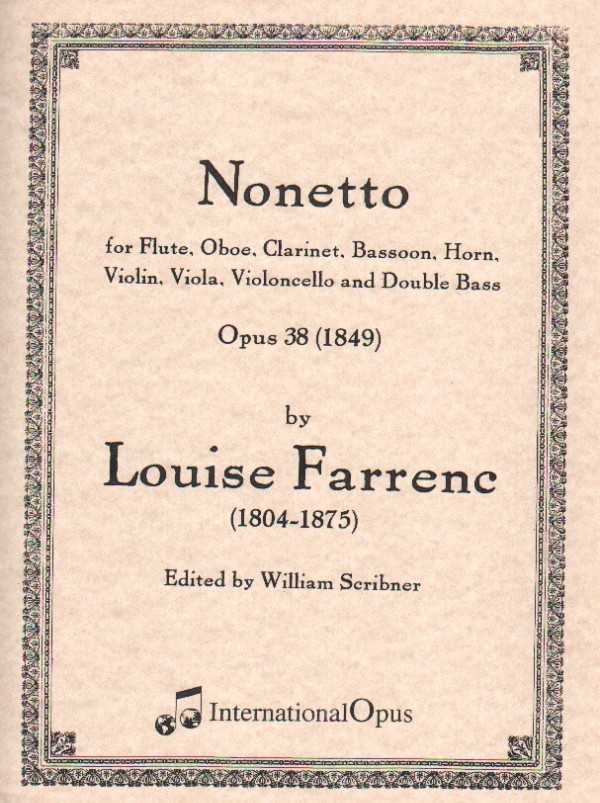
Louise Farrenc: Nonet in E-flat major, Op. 38
From the first chords of the opening of her Trio in E minor Opus 45, a four-movement work, we know we are in for drama and passion. If you thought this was a work by Mendelssohn, you wouldn’t be faulted, as the writing is full and rich with virtuoso passages for all three musicians, especially in the piano, as Mendelssohn or a virtuoso pianist might write. The theme returns in unison. It is poignant. What follows is an excellent development, and the movement ends with a flourish. The lovely andante second movement is gentle and singing. The vivace takes my breath away—fast paced and brilliantly written with the strings often answering the piano. There is a middle section with a dolce and lilting melody in three introduced by the cello. Quickly, we return to the vivace, feeling one to a bar. Compositionally impressive, towards the end of the movement, the composer combines the two themes.
The last movement, a Presto, is technically brilliant—it is very quick, certainly, but it is weightier than the Vivace. With heavier bow strokes in the strings, almost fugal, the trio ends with decisive chords and with substance. It’s an outstanding composition.
Louise Farrenc: Piano Trio in E Minor, Op. 45 (Thomas Albertus Irnberger, violin; David Geringas, cello; Barbara Moser, piano)
The Trio in E-flat Op.33, an earlier four-movement work, is more classical to my ears but no less accomplished. The charming and gentle themes in the first movement are captivating. Here, the texture is a bit more transparent. During the development, the composer turns to the minor, adding wistfulness, while the cello and violin trade lines accompanied by arpeggios in the piano. The opening theme regally returns, but this time, Farrenc embellishes with several techniques—pizzicato and syncopation in the strings, and then, with an unexpected adagio, the movement fades out and closes beautifully.
The slow movement is haunting. The adagio sostenuto begins with a melancholy cello melody in the lowest range. While the cello continues sorrowfully, now higher, the violin joins in sharing the spotlight, and after a deceptive cadence, a soaring melody ensues. The drama returns with the piano dominating, and the movement then ends with soft pizzicatos.
Louise Farrenc: Piano Trio in E-Flat Major, Op. 33 (Neave Trio, Ensemble)
It’s impossible not to mention Farrenc’s Piano Trio in D minor No. 2, Op 34. The Rondo movement is exceptionally melodic and infectious. What stands out for me is the independence of the three instruments and virtuosic writing for the cello (even going quite high in the range), each instrument of equal stature. The last minute of the movement increases in intensity and drama and ends powerfully. As you’ll see, this key is favoured by several composers.
Louise Farrenc: Piano Trio in D Minor, Op. 34 – III. Rondo: Allegro (Abegg Trio, Ensemble)
German composer Fanny Mendelssohn-Hensel (1805-1847), or as she is also known, Fanny Mendelssohn Bartholdy, is less of a stranger to us. Fanny and her younger brother Felix were inseparable. They were both considered prodigies and learned composition together, and they often shared their works with each other. In fact, several of her works were ascribed to F. Mendelssohn with Felix’s approval, giving more visibility to her brilliant works but not to Fanny as a composer. Sadly, later in life, social conventions dictated that she had to stay behind at home while Felix toured. Despite dying tragically young, at age 41, Fanny wrote an astonishing 450 works, mostly unpublished during her life, including 125 solo piano works, over 250 songs, and lovely chamber music, including her piano trio.
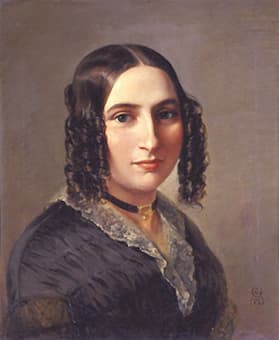
Fanny Mendelssohn-Hensel, 1842
Like her brother’s trio and Farrenc’s trio, Fanny Mendelssohn’s beautiful and remarkable trio is in D minor, Op. 11. It begins Allegro molto vivace and is in keeping with the German literary and musical style of the late 18th century “Sturm und Drang”, emphasising intense emotional themes and dramatic effects. Mendelssohn-Hensel creates this effect with a restless undulating in the piano. (With fistfuls of quick notes.) In the middle of the movement, these feverish notes continue under the unison strings, reinforcing the dramatic sweep. It makes one want to leap out of one’s seat even after only one movement.
The Finale opens with a piano cadenza, a gorgeous melody, embellished with flourishes in the left hand. The strings sneak in unobtrusively, and soon they join the piano in the opening melody, but it is transformed. Passionate and animated, they bring drama to the fore as the tempo accelerates breathlessly. The movement comes to a brilliant climax.
This trio, and the trios of Farrenc, I believe, should be featured on programs as often as the other masterpieces of the trio repertoire.
Fanny Mendelssohn-Hensel: Piano Trio in D Minor, Op. 11 (Kaleidoscope Chamber Collective, Ensemble)
Louise Farrenc and Fanny Mendelssohn-Hensel begin our series. Next time, we will delve into Clara Schumann, Emilie Mayer, and Elfrida Andreé trios before working our way forward into the 20th century.
For more of the best in classical music, sign up for our E-Newsletter