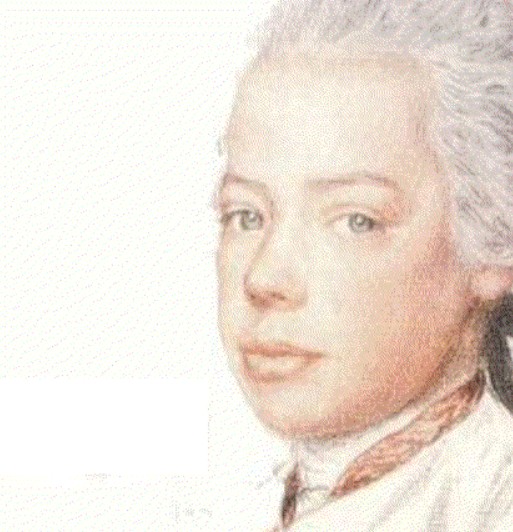
Worth Many Thousands, The Virginia Parker Award for Outstanding Talent, Musicianship, and Artistic Excellence
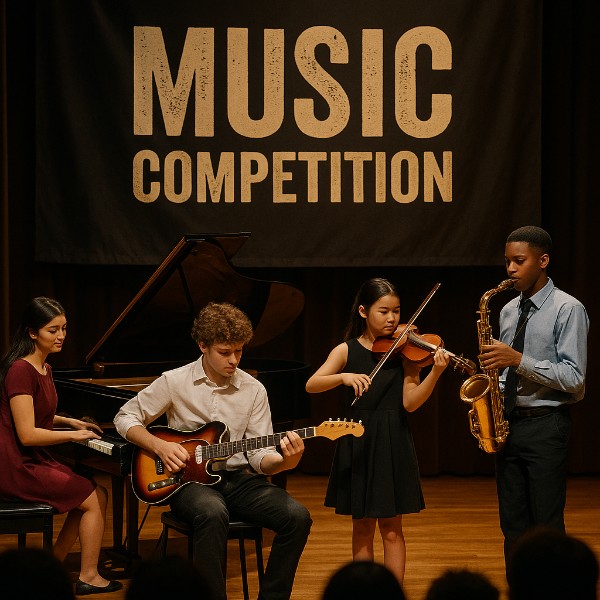
Imaged created by ChatGPT
Competitions! They are often a regrettable and necessary evil—sometimes the bane of a performer’s existence. As two of our recent articles featuring competitions point out (read more from: The Predictability of the 2025 Van Cliburn Competition), the prize money and accompanying accoutrements, if won, are the pinnacle, but winning, as Ellen Tso points out, can be compared with, say, the Olympics or climbing Mount Kilimanjaro—only the highly trained, incredibly gifted, and mentally and physically endowed can succeed in the gruelling escapade. A starving artist might wail, “Why can’t more organisations offer support, stipends, or scholarships to deserving virtuosos without having to endure the arduous nature of international competitions?”
The Canada Council for the Arts does. In the last year alone, they supported 3500 Canadian artists, 500 groups, and 2,000 arts organisations in seven programs such as Engage and Sustain, Supporting Artistic Practice, Creating, Knowing and Sharing: The Arts and Cultures of First Nations of the Inuit and Métis People, and Arts Abroad. In fact, I was one of the lucky ones and received grants to study at Indiana University with János Starker when I was starting out.
This year, the Canada Council is also celebrating the 40th anniversary of their Musical Instrument Bank. Their collection, regularly loaned out to deserving Canadian players, includes four instruments by Antonio Stradivarius, and instruments crafted by the esteemed makers Mantagnana, Tecchler, Vuillaume and Gagliano.
But back to the Virginia Parker Prize administered by the Canada Council. It was established by the late Virginia Parker in 1982 and is funded by an annual gift from the Virginia Parker Foundation.
Each year, after a selection process, the Canada Council announces the winner of CAD30,000, awarded annually to a classical musician, instrumentalist, or music conductor under the age of 32 who demonstrates outstanding talent, musicianship, and artistic excellence and who makes a valuable contribution to artistic life in Canada and internationally.
Previous recipients include a who’s who of Canadian classical music legends that you likely know of, such as Jon Kimura Parker, Marc-André Hamelin, Corey Cerovsek, Scott St. John, James Ehnes, and Yannick Nézet-Séguin, among others.
The application does have its requirements. The performer must be a Canadian citizen or permanent resident and have performed as a soloist or chamber musician internationally. Required documents include an artistic statement explaining how you see your future as an artist, the impact of the prize and how it would assist your career, and “how your work evolves current thinking and practice in your area of expertise, contributing to a more equitable, diverse and inclusive artistic ecosystem.” Three thirty-minute recordings of performances of contrasting pieces recorded within the last 24 months are required, and (they gently imply) that a piece by a Canadian composer should be included.
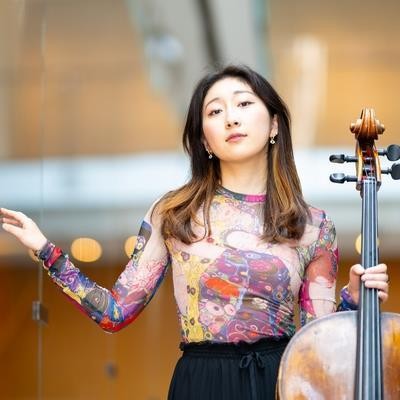
Joanne Yesol Choi © Stuart Lowe
This year, cellist Joanne Yesol Choi was chosen as the recipient of the 2025 Virginia Parker Prize. Named one of the Canadian Broadcasting Corporation’s “20 hot Canadian classical musicians under 30” in 2022, the Korean Canadian cellist has appeared at New York’s Carnegie Hall, Toronto’s Koerner Hall, the Banff Centre of the Arts, Alberta, and she has presented classes at Stanford University, University of Toronto, and the Mostly Modern Festival. She is a founding member of the prize winning and dynamic Dior Quartet, a wonderful blend of string players from Israel, Korea-Canada, Saint Lucia, and the USA.
One of Choi’s goals is to “advance accessibility, representation, and innovation within the evolving landscape of classical music.” Choi is the founder and artistic director of two laudable initiatives. Solegio Arts is a non-profit organisation committed to making world-class music education accessible to the community and is built on a simple idea: music is a gift that grows when it is shared, and Art of Four, a String quartet program she has formulated, is designed to nurture young string players.
Choi studied with Eric Kim, Brandon Vamos, and the Pacifica Quartet at Indiana University Jacobs School of Music where she received her bachelor’s and master’s degrees.
A multi-talented woman, she was commissioned by the Autism in Mind Charity to write Blob the Colorful Star, her first children’s book, which her mother Hyunah Yi illustrated.
Listen to the wonderful Dior Quartet performance of the String Quartet No. 3 by Kevin Lau, one of Canada’s most sought-after composers. The colourful score is full of ghostly harmonics, driving rhythmic passages, and haunting harmonies and is brilliantly played. Choi dazzles at the end. Wait for it!
Dior Quartet | Kevin Lau – String Quartet No. 3
If Ravel is more your speed, here is a sparkling rendition of Ravel’s String Quartet in F, movement II, Scherzo. (It’s one of my favourites, too.) Two minutes in, there is a lovely cello solo played quite beautifully.
Maurice Ravel: String Quartet in F Major, II. Scherzo | Dior Quartet
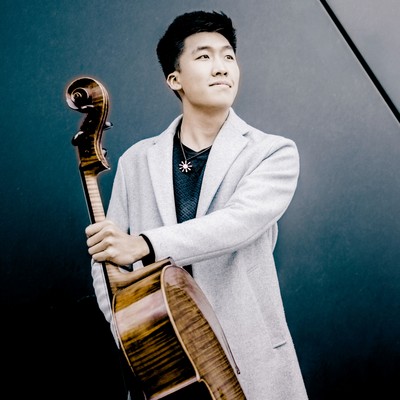
Bryan Cheng © Andrej Grilc
Another cellist was the recipient of the 2023 Virginia Parker Prize. Bryan Cheng was born in Ottawa and is now based in Berlin. Starting out at a very young age, he made his sold-out Carnegie Hall recital debut aged 14, his Elbphilharmonie debut at age 20 with the Deutsche Kammerphilharmonie Bremen, and he was the first cellist to be awarded the Verbier Festival’s coveted Prix Yves Paternot.
Cheng’s performance highlights include a remarkable list of debuts with Deutsches Symphonie-Orchester Berlin, Philharmonie, Frankfurt Radio Symphony, National Taiwan Symphony Orchestra, Symphony Orchestra of India, and the Slovak, Calgary, and Cape Town Philharmonics. He has appeared at prestigious summer festivals, including this summer at Verbier, and in 2023-24 season he was the artist in residence of Romania’s Filarmonica Banatul Timișoara and at Switzerland’s Week-End Musical de Pully.
One of the fortunate beneficiaries of the Canada Council Musical Instrument Bank, Cheng has been loaned the 1696 ‘Bonjour’ Stradivari cello. A few of his other major prizes include Queen Elisabeth, Geneva, and Paulo competitions. Bryan received his bachelor’s and master’s degrees from the Universität der Künste Berlin.
Listen to this charming bonbon by Glazunov Serenade Espagnole for Cello and Orchestra Op. 20 No. 2 with the Frankfurt Radio Symphony, and the more rarely played Saint-Saëns Cello Concerto No. 2 Movement II, Op. 119, with its quick spiccato movement that transforms into a passionate cadenza. It’s great playing.
Glazunov: Sérénade espagnole ∙ hr-Sinfonieorchester ∙ Bryan Cheng ∙ Erina Yashima
Saint-Saëns Cello Concerto No. 2, Op. 119 (II) | Bryan Cheng
What about the recipient of the 2024 prize? To do the winner justice we’ve dedicated an article entirely to him. Please check out Part 2. I’ll close with Cheng’s interpretation of El cant dels ocels (Song of the Birds) by Pau (Pablo) Casals with the National Youth Orchestra of Canada. It sends an important and stunning message!
For more of the best in classical music, sign up for our E-Newsletter