Most people may think, as they enter their ninth decade on this earth, that it is time to take a richly-deserved rest – but Sir John Rutter is not most people. Sir John (a recent knighthood last year for his significant contributions to music) is perhaps one of the most well-known choral composers of today, with a career spanning 60 years and a body of work including Christmas carols and other choral works performed and loved by many around the world.

John Rutter
John brought the choir of Clare College, Cambridge, to prominence in the 1970s during his tenure there as Director of Music. One person who knows John better than almost anyone is Graham Ross, Clare’s current Director of Music. Over the 16 years that Graham has held the position, his and John’s frequent collaborations have nurtured a deep professional relationship that has now become a close friendship, something that is reflected in the choir’s most recent release, John Rutter: A Clare College Celebration.
The two are in frequent contact – Graham’s inbox pings with an email from John literally during our interview – whether it be about the recent release or indeed any of the recordings of Clare College Choir for which John has been in the role of producer as well as composer.
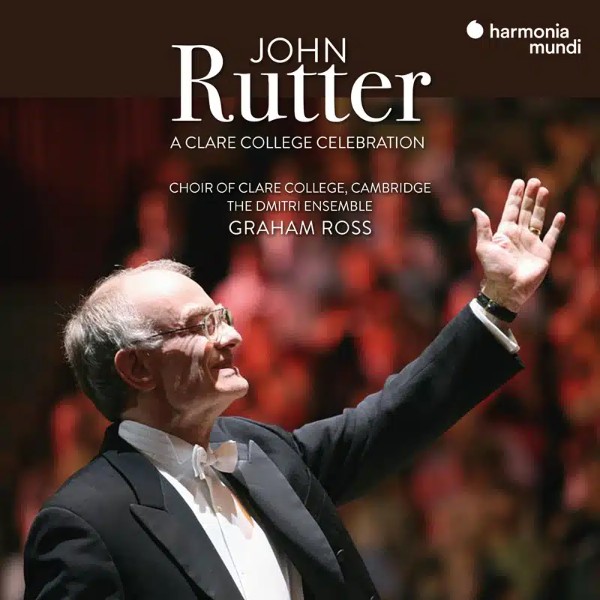
John Rutter: A Clare College Celebration, which came out earlier this year, features both familiar and more recent works by John. The album, as the name implies, is a reflection on the strong presence Clare College has (and continues to hold) in John’s musical life.
The focal point of the album is The Gift of Life, a large-scale work for choir and orchestra from 2015 that here receives its premiere recording in a smaller chamber orchestra arrangement. I chat to Graham, who gives us a glimpse behind the scenes of the album’s recording, as well as his working relationship with one of the most famous choral composers alive today.
John Rutter, The Gift of Each Day, The Choir of Clare College Cambridge, Graham Ross
You have recorded many albums over the years with the choir of Clare College. What made it feel like the right time to do an album of John Rutter’s music?
I’d wanted for a long time to do an album of John’s music, and I was kind of waiting for the right moment, and a big, significant birthday seemed like a good moment to do that. By happy coincidence, it was very soon after he’d just been knighted and had received his honorary degree from Cambridge University, so it was a proper celebration.
Obviously, he has such close ties to Clare and to the music-making here, and particularly to me as well. He’s been super kind, super generous and supportive, almost like a mentor, I would say, over the last 16 years I’ve done this job, so it felt totally right to programme his music.
I wanted to make the album very much a Clare-focused album – partly because John’s written so much for us over the years, and also because a lot of his output has links that are directly linked to the four walls around me – from when he was here as an undergraduate, when he was here as Director of Music, and then all of the relationship we’ve had since.
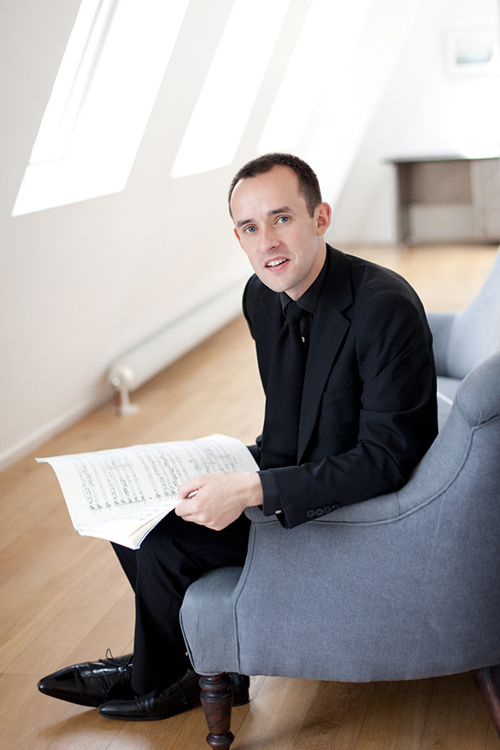
Graham Ross © Ben Ealovega
There are moments of large-scale grandeur in The Gift of Life. Perhaps many listeners who are more familiar with his lighter carols may enjoy discovering this?
And yet it retains these moments of intimacy as well. The chamber scoring doesn’t lose anything of the grandeur of the big version, and of course, in the more intimate moments, it makes it arguably more intimate.
There is only one piece on the album that is a cappella (unaccompanied): A Ukrainian Prayer. How did that piece come about?
John came to compline [a candlelight service] at Clare one evening, and it happened to be the day that the Ukraine war started. At the very last minute, I changed the repertoire for the service and put in this setting of a Ukrainian prayer by Silvestrov. John happened to be there completely by chance, and he asked me afterwards for a score, since he really liked the text – and by 9am the next morning, in my inbox, was his finished setting of it.
He then, in his very generous, hospitable way, made that score available to any choir in the world to download for free, encouraging donations towards relief efforts. I think something like 10,000 choirs downloaded it, which is extraordinary.
John Rutter: A Ukrainian Prayer (Choir of Clare College, Cambridge / Graham Ross)
Is this generosity something you’ve often encountered with John?
He’s probably the most generous person I know. He really cares about what he does. He cares about the music that he crafts. He cares about the physical scores that he produces. They’re immaculately produced.
He cares about this college, and he cares about the music of it, and that’s obviously because he has history here himself, but he really cares about the longevity of it.
He’s produced every single album I’ve ever made, and we’ve done something like 23 of them. He knows exactly how I work, and I know exactly how he works, and I think that we’re quite a good pairing when it comes particularly to recording sessions, which can be quite stressful. The clock’s ticking, you’ve got to get it down, you’ve got to get the very best out of your performers despite whatever is going on in their day.
How was it having John present in the recording sessions of his own music; in other words, with the composer and producer being the same person?
It must have been slightly strange for John because he was there physically recording, in control of sound, levels, producing and all of that – but of course it’s also his music. I think he’s quite good at simultaneously wearing two different hats.
As a producer, it’s quite a different request, I think, from when you’re a composer. But with him, he treads that line very carefully, I think.
Is it hard to keep that separation in a recording session?
Yes, unless you’re with someone who knows what they’re doing. We know exactly how each other works and we’re both quite efficient, I would say, so sessions would run relatively smoothly – or at least give the impression of being smooth on the surface!
How did the choir respond to having John there? Were they intimidated by having the composer in the room?
Two days before the recording sessions, John had us all round his house for a barbecue, so I don’t think ‘intimidated’ is a word that comes to mind! They love working with him, and they love what he’s done for the college, and they love being part of that journey. They’re part of it as much as I am, as much as everyone is.
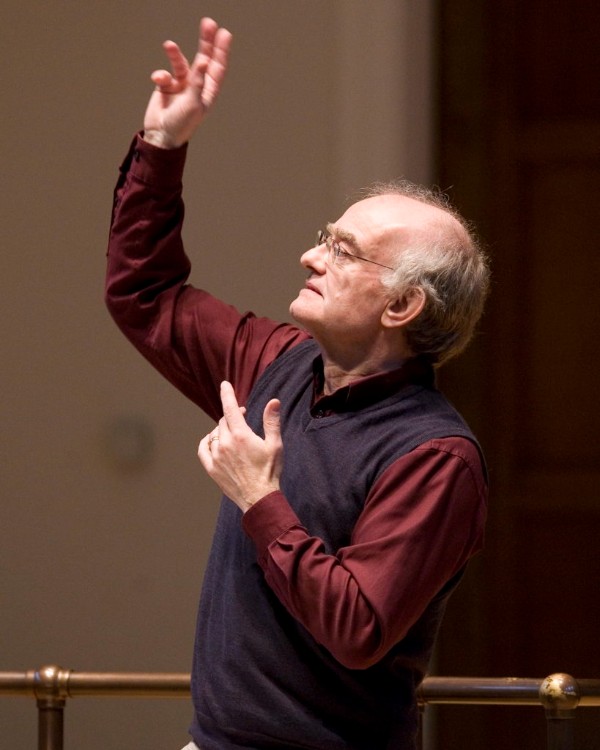
John Rutter
What is it about John’s music that you personally feel makes it so universal and well-loved?
I think he has a real gift, probably more than anything else, to write a melody. I don’t really know anyone who is as good a melodist as John. I wrote in the liner notes of the CD booklet that he has this amazing facility to write a melody that seems immediately familiar. We all try to do that as composers, but most of us don’t really truly succeed.
He writes something that just seems so familiar, so naturally crafted, that it’s something as if we’ve known for years and years, even though it’s just been delivered for the first time. That’s a real gift.
He knows exactly how to write for the human voice, and I think he also has a real gift for being able to write stuff that is singable, playable, approachable by amateurs and professionals alike, and something that the amateurs feel hasn’t been dumbed down for them, that gives them something to challenge themselves with.
He has a real attention to his craft, and that really comes through in everything that he’s written. It’s of amazing quality. It’s easy for people to forget that he’s absolutely not just a composer. He does so much particularly for the world of choral music.
And that’s why something like his knighthood is so richly deserved. Yes, he’s a fantastic composer, but he’s a really hardworking conductor, producer, and editor. He made all these famous publications for Oxford University Press; he’s a speaker and lecturer…the list is endless. And he commits to everything.
It’s quite annoying really – he can kind of do everything and do it really well, and still be a nice person!
For more of the best in classical music, sign up for our E-Newsletter