‘Following an Instinct’
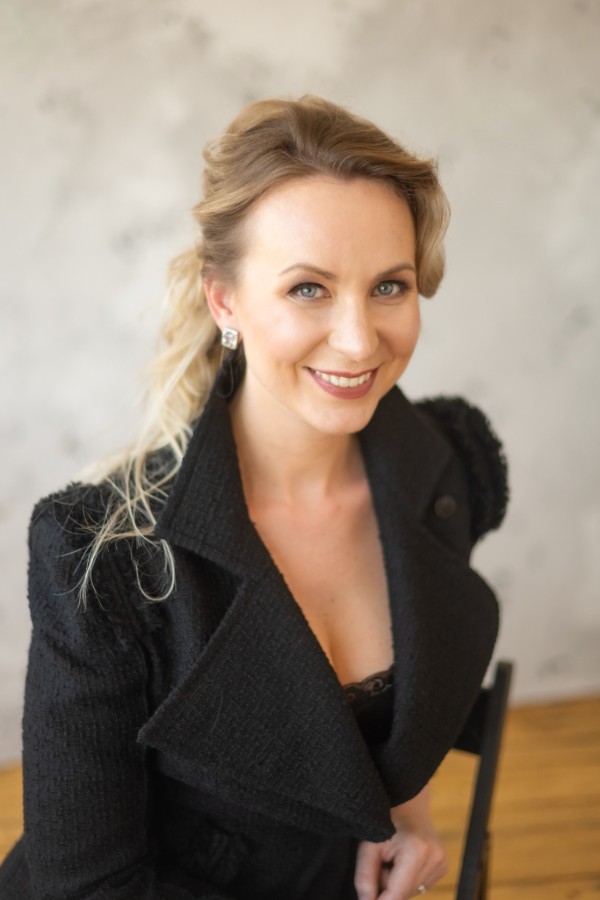
Justina Gringytė © Tommy Ga-Ken Wan
Lithuanian mezzo-soprano Justina Gringytė has garnered praise for her ‘knockout technique’ (The Times) and ‘thunderously powerful voice’ (Daily Telegraph). She has performed on stages across the UK, Lithuania, Russia, Italy, Portugal and Korea, including at the opening ceremony of the London Olympic Games. She is at home both in opera and concert, moving from song recitals at London’s Wigmore Hall to Beethoven’s Ninth Symphony in the Royal Festival Hall with ease.
Justina’s recent release of Bizet’s relatively unknown Op. 21 songs offers us an opportunity to discover a lesser-known side to the composer of the ever-popular Carmen – a role that Justina is no stranger to.
Habanera from Bizet’s Carmen ǀ Justina Gringytė ǀ English National Opera
These songs demand a hugely flexible vocal technique, and vary from operatic outbursts reminiscent of Bizet’s perennial operatic favourite to an intimacy not out of place in a Schubert song cycle. Justina is one of the first singers to have recorded the entire cycle alone, and this undertaking is a testament to her versatility and magnificent artistry.
I talk to Justina about the experience of learning and discovering these songs, and the difference in approach when engaging with a seldom-performed gem of the repertoire as opposed to one of the most famous opera roles of all time.
How did you find your way to singing?
As a child, I went to music school to study the piano, and I became quite fanatical about it. But also, I loved singing since I was very little, and I would sing anything and everything, whatever music was around.
My parents said I had to be well-educated at school, so for me, maths, chemistry, literature, everything was on an equal plane, and I had to do the best because I wanted the doors open if I didn’t pursue music and instead went to something else. I was actually thinking whether to pursue medicine or music.
I was at school, playing the piano, doing competitions, working hard, and then I entered a conservatoire, which was a notch below the Lithuanian Academy of Music and Theatre, as a pianist.
I was very determined to play, and my professor was determined to lead me onto the piano. I would never have made it as a pianist – I was good, but not good enough, I’d say.
I remember one day I was playing in one of those dungeon [practice] rooms in the conservatoire, and I started humming. I hummed and sang whatever, with no words or anything, and I just felt like there was something that wanted to get out of me. My voice didn’t want to stay inside. It was one of the weirdest and strongest sensations I’ve had in my life. I felt like I couldn’t hold it in.
I called one of my dad’s old classmates at the Academy, who was a professor there, and asked her to listen to see if she thought I had a voice that was acceptable for the Academy. I went there, and she said yes, I had the voice to enter the Academy.
So then I went back to the conservatoire and I told my piano professor that I wasn’t going to enter the Academy as a pianist: ‘I’m going there as a singer,’ I said. She was cross with me, of course, but it all happened very naturally. Nobody told me to go and sing.
In 2008-10, I did my postgrad in Cardiff at the Royal Welsh College of Music and Drama, and then 2010-11, I was at the National Opera Studio in London, and then the Covent Garden Young Artists programme. From 2013 I started my freelancing work up until today.
All of this, when I speak it out loud, seems like a perfect plan, step by step. But nothing was planned. Everything went out of following an instinct. I saw something and I thought, ‘That’s where I feel the pull, so I’m going there.’
Gediminas Gelgotas – To The Skies / Justina Gringytė (mezzo-soprano)
You are renowned for your interpretation of the role of Carmen. Do you notice any similarities in these songs to Bizet’s operatic writing?
I have this idea in my mind that generally, with Bizet, all the songs were little escape islands for him. The Académie des Beaux-Arts was pretty cruel to him, and he really took a beating from them. He would bring scores with some weird transition or chromaticism, and they would say, ‘No, that’s no good, that’s no good’.
He was always just dressed down, and […] when he was composing Carmen, he said, ‘I don’t care any more who will say what. I will just do what I want and write the way that I want,’ and then now we have this jewel of opera for the rest of humanity.
In these Opus 21 songs, we see over 10 years of his composing life. He didn’t need to justify any of them in front of anybody. He was writing the way he wanted. He loved Beethoven, and we hear which song in his mind is kind of dedicated to, or influenced by, Beethoven, and where the gratitude towards his teacher, Gounod, is.
We see the influences of his free lifestyle, the influences of his personal sufferings. He was free to do what he wanted. And even though those songs were dedicated to certain people, they were not judged in the same way, or at all, as other operatic or instrumental compositions were.
I think, here, in these songs, we have pure Bizet: the way he wanted to express himself.
These songs are so extraordinarily difficult for just one singer, particularly, because no matter what type of voice you are, you have to find the colour that suits you and what colour you have in order to express certain emotions.
They were very difficult to learn, because the vocal line seemed to be obvious to hear but not obvious to produce – the way he writes is very difficult. It’s very good for the voice.
Bizet used to play for his dad’s singing lessons, so he really knows how the voice works, he really knew where the voice can make a climax and when you need to rest – it’s really clever writing, but it’s not simple writing.
He wants a substantially big sound, but within that, he moves very quickly away from it. For me, and the kind of music I normally sing, in my repertoire, he demands things that I do not otherwise have. In my repertoire, which is based more on the dramatic side, stepping towards Wagner and Strauss, these roles don’t often give me the chance to work on and show that I have the ability to make, for example, light and soft pianissimos, so even from a technical point of view, to learn these songs was quite a task.
I told myself that I couldn’t give up. It’s fantastic vocal work, and vocal discipline is so important to me. You need to keep that flexibility in the voice and be able to play with colours and words in a different way than what being on the operatic stage demands.
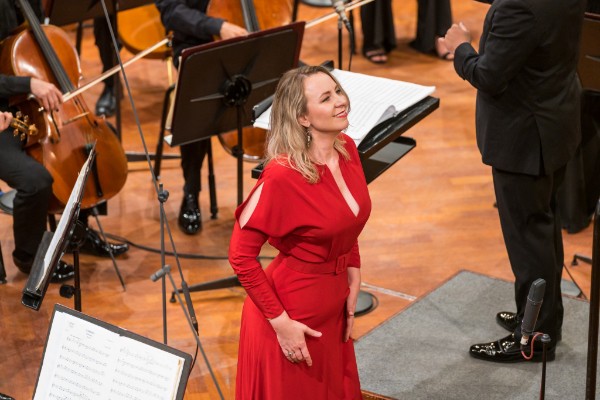
© Justina Gringytė Facebook Page
Carmen is one of the most well-known roles in the operatic repertoire. How did it feel stepping from something everybody knows to something relatively unknown?
Everything I felt I had to create my own, and maybe that’s the best thing in general. If you work on songs by Schubert or Wolf, you cannot escape others. You remember thousands of recordings in your head, and you’re being shaped by somebody.
One of the interesting things is that I wasn’t shaped by anyone in this. It doesn’t happen very often with older music. I was working on these songs for two years and living with them, finding my own way. My willingness to produce the songs in a certain way changed. Even now, I notice when I do these songs in recital, I feel it changing again.
They are flexible: they are romantic songs, and they give that flexibility. I guess for any type of voice, if three people record them or if one person records them, man or woman, soprano or mezzo, I think anybody can find a home in them.
There is always a key. I say, ‘What is the key of this song?’ I have to find my key, with my instrument, with my life experience, with my voice experience, and that has been an amazing journey for me in every sense. Not always easy, but amazing.
Ondine Releases 9/2025: Bizet: 20 Songs, Op. 21 – Justina Gringyte & Malcolm Martineau ODE 1458-2
It must have been nice not to feel that ‘weight’ from the past when learning these songs?
Yes, not to feel that weight, but I’m also not saying that I think I’m right somehow – I’m absolutely not. When I’m talking to students, I’m really curious to hear what different people can bring to these songs and how great they are for the voice itself.
I love educating and sharing things with the younger generation, and I think it’s wonderful to bring this repertoire to conservatoires, since it’s not widely known. Some of the songs are perfect for students just starting out and finding their way. With this whole opus, you can develop your voice, moving from the light songs to the heavy ones year after year. Bizet really knew what the voice is about.
How do you take the more famous operatic roles on and find what to say with them yourself?
Everybody knows Carmen – and can tell you how to sing it! The biggest thing with these roles is that you have to be yourself and remember that you will not be liked. If somebody liked you and gave you this role, well, at least that person likes it! And then you just have to do what any musician, any artist, does: you just have your quality bar and you try and reach for that.
As a musician, I work with all possible coaches and teachers. I seek help and I develop, and I absolutely sincerely want to do that quality work, and try to be unique with it, within myself.
Obviously, with these extraordinary roles that everybody knows, it’s more likely that you will not be liked rather than liked. But then I have to understand that I am myself, and I have to do what I have to do. That’s my purpose and my aim, my passion. That’s why I’m not giving up.
It’s really difficult, and in these Bizet songs, what was really refreshing was that there was no sound of other people in my ears. It felt almost like I was doing contemporary music. I felt quite free. You do that quality work, but you’re also free.
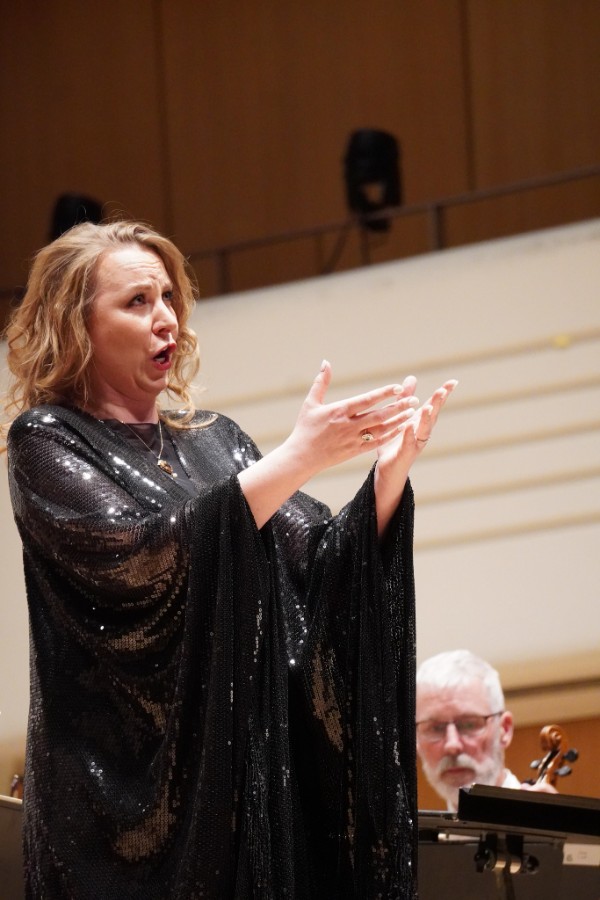
© Sønderjyllands Symfoniorkester
What do you do in your spare time?
I love gardening. I love cutting trees and carrying the branches. Gym muscles are good, but work muscles are better! What it comes down to is time with my family: with my son, with my husband, with my mother.
We all get together and try to spend as much time as possible together, and if that means that one week we are crazy gardeners, then that’s alright! I think I live a very happy, full family life. I find it feeds me.
For more of the best in classical music, sign up for our E-Newsletter