Artistry and Heart and Soul
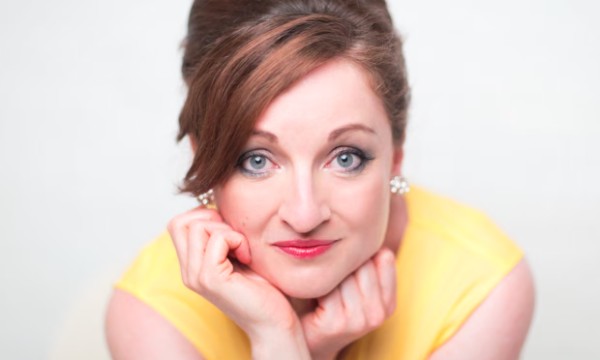
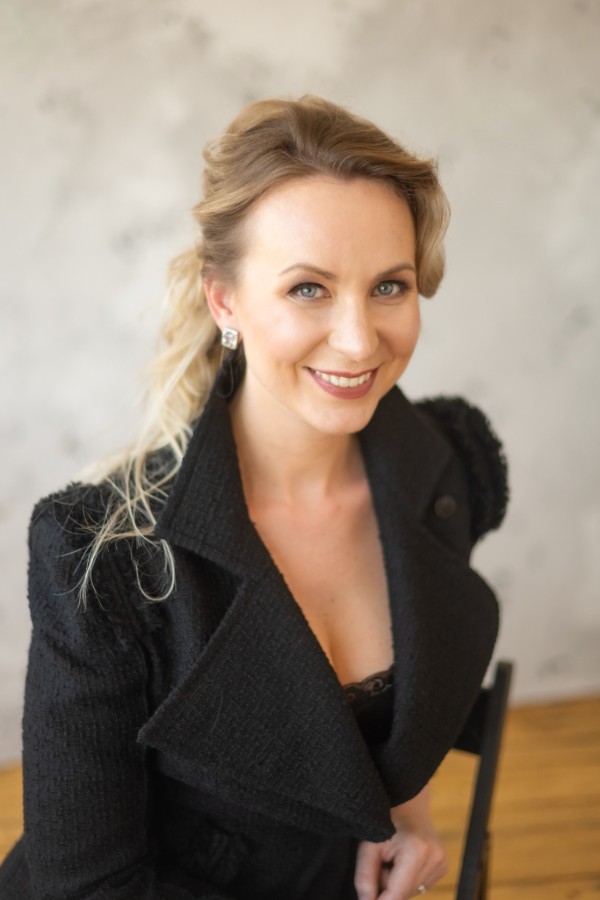
Ailish Tynan © Benjamin Ealovega/PR
One might think that an opera singer with an international career spanning three decades and several continents was immersed in the world of classical music from the very beginning. Not so with Irish soprano Ailish Tynan, for whom the only thing she remembers playing on the family radio growing up was the news.
Ailish recounts her childhood in Mullingar, in the centre of Ireland, listening to the radio that mostly delivered the news, and if she was lucky, a song by the Smiths – but never the operas that she would eventually find herself singing on stages across the world.
Since winning the Rosenblatt Recital Song Prize in 2003 at the BBC Cardiff Singer of the World competition, Ailish has risen to prominence as one of the finest sopranos of her generation. She has performed in opera houses across the UK, Europe and the US, with a busy operatic and concert schedule ranging from Mozart, Janáček and Mahler to newer works, having recently sang the role of Christine in the world premiere of Mark-Anthony Turnage’s Festen at the Royal Opera House earlier this year.
Alongside her operatic work, Ailish is a renowned interpreter of song, collaborating regularly with pianists Iain Burnside, James Baillieu, Graham Johnson, and Simon Lepper. She has a longstanding relationship with Wigmore Hall in London, where she is a regular favourite.
Schubert: Die Forelle (Ailish Tynan & Iain Burnside)
Music wasn’t around much at home, so how did you find your way to singing?
It was really the nuns who spotted my talent early on! I was always in the choirs at school, that kind of thing, but I never heard an opera until I was about 24. I laugh when I hear people saying that classical music is elitist, because my family had no classical music at all.
I did a degree at Trinity College Dublin, a bachelor’s in music education, with a view to becoming a secondary school teacher. Then I went and did a master’s in voice at the Royal Irish Academy of Music because I wanted to work with a teacher there, Irene Sandford.
Following these studies, you auditioned for the opera course at the Guildhall School of Music and Drama in London. How was that process?
I’d just won a few big competitions in Ireland as a complete outsider, and the casting director of Glyndebourne Opera was on the panel. He spoke to me afterwards and said I needed to get to London, and my singing teacher at the Academy [in Dublin] agreed – she had been a singer herself and been to London.
When I came to Guildhall to audition for the opera course, I didn’t even have three arias to sing. I think they were hesitant to put me in the opera course because I had so little experience. I thought, ‘I’ve got a degree, I’ve got a master’s, I don’t need any more letters or numbers after my name: now I need experience.’ I think I said that to them, and I think that’s what decided it for them.
I used to go down to Glyndebourne for six months of the year, doing small roles like the second bridesmaid in The Marriage of Figaro, and then I would understudy bigger roles like Miss Wordsworth in Albert Herring, so I was getting the best of both worlds.
When I was at Glyndebourne, I was spotted for the young artist programme at the Royal Opera House, and that really was the absolute making of me.
How did your time at the Royal Opera House shape you as an artist?
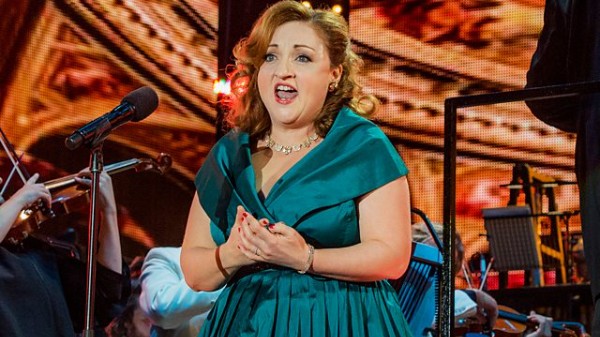
© bbc.co.uk
I went into the Royal Opera House not knowing a thing, really, and the encouragement, the support, the education, the training was unbelievable.
It was very intense, and it was totally immersive. Some days, you could get there at 10 in the morning and still be there at 10 at night, doing classes in the morning and then understudying on a show in the evening.
I was basically cherry-picked out of Guildhall for it, so I knew before I left that I was going on to that. I was so lucky. It’s so easy to get lost in those interim years and lose focus and think, ‘I’m never going to make it.’ I’m so lucky that I never had that feeling. I look back and think about how incredibly lucky I was.
It’s a combination of luck, having the talent and being in the right place at the right time. And of course, once you get it, now more than ever, the hard work that goes into it is unbelievable.
I went in for some coaching recently at the Royal Opera House, which is another great perk of having been a young artist there: you can go back for a certain amount of coaching every year. In a way, you always feel like you’re part of a family, which in this business is an amazing feeling.
Papageno, Papagena duet Simon Keenlyside & Ailish Tynan
What do you think are some of the challenges that young performers face today?
I think with young musicians today, there is a huge amount of work you have to put into it to make it, and you have to work in ways that we didn’t even have to think about, like with social media and everything.
This social element is a lot, and also, how you look now is a big part of it. I feel casting directors are more centred around how people are going to look in their productions than I think they would have been when I started out.
Do you have any advice for younger singers who are in that post-studying transitional phase today?
I’m the International Artist in Voice at Trinity Laban [in London] – it’s not a title I’ve given myself!
So I see a lot of young singers coming through and going on to the next phase.
I think, from my point of view, what I would love to see people doing while they’re at music college, while they have the chance, is working on their languages. Languages are so important. I don’t think you can be an opera singer now without having that perfect.
If we put aside all the bells and whistles – having social media, how you look, all those other kind of things that I think are nonsense – if we go to the core of what it means to be a great artist, the thing that I would really value is artistry.
What does ‘artistry’ mean to you?
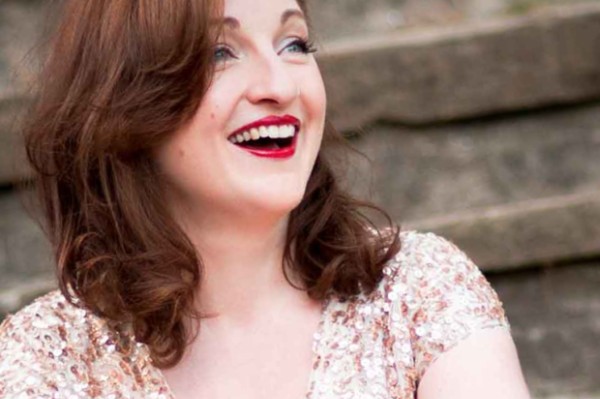
© journalofmusic.com
I am a great believer in listening to the greats and seeing what makes a brilliant artist. For years, I never liked Elisabeth Schwarzkopf’s voice. As I get older and I realise what artistry really means, it’s not just about having a fantastic voice, it’s not just about doing all the right moves in the right places: it’s about bringing personality to your singing, and it’s about getting to the heart of what the composer wanted, rather than what you think sounds good.
Nowadays, I listen to Elisabeth Schwarzkopf and I can’t get enough of her. I’m absolutely gutted if I’m singing something that she hasn’t sung, especially in repertoire like Hugo Wolf.
I say to younger singers to go and listen to singers like Natalie Dessay – what she does with French music is incredible. Her discs of Poulenc songs are incredible. She captures what Poulenc probably really wanted, which is someone who could speak and sing, who could sing the text like they’re speaking it, and she does that so incredibly.
It’s getting to that stage of artistry as a singer where you’re not really looking exactly at what’s on the paper, but you’re reading between the lines. It’s getting to the stage where you can bring that alive in a way that’s real to you.
What’s the main thing, if anything, that a singer should be aware of in their own artistry?
For me, the main thing I think about being a singer is communication, and going beyond the music to communicate and resonate with your audience, and with the people who’ve come to share that experience with you. I think that’s what I love most about being a singer.
In a way, I’ve always leaned towards recital singing. I won the Rosenblatt recital prize at Cardiff Singer of the World in 2003, and I think even then people had spotted that I had an affinity with song.
What are the main differences for you between opera and song?
I’ve actually done more opera in the last few years than I’ve ever done, and that has been brilliant, but it’s amazing to see the difference. When you learn a role in opera, that role keeps paying out, because you just go around the place doing the same role. Of course, the role grows and gets better every time you do it; you learn more, you get more confident with it, but actually, with recitals, I haven’t done so many because opera’s taken up a lot more time.
With song recitals, the time commitment is huge for what you eventually get paid, but the artistic payoff is big. There is an immediate communication with the audience: you’re not working through a director or conductor, who both control a lot of what you do in opera.
With recital singing, it’s immediate. It’s your own thoughts and ideas, and those of your collaborative partner, but you don’t get in the way of each other. They do their thing and you do your thing, and you’re both presenting it, fresh and individual, to the audience. I love that.
In opera, you are using a vocal technique to get across to 80 people in an orchestra and to fill a huge auditorium, so it’s an entirely different way of singing, whereas in a recital programme, you can really take risks and do the small things that you can’t really do in an opera scenario.
How does it feel when you’ve been doing a long stretch of opera and then you get to do a smaller song recital?
It’s kind of scary when you go from one to the other, from opera to song. With opera singing, it can be hard on your voice. The more I do opera and the older I get, I can see how opera singers have a certain timespan. I think if I were singing recitals my whole life, I would be singing until I was 90, but the minute you start going into that bigger rep, it does put an extra strain on the voice, for sure.
The voice is like an elastic band: once you start to stretch it so far, that’s it, really. Vocally, sometimes when you’ve been doing a lot of opera – I did The Turn of the Screw at English National Opera and in the middle of the run, I did a recital at Wigmore Hall, and I have to say that was tough.
In The Turn of the Screw I was giving it everything. Even though it’s Benjamin Britten, there are some huge and very emotional phrases. You’re giving it everything, and then to have to go back and sing a Schubert song after that was tough.
Operas vocally take more out of you, but then stage-wise, when you go back to the recital form, you’ve got so much more going on in your head from all the opera experience, with the feel of it, and you’ve definitely got more to offer, intellectually and emotionally.
It’s great to have the balance. I feel very lucky that I’m able to do both of them.
With operatic roles, you are synthesising your own ideas with those of a director and conductor. How do you balance your own ideas with the feedback you get from the creative team?
I’m about to go out to South Korea to do The Turn of the Screw in a concert performance, and it’ll be the premiere of this piece in Korea, so I’m quite excited about that. In the production I did recently at ENO, the production was set 30 years after the original, and the director had interpreted it where my character had lost her sanity after the death of her child, and she was in an asylum, reliving it all the time.
Doing that role, normally you’d be in the mindset of a 25-year-old, and now all of a sudden you’re playing it as a woman who’s 55. Now, going to Korea to do it, I’m going back to the 25-year-old mindset because it’s a concert performance, so I will not do it with this director’s idea of it being in an asylum: just as a young girl who’s going through her first job as a governess to these children.
In opera, you have to make it work very quickly, and work in a way that you can translate it to other people, and make them believe in you and your character.
Of course, every good singer can take on these things and do their best with them, but I think when a singer really gives their best performance is when the director has managed to tap into a bit of who they are as well.
Ailish Tynan & Iain Burnside – Over the Rainbow
What do you do in your spare time?
That would be my greatest bit of advice to a young singer, actually: have a life. Even if you’re the greatest star in the world, this career is short. There are not many people who have 50-year careers, like people who might get a job in a bank when they’re 25. It can be very hard and unforgiving at times. Things can fall apart at very short notice, so have other things in your life.
My whole life is my husband and my little daughter, who’s 8 and the absolute light of my life. I spent a lot of time here in the UK – I haven’t been abroad for an opera since my daughter was born, because I wanted to enjoy the time with her.
I love to cycle – we go cycling together. I love walking our dog. I have a very simple life, actually. I love good food, being out and about in nature, I love my friends and having a bit of a social life when I can – as a singer, that’s a bit tricky because you’re always minding your voice or working in the evenings!
With the amount of time and energy and artistry and heart and soul we dedicate to this, you need to make sure you’ve got something else in your life, so that you’ve got something to fall back on in the hard times, when you might not have work and you might feel blue. Have something else in your life that gives you joy.
For more of the best in classical music, sign up for our E-Newsletter