The 2025 Chopin Piano Competition has garnered tremendous attention in the classical piano arena this 19th term of its existence. The pressure of high expectations conveyed to participants at every round of the competition could certainly rival that of the world’s “Olympics”. Facts are that:- 642 applicants from 28 countries broke application records, performances of the 162 candidates selected at the preliminary stage were immediately exposed through the internet, not to mention the 85 qualified pianists ( of which 19 were already prize winners in other international competitions ) were overwhelmed by world-wide publicity while they were revealing “the best versions of themselves” at the official venue in Warsaw, Poland from October 2nd to 23rd. These scenarios set in motion extensive media coverage, utmost scrutiny on all participants, even jurors, and lastly, controversial opinions saturating all conversations.
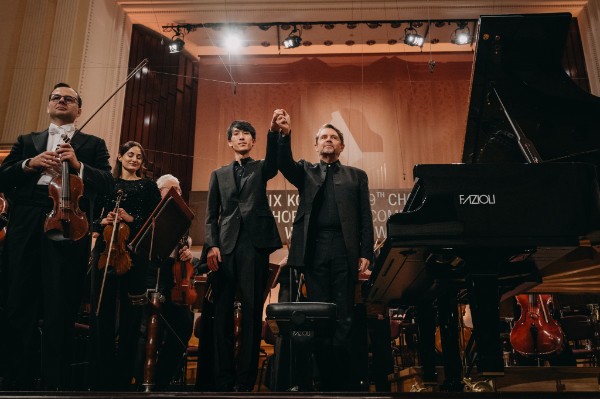
Eric Lu Wins the 2025 International Chopin Competition © Wojciech Grzedzinski
After 3 rounds of intensely competitive solo rounds in Warsaw, 11 pianists advanced to the finals, supposedly competing for 6 prestigious prizes. As it turned out, the 4th and 5th prizes were tied, and thus there were 8 top prize winners this year. Apparently, both technical and artistic standards of these competitors had reached the highest levels ever, allegedly the most critical in comparison to previous competitions, confirmed by numerous online commentaries and printed press, professional or otherwise. As a consequence, speculations and predictions about who would make it as finalists and award winners went frenzied! Truth of the matter is, every single candidate at this point must have been at one time a child prodigy in his or her own country of origin. Each had definitively been recognised at an early age to be exceptionally talented, hence was sent to the most prestigious teachers or music conservatories for serious training, with some of them even sent abroad as youngsters to faraway countries for the purpose of furthering their professional development. A lifetime of demanding education, focused hard work, and dedicated practice has evolved them into the world-class genre of concert pianists, deserving successful and lucrative careers. However, in any competition, there are limited prizes, and everyone is aiming for the same scarce accolades, which, of course, would create huge disappointments or feelings of injustice when unattainable. Such is the life of an ambitious competitor, especially for “high octane” ones!
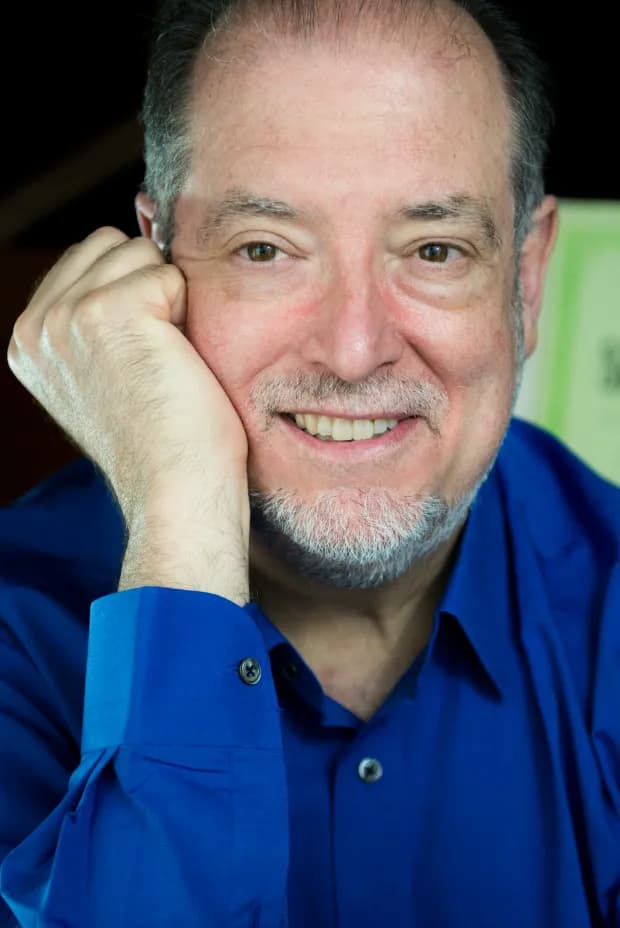
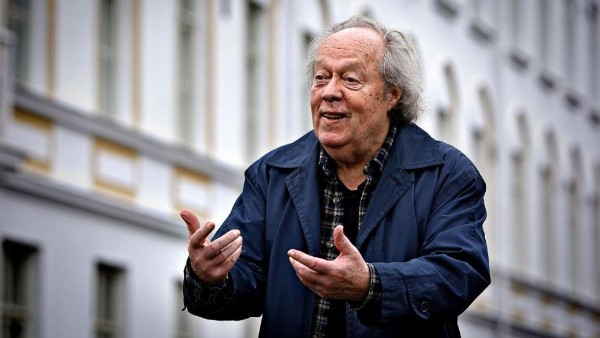
Garrick Ohlsson
As Garrick Ohlsson, the chairman of the jury, said when interviewed: There was so much controversy among jurors’ judgments that at the end of every session, when names of candidates to advance further in the game were announced, there was always a profusion of astonishments among them – “Oh…..Oh…..Oh…..”! He even mentioned that there were a few of his favourite pianists in the first round, whom he assigned the highest scores to, who were rejected by the jury from advancing to the second round. He was so looking forward to hearing them again, but was deprived of the chance, and they too, missed the opportunity to prove their worth. So impassioned were disagreements among the jurors that the deliberation for selecting winners after the finals took over 5 hours, and it was upon his insistence that jurors agreed to compromise their choices and arrived at some sort of conclusion in the middle of the night.
I applauded the jurors for their decision of 11 finalists in this competition, although I might have placed them in a different order, according to my taste. Nonetheless, they represented an array of exquisite but diversified qualities which, in their own right, showed off their authentic best and served them well in their destined artistic pursuits. Whatever fate each candidate encounters after the conclusion of this competition will depend largely on factors beyond their control, i.e., (i) luck, (ii) individual learning curves, (iii) varied levels of resilience, and (iv) extent of popularity among audiences. I firmly believe that if they remain realistic and persistent in their goals, these talents will eventually find their station in life.
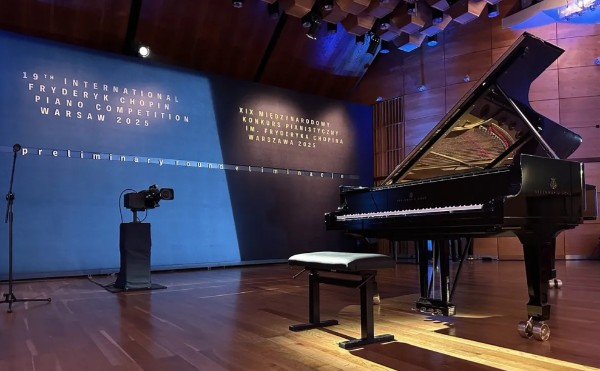
© pianostreet.com
Here is my personal impression of the finalists’ attributes, which are most transparent to me, submitted in simple note form, and listed in the order that they appeared at the finals:-
1. Tianyou Li:
Variations in B flat major, Op. 2 (34:29)
*Pure joy to listen to
*Cheerful disposition
*Charismatic personality
*Lack of pretentiousness
*Representation of youthfulness
2. Eric Lu:
Polonaise – Fantasie in A flat major, Op. 61 (0:06)
*Commendable professionalism
*Consistency of seriousness
*Expert manipulator of sounds
*Seasoned navigator at the piano
*Cool, calm and collected persona
*Excitement slightly restrained
3. Tianyao Lyu:
Concerto in E minor, Op. 11 (17:14)
*Authentic charm
*Natural musicality
*Inborn musicianship
*Inherent confidence
*Exquisite sense of style
*Gifted in captivating audiences
4. Vincent Ong:
24 Preludes, Op. 28 (07:39)
*Unique character
*Immaculate touch
*Warmth in tonality
*Abundance of energy
*Subtle display of brilliance
*Creative and independent interpretation
5. Miyu Shindo:
Andante Spianato and Grands Polonaise Brillante in E flat major, Op. 22 (38:04)
*Scintillating touch
*Passionate personality
*Ample display of emotions
*Drama internalised in her music
*Pained facial expression throughout
6. Zitong Wang:
Sonata in B flat minor, Op.35 (10:48)
*Powerful artist
*Superior tonal control
*Convincing soulfulness
*Contemplative musicianship
*Acute listener to production of sounds
*Resemblance to Aimi Kobayashi (my favourite former Chopin Competition finalist) in technical dexterity and wide-scoped conceptualisation
7. William Yang:
Scherzo in E major, Op. 54 (0:05)
*Technical proficiency
*Profusion of intellectualism
*Evidence of a strong academic background
*Emphasis on simplicity and classicism in structuring Chopin’s music
*Even more imagination could be unleashed
8. Piotr Alexewicz:
Andante Spianato and Grands Polonaise Brillante in E flat major, Op. 22 (37:38)
*Natural lyricism
*Polish advantage
*Reference to Chopin’s musical language as mother tongue
*Usage of subtle rubato, allowing lines to sing and flow effectively
*Successfully dwelling on silences and breathing between phrases
9. Kevin Chen:
12 Etudes, Op. 10 (15:17)
*Amazing virtuosity
*Impressive pianistic skills
*Diligent adherence to scores
*Meticulously curated interpretation
*Clear and deliberate implementation of intentions
*Spontaneity mildly noticeable
10. David Khrikuli:
Scherzo in E major, Op. 35 (45:12)
*Sensitivity in touch
*Strong hint of intensity
*Sustained tension attained without loud chords and heavy touch
*Sincere rapport with audiences
11. Shiori Kuwahara:
Sonata in B minor, Op. 58 (19:18)
*Performances reflect elegance, gracefulness, gentility, maturity and poise
*Evidence of classy, dignified, sophisticated and cultured background
*Portrayal of warmth, intimacy and humanity in her music
*Exemplary professionalism
For more of the best in classical music, sign up for our E-Newsletter