Echoes of Venice
He may not be as famous as Mozart or Haydn, but Baldassare Galuppi (1706-1785) played a vital role in the evolution of opera buffa. He was known during his lifetime as Il Buranello, after his birthplace on the Venetian lagoon island of Burano.
One of the most influential yet historically underappreciated composers of the mid-eighteenth century, Galuppi “occupied a central position in the stylistic translation from late Baroque complexity to the melodic clarity of the Galant and early Classical idioms.”
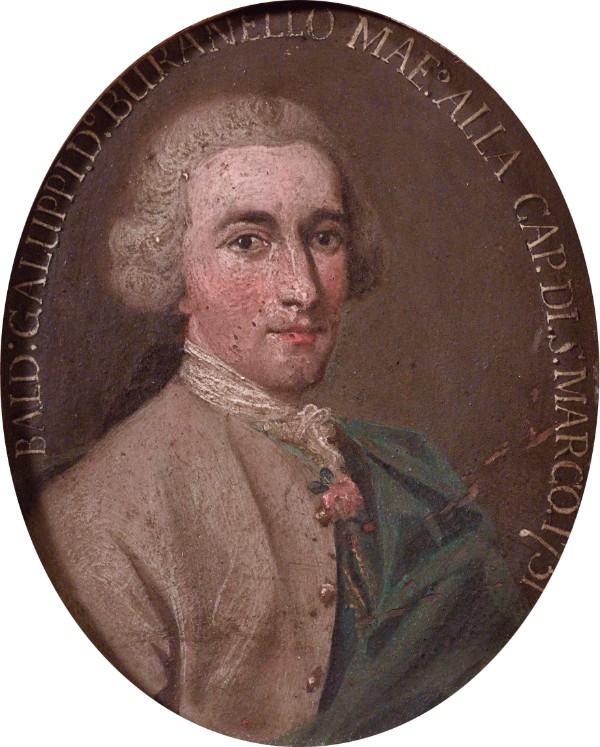
Baldassare Galuppi
According to Encyclopaedia Britannica “Galuppi’s role in shaping opera buffa and reforming operatic dramaturgy was both substantial and enduring.” To celebrate his passing on 3 January 1785, we reflect on a life of remarkable productivity and influence.
Baldassare Galuppi: Arcifanfano (King of the Fools), Act 1
Early Life and Musical Formation
Galuppi was born on 18 October 1706 into a modest household. His father earned a living as a barber while also performing as a violinist. He introduced him to music at an early age, exposing the young boy to practical musicianship.
As a young man, Galuppi travelled to Venice proper and studied composition and keyboard with Antonio Lotti, the first organist at the basilica of S. Marco. This apprenticeship immersed Galuppi in the contrapuntal traditions of the late Baroque, yet his temperament leaned towards theatrical expression.
His first attempt at opera, La fede nell’incostanza ossia gli amici rivali of 1722, was staged while he was still a teenager. Apparently, it met with public disapproval, interrupted by disturbances in the theatre.
This early public failure might easily have discouraged a lesser composer, but Galuppi responded by refining his craft and absorbing the evolving tastes of Venetian audiences. In fact, Dale E. Monson suggested that this early failure might have sharpened his artistic focus and commitment.
Baldassare Galuppi: Harpsichord Concerto in C Minor (Ernesto Merlini, harpsichord; I Solisti Veneti; Claudio Scimone, cond.)
Professional Establishment and Institutional Appointments
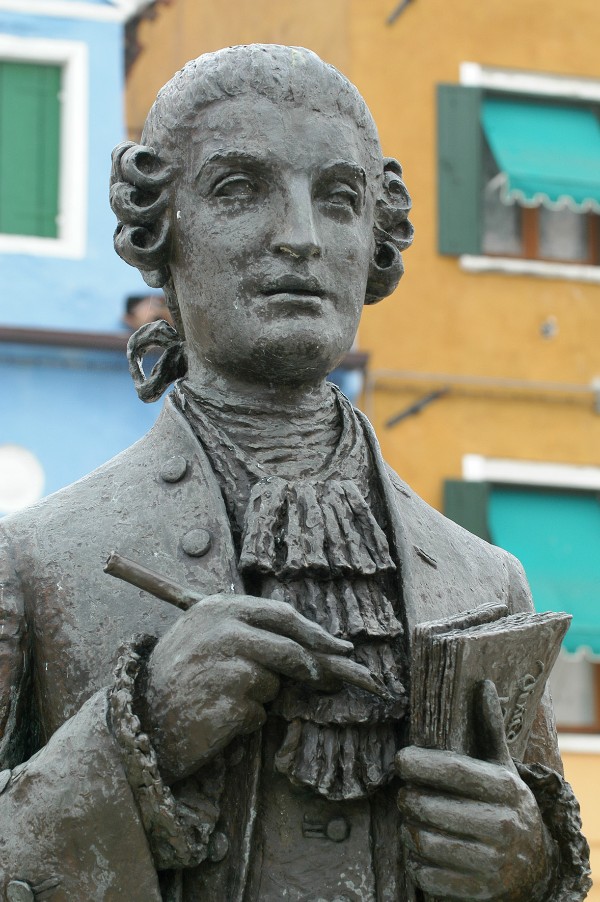
Baldassare Galuppi
By the late 1720s, Galuppi had established a reputation as a cembalist in Venice and Florence, and he was soon engaged at theatres in Venice. He collaborated with Giovanni Battista Pescetti, “writing alternate acts for various opera productions.”
Over the course of his career, Galuppi composed more than one hundred operas, a figure cited both by Grove Music Online and Wikipedia, making him one of the most prolific opera composers of the eighteenth century. At the same time, he secured important institutional appointments that confirmed his status.
In 1740, he became maestro di musica at the Ospedale dei Mendicanti, one of Venice’s celebrated musical charities. According to Monson, “these institutions maintained elite ensembles and served as important centres of musical innovation.”
Galuppi’s most prestigious appointment came in 1748, when he was named vice-maestro di cappella at St. Mark’s Basilica. He rose to maestro di cappella in 1762, assuming responsibility for the musical life of Venice’s most symbolic religious space.
Baldassare Galuppi: Mass in C Major, “Kyrie”
The Rise of Opera Buffa
Galuppi’s lasting historical importance rests above all on his contributions to opera buffa. Music historian Daniel Heartz situates Galuppi squarely within the rise of the Galant style, emphasising his preference for clear melodic lines, regular phrase structure, and expressive simplicity over contrapuntal density.
The decisive moment in Galuppi’s operatic career came through his collaboration with playwright and librettist Carlo Goldoni. This partnership transformed comic opera from a loosely structured genre into a dramatically coherent form.
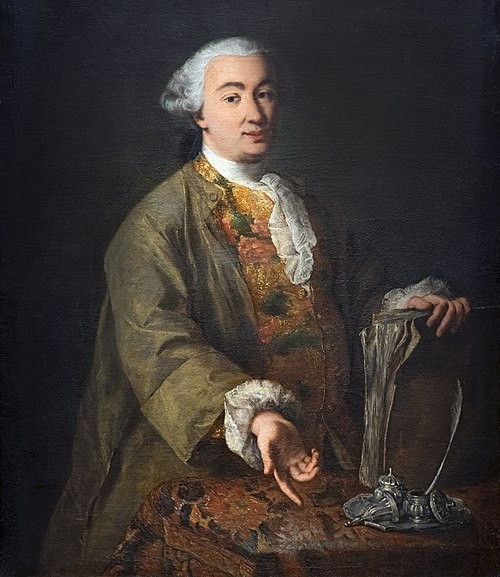
Carlo Goldoni
Operas such as Il mondo della luna of 1750, and Il filosofo di campagna of 1754, demonstrate how Galuppi’s music supports characterisation, pacing, and ensemble interaction rather than merely accompanying individual arias.
One of Galuppi’s most important formal innovations was the development of extended ensemble finales. According to scholars, “these finales allowed multiple characters to participate simultaneously in musically unified dramatic climaxes, a technique that later became standard in Classical opera.”
Baldassare Galuppi: Il filosofo di campagna – Act I: Finale: Son pien di giubilo (Nardo) (Alessandro Calamai, bass; Sauro Argalia, harpsichord; Intermusica Ensemble, Ensemble; Franco Piva, cond.)
International Recognition
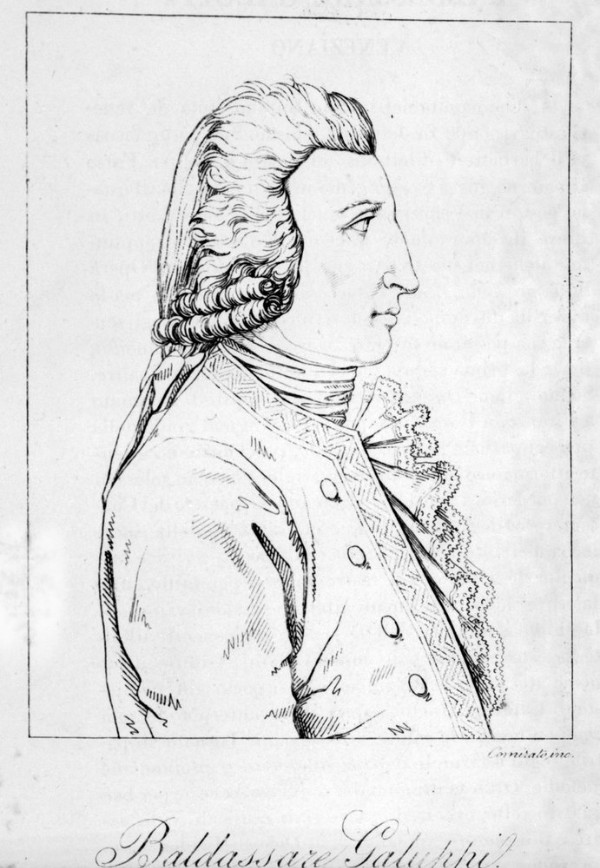
Portrait of Baldassare Galuppi
Galuppi’s reputation extended well beyond Venice. Between 1741 and 1743, he worked in London, where his operas and pasticcios were staged for English audiences. The eighteenth-century music historian Charles Burney praised Galuppi’s melodic naturalness and dramatic effectiveness, noting that “his style appealed strongly to contemporary tastes.”
An even more significant chapter of Galuppi’s career unfolded in 1765, when he accepted an invitation from Empress Catherine II to serve at the Russian imperial court in Saint Petersburg. As Britannica records, Galuppi composed operas and sacred works while also educating young Russian musicians.
Returning to Venice in 1768, Galuppi resumed his duties at St. Mark’s Basilica. Though his operatic output declined, his international experience enriched his compositional language and reinforced his standing as a cosmopolitan figure within eighteenth-century European music.
Baldassare Galuppi: Il mondo della luna (Giorgio Gatti, bass; Gastone Sarti, bass; Paola Antonucci, soprano; Patrizia Cigna, soprano; Barbara Di Castri, mezzo-soprano; Claudio Ottino, baritone; Enrico Facini, tenor; Intermusica Ensemble, Ensemble; Franco Piva, cond.)
Final Years and Reception
While opera defined his public reputation, Galuppi devoted considerable energy to sacred music. Musicologist Eleanor Selfridge-Field notes that Galuppi’s masses and psalm settings “blend traditional Venetian ceremonial grandeur with the melodic clarity of the galant style.”
Galuppi’s instrumental works, especially his keyboard sonatas, further illustrate his role as a transitional composer. Heartz identifies these sonatas as exemplary of mid-century taste, favouring balanced phrasing and expressive restraint over virtuosic display.
After completing his final opera, La serva per amore, in 1773, Galuppi increasingly focused on sacred and instrumental composition. He remained active at St. Mark’s Basilica until his death on 3 January 1785. His passing was marked by public recognition and commemorative performances, reflecting the esteem in which he was held by Venetian musicians.
Despite this recognition, Galuppi’s music gradually fell out of favour in the nineteenth century. Political upheaval and the dispersal of manuscripts contributed to his relative obscurity. His name survived in literary memory, however, as Robert Browning’s 1855 poem “A Toccata of Galuppi’s” nostalgically evokes eighteenth-century Venice.
Baldassare Galuppi: Piano Sonata No. 9 in F minor, “Andante spiritoso”
Legacy and Modern Reassessment
Modern scholarship has restored Galuppi to his rightful place in music history. Grove Music Online emphasises his central role in the development of opera buffa and his influence on later Classical composers.
Galuppi’s style is marked by elegant, flexible melody, rhythmic vitality, clarity of texture, and acute sensitivity to text and characterisation. Equally attentive to singers and instrumentalists, he tailored his music precisely to the abilities of the performers and helped elevate orchestral discipline in Venice and Saint Petersburg.
Together, these achievements position him as a central figure in the musical life and stylistic evolution of mid-eighteenth-century Europe. Recent performances and recordings have revealed the dramatic intelligence, melodic charm, and structural innovation of his works.
Today, Galuppi is recognised not merely as a prolific composer, but as a key architect of eighteenth-century musical modernity. His career illustrates how Venetian musical culture shaped the broader transformations of European art during the Enlightenment.
For more of the best in classical music, sign up for our E-Newsletter