The French Mozart Turns 250
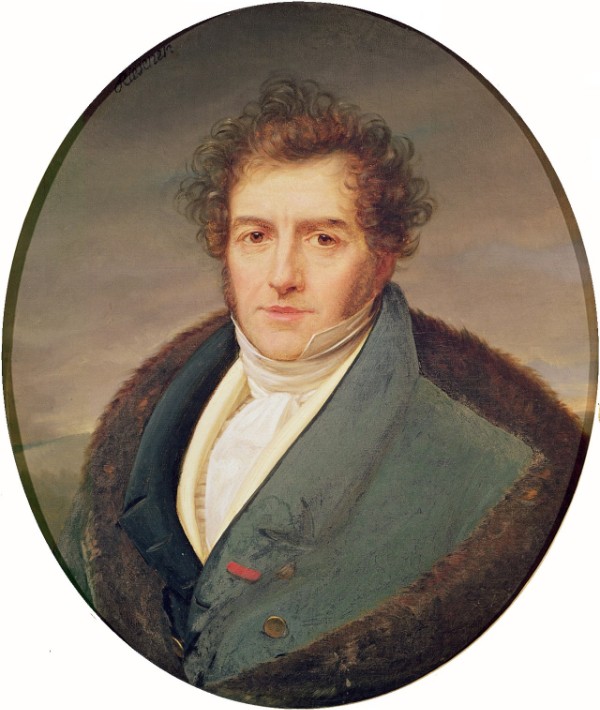
François-Adrien Boïeldieu
On 16 December 1775, in the city of Rouen, France, the composer François-Adrien Boïeldieu (1775-1834) was born. It is an anniversary of significance for admirers of classical music, as it marks 250 years since the birth of a composer often hailed as “The French Mozart.”
François-Adrien Boïeldieu was a prolific composer of more than forty operas, a pioneer in transforming opéra comique into a more expressive, romantic form, and a gifted creator of instrumental music.
His greatest masterpiece, La Dame blanche, continues to be celebrated, but his broader oeuvre, including piano works and the rare and beautiful Harp Concerto, invites renewed attention.
On the 250th anniversary of his birth, we honour not only his surviving masterpieces but also the spirit of musical elegance, innovation, and cultural bridging that he embodied.
François-Adrien Boïeldieu: La Dame blanche, “Overture”
From Rouen to the Stage
François-Adrien Boïeldieu was born into a modest family, with his father serving as the secretary at the archbishop’s palace in Rouen. Young François-Adrien displayed great musical talent, and he received his first formal instruction in music from Charles Broche.
Broche was the organist at Rouen Cathedral, and Boïeldieu received instruction in organ, piano, harmony, and composition. By 1791, he became organist at the church of Saint-André in Rouen. His early years coincided with the turmoil of the French Revolution, a period of radical social and political change in France.
Throughout the revolutionary years, the city of Rouen maintained a lively musical scene, and these turbulent years did not stifle Boïeldieu’s creativity. In fact, at the age of 17, he composed his first opera, La Fille coupable, with a libretto by his father, which was successfully staged in Rouen in 1793. His second opera, Rosalie et Myrza, followed in 1795.
François-Adrien Boieldieu: Ma tante Aurore, “Le roman impromptu”: Dieux cruels, dieux impitoyables … (Cyrille Dubois, tenor; Orfeo Orchestra; György Vashegyi, cond.)
Parisian Ambitions
François-Adrien Boïeldieu
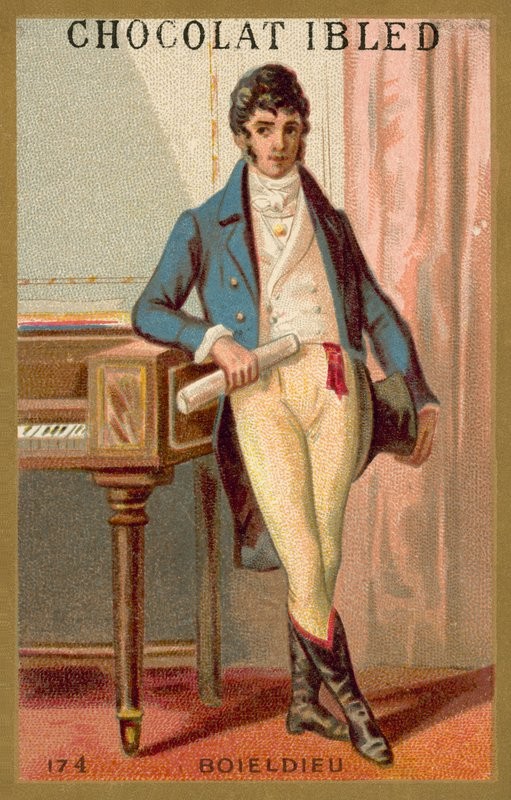
Emboldened by his early successes, Boïeldieu moved to Paris in 1796. There, in the bustle of the capital, Boïeldieu began to build connections with important contemporaries, and he immersed himself in the musical life of the city.
His career took a practical turn first as he worked as a piano tuner to support himself while pursuing composition. However, his talent quickly attracted attention in theatrical circles. 1797 turned into a remarkable year as three of his comic operas premiered in quick succession, namely La Famille suisse, L’Heureuse nouvelle, and Le Pari, ou Mombreuil et Merville.
One year later, he followed up with Zoraïme et Zulnar and La Dot de Suzette, firmly establishing himself in the Parisian opera world. In 1798, he was appointed piano professor at the newly established Paris Conservatoire.
François-Adrien Boieldieu: Les Souvenirs, “Tout mon bonheur est dans mes larmes” (Sylvie Nicephor, soprano; Etsuko Shoji, harp)
Melody and Magic
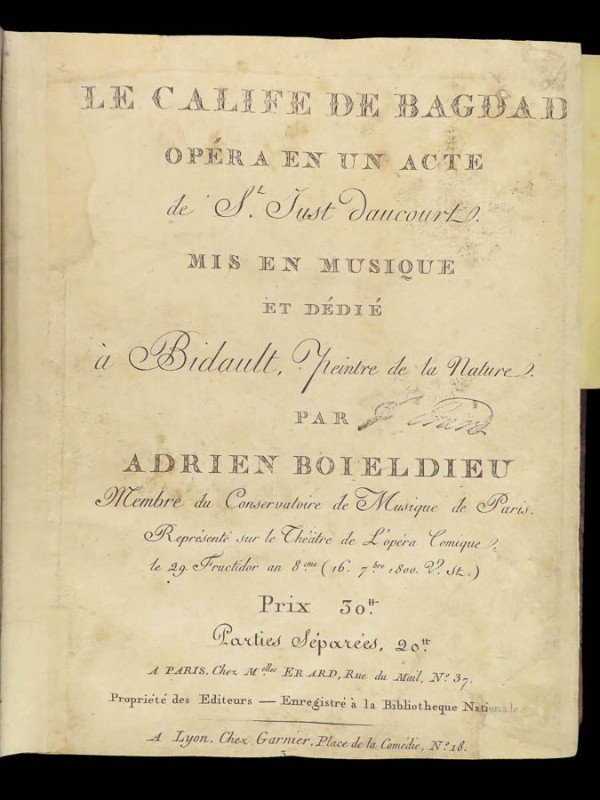
François-Adrien Boïeldieu’s Le Calife de Bagdad title page
Even in these early years, Boïeldieu’s compositional output was prolific and diverse, yet always marked by a gift for melody and theatrical flair, qualities that would define his long-term contribution to French opera.
Over his lifetime, Boïeldieu composed more than 40 operas and vaudevilles, many of which enjoyed success across France and beyond. His work is often regarded as pivotal in transforming the genre of opéra comique from light and amusing fare into more serious works that foreshadowed Romantic opera.
For scholars and connoisseurs, Le Calife de Bagdad of 1800 is often considered his first major triumph. The exotic subject matter and lively melodic music appealed greatly to contemporary audiences, and the work became popular throughout Europe.
François-Adrien Boieldieu: Le calife de Bagdad: Overture (Orchestra della Svizzera Italiana; Howard Griffiths, cond.)
Expanding Horizons
Another opéra comique, Ma tante Aurore, ou Le Roman impromptu of 1803, enjoyed a successful staging and contributed to Boïeldieu’s growing fame. His fame was such that he attracted significant opportunities abroad.
Between 1804 and 1810, he was engaged as court composer in St. Petersburg, Russia, where he produced a number of operas for the imperial theatres.
Back in Paris, Jean de Paris was staged in 1812, and it is generally considered an example of his maturing musical style. Le Petit Chaperon rouge of 1818 shows Boïeldieu’s continual engagement with fairy tale and often charming theatre material.
François-Adrien Boieldieu: Jean de Paris: Overture (Orchestra della Svizzera Italiana; Howard Griffiths, cond.)
Haunted Castles and Hidden Fortunes
La Dame blanche
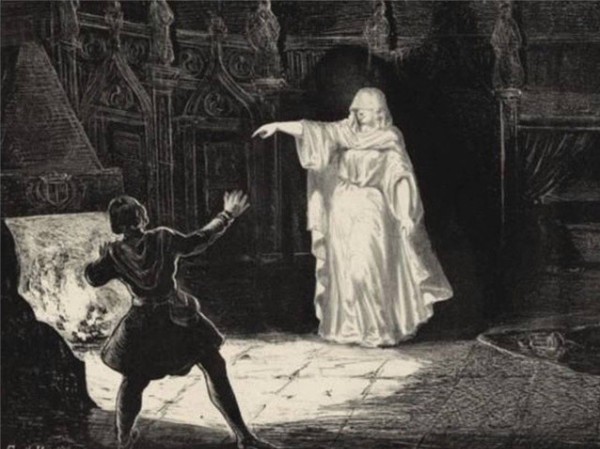
His crowning opus emerged in 1825. La Dame blanche, with a libretto of Eugène Scribe, is a three-act opéra comique drawn from the works of the Scottish novelist Sir Walter Scott. It specifically draws on Guy Mannering and The Monastery.
The story involves romance, mystery, a haunted castle, a hidden identity and fortune, all exploring elements of early Romanticism.
The atmosphere, mood, and musical language of La Dame blanche mark this shift. The opera’s scenes of mystery and romance foreshadow later Romantic operas and influenced composers like Giacomo Meyerbeer and subsequently Charles Gounod.
François-Adrien Boïeldieu: La Dame blanche, “Viens, gentille dame”
Beyond the Stage
Beyond his prolific output for the operatic stage, Boïeldieu demonstrated remarkable versatility as a composer of instrumental music. His Harp Concerto, dating from around 1800/01, stands as a crowning and celebrated achievement in the repertoire.
At a time when substantial works for the harp were rare, this concerto distinguished itself not only through its melodic inventiveness but also through its enduring appeal, securing a place in concert programs even today.
In addition to his contributions for the harp, Boïeldieu composed a number of piano works and romances for voice accompanied by piano or harp. His piano compositions, in particular, hold historical significance as they are recognised as among the earliest such works by a major French opera composer.
François-Adrien Boieldieu: Piano Concerto in F Major (Martin Galling, piano; Innsbruck Symphony Orchestra; Robert Wagner, cond.)
Trials and Tribulations
Despite political upheavals and shifting tastes in opera, Boïeldieu remained a respected figure, beloved by many for his melodic charm, graceful style, and ability to appeal to French taste.
In his later years, Boïeldieu’s health deteriorated. According to biographical sources, he suffered from tubercular laryngitis, a disease that gradually robbed him of his voice.
His late opera, Les Deux Nuits of 1829, despite some hopes, failed to replicate the success of his earlier triumphs. Moreover, the bankruptcy of the Paris Opera and the political upsets of the July Revolution adversely affected his fortunes.
François-Adrien Boieldieu: Violin Sonata No. 1 in E-Flat Major, Op. 8 (arr. for clarinet and piano) (Eduard Brunner, clarinet; Maria Bergmann, piano)
Honoured in Life and Legacy
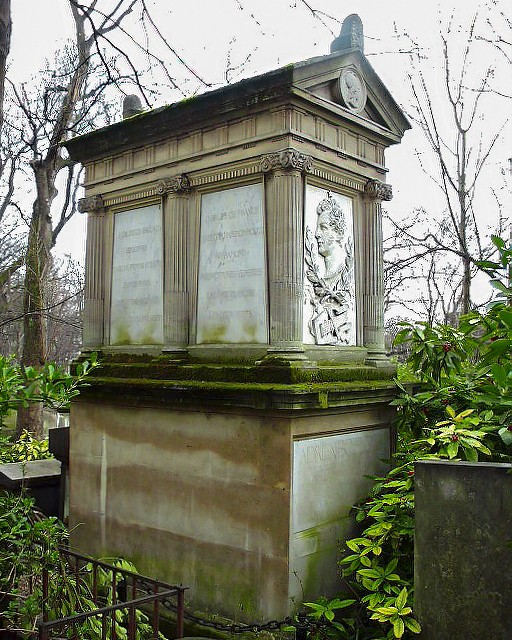
Tomb of François-Adrien Boïeldieu
Eventually, to prevent destitution of this “national hero,” the French government under Adolphe Thiers granted him a pension of 6,000 francs. Boïeldieu died on 8 October 1834 in his country residence at Varennes-Jarcy near Paris.
As a mark of respect, France held a national funeral for him at the famous Les Invalides. His heart was interred in a memorial tomb in his native Rouen, and his body was buried in the celebrated Père-Lachaise Cemetery in Paris.
In addition to his musical legacy, his character as a dedicated teacher endured. Among his students were composers like Adolphe Adam and Pierre Zimmermann, through whom his influence spread into the next generations.
François-Adrien Boieldieu: Zoraime et Zulnar: Overture (English Chamber Orchestra; Richard Bonynge, cond.)
Elegance, Innovation, and Influence
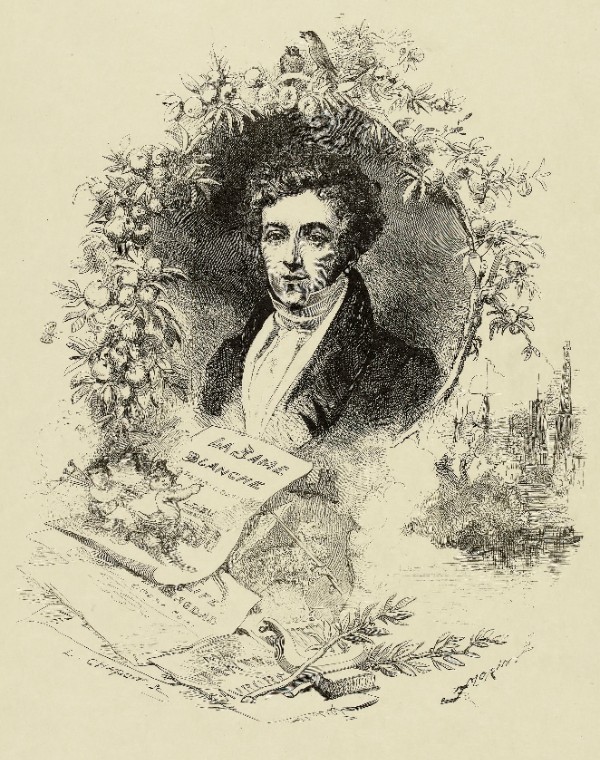
François-Adrien Boïeldieu
Boïeldieu’s career occupies an important transitional period in European art as music was evolving from the classical tradition into the early romantic age. His contribution lies not only in the volume of his output but in the way he shaped the French operatic tradition.
With La Dame blanche, Boïeldieu helped to show that opéra comique could encompass supernatural romance, mystery, and dramatic intensity, a significant shift from the purely comedic and domestic themes typical of earlier works.
In France and elsewhere, his name became associated with a refined, graceful musical sensibility, including elegance of melody, clarity of structure, and an approachable yet evocative theatrical style. His readiness to collaborate and adapt reflects a practical and prolific musician deeply embedded in the cultural currents of his time.
Boïeldieu’s life, marked by early success, foreign service, teaching, acclaim, decline, health struggles, and eventual honour, is a microcosm of the artist’s condition during a turbulent age. Commemorating the 250th anniversary of his birth reminds us that great music is part of the human story, shaped by era, politics, personal fate, and by sheer talent and perseverance.
For more of the best in classical music, sign up for our E-Newsletter