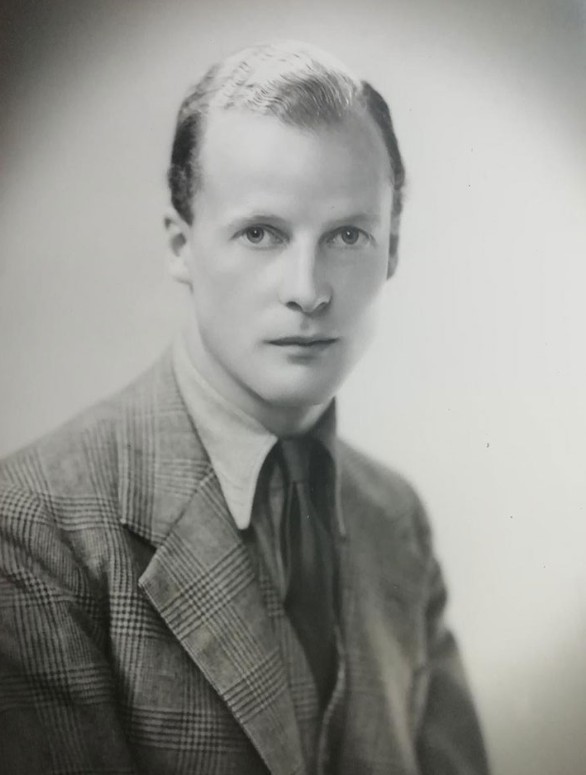
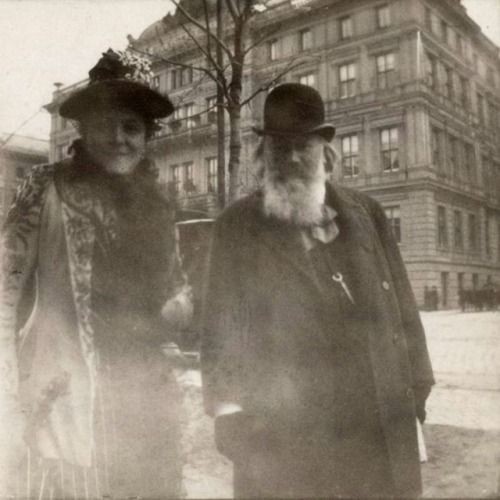
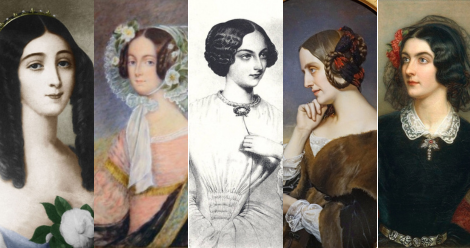
Throughout classical music history, ostensibly professional relationships between teachers and students have sometimes turned romantic.
Some of the resulting marriages ended up being loving, long-lasting partnerships built on deep mutual admiration and respect. Others curdled rapidly due to destructive power dynamics.
From Tchaikovsky’s ill-fated attempt to conform to societal norms to Ottorino Respighi’s lifelong creative partnership with his composer wife Elsa, we’re looking at whether these seven composer-student marriages were for better…or for worse.
Giuseppe Verdi and Margherita Barezzi (1836–1840)
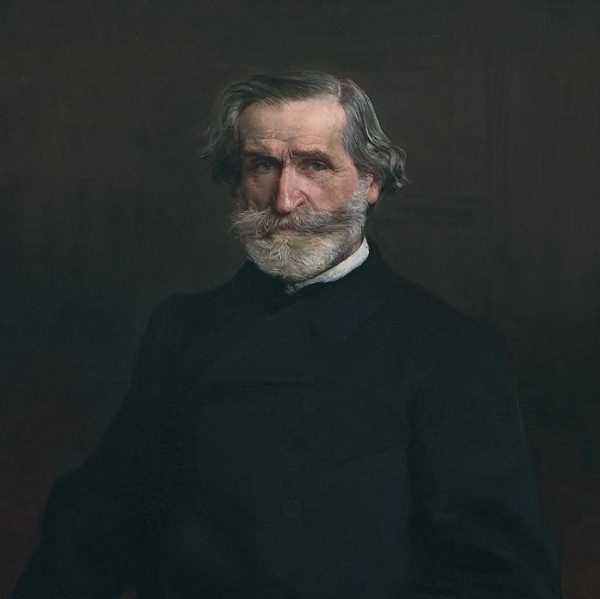
Giovanni Boldini: Giuseppe Verdi, 1886 (Milan: Casa Verdi)
When he was in his late teens, Giuseppe Verdi began working as a musician and piano teacher in Busseto, a small town a hundred kilometers southeast of Milan.
He moved in with a patron named Antonio Barezzi, a grocer and wine merchant, and began teaching piano to his singer daughter Margherita. Teacher and student fell in love.
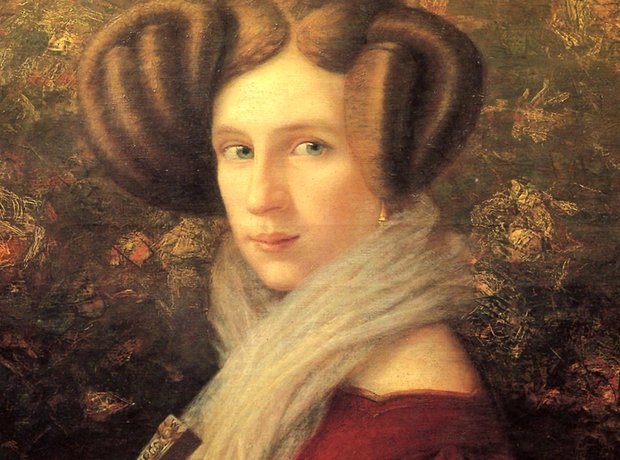
Margherita Barezzi
Barezzi wasn’t thrilled about the idea of his daughter marrying an impoverished composer, so he subsidised Verdi’s further studies in Milan, hoping distance would cool the romance.
However, Verdi ultimately returned to Busseto in 1836 and secured a job as the town’s maestro di musica. Two weeks later, he married Margherita.
Unfortunately, the Verdi marriage turned into a tragedy. Their two children died as infants, and in 1840, Margherita died at the age of 27 of encephalitis.
Verdi later wrote of that time:
“A third coffin goes out of my house. I was alone! Alone!”
Learn more about Verdi’s short and tragic love story.
Pyotr Ilyich Tchaikovsky and Antonina Miliukova Tchaikovskaya (1877)
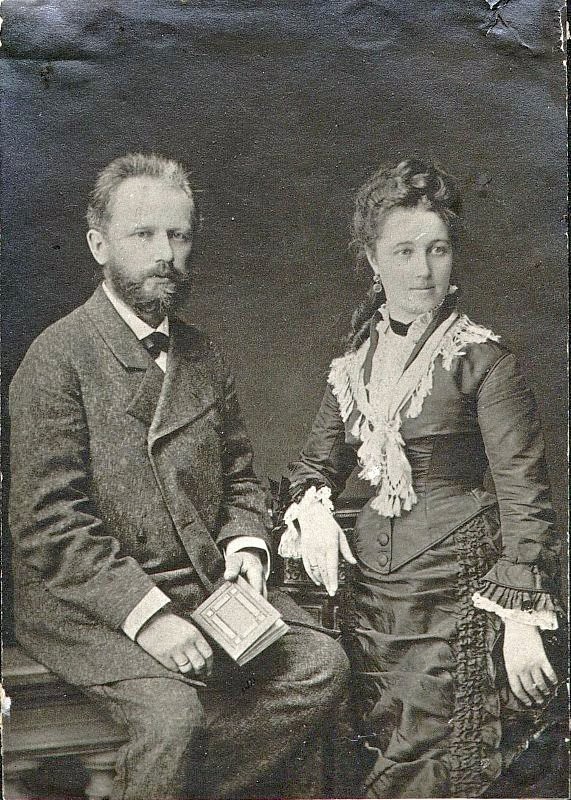
Tchaikovsky with his wife Antonina Milykova
In 1872, Antonina Miliukova went to a dinner party thrown by her older brother. His wife had invited an old friend by the name of Pyotr Ilyich Tchaikovsky.
The following year, Antonina enrolled at the Moscow Conservatory and studied harmony with Tchaikovsky. She developed a crush on him.
After an aunt died in 1876, providing her with an inheritance that could serve as a dowry, she struck up a correspondence with her old teacher.
The timing was fortuitous. Tchaikovsky was then open to the idea of marrying in order to tamp down suspicions of his homosexuality.
They married in July 1877, after only having met a few times. Tchaikovsky’s love interest, violinist Joseph Kotek, served as best man.
Predictably, within six weeks, the marriage fell apart. Divorces were difficult to come by in 1870s Russia, so the couple separated, but they also never lived together again. Antonina went on to have relationships with other men…and so did Tchaikovsky.
Tchaikovsky’s violin concerto, written with the assistance of Joseph Kotek, soon after his marriage fell apart
Theodor Leschetizky and Anna Yesipova Leschetizky (1880–1892)
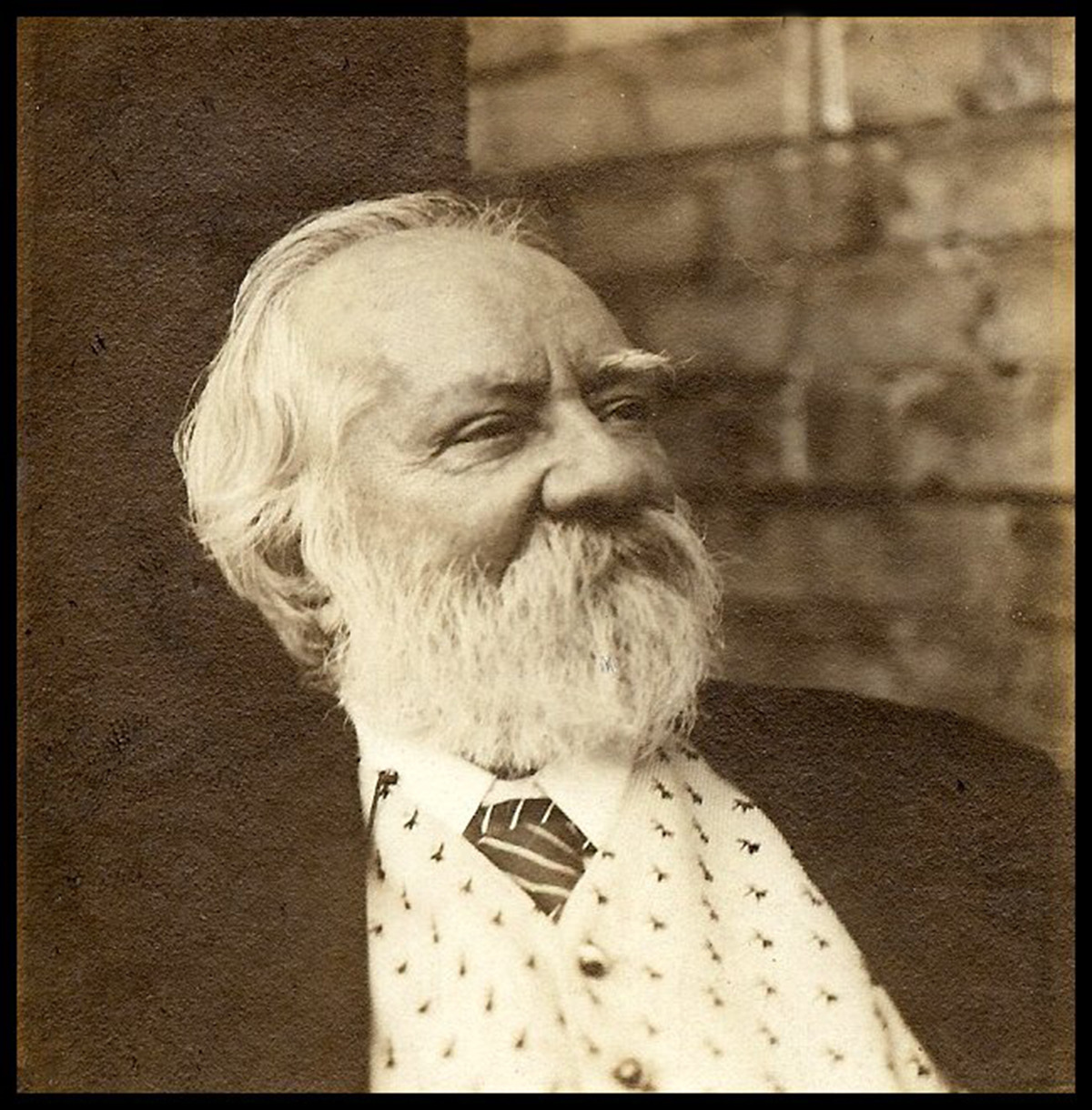
Theodor Leschetizky
In 1856, piano professor and virtuoso Theodor Leschetizky married a student, singer Anne de Friedebourg.
Fast forward two decades to 1877, when Leschetizky began teaching pianist Anna Yesipova.
Yesipova was in her mid-twenties, admired by figures like Tchaikovsky and Liszt, and already an international star. But her colleague Fannie Bloomfield-Zeisler recommended that she take some lessons from her own former teacher, Leschetizky, and Yesipova took her advice.
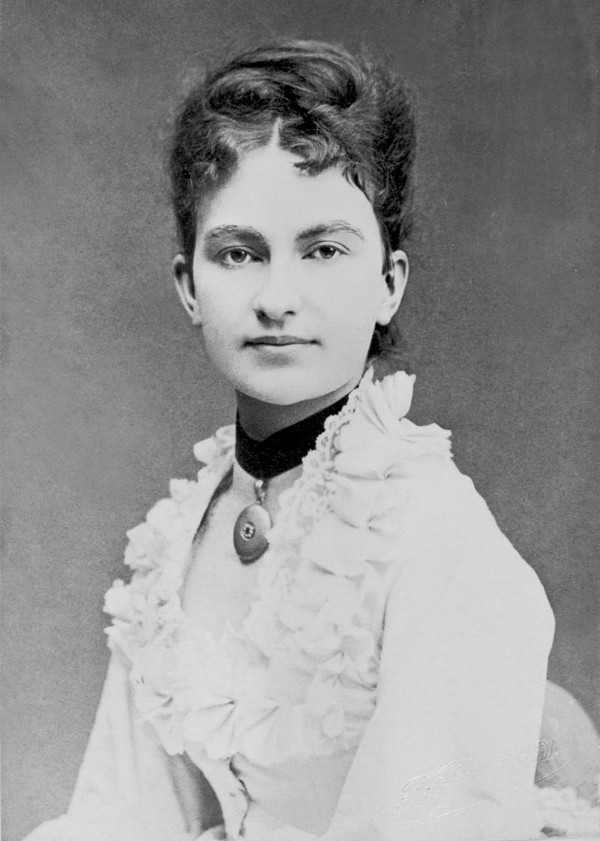
Anna Yesipova
At some point, teacher and student began falling in love, and in 1878, his marriage to Friedebourg began falling apart. Their divorce took two years to finalise. Once he was single again, Leschetizky married Yesipova. He was 50; she was 29.
The couple had two children and were married for twelve years. They divorced in 1892. Leschetizky went on to marry two other students before dying in 1915.
Meanwhile, Yesipova became one of the most celebrated piano teachers in Russia. She taught Sergei Prokofiev and Isabelle Vengerova, who in turn went on to teach Samuel Barber and Leonard Bernstein.
Learn more about Leschetizky’s four marriages to his students.
Leschetizky’s “Waves and Billows”
Edward Elgar and Alice Roberts Elgar (1889–1920)
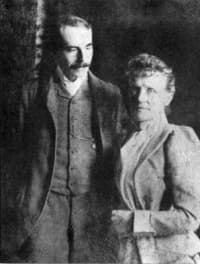
Edward and Alice Elgar, circa 1891 © Wikipedia
In 1886, 38-year-old poet and amateur pianist Alice Roberts began taking accompanying lessons with a 29-year-old music teacher named Edward Elgar.
Two years later, in 1888, teacher and student became engaged. Roberts’s family was appalled: Elgar was young, a teacher, and Catholic. But Edward and Alice didn’t care what their families thought, and they married in the spring of 1889.
Their wedding gifts to each other reflected their respective passions. She wrote him a poem called “The Wind at Dawn” (which he would later set to music), and he wrote her a lovely violin-and-piano piece called “Salut d’amour”…significant because he was a violinist, and of course, she’d come to him to learn how to accompany!
Learn more about Edward and Alice Roberts Elgar’s three-decade-long love story.
Elgar’s “Salut d’amour”
Leoš Janáček and Zdeňka Schulzová Janáčková (1881–1928)
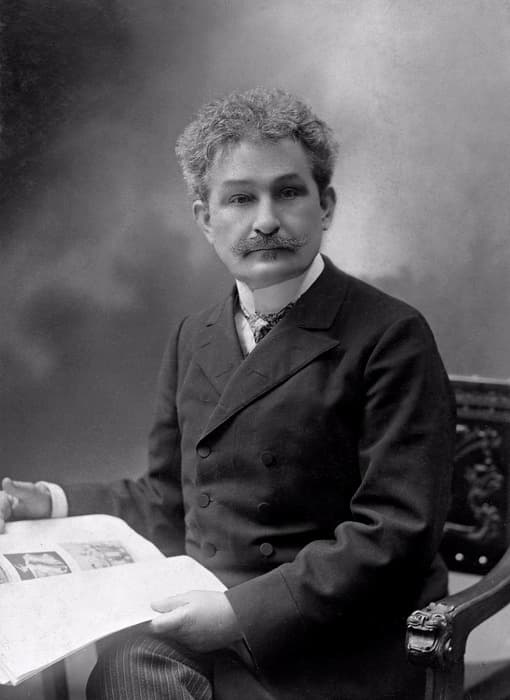
Leoš Janáček
By modern standards, the relationship between Leoš Janáček and Zdeňka Schulzová began on a troubling note: they met when she was only twelve.
He began teaching her and soon developed a romantic interest in her…or at the least wanted to ingratiate himself with her father, who was head of the Teachers’ Institute in Brno, where he taught.
The couple married in the summer of 1881. Janáček was in his mid-twenties and Schulzová was fifteen. She had her first baby, Olga, the month after she turned sixteen.
Decades later, Schulzová wrote a bitter account of her marriage, which remained unpublished until the 1990s.
In this document, she claims that Janáček was abusive toward her, going so far as to refuse to give her and their children enough money to buy food. He also conducted a number of extramarital affairs that hurt her deeply. By 1890, they were married in name only.
Their relationship lasted until his death in 1928. She wrote her scathing memoir soon after.
Janáček’s Zdenka Variations, written for her when she was 14
Béla Bartók and Márta Ziegler Bartók (1909–1923)
Like Janáček, Béla Bartók was also attracted to young girls.
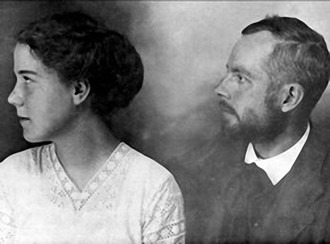
Béla Bartók and Márta Ziegler Bartók
Márta Ziegler was the daughter of a police officer. She and her sister began studying piano with Bartók in 1907, the year she turned fourteen and Bartók turned 26.
At the time, Bartók was infatuated with a violinist named Stefi Geyer, but in February 1908, Geyer made it clear to him that she was not interested in pursuing a relationship with him. He began looking elsewhere for a partner.
In November 1909, Bartók and Márta visited her parents for dinner and surprised them with the announcement that they’d just gotten married. Bartók was 28 and Márta sixteen. Nine months later, they had a son named Béla, Jr.
In addition to being a wife and mother, Márta also helped Bartók with his career, transcribing folk music for him.
Unfortunately, and predictably, Bartók’s marriage didn’t stop his romantic interest in teenage girls. In 1923, he fell in love with a student named Ditta Pásztory. Márta asked for a divorce. After the divorce was finalised, Bartók (aged 42) and Ditta (aged nineteen) married.
Learn more about the history of the Bartók/Ziegler marriage (including a tidbit on why Bartók composed in the nude).
Bartók’s Bluebeard’s Castle, dedicated to Márta
Ottorino Respighi and Elsa Respighi (1919–1936)
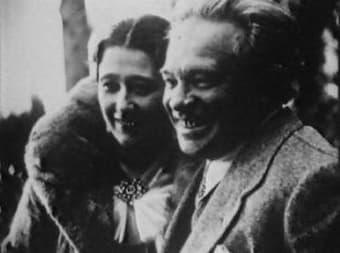
Elsa and Ottorino Respighi
Elsa Olivieri-Sangiacomo was born in 1894 in Rome. During her childhood, it became clear that she was very musically talented, and she began studying voice, piano, harmony, and counterpoint.
In 1915, she enrolled in a composition class taught by Ottorino Respighi. Respighi, who was 36, was sure he’d never get married. Elsa, who was 21, said she fell in love at first sight. They married in 1919.
From that moment, Elsa became Respighi’s close personal and professional collaborator. She gave up composing and focused on promoting her husband’s works instead.
They toured together performing his songs, with Elsa singing and Respighi playing piano. At home, she copied his manuscripts for him and worked as his assistant.
After fascists came to power in Italy, women musicians were discouraged from pursuing careers. Supporting Ottorino became a way for her to stay involved in professional music as a woman.
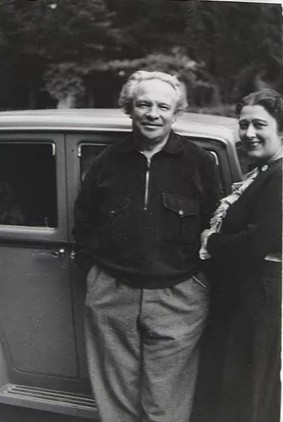
Elsa and Ottorino Respighi
After Respighi died in 1936, she finished his opera Lucrezia for him.
She wrote a memoir and biography of Respighi and spent the rest of her long life advocating for his music. She died in 1996, just before she turned 102. She had been a widow for nearly sixty years.
Learn more about Elsa and Respighi’s love affair.
A recording of Elsa singing two folk songs with Respighi accompanying on piano
Conclusion
Some of these relationships worked out; others obviously fell apart in dramatic fashion. But all seven left deep imprints on the lives of these composers, as well as on their music. For that reason, all of these relationships are worth learning about today.
For more of the best in classical music, sign up for our E-Newsletter