From the very beginning, the idea of flight has intrigued composers, whether they’re writing about Icarus or the Wright Brothers. We’ll look at some music inspired by planes – some positive and some less so.
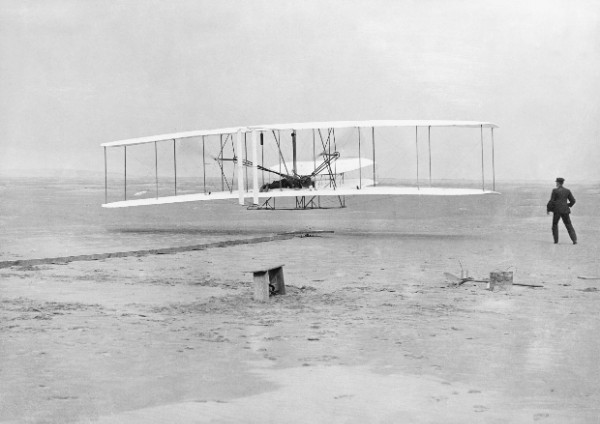
The Wright Brothers’ first flight, 1903 (Imperial War Museums)
George Antheil, who brought a bright sense of mischievousness to music, entitled his second piano sonata the Airplane Sonata. He wrote the Sonata following a set of memorable dreams he had that enabled him to catch ‘the true significance and atmosphere of these giant engines and things that move about us’. He wrote the Airplane Sonata while still in the US before he left for his first European concert tour. The first movement, ‘To be played as fast as possible’, sweeps us up into the air. It’s free and careless, swinging through the air and then having to come to grips with the invisible forces that toss the plane about.
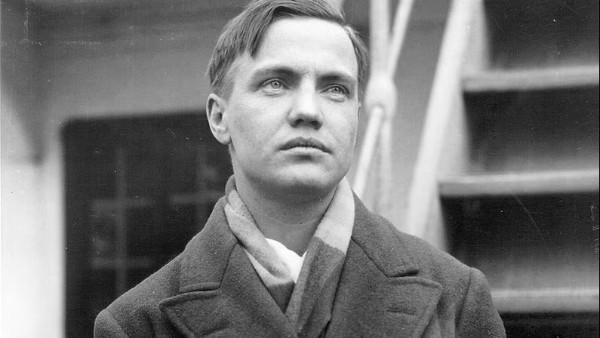
George Antheil
George Antheil: Airplane Sonata, “Piano Sonata No. 2” – I. As Fast as Possible (Roger Shields, piano)
Antheil’s contemporary Leo Ornstein also wrote an airplane piece, but from a very different idea: he’d read an article about a pilot who killed himself by flying his plane into the ground and thus was born Suicide in an Airplane, which dates from the end of WWI.
Instead of Antheil’s straightforward account, Ornstein immediately sets us up with a disquieting sound. All is not well in that cockpit: the mood is black and fraught with emotion. The pilot seems not to know what he’s doing and where he’s going. The plane approaches, circles overhead, and then departs, never to return.
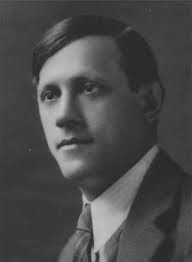
Leo Ornstein
Leo Ornstein: Suicide in an Airplane (Marc-André Hamelin, piano)
On a much more positive note, Michael Daugherty (b. 1954) explores the world of Amelia Earhart, who disappeared while on a round-the-world flight.
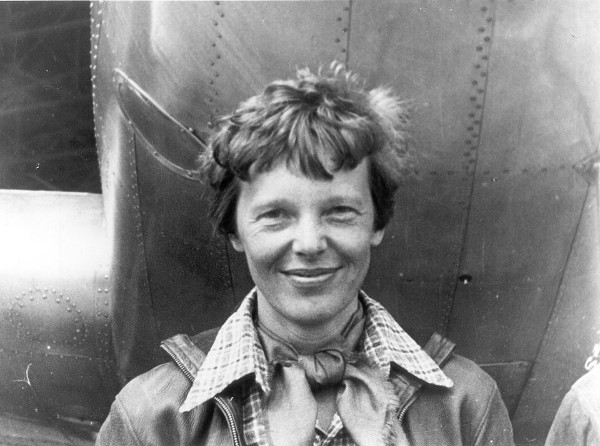
Amelia Earhart standing under nose of her Lockheed Model 10-E Electra, 1937
The third movement of his Blue Electra piece for solo violin takes its inspiration from a poem written by Earhart before she could fly, but long after she could dream about being a pilot:
Even the watchful, purple hills
That hold the lake
Could not see so well as I
The stain of evening
Creeping from its heart
Nor the round, yellow eyes of the hamlet
Growing filmy with mists.
As her future airplane spirals through the air, she looks around and celebrates her viewpoint of the world below her
Michael Daugherty: Blue Electra – III. From an Airplane (1921) (Anne Akiko Meyers, violin; Albany Symphony Orchestra; David Alan Miller, cond.)
The daughter of English composer Samuel Coleridge-Taylor, Avril, was also a composer. While on a trip down to South Africa to conduct, she took a ride in the first long-distance commercial jet airliner, the de Havilland Comet. She was hoping for an opportunity in South Africa to appear as a white conductor, but soon her mixed-race parentage was found out, she could no longer work, all her existing contracts were cancelled, and she had to find her own way home with no income. The Comet Prelude, however, was her optimistic look ahead to better days that never came.
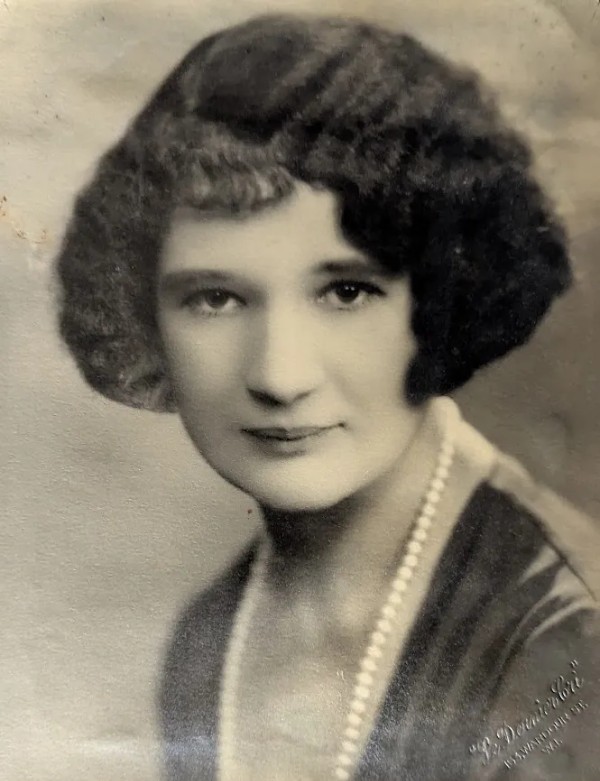
Avril Coleridge-Taylor
Avril Coleridge-Taylor: Comet Prelude (BBC Philharmonic Orchestra; John Andrews, cond.)
In his overview of what he described as ‘the great technological miracle of our time’, Gabriel Jackson wrote his Airplane Cantata. He starts with Icarus, the doomed son of the inventor Daedalus, who, on his wax wings, flew too close to the sun.
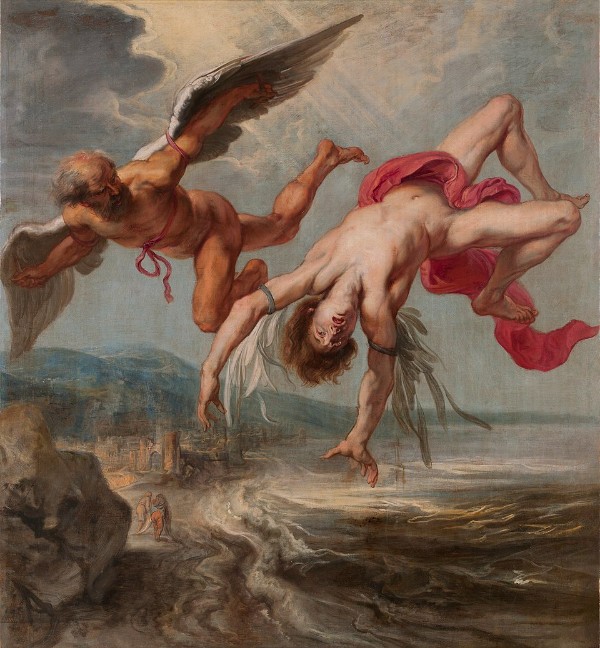
Jacob Peter Gowy: The Fall of Icarus (after Peter Paul Rubens), ca 1635 (Museo del Prado)
The majority of his cantata, however, deals with the advancement of flight in the early 20th century: first flights across the Channel, across the Atlantic, and long-distance solo flight between London and Australia. In the middle, however, is ‘Flight’, a setting of a poem by Humbert Wolfe, which closes ‘Give me the wings, magician, or I die’. Wolfe saw the ability to fly as magical and asked why man couldn’t learn the secret of the birds’ flight.
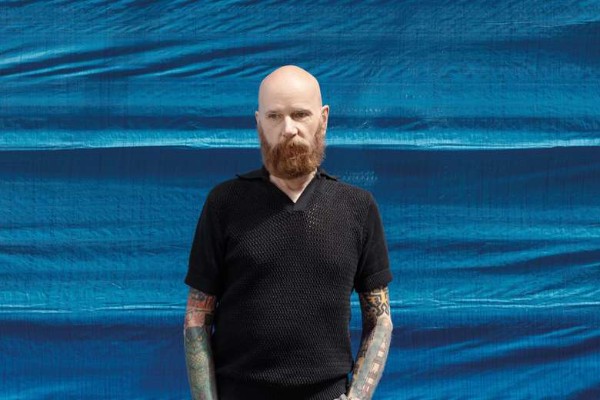
Gabriel Jackson
Gabriel Jackson: Airplane Cantata – Flight (Rex Lawson, pianola; BBC Singers; James Morgan, cond.)
And so we take to the air, modelling ourselves on the birds and revelling in the freedom of the air. In another section of Jackson’s cantata, he quotes Amelia Earhart: ‘I have often said that the lure of flying is the lure of beauty, and I need no other flight to convince me that the reason flyers fly, whether they know it or not, is the aesthetic appeal of flying’. And so, we take to the air. Our final landing may be less sure, but to fly is the reason for a flyer’s life.
For more of the best in classical music, sign up for our E-Newsletter