Some of the most iconic orchestral works in the repertoire owe their character or even existence to women supporters.
Today, we’re looking at eight of the best orchestral works dedicated to women and the stories behind them all.
Liszt: Les préludes (1845–54)
Dedicated to Princess Carolyne von Sayn-Wittgenstein
Princess Carolyne von Sayn-Wittgenstein was more than Franz Liszt’s long-term lover and muse. For a number of years, she was also his closest intellectual companion.
The princess encouraged him to solidify his reputation by taking a step back from the concert platform and focusing on composition.
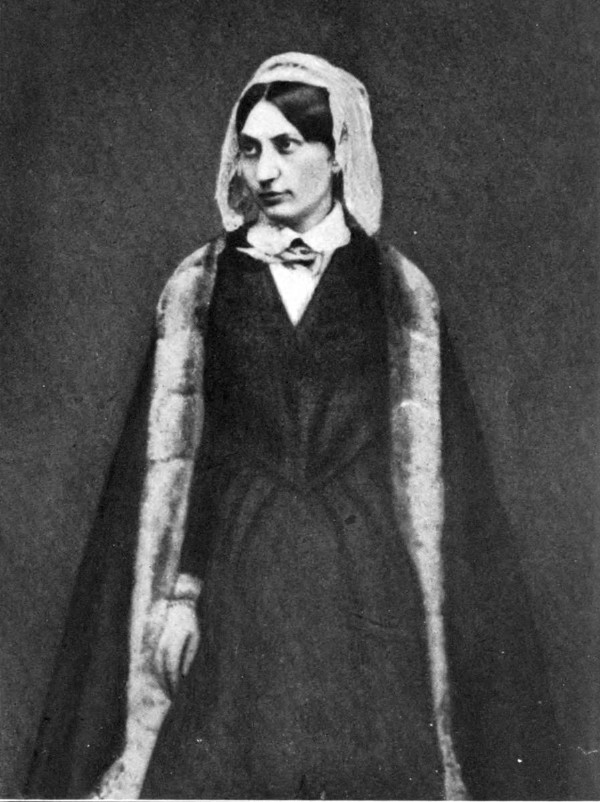
Princess Sayn-Wittgenstein in 1847
Les préludes is among the first symphonic poems in classical music history. It took a full decade to finish.
Toward the end of the composition process, Liszt titled the work Les préludes (d’après Lamartine), a reference to French writer Alphonse de Lamartine, a favourite author of Carolyne’s.
She also provided a text prelude for the work, which begins, “What else is our life but a series of preludes to that unknown Hymn, the first and solemn note of which is intoned by Death?”
The princess’s influence pervades the work and is an embodiment of their shared literary, musical, and even spiritual interests.
Mahler: Symphony No. 8 (1906)
Dedicated to Alma Mahler
Mahler’s sprawling eighth symphony – nicknamed the “Symphony of a Thousand” – is a jaw-dropping choral epic.
Its dedication to Alma Mahler is fitting. She was Mahler’s much younger wife, possessing both musical talent and legendary beauty.
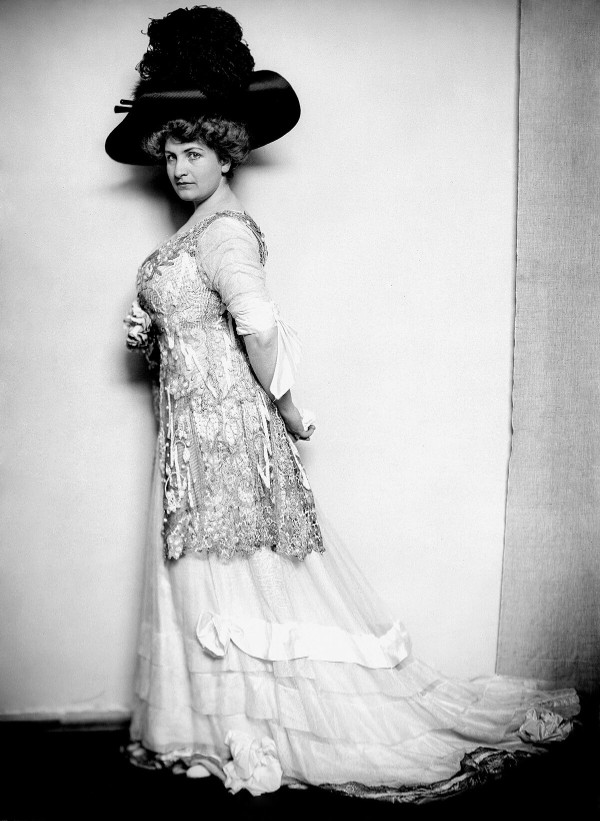
Alma Schindler Mahler
But their marriage had always been tempestuous. They wed after only knowing each other for a few months, and she was pregnant at the wedding. He initially discouraged her from pursuing her interest in composition, believing there was only room for one composer in a marriage.
Despite their troubles, they did love one another. They had two daughters, one in 1902 and another in 1904. Mahler wrote this symphony during the summer of 1906.
It wasn’t premiered until September 1910. Much had changed for the couple over the previous few years. Their eldest daughter died in 1907, devastating both Gustav and Alma. Then, in June 1910, Alma had an affair. In part to try to save his marriage, he gave permission to Alma to publish some of her songs, which she did.
Within a year of the symphony’s premiere, Mahler died of an infection related to a heart defect.
The dedication to Alma of the eighth symphony, the biggest work of his career, stands as a monument to the relationship that shaped so much of his life and art.
Debussy: Images pour orchestre (1905-12)
Dedicated to Emma Bardac
When Claude Debussy fell in love with Emma Bardac, both were married, and both ended up leaving their spouses for each other.
Debussy’s treatment of his first wife, Lily, was especially horrifying. She ended up so distraught that she attempted suicide. (She survived. Debussy’s social reputation didn’t.)
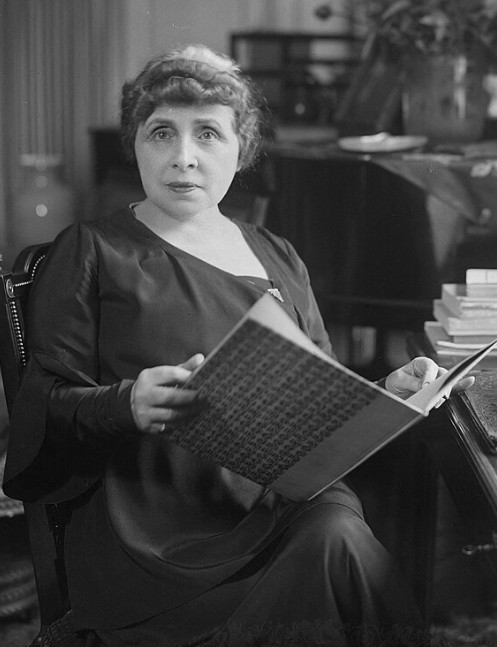
Emma Bardac
Emma was divorced in May 1905, and Debussy’s divorce was finalised in August. They had a daughter together that autumn and married in May 1908.
Debussy’s first set of Images was a suite of six pieces for solo piano, written before his second marriage. He decided to write his next set of Images for orchestra. The result was a three-part suite for orchestra that premiered in its entirety in January 1913.
Though he didn’t inscribe Emma’s name on the score of all three individual movements, he dedicated the complete triptych to her.
Ravel: La valse (1919–20)
Dedicated to Misia Sert
Misia Sert was born in 1872 outside of St. Petersburg. She had a lonely childhood in Paris and gravitated toward studying music.
After she married at the age of 21, her salon became one of the best-known in Paris. She entertained figures like Renoir, Monet, Proust, Debussy, Toulouse-Lautrec, and others.
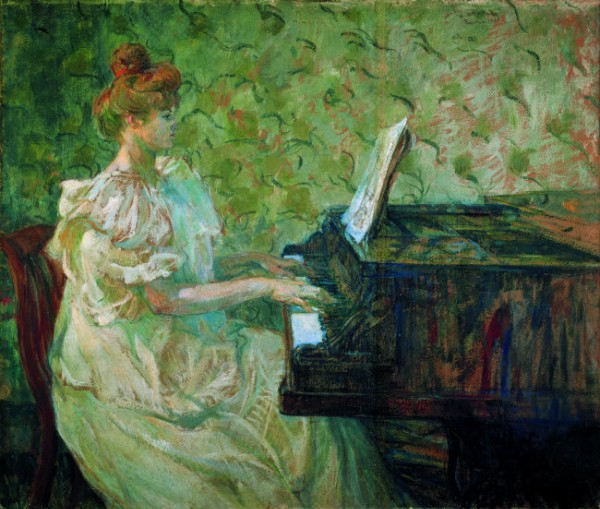
Misia Sert
In 1905, she divorced her husband and married the man who had taken her as his mistress. In 1920, she married again, this time to painter José-Maria Sert.
She became known for her attraction to women (including her husband’s mistress), a drug addiction, and her tendency to encourage messy fights among her friends.
It’s fitting then that Maurice Ravel dedicated La Valse – his homage to the Viennese waltz, and a metaphor for Europe after World War I – to the chaotic and colourful Sert.
Stravinsky: Suite No.1 for Small Orchestra (c. 1920)
Dedicated to Eugenia Errázuriz
Chilean-born Eugenia Errázuriz was one of Stravinsky’s earliest patrons after he left Russia.
A minimalist before the term existed, her famously stark aesthetics were in line with the stripped-back neoclassical musical language that Stravinsky began employing after World War I.
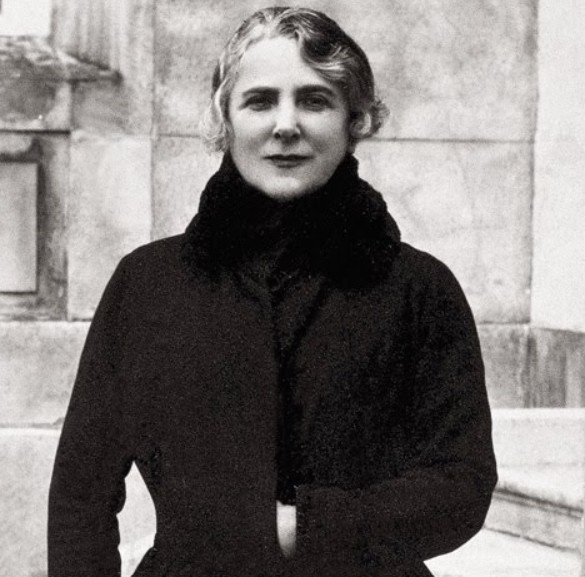
Eugenia Errázuriz
His Suite No. 1 for Small Orchestra was based on small piano pieces he’d written for his children.
Its sparse and quirky character reflects Errázuriz’s chic salon, making the dedication extremely fitting.
Ravel: Boléro (1928)
Dedicated to Ida Rubinstein
Boléro is Ravel’s most famous work.
Although nowadays we think of it as an orchestral showpiece, originally it was a ballet score commissioned by dancer and patron Ida Rubinstein.
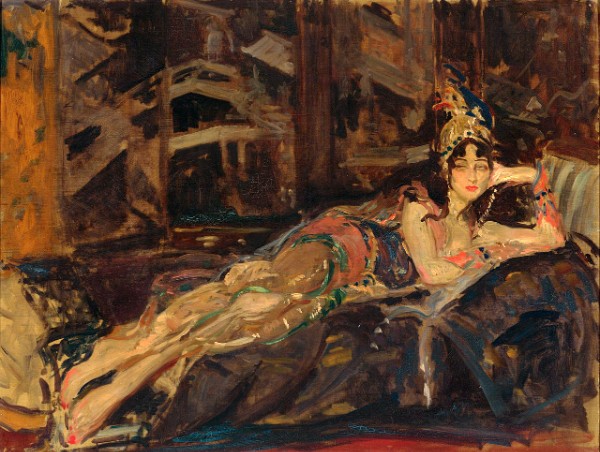
Ida Rubinstein
Born into a wealthy family in present-day Ukraine, Rubinstein’s passion was dance. Even though she had begun learning too late to become a great technician, her stage presence astonished audiences across Europe.
She also began mounting ballet productions of her own. In the 1910s and 1920s, she quarreled with Serge Diaghilev because her tremendous wealth enabled her to hire dancers out from under him.
It also enabled her to commission Ravel to write this work. In 1928, she put La Valse and Boléro on the same ballet program, helping to cement Ravel’s legacy as one of the great orchestrators of his generation.
Bartók: Concerto for Orchestra (1943)
Dedicated to Natalie Koussevitzky
In January 1942, composer Serge Koussevitzky’s wife, Natalie, died, devastating him. They had married in 1905, and she had used her money to fund his career.
That same year, Koussevitzky established the Koussevitzky Foundation to support the creation of new music.
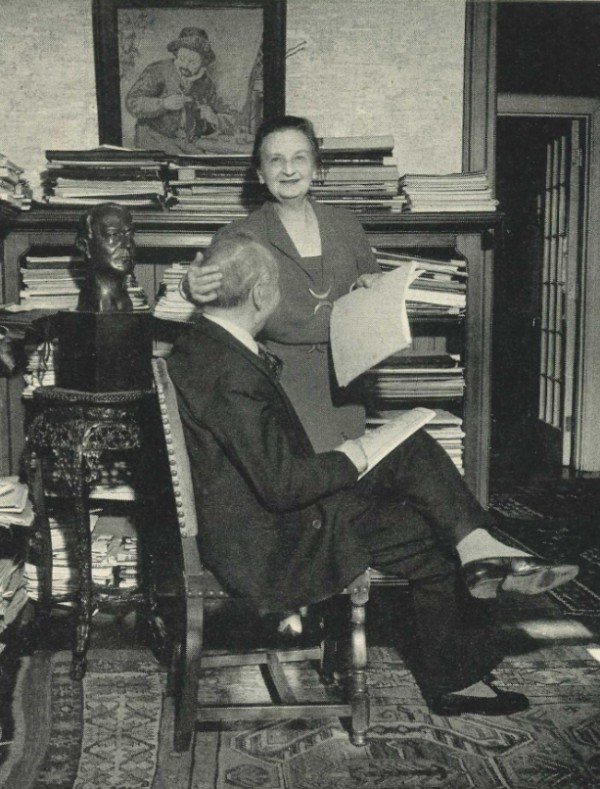
Natalie Koussevitzky
Thanks to the war in Europe, it was a time of great creative churn. Béla Bartók had fled war-torn Europe in October 1940. In 1943, Koussevitzky approached him and commissioned the piece that would become the Concerto for Orchestra.
Despite the fact that he was growing increasingly ill with leukaemia, Bartók threw himself into the composition of the work. It premiered in Boston in December 1944. He reworked the ending in early 1945 and died that September.
Bartók dedicated the work to the late Natalie Koussevitzky, the woman who had made the entire venture possible.
Holst/Matthews: The Planets (1914-17, 2000)
Dedicated to Imogen Holst
Colin Matthews: Pluto, the Renewer (Royal Scottish National Orchestra; David Lloyd-Jones, cond.)
When Gustav Holst finished The Planets in 1917, his daughter Imogen was ten years old.
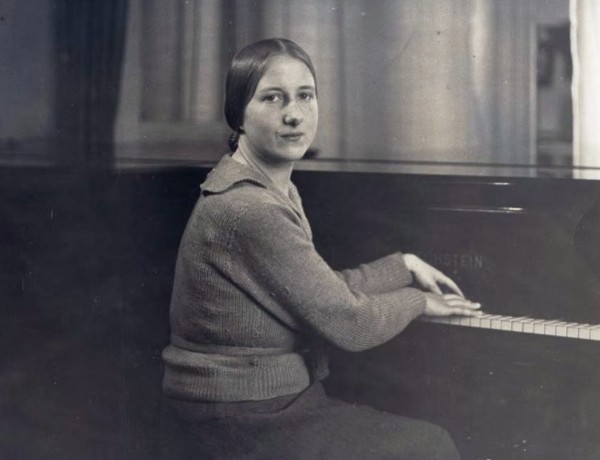
Imogen Holst
Imogen Holst would grow up to become a great musician in her own right and one of the most effective promoters of her father’s legacy. She even wrote an introduction to the score of The Planets.
In 2000, the Hallé Orchestra commissioned composer Colin Matthews to “complete” the work by writing a movement portraying Pluto, which in Holst’s day had not yet been classified as a planet.
Matthews altered the ending of the Neptune movement to lead more effectively into his Pluto-inspired addition.
In honour of Imogen’s work and legacy, Matthews chose to dedicate the new music to her. He wrote of the project, “‘Pluto’ is dedicated to the memory of Holst’s daughter Imogen, with whom I worked for many years until her death in 1984, and who I suspect would have been both amused and dismayed by this venture.”
For more of the best in classical music, sign up for our E-Newsletter