Dedications in the classical music world are often treated as footnotes. But they shouldn’t be: composer’s dedications can say a lot about the dedicatee, the work itself, and even the composer.
Today, we’re looking at seven piano concertos dedicated to women…and the relationships between the dedicatees and the composers.
Mozart: Piano Concerto No. 18 (1784)
Dedicated to Maria Theresia von Paradis
In February 1785, Leopold Mozart – Wolfgang’s father – wrote in a letter that his son played “a masterful concerto that he wrote for Paradis. I had the great pleasure of hearing all the interplay of the instruments so clearly that for sheer delight tears came to my eyes.”
Maria Theresia von Paradis was a virtuoso pianist and composer who made an impressive piano career despite her blindness.
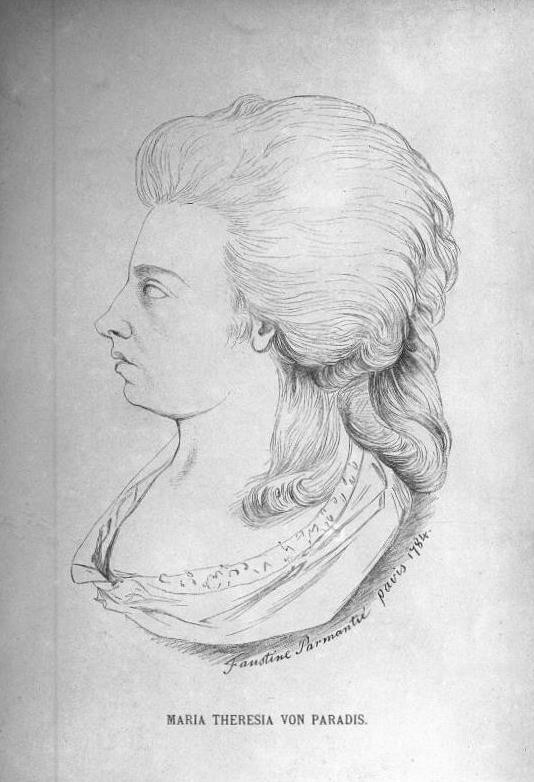
Maria Theresia von Paradis
To be fair, historians don’t know for sure if this particular piano concerto was the one meant for Paradis. (Mozart was on a tear writing them in the mid-1780s, and it would be easy to mix them up.)
The work wasn’t published until 1792, and didn’t come with an official dedication, so unless new evidence emerges, we may never know the truth.
Still, its existence is an important reminder that Mozart was surrounded by talented women interpreters who embraced his music, and we know that one of his concertos was written for her.
Mendelssohn: Piano Concerto No.1 (1830–31)
Dedicated to Delphine von Schauroth
Felix Mendelssohn wrote this stormy, virtuosic concerto in Italy after having met an extraordinary pianist while traveling through Munich.
The pianist, Delphine von Schauroth, was a teenage prodigy. Like Mendelssohn, she was a precocious pianist and even composer. When they met, they felt a spark.
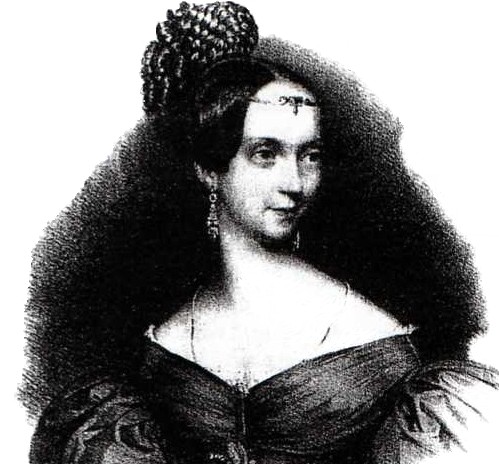
Delphine von Schauroth
Mendelssohn began writing the first draft of this concerto in 1830 (he once claimed “I wrote it in but a few days and almost carelessly”).
He also wrote to his sister that von Schauroth had composed a passage in the concerto “that makes a startling effect.” Unfortunately, we don’t know which passage he was referring to, or whether it made it to the final draft.
Mendelssohn premiered the concerto in October 1831. When he published it in 1832, he included an official dedication to Delphine von Schauroth.
Tchaikovsky: Concert Fantasia (1884)
Dedicated to Anna Yesipova and Sophie Menter
Tchaikovsky’s Concert Fantasia isn’t as well-known as his first or even second piano concertos. That said, it’s a fascinating hybrid piece: part concerto, part freewheeling fantasy.
He dedicated the piano version to Anna Yesipova and the piano-and-orchestra version to Sophie Menter.
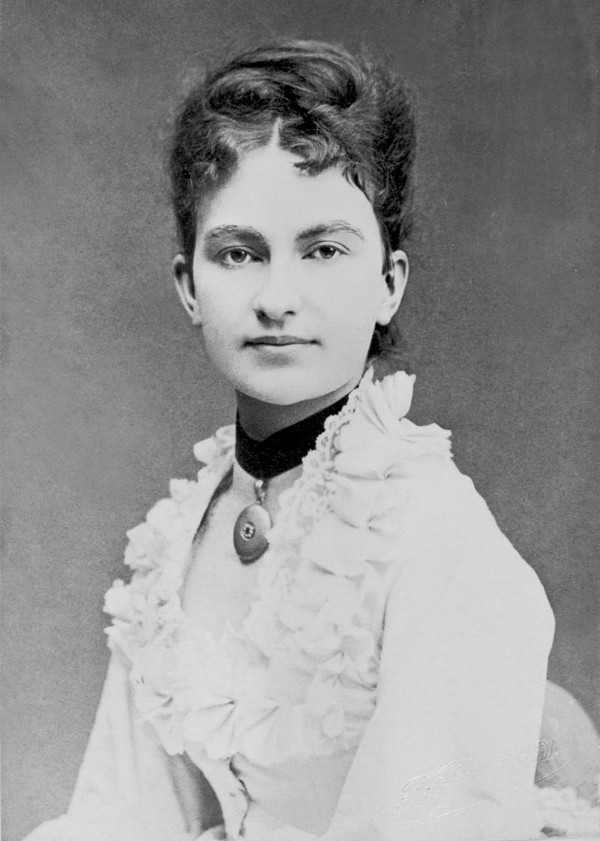
Anna Yesipova
Anna Yesipova was a piano virtuoso born in 1851 who enjoyed an international career. In 1893, she joined the faculty of the St. Petersburg Conservatory. She went on to teach Sergei Prokofiev, Artur Schnabel, and Isabelle Vengerova, the latter of whom taught twentieth-century giants like Barber, Bernstein, Gary Graffman, and Menahem Pressler.
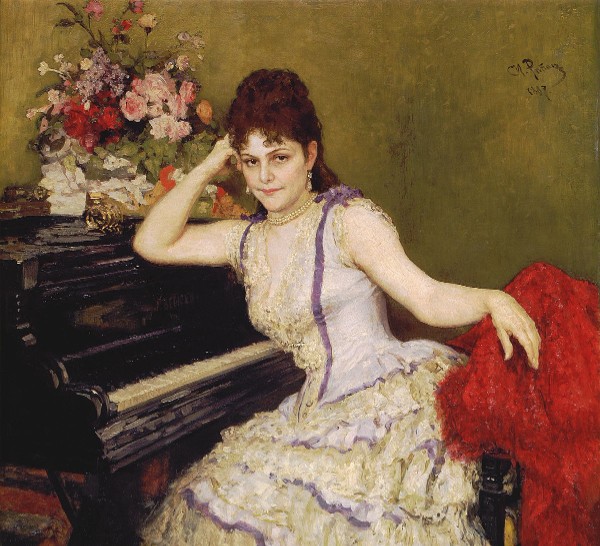
Sophie Menter
Sophie Menter was born in 1841. She was one of Liszt’s most famous students (he once called her “my only piano daughter”). Between 1883 and 1886, she made a career in Russia, teaching at the Saint Petersburg Conservatory.
The dedication acknowledges the stature and influence of these two great historical pianists, who have been largely forgotten today.
Beach: Piano Concerto (1898–99)
Dedicated to Teresa Carreño
Amy Beach, widely described as the first American woman to write a symphony, dedicated her Piano Concerto to another trailblazer: Venezuelan pianist Teresa Carreño.
Carreño was an idol to many aspiring musicians, especially women.
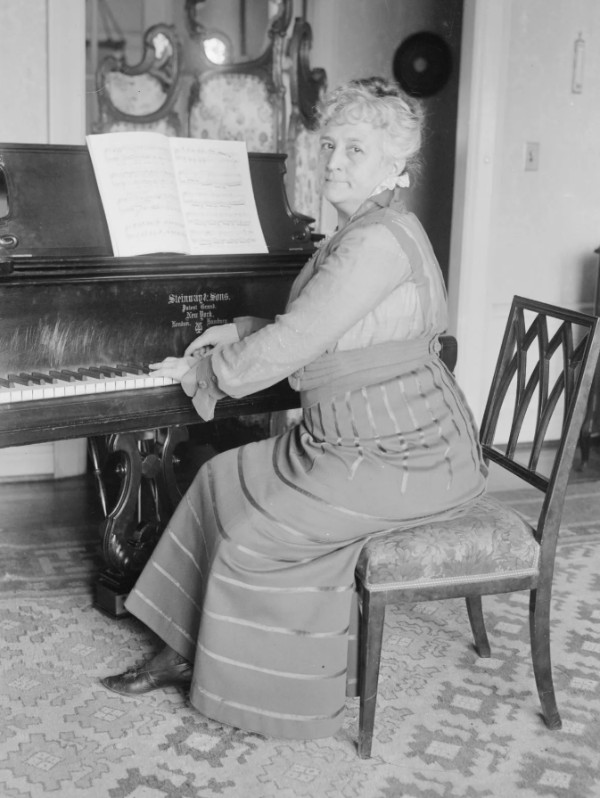
Teresa Carreño
Unfortunately, the piece received a cool reception upon its premiere. Carreño’s manager suggested that she not take it up, but she did send a note to Beach thanking her for the dedication.
After she was widowed in 1910, freeing her to travel, Beach began touring the world with her piano concerto. Happily, in the intervening years, opinions of it have improved.
It remains an incredibly special homage to the virtuosity of two great women artists.
Tailleferre: Piano Concerto No. 1 (1923-24)
Dedicated to Winnaretta Singer
Winnaretta Singer, the eccentric lesbian heiress to the Singer sewing machine fortune, was a towering figure in Parisian salon society in the early twentieth century.
She was especially supportive of contemporary composers and always kept a special eye out for female artistic talent.
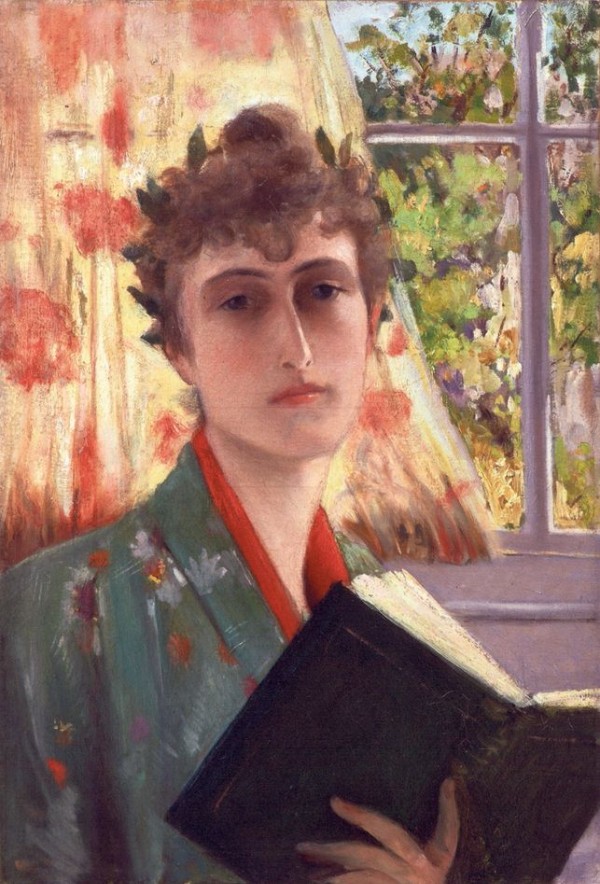
Winnaretta Singer
In 1924, Germaine Tailleferre, the only woman in the association of composers known as Les Six, dedicated her piano concerto to Singer in gratitude.
The work is full of wit and neoclassical sparkle.
Vaughan Williams: Piano Concerto (1926–31)
Dedicated to Harriet Cohen
By the early twentieth century, dedicatees often began taking a more active role when working with composers.
In the 1920s, British pianist Harriet Cohen worked with British composer Ralph Vaughan Williams on his piano concerto.
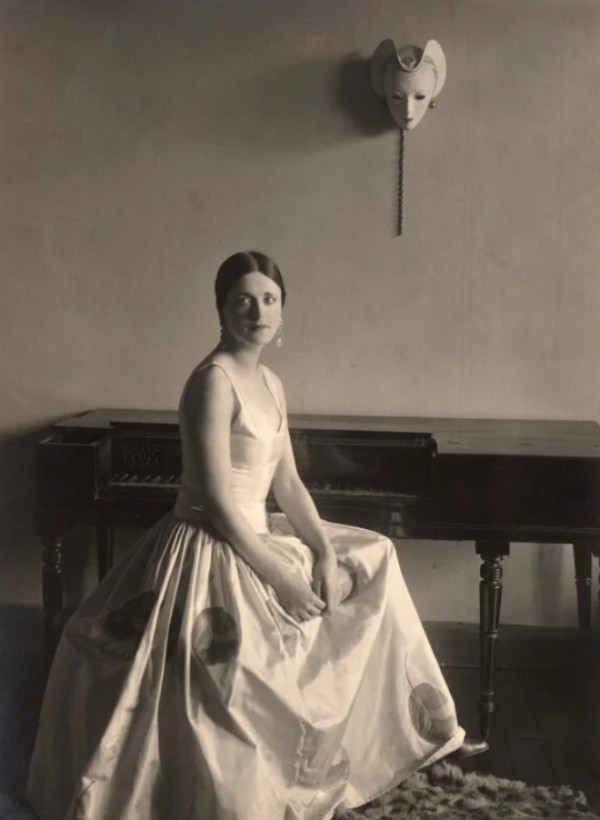
Harriet Cohen
The two seem to have had some kind of flirtatious relationship. (Vaughan Williams would remind her in letters of the thousands of kisses she owed him.)
The work is unusual for Vaughan Williams. It has a modernist sheen, focusing on aggressive rhythms and treating the piano as a kind of percussion instrument.
Cohen premiered the concerto and became its primary proponent.
Unfortunately, the initial response to the work was lukewarm, and later Vaughan Williams rewrote the material as a concerto for two pianos.
Ravel: Piano Concerto (1929–31)
Dedicated to Marguerite Long
Marguerite Long was one of the great pianists of the early twentieth century. The number of fellow countrymen who trusted her to bring their works to life is truly impressive. She premiered or accepted the dedication to works by Tailleferre, Fauré, Ravel, and Debussy, among others.
In 1932, she premiered Ravel’s jazz-inflected piano concerto, with the composer on the podium. Afterwards, they embarked on a European tour of the work together.
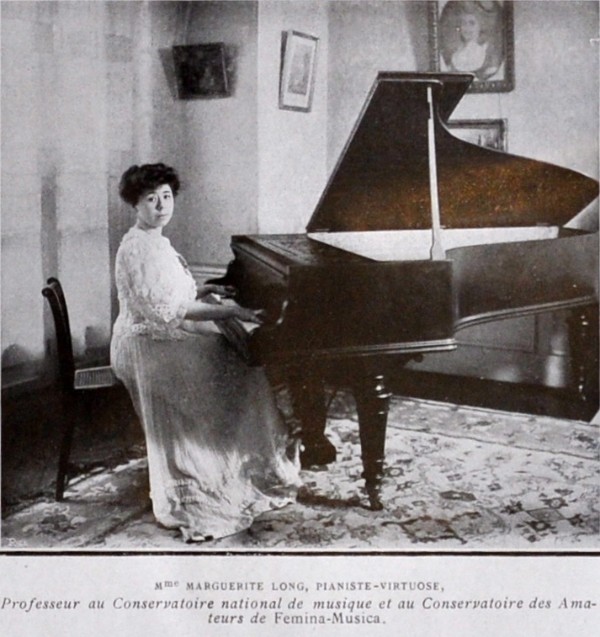
Marguerite Long
From the very first notes (that bullwhip crack!), the concerto is a jazz-inflected treat, with plenty of French flavour baked in.
For more of the best in classical music, sign up for our E-Newsletter