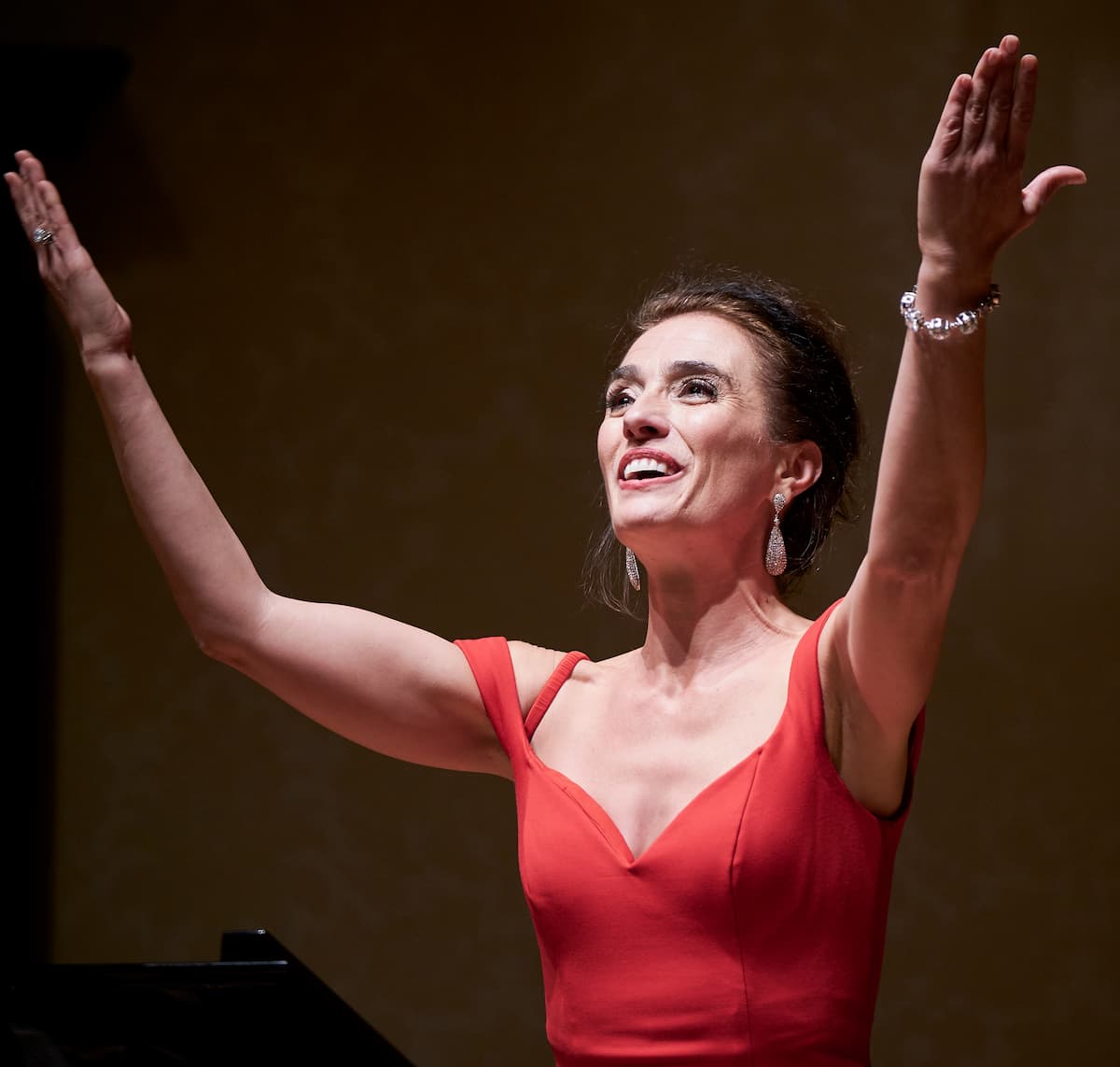
It was once again time to catch up with the deliciously busy Ermonela Jaho, described in The Economist as “the world’s most acclaimed soprano.” But was it more than that, Jaho is surely one of the most eloquent and outspoken advocates for opera, championing its emotional depth, accessibility, and relevance in an ever-changing cultural landscape.
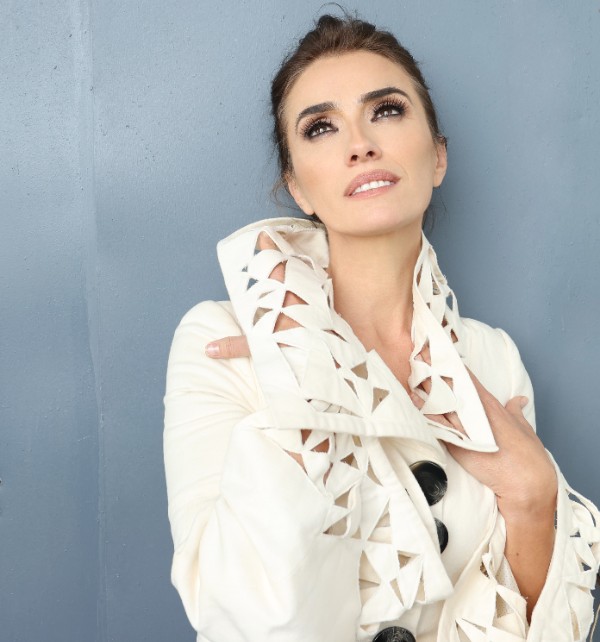
Ermonela Jaho © Fadil Berisha
In this exclusive interview for Interlude.hk, she opens up about her latest projects, the joys and challenges of concert performances, and her unwavering commitment to pushing artistic boundaries while honouring the timeless power of the human voice.
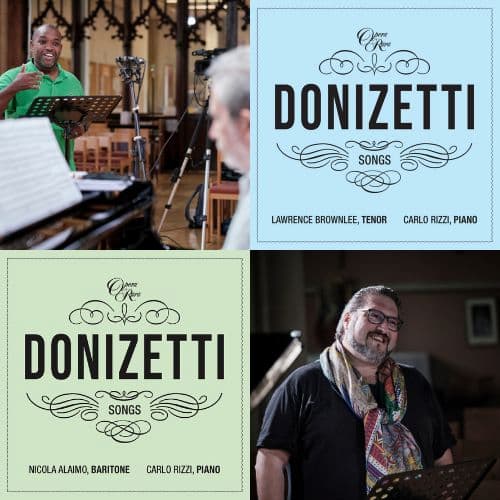
As Artist Ambassador for Opera Rara, Ermonela Jaho recently presented, together with Carlo Rizzi, Vols 5&6 of the Donizetti Song Project. Featuring 18 Italian and 19 French songs, this release continues the Opera charity’s ambitious project to record and publish all of Donizetti’s overlooked gems.
And there are other gems in the making as Opera Rara teams up with the BBC Symphony Orchestra to present the final 1921 version of Puccini’s La rondine at London’s Barbican Centre in December 2025, in a version that hasn’t been heard in nearly a century.
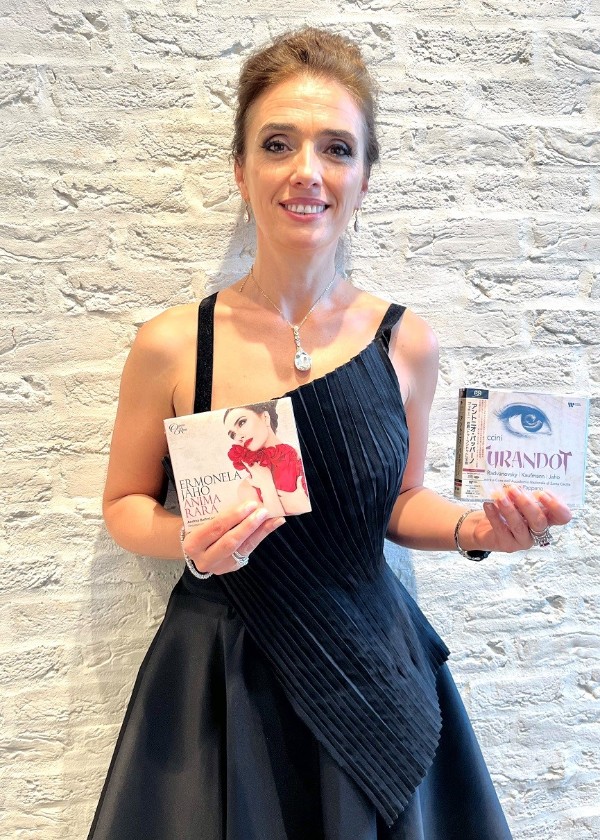
Ermonela Jaho holding Anima Rara (her debut recital album, released by Opera Rara in 2020) © Warner Classics
We began our conversation, however, by discussing her recent performance of Iris, a rarely performed opera by Pietro Mascagni, at Madrid’s Teatro Real.
Ermonela Jaho in Mascagni: Iris (Finale)
Embracing Fragile Innocence
Pietro Mascagni’s Iris, an opera about innocence and desire in a Japanese setting, predates Puccini’s Madama Butterfly by six years. Contrary to the aware Butterfly, Iris is an incredibly fragile yet fiercely innocent character.
For Jaho, the opera is all about that innocence, about “losing our place in life and in the world. Purity and vulnerability interact, and the opera plays with these nuances, with Iris unable to make a decision.”
Iris has these sunlit moments that seem to burst with colour, like the opening of Act 1 or the hallucination of being ravished by a sea monster. For Jaho, as a lyric soprano essentially stepping into spinto territory, the beauty of this work lays “in balancing the tenderness and vulnerability with the raw emotional power of the role.”
Ermonela actually enjoys singing these powerful scenes in concert versions, as it “forces even more concentration on the music and the words.” According to Jaho, “it forces you to be in that particular situation and live it fully through your voice and expression alone, without the safety net of staging or costumes.”
To immerse herself completely in the character’s emotional truth and convey it directly to the audience, no matter the format, is what Jaho considers “her duty as an artist.”
Ermonela Jaho/Carlo Rizzi: Donizetti, “Dormi, fanciullo mio”
Intimate Revelations: Donizetti’s Forgotten Romanzas
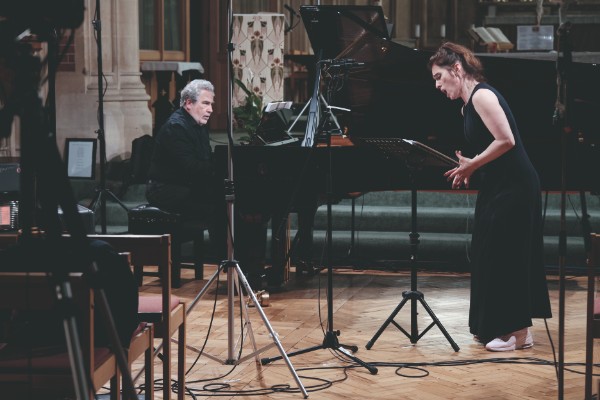
Carlo Rizzi and Ermonela Jaho © Russell Duncan
On 26 September 2025, Opera Rara released Volumes 5 & 6 of its Donizetti Song Project, a groundbreaking initiative dedicated to unearthing, recording, performing, and publishing the composer’s long-forgotten songs and romanzas. The newly released volumes, featuring Italian and French songs, were performed by Artistic Ambassador Ermonela Jaho and Artistic Director Carlo Rizzi.
With this further immersive dive into Donizetti’s world, we asked Ermonela Jaho if anything really surprising had surfaced in these lesser-known compositions. “Absolutely,” she replied, “it is such a revelation to transition from the bel canto fireworks we know so well to these intimate romanzas.”
“They reveal another side of Donizetti, and offer a profound range of emotions and intimacy. There is introspection and melancholy, but also bursts of joy. These songs feel like personal confessions, drawing you into his soul in ways his grand operas don’t always do.
While the Italian volume bursts with bel canto lyricism, the French volume unfolds with such poignant elegance. Ermonela Jaho was struck deeply by the simplicity of the texts and music as well, as “they hide layers of melancholy and human truth.” Working together with Carlo Rizzi, it took hours upon hours to uncover these stories within stories.
As these volumes spotlight Donizetti’s versatility across languages and moods, we asked how Jaho infused her signature vulnerability and colour into songs that haven’t been heard in generations. For Jaho, “It starts with telling a believable story. These pieces have not lost their simple, raw essence over time. I focused on the behind-the-scenes emotion, that wonderful melancholy that simmers beneath.”
For Jaho, “the romanzas are the gateway to melody and bel canto technique. Every song here offers invaluable lessons in phrasing, breath control, and storytelling.” For young singers, Jaho has only one advice: “Dive in, as these overlooked works are treasure troves of experience that will enrich artistry and connect to opera’s living history.”
Ermonela Jaho & Carlo Rizzi: Donizetti: “Venne sull’ali ai zefferi”
La rondine’s Final Version
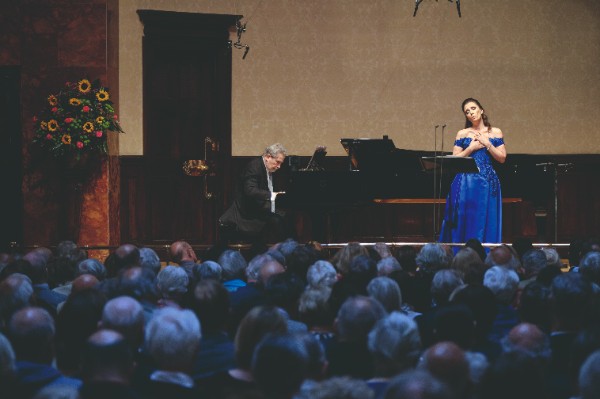
Carlo Rizzi and Ermonela Jaho © Russell Duncan
For the first time in nearly a century, the final 1921 version of Puccini’s La rondine will sound on 5 December 2025. Opera Rara teams up with the BBC Symphony Orchestra under Carlo Rizzi and featuring Ermonela Jaho in one of her signature roles as Magda de Civry.
The work, of course, has had a turbulent history. Following its 1917 premiere in Monte-Carlo, Puccini, dissatisfied with his first version of La rondine, made two further revisions in 1919 and 1921. Committed most deeply to the third version, which he once described as a “jewel,” Puccini was unable to attend the first performances in Italy in April 1924, and he died before he could ever hear it performed.
Moreover, a fire that broke out during the Second World War at Puccini’s publisher’s offices in Milan has meant that, since that time, this final version has survived only in vocal score. Opera Rara’s revival is based on a new performing edition, and it includes an ending that differs completely from the first version of 1917.
Ermonela Jaho’s 2023 portrayal of Magda in Zurich was hailed as a “thrilling swallow and dying swan all in one.” To Jaho, “returning to Magda in 2025 feels like revisiting a cherished dream, her blend of exuberant freedom and poignant resignation mirroring life’s own bittersweet turns.”
“My bond with Magda has grown more intimate over time”, she explains. “Initially, I saw her as a bird trapped in luxury, but now I feel her quiet strength in choosing resignation over illusion. The 1921 finale unlocks layers of tender melancholy and unresolved longing, allowing me to explore her vulnerability with even greater nuance; her return is not a defeat but a profound acceptance of love’s permeance.”
La rondine dances on the edge of waltz and tragedy, and this restored version sharpens that tension. For Ermonela Jaho, “the revived ending amplifies Magda’s duality, turning her reveries into vivid inner dialogues where operetta frivolity masks profound sorrow.”
A week prior to the concert performance, Opera Rara will commit this third version to disc for the first time ever. This world premiere recording will also include excerpts from the second version of 1919 in an appendix, which features the surprise role for a baritone.
For more of the best in classical music, sign up for our E-Newsletter