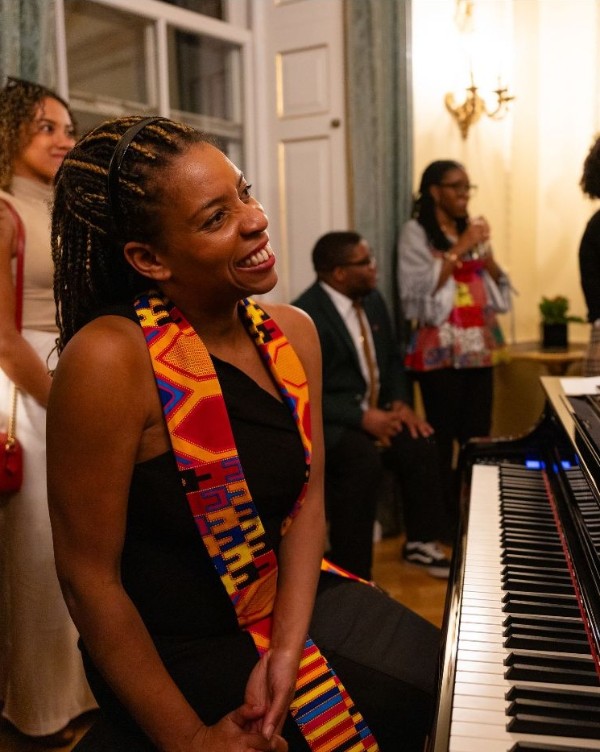
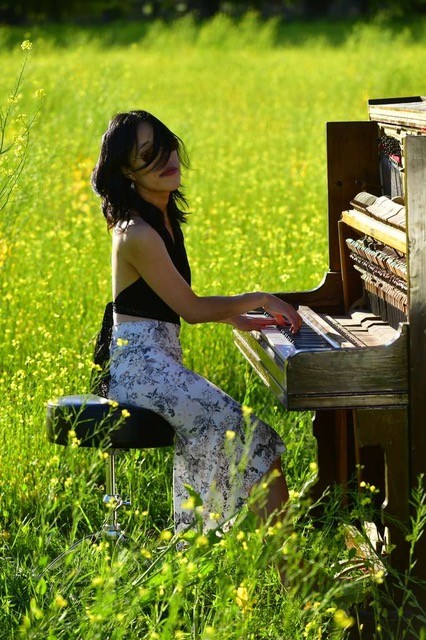
We had a talk the other day with pianist and composer Beatrice Nicholas. She’s a virtuoso pianist and at the same time is so active in imagining all the places the music can go that you really need to follow to see what she’s doing next!
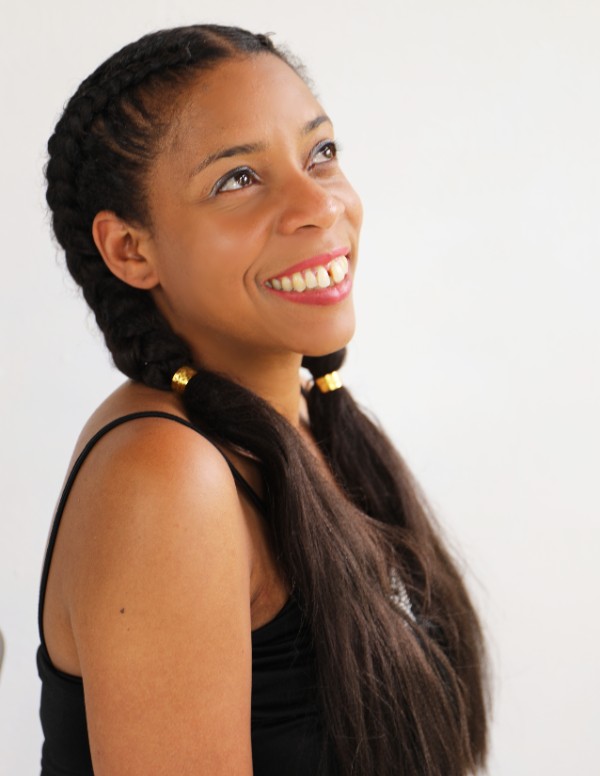
Beatrice Nicholas (photo by Janice Issitt)
We looked at Beatrice Nicholas’ October schedule in awe. She starts with a concert at St. Margaret’s in London with Black and Classical with works by three African American women composers: Florence Price (1887–1953), Betty Jackson King (1928–1994), and Margaret Bonds (1913–1972).
Less than a week later, she’s at Kings Place with Classically Black, accompanying Mebrakh Haughton-Johnson (clarinet) in a program that ranges all over the musical map.
Then it’s the Black Voices Festival at All Saints Church, in Queen’s Park, Bedford, where she will bring her jazz-inspired program about the women who bridged classical and jazz. She’s back at the Festival the next day with Reimagined Spirituals, accompanying double-bassist Leon Bosch.
This is all in support of Black History Month in the UK, and her activities are just a small part of the music celebrations for Black History Month taking place across the UK. Celebration of Black History Month started in 1970 in the US and by 1976 had spread across the US and was recognised by President Gerald Ford as part of the celebrations of the US Bicentennial that year. The first celebration in the UK was in 1987, and other countries around the world followed.
We spoke with Beatrice Nicholas just before she plunged into this maelstrom of music and were really excited by her own joy in her music and research.
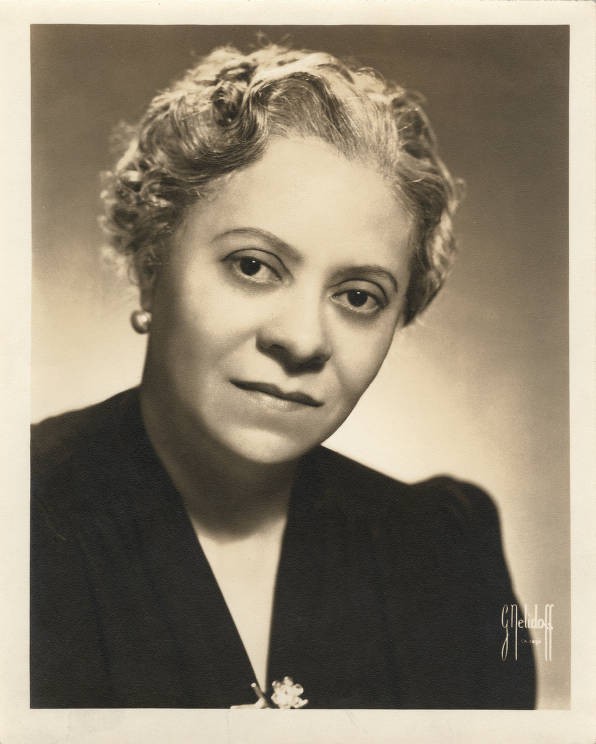
George Nelidoff: Florence Price
The Black and Classical program focuses on music written in Chicago by Florence Price, Margaret Bonds, and Betty Jackson King. Price’s Fantasie Negre No. 2 opens the program. The second in Price’s series of 4 fantasies, The E minor Fantasie was written in 1929 and revised in 1932, and the G minor, F minor, and B minor were all written in 1932. The 20th-century fantasie was Price’s own genre that brought together African American vernacular idioms taken from spirituals and plantation songs and the traditions of the European piano fantasy. The second fantasie became a place for Price to write her own vernacular themes – although they seem like they could be from earlier music, these are original to this work.
Price’s Clouds, although unpublished for many years, is considered one of the most important of Price’s unpublished works. An intense lyricism in the Schumann style, chromaticism that could have come from Scriabin or Rachmaninoff, and yet always with a touch of Price.
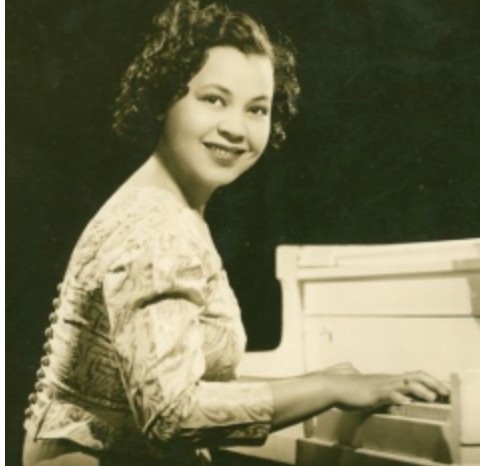
Margaret Bonds
The Spiritual Suite by Margaret Bonds is based on 3 spirituals. She composed it in the 1920s and 1940s as a showstopper ending for her own concerts; as a virtuoso pianist, she had an extensive touring schedule. Bonds’ own description of her music says that it’s ‘jazz and bluesy, and spiritual, and Tchaikovsky all rolled up in one’.
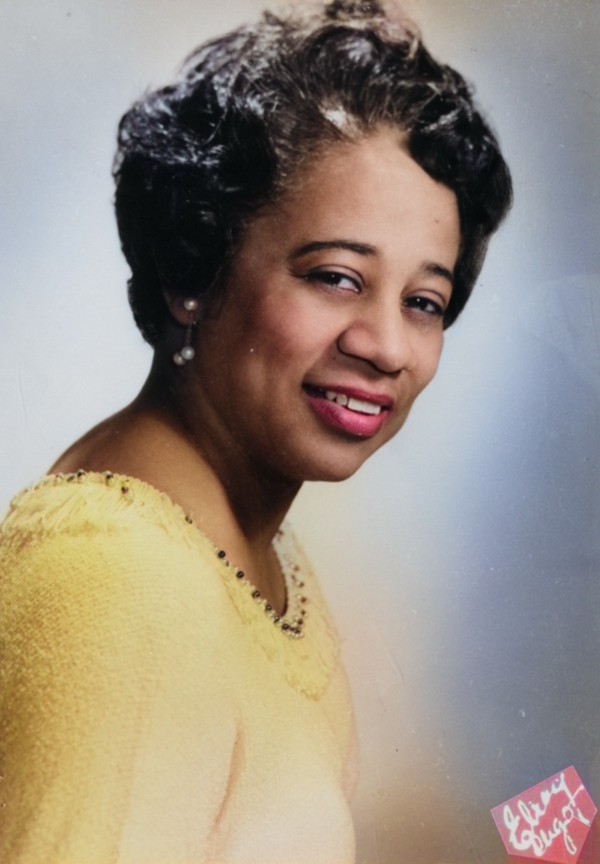
Betty Jackson King (colourized)
Younger than the other two composers, Betty Jackson King generally focused on vocal music. Four Seasonal Sketches is one of her few keyboard works and was written in 1973. Each of the seasons is given a movement and an indicative title: Spring Intermezzo, Summer Interlude, Autumn Dance, Winter Holiday. The work is dedicated to Dr. Geneva Handy Southall, best known as a musicologist and college professor, and for her three books on the slave pianist known as Blind Tom Wiggins. Born into a slave household in 1849, he effectively remained a slave to his musical promoters until his death in 1908.
Black and Classical Concert – Beatrice Nicholas, Solo Piano
In Classical Black: The Next Movement–Evolving Sounds, Nicholas accompanies clarinetist Mebrakh Haughton-Johnson as part of the festival at Kings Place. This is the second year of the Classically Black Festival, a showcase for emerging talents from ethnically diverse backgrounds. Although classical music is the title, the focus is innovation, creativity and excellence.
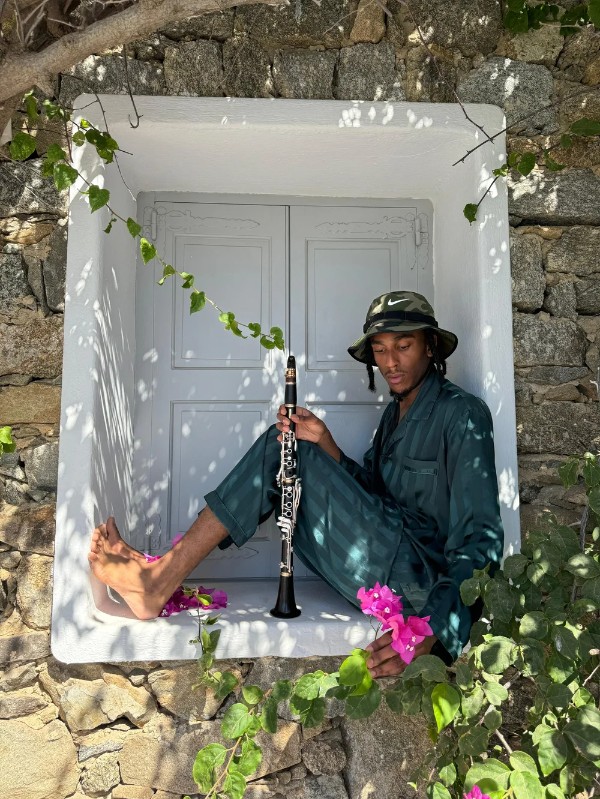
Mebrakh Haughton-Johnson
Her two appearances at the Black Voices Festival start with her program of Classic Women! Originally envisioned as Classical Swing, Nicholas looks at the legacies of four impressive women with classical training who made their names in jazz: Hazel Scott, Lil Hardin Armstrong, Dorothy Donegan, and Nina Simone.
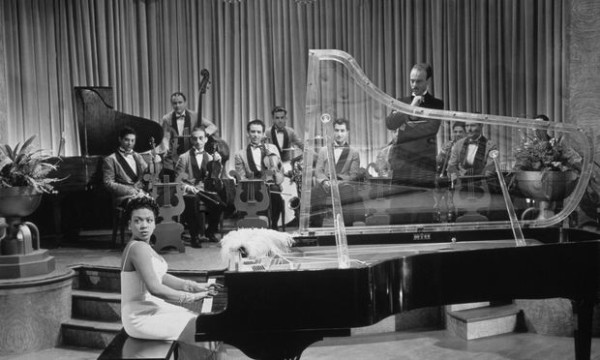
Hazel Scott
Hazel Scott (1920–1981) was a musical prodigy who was given scholarships to study at the Juilliard School when she was only eight. Not able to have a career as a classical pianist, she performed in various nightclubs in the 1930s and 1940s, playing jazz, blues, ballads, and popular songs from Broadway, as well as a bit of classical music. She is credited with the practice of ‘swinging the classics’ and went on to a career in Hollywood. She followed that triumph by having her own television show starting in 1950, the first black woman to do so. In a nod to Hazel Scott, Nicholas also swings Franz Liszt‘s Hungarian Rhapsody No. 2 in her own arrangement for jazz trio.
Finale from Classical Swing!
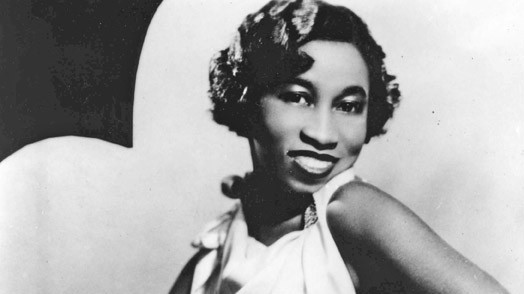
Lil Hardin Armstrong
Lil Hardin Armstrong (1898–1971) had her primary musical training at Fisk University and in 1918 moved to Chicago with her parents. She was a skilled sight-reader and had her first job as a sheet music demonstrator. She was quickly snapped up by band leader Lawrence Duhé and was his pianist until she started working for King Oliver’s Jazz Band. She returned to Chicago in 1921 after an extended engagement with the band that kept them in California. She married for a short time, but after she met Louis Armstrong, both of them divorced their then-spouses and, as part of their honeymoon, went on tour with the King Oliver band to Pennsylvania.
She was the making of Louis Armstrong, upgrading his dress, changing his hairstyle, and, most importantly, encouraging his investigations into classical music. She also persuaded him to leave King Oliver and find better jobs. In 1924, he went to New York to work in the Fletcher Henderson band while she stayed in Chicago and developed her own band. They divorced in 1938, after 14 years of marriage, but it was an important 14 years for both.
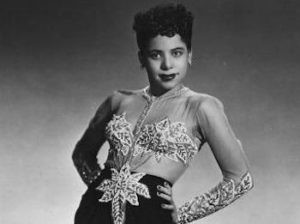
Dorothy Donegan
Dorothy Donegan (1922–1998) studied at the Chicago Musical College and the University of Southern California and became known for her work as a classically-trained jazz pianist, playing stride and boogie-woogie. When she performed at Chicago’s Orchestra Hall in 1943, she opened her concert with Rachmaninoff and Grieg and played jazz in the second half. Her flamboyance set her apart in a field where women were rare.
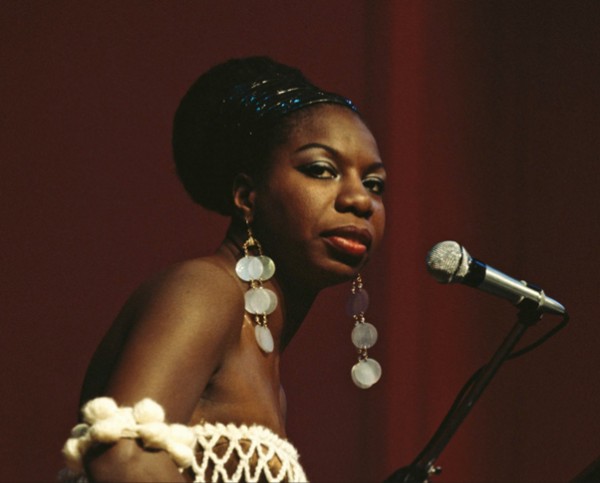
Nina Simone
Nina Simone (1933–2003) played a range of styles, ranging from classical, folk, gospel, blues, jazz, R&B, to pop. She attended a summer at the Juilliard School in preparation for applying to the Curtis Institute in Philadelphia. Her application was unsuccessful; she says it was due to racism, and the Curtis Institute says it was because only 4% of applicants were successful that year. She sang and accompanied herself at a nightclub in Atlantic City and made her first recording in 1958, the start of a recording career that would extend to 40 albums by 1974.
Each of these women was successful in different aspects of jazz but had initially trained in classical music. Nicholas gathers them together in Classic Women! to give us a new definition of classical music and women’s role in expanding the box that holds them.
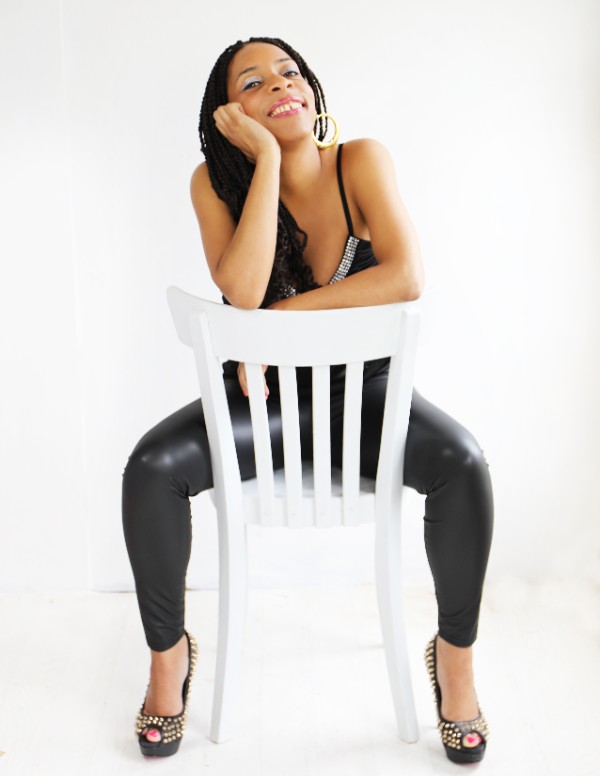
Beatrice Nicholas (photo by Janice Issitt)
The day after Classical Women!, she has a program working with double-bassist Leon Bosch in Reimagined Spirituals. Starting with traditional spirituals, such as Go Down Moses, Bosch brings them into the 21st century. Nicholas called spirituals ‘a very powerful way to tell a story’.
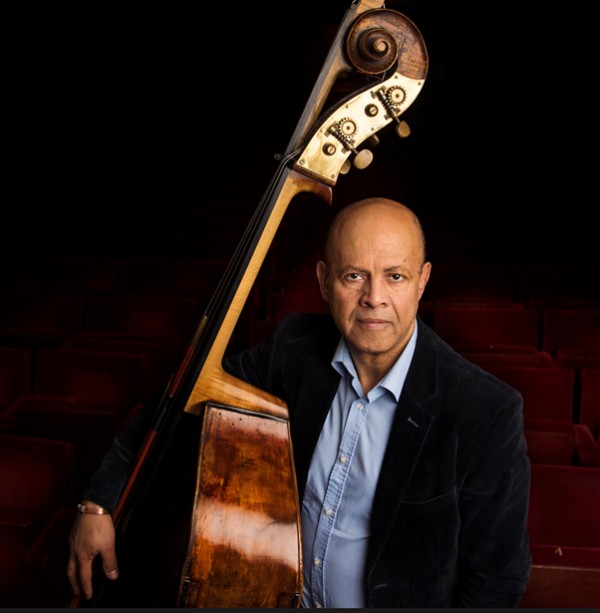
Leon Bosch
All of these are adult concerts. She also creates concerts for children that are more than sitting and listening. Her Beatrice the Amazing Astronaut program, which she will be performing in late November at Blackheath Halls, takes music from space, such as Debussy’s Clair de Lune and John Williams’ Theme from ET and creates an interactive program to get the children up and moving. She wants the music to speak to the children and spark their imagination, rather than just serving as something to endure. Dressed in her astronaut suit, she’s a striking force at the keyboard!
Beatrice Nicholas – The Amazing Astronaut
The enthusiasm with which Beatrice Nicholas approaches music and her field of expertise in black women in classical and jazz is impressive. Join her for any one of her memorable evenings around London and in other parts of England to discover music you’ll love by exciting women from the 19th century to now.
For her schedule: https://www.beatricenicholas.com/performance-events/
Classical Black: The Next Movement–Evolving Sounds
Saturday, October 18, 2025
2:30 PM 10:30 PM
Kings Place, London
Black Voices Festival
Classical Women!
Friday, October 24, 2025
7:45 PM 9:45 PM
All Saints Church
Reimagined Spirituals
Saturday, October 25, 2025
2:00 PM 3:00 PM
All Saints Church
Beatrice The Amazing Astronaut
Saturday, November 22, 2025
2:00 PM 2:45 PM
Blackheath Halls
For more of the best in classical music, sign up for our E-Newsletter