Inspirations Behind Anna Clyne’s Abstractions
The suite Abstractions (2016) uses the works of five contemporary abstract artists to create an image of art today. The works were all in the collection of the Baltimore Museum of Art and came from the private collection of Rheda Becker and Robert Meyerhoff.
Marble Moon was inspired by Sara VanDerBeek’s Marble Moon (2015). The art is a series of ‘digital chromogenic colour prints’ where VanDerBeek layers an image of a total eclipse that she took as a child with ‘a recent photo of light falling on the marble architecture of Baltimore’s Mount Vernon neighbourhood’.

Sara VanDerBeek
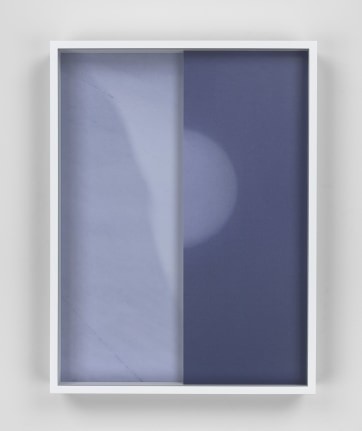
VanDerBeek: Marble Moon
In her music, Anna Clyne uses the orchestra to evoke the sound of an organ, putting her musical ideas over the sound of a pedal point E that holds through the whole movement. Above the held E major chord, the woodwinds develop a chant-like theme that culminates in three horns creating an imitative passage. Like the night, the whole movement is held back in its dynamics.
Anna Clyne: Abstractions – I. Marble Moon (inspired by Sara VanDerBeek’s Marble Moon) (Baltimore Symphony Orchestra; Marin Alsop, cond.)
American artist Julie Mehretu (b. 1970) created Auguries on a set of 12 panels, using red, yellow, and black aquatint as the colours. It seems arching and abrupt, falling always to the right, yet interrupted by lines that cross angles.
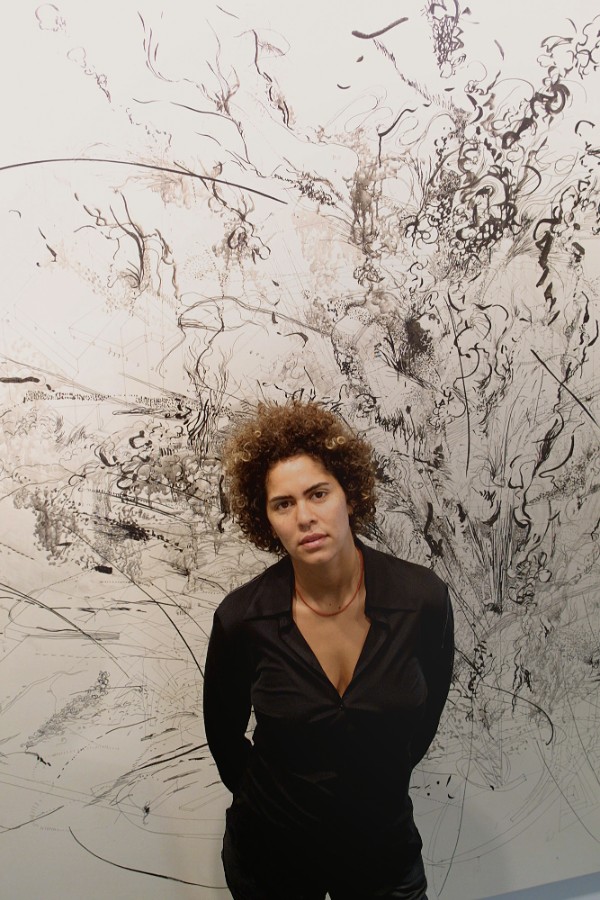
Julie Mehretu
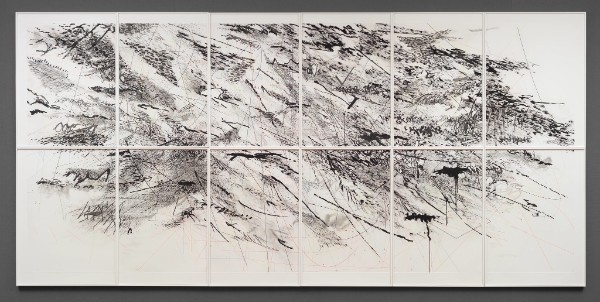
Mehretu: Auguries
In her music, Clyne picks up on the long arching lines and the compact energy of the imagery and creates a work that seems like it’s just on the edge of collapsing. The lines build and fall, sometimes in a sawing motion and other times in dense, shifting sound clouds.
Anna Clyne: Abstractions – II. Auguries (inspired by Julie Mehretu’s Auguries) (Baltimore Symphony Orchestra; Marin Alsop, cond.)
Hiroshi Sugimoto (b. 1948) uses the medium of photography and time exposures to create images where time seems to both stop and be going on endlessly. In his 1980 photograph Caribbean Sea, Jamaica, Sugimoto used a large-format camera and long exposure time that doesn’t capture the sea and sky as much as the interplay of its elements of light and waves.
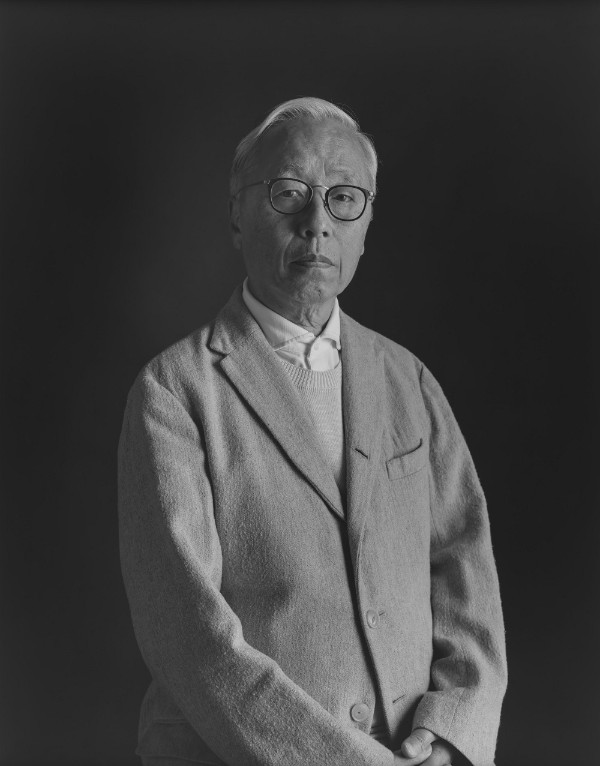
Hiroshi Sugimoto
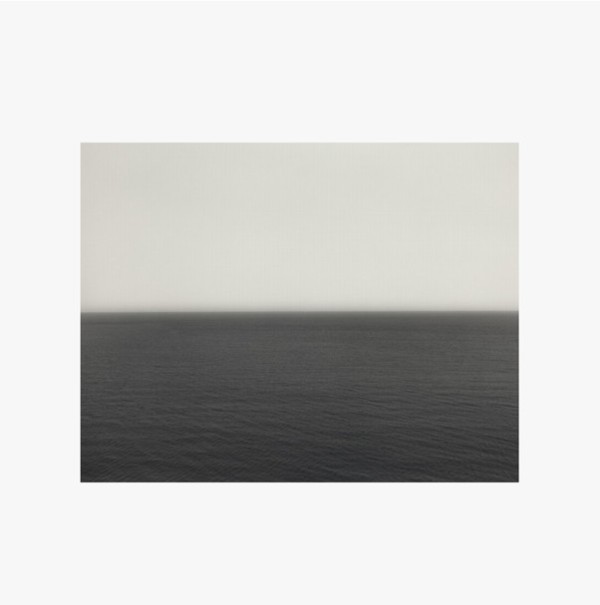
Sugimoto: Caribbean Sea, Jamaica
Both the stillness of the image and the implied movement of the water are in the music. We’re in a meditative mood, staring out at sea. Nothing in particular catches our eye, but the movement of the waves keeps us from being distracted by anything else. There’s a serenity in the line of the unchanging horizon.
Anna Clyne: Abstractions – III. Seascape (inspired by Hiroshi Sugimoto’s Caribbean Sea, Jamaica) (Baltimore Symphony Orchestra; Marin Alsop, cond.)
Ellsworth Kelly (1923–2015) was an American painter, sculptor, and printmaker, and his print River II builds on the fascination with water that Kelly developed from his first years abroad in France.

Ellsworth Kelly
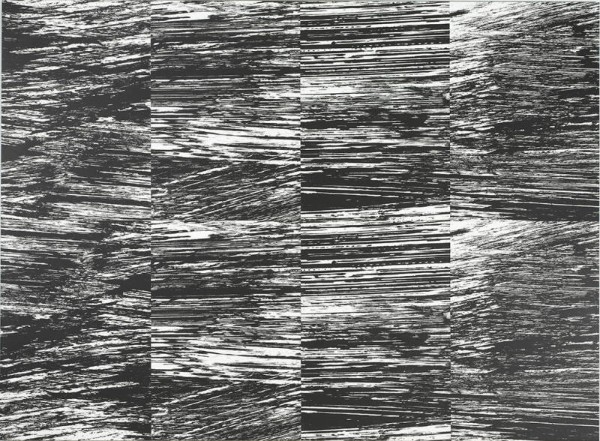
Ellsworth Kelly: River II
In the music, we return to the quick motion we heard in the second movement, trying to pick up on the black/white contrast in Kelly’s work. Moments of repose are interrupted by yet more movement, music as in the artwork, lines gather and release.
Anna Clyne: Abstractions – IV. River (inspired by Ellsworth Kelly’s River II) (Baltimore Symphony Orchestra; Marin Alsop, cond.)
The final inspirational work was created by Brice Marden (1938–2023). A minimalist painter, Marden had extensive connections within the art world from his studies at the Yale School of Art and in the American folk music scene, where he was the husband of Pauline Baez, sister to singer Joan Baez.
Three, which dates from 1987–1988, uses his characteristic line painting in a dimensional way. Although the lightest colour stands out first, deeper examination shows other colours behind, whose lines are an integral part of the surface lines; many of the background lines extend the lighter coloured surface lines.

Brice Marden
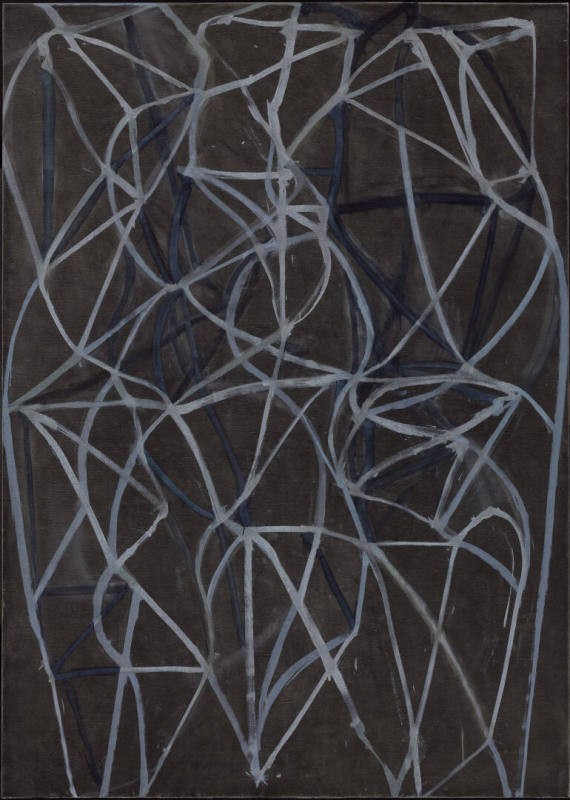
Marden: 3
Clyne sees ‘Asian calligraphy and the structure of seashells’ in Marden’s work and in her music, making the lines dance. First, they seem to be marching, but the background notes start to have more and more importance, the volume grows, other instruments come to the fore, and we’re not dancing so much as appreciating the world around. The composer’s instructions, ‘Elegant Dance, Slowly becoming more raucous’ sum up the work beautifully
Anna Clyne: Abstractions – V. Three (inspired by Brice Marden’s 3) (Baltimore Symphony Orchestra; Marin Alsop, cond.)
Clyne’s work focuses on art of a highly contrasting nature, but with a similarity in its use of a limited colour range. Many of these artists are known for their highly-coloured and contrasting works, but in putting this collection together, the composer has opted for a predominantly monochrome aesthetic. Upon closer inspection, there is colour, particularly in Auguries, but the initial impression is black and white. As a survey of modern abstract art, Abstractions is Clyne’s way of giving us a curated view, chosen for line and colour.
For more of the best in classical music, sign up for our E-Newsletter